Tag Archives: wealth

Smart Money Series: Stop Feeding the System—How Discipline Builds Wealth

Modern economic systems thrive not on wisdom but on impulse. Corporations are sustained by consumers who spend reflexively, upgrade unnecessarily, and mistake convenience for necessity. To “feed the system” is to participate unconsciously in cycles that extract wealth rather than build it. True financial freedom begins with discipline—the deliberate refusal to be governed by appetite, comparison, and urgency.

Discipline is the foundation of wealth because it governs behavior long before money accumulates. Scripture affirms this principle, teaching that “he that hath no rule over his own spirit is like a city that is broken down, and without walls” (Proverbs 25:28, KJV). A person without financial discipline is equally exposed—vulnerable to debt, stress, and perpetual lack.

The system is fed daily through impulse spending, engineered by marketing psychology. Retail environments, digital ads, and social media influencers are designed to provoke emotional responses rather than rational evaluation. Behavioral economists note that humans are predictably irrational, often prioritizing short-term pleasure over long-term benefit (Kahneman, 2011). Discipline interrupts this cycle by slowing decision-making and restoring intentionality.

One of the most powerful acts of resistance is spending less than you earn. This principle is deceptively simple yet rarely practiced. Many households increase spending alongside income, a phenomenon known as lifestyle inflation. Scripture warns against this pattern, stating, “There is that maketh himself rich, yet hath nothing” (Proverbs 13:7, KJV). Wealth is not measured by appearance but by margin.

Discipline also manifests in delayed gratification. Investing rather than consuming requires patience and trust in future reward. Compounding—whether financial or spiritual—rewards consistency, not haste. Proverbs 21:5 reminds us that “the thoughts of the diligent tend only to plenteousness” (KJV), emphasizing planning over impulse.

To stop feeding the system, one must opt out of constant upgrading. Phones, cars, appliances, and wardrobes are marketed as obsolete long before their usefulness expires. Discipline resists manufactured dissatisfaction and values function over novelty. This posture aligns with biblical contentment, which teaches that sustenance and covering are sufficient (1 Timothy 6:8, KJV).

Another critical discipline is intentional consumption—buying only what aligns with purpose and values. Every dollar spent is a vote, either reinforcing systems of excess or supporting sustainability and stewardship. Conscious spending transforms money from a reactionary tool into a strategic resource.

Debt is one of the system’s most effective chains. High-interest consumer debt feeds financial institutions while weakening households. Scripture cautions plainly, “The borrower is servant to the lender” (Proverbs 22:7, KJV). Discipline prioritizes debt avoidance and repayment, restoring autonomy and peace.

Cooking at home, carrying snacks, and avoiding convenience spending may seem minor, but these habits represent daily acts of discipline. Small leaks sink great ships. Financial freedom is often lost not through catastrophe but through neglect. Luke 16:10 affirms that faithfulness in small matters governs larger outcomes.

Discipline also requires confronting covetousness and comparison, especially in a digital age where curated lifestyles distort reality. Envy drives unnecessary spending and erodes gratitude. Scripture commands restraint: “Let your conversation be without covetousness; and be content with such things as ye have” (Hebrews 13:5, KJV).

Importantly, discipline does not reject enjoyment—it reorders it. Wealth built through discipline produces peace, not anxiety. It allows for generosity without strain and provision without panic. Proverbs 11:25 teaches that “the liberal soul shall be made fat” (KJV), but generosity is sustainable only when rooted in wisdom.

Stopping the flow of money into exploitative systems does not require isolation from society, but mastery within it. Those who govern their appetites, plan their resources, and resist emotional spending quietly build wealth while others remain trapped in cycles of consumption.

Ultimately, discipline builds wealth because it aligns action with truth. It restores the individual as the decision-maker rather than the product. In an economy that profits from disorder, discipline is both a financial strategy and a moral stance.

Those who stop feeding the system do not merely accumulate money—they reclaim power, peace, and purpose.


References

Bodie, Z., Kane, A., & Marcus, A. J. (2021). Investments (12th ed.). McGraw-Hill Education.

Collins, J. L. (2016). The simple path to wealth: Your road map to financial independence and a rich, free life. JL Collins LLC.

Kahneman, D. (2011). Thinking, fast and slow. Farrar, Straus and Giroux.

Thaler, R. H., & Sunstein, C. R. (2009). Nudge: Improving decisions about health, wealth, and happiness. Penguin Books.

The Holy Bible, King James Version. (1611/2017). Cambridge University Press.

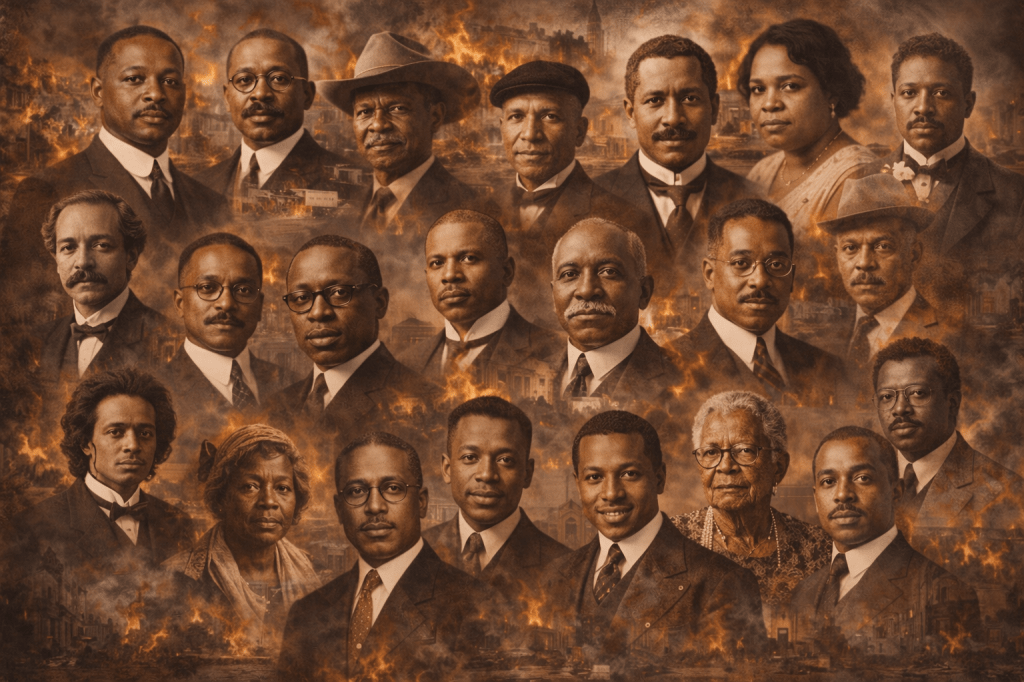
Black History: Black Millionaires They Tried to Erase from History.

In early 20th‑century America, Black entrepreneurs in segregated communities defied racism by generating unprecedented wealth. These men and women built thriving businesses, owned property, and created entire economic ecosystems — only to have their legacies diminished, erased, or violently destroyed by systemic racism and white supremacist violence.

In Tulsa, Oklahoma, the Greenwood district — known as “Black Wall Street” — was one of the most remarkable examples of Black prosperity in American history. Founded by visionary Black businessmen and professionals, Greenwood became a symbol of independence, economic self‑sufficiency, and community resilience.

Among Greenwood’s earliest millionaires was O.W. Gurley, a real‑estate developer and entrepreneur. Born to formerly enslaved parents in Alabama, Gurley moved to Tulsa and purchased land designated for Black ownership. He built hotels, apartment buildings, a grocery store, and sponsored other local businesses, accumulating an estimated net worth that translated into the millions in today’s dollars.

Gurley’s success helped inspire others to invest in Greenwood. J.B. Stradford, another eminent figure, was the son of an emancipated slave who became a lawyer, real‑estate magnate, and hotelier. His crowning achievement was the Stradford Hotel, the largest Black‑owned hotel in the United States at the time. It offered luxury services equal to those in white Tulsa and hosted a thriving social life, attracting wealthy travelers and local elites.

John and Loula Williams were another Black power couple in Greenwood. They owned multiple businesses — including the Dreamland Theatre, a confectionary, and a rooming house — and became among the wealthiest Black residents. Loula was a partner in these ventures, showing how women also played central roles in building Black wealth.

Greenwood was far more than a collection of storefronts: it had its own bank, schools, hospital, newspaper, and even private transportation networks, all built and operated by Black entrepreneurs. The Tulsa Star, founded by A.J. Smitherman, became a prominent voice advocating civil rights, economic empowerment, and community solidarity.

Despite this economic miracle, Greenwood was targeted by white supremacists fearful of Black success. From May 31 to June 1, 1921, a white mob attacked the district in what is now known as the Tulsa Race Massacre, burning businesses, homes, and churches to the ground. Up to 300 Black residents were killed and roughly 1,200 homes destroyed. This coordinated assault erased generational wealth in a matter of hours.

The destruction of Greenwood exemplifies how racial violence was used to prevent Black Americans from maintaining wealth and influence. Millionaires like Gurley and Stradford lost everything; there was no restitution for survivors or descendants for decades. Their stories, once widely known locally, faded from mainstream historical memory.

Beyond Tulsa, there were other Black millionaires whose achievements were overshadowed or forgotten due to systemic racism. Jake Simmons Jr., an oilman from Oklahoma, became one of the most successful Black oil entrepreneurs in the mid‑20th century, partnering with major petroleum companies and opening opportunities in Africa’s energy sector. His rise showcased Black leadership in the global industry, yet his legacy remains underrecognized.

Black businesspeople in areas outside Tulsa also built considerable wealth during Jim Crow. In many segregated towns and cities, Black physicians, lawyers, educators, and merchants created thriving practices serving Black customers, generating stable incomes and propelling local economies. However, many were omitted from national business histories, minimized by the dominant narrative.

Black Millionaires Who Were Erased or Forgotten

  1. O.W. Gurley – Real estate developer and founder of Greenwood, Tulsa (“Black Wall Street”). Built hotels, grocery stores, and a thriving Black community before the Tulsa Race Massacre destroyed his fortune.
  2. J.B. Stradford – Lawyer and entrepreneur; owner of the Stradford Hotel, the largest Black-owned hotel in the U.S. before 1921. Lost property in the Tulsa Race Massacre.
  3. John and Loula Williams – Business power couple in Greenwood, owning multiple enterprises including theaters, confectionaries, and rooming houses.
  4. A.J. Smitherman – Publisher of the Tulsa Star, the influential newspaper in Greenwood that advocated Black economic empowerment and civil rights.
  5. Jake Simmons Jr. – Oklahoma oil tycoon and international businessman; instrumental in opening opportunities in Africa’s oil sector.
  6. Moses Austin – Early 19th-century businessman who invested in land and local enterprises; lesser-known due to records focusing on white counterparts.
  7. Paul Cuffe – African American entrepreneur and shipowner in the late 18th and early 19th centuries; financed Black migration to Sierra Leone and traded globally.
  8. Madam C.J. Walker – First female self-made millionaire in America through haircare and beauty products; her story was overshadowed for decades despite her philanthropy.
  9. Robert Reed Church – Memphis real estate mogul; accumulated wealth through investments and urban development in the post-Civil War South.
  10. Anthony Overton – Entrepreneur and publisher; owned the Overton Hygienic Company and the Chicago Bee newspaper.
  11. Alonzo Herndon – Founder of Atlanta Life Insurance Company; born enslaved and became one of the wealthiest Black men in the U.S.
  12. Norbert Rillieux – Inventor and businessman; revolutionized sugar refining and built wealth that was largely unrecognized in mainstream history.
  13. John H. Johnson – Founder of Johnson Publishing Company (Ebony, Jet); a 20th-century millionaire whose financial influence in media is often underappreciated.
  14. Viola Fletcher – Survivor and symbolic figure of Tulsa’s Greenwood, representing families who had generational wealth destroyed in the massacre.
  15. Samuel Coleridge-Taylor (U.S. connections) – Composer and businessman in music ventures; recognized in Europe but often omitted from U.S. economic history discussions.
  16. Mary Ellen Pleasant – Wealthy Black entrepreneur and philanthropist in San Francisco during the 19th century; aided civil rights causes but was historically obscured.
  17. Madison Jones – Oil and landowner in the early 20th century; wealth erased through discriminatory policies and lack of historical recognition.
  18. John Merrick – Founder of North Carolina Mutual Life Insurance Company; amassed wealth but is often only recognized regionally.
  19. Robert W. Johnson – Entrepreneur in early 1900s Chicago; built wealth in real estate and business before being written out of mainstream histories.
  20. Frederick McGhee – Lawyer and businessman; helped build economic infrastructure for Black communities in Minneapolis but largely forgotten in national narratives.

The erasure of these figures was not accidental. Throughout U.S. history, Black success has been met with legislative discrimination, economic exclusion, violence, and historical suppression. After the massacre, Greenwood’s rebuilt community prospered again for decades — only to be dismantled a second time in the mid‑20th century through “urban renewal” projects and highway construction that obliterated much of the neighborhood.

The consequences of this erasure persist. Without preservation and education about these Black millionaires, their contributions are excluded from textbooks, newspapers, and national consciousness. This has furthered false narratives that Black communities did not achieve economic success prior to the Civil Rights Movement.

Historians and activists today work to recover these stories, ensuring that Gurley, Stradford, the Williamses, Simmons, and many more are acknowledged as pioneers of Black wealth in America. Their legacy demonstrates profound resilience and innovation under adversity.

Black Wall Street’s destruction also disrupted generational wealth transfer; properties and businesses never regained their pre‑1921 value, and families were denied inheritance opportunities that could have sustained future prosperity.

In recent years, Tulsa has taken steps to confront its history. Reparations efforts, educational initiatives, and public memorialization aim to restore recognition for Greenwood’s lost entrepreneurs and honor survivors like Viola Fletcher, who testified about the massacre’s enduring impact.

The story of these Black millionaires is a reminder that racial oppression targeted not only individual lives but collective economic power. Their erasure from history reflects broader social resistance to acknowledging Black achievement.

Engaging with these histories allows for a more accurate understanding of American capitalism, one that includes both Black contributions and the violence used to undermine them.

Recognizing Black millionaires lost to history also challenges contemporary narratives about wealth, race, and opportunity, showing clearly that Black success was possible — and existed — long before today’s conversations about equity and inclusion.

These narratives also inspire modern generations of Black entrepreneurs, emphasizing the importance of legacy, community investment, and perseverance despite systemic barriers.

Understanding the erased histories of Black millionaires is vital not only for historical accuracy but for framing present discussions about wealth inequality, reparations, and racial justice in the United States.


References

National Geographic Society. (n.d.). Before the Tulsa Race Massacre, Black business was booming in Greenwood. National Geographic. https://www.nationalgeographic.com/history/history-magazine/article/before-tulsa-race-massacre-black-business-booming-greenwood

History.com Editors. (n.d.). 9 Entrepreneurs Who Helped Build Tulsa’s “Black Wall Street”. HISTORY. https://www.history.com/articles/black-wall-street-tulsa-visionaries

CNBC. (2020). What Is “Black Wall Street”? History of the community and its massacre. CNBC. https://www.cnbc.com/2020/07/04/what-is-black-wall-street-history-of-the-community-and-its-massacre.html

ABC7 New York. (n.d.). Tulsa Race Massacre: Story behind Black Wall Street destroyed by racist mob. https://abc7ny.com/tulsa-race-massacre-1921-black-wall-street-greenwood/10707747

Wikipedia contributors. (n.d.). Greenwood District, Tulsa. Wikipedia. https://en.wikipedia.org/wiki/Greenwood_District%2C_Tulsa

Wikipedia contributors. (n.d.). Jake Simmons. Wikipedia. https://en.wikipedia.org/wiki/Jake_Simmons

Wikipedia contributors. (n.d.). Viola Fletcher. Wikipedia. https://en.wikipedia.org/wiki/Viola_Fletcher

The Brown Girl Dating Diaries: Gifts that Speak.

In the journey of dating as a brown girl, gifts are more than objects—they are symbols, messages, and mirrors reflecting intentions. From the very beginning, it is crucial to recognize that gifts carry meaning beyond their material value. They speak of thoughtfulness, attention to detail, and, most importantly, respect. Understanding this allows one to navigate the dating world with discernment, recognizing which gestures are genuine and which may be performative.

Gifts from men in dating can serve as expressions of care, interest, and investment in a relationship. A simple bouquet, a thoughtful note, or even a small token can communicate attentiveness and a desire to connect. However, the essence of these gifts must be weighed against the character of the giver. The act of giving should not become transactional, and the recipient must remain discerning, recognizing the alignment of actions with values.

Yet, gifts are not limited to men. Gifts from God are the most profound, offering guidance, patience, and discernment in choosing the right partner. Spiritual gifts manifest as wisdom, emotional maturity, and the ability to love rightly. Recognizing divine gifts in oneself allows for a grounded sense of self-worth that is not reliant solely on the approval or offerings of a partner.

The humility to accept gifts graciously is often overlooked. In dating, a brown girl may struggle with pride or skepticism, questioning whether she deserves the gestures she receives. Accepting gifts with gratitude demonstrates an understanding that love and attention are not entitlements but blessings, whether they come from God or a thoughtful partner. Gratitude transforms even a simple gesture into a moment of connection and reflection.

Material gifts from men must always be balanced with observation of their actions. Consistency, respect, and integrity cannot be replaced by lavish items or grand gestures. A true gift in dating is not measured solely in dollars but in sincerity. The quality of character and the intention behind the gesture speak louder than any wrapped box or handwritten card.

Gifts from God, however, are invisible yet deeply tangible in their effects. Spiritual insight, timing, and divine protection guide the dating journey. Praying for discernment before accepting gifts, both tangible and intangible, ensures that one is not misled by appearances. Divine gifts often come through patience, clarity, and the soft inner voice that cautions against haste or compromise.

In receiving gifts from men, the principle of humility remains vital. Pride or entitlement can distort perception, leading to the misinterpretation of intentions. A humble heart allows one to see the true message behind a gesture, whether it is a loving act, a test of commitment, or a reflection of deeper character. Humility aligns the heart with God’s perspective, ensuring that gratitude, not arrogance, defines the response.

Dating as a brown girl also involves understanding boundaries. Gifts are never a tool to manipulate, coerce, or demand reciprocity. Recognizing the difference between generosity and obligation is key. A gift should invite appreciation, not create indebtedness, and a wise recipient evaluates the heart of the giver rather than the size or cost of the present.

The lessons of gifts extend beyond romantic relationships. They teach about self-worth, discernment, and emotional intelligence. Every thoughtful gesture becomes a learning moment: how to receive, how to respond, and how to assess the intentions behind actions. These lessons cultivate maturity, which is essential in choosing a partner aligned with both personal values and spiritual calling.

In navigating dating, one must also acknowledge that not all gifts are meant to be kept. Some come with lessons, guiding decisions about compatibility and long-term alignment. Letting go of gifts that mask deeper incompatibilities or unhealthy patterns demonstrates wisdom and reverence for the higher purpose of love.

Gratitude transforms the reception of gifts into a spiritual exercise. Whether a small token from a man or a subtle sign from God, embracing gifts with thankfulness cultivates a heart attuned to love, patience, and discernment. Recognizing the divine orchestration behind timing and provision brings clarity, reducing the temptation to rely solely on human gestures for affirmation.

Understanding gifts also intersects with self-awareness. A brown girl must recognize her own value, gifts, and boundaries before fully appreciating the offerings of others. Confidence rooted in God’s love allows one to receive thoughtfully without compromising standards or integrity. Self-awareness creates a framework where gifts enhance, rather than define, a relationship.

Communication is another essential dimension of gifts. Discussing intentions, expectations, and feelings ensures that both giver and recipient are aligned. Misunderstandings about gestures can cause unnecessary tension or misinterpretation, and clear communication nurtures a culture of transparency, honesty, and mutual respect.

Ultimately, gifts in dating are more than tangible items—they are reflections of intent, character, and spiritual alignment. When approached with discernment, humility, and gratitude, they become tools for connection, insight, and growth. They remind the brown girl that love, whether human or divine, is both an act and a lesson, a dialogue between hearts.

The Brown Girl Dating Diaries remind us that gifts speak when we listen carefully. They carry meaning beyond their surface, teaching patience, humility, and discernment. Whether a token from a man or a divine provision, every gift shapes the narrative of love, guiding the heart toward the right partner while nurturing a life anchored in gratitude and grace.


References

Carter, R. T. (2013). Race and racial identity in psychology: Emerging perspectives. Wiley.

Garza, A. (2014). A herstory of the #BlackLivesMatter movement. The Feminist Wire.

Maxwell, J. C. (2018). The 5 levels of leadership: Proven steps to maximize your potential. Center Street.

Tannen, D. (1990). You just don’t understand: Women and men in conversation. William Morrow.

Warren, R. (2014). The purpose-driven life: What on earth am I here for? Zondervan.

Is There Wealth in the Black Community?

The question of whether there is wealth in the Black community requires both historical and contemporary analysis. On one hand, there are visible examples of affluent Black individuals—entrepreneurs, entertainers, athletes, professionals, and political leaders—who have accumulated substantial financial resources. On the other hand, aggregate data consistently show that Black Americans, as a group, possess significantly less wealth than their White counterparts. This gap is not merely about income, but about intergenerational wealth, assets, ownership, and long-term financial security.

Wealth is fundamentally different from income. Income refers to money earned through wages or salaries, while wealth includes accumulated assets such as property, investments, businesses, savings, and inheritances. A household may earn a decent income yet remain wealth-poor if it lacks assets and savings. Studies show that even middle-class Black families often have far less wealth than White families with similar incomes, indicating structural rather than individual causes (Oliver & Shapiro, 2006).

Statistically, the racial wealth gap in the United States is stark. According to the Federal Reserve’s Survey of Consumer Finances, the median White household holds nearly ten times the wealth of the median Black household. In 2022, the median net worth of White households was approximately $285,000, compared to about $44,900 for Black households (Federal Reserve, 2023). This means that at the midpoint, a typical Black family has access to less than one-sixth of the financial resources of a typical White family.

Only a small percentage of Black Americans fall into the top wealth brackets. Roughly 10% of Black households hold the majority of Black wealth, mirroring the general pattern of wealth concentration in America, but starting from a far lower baseline (Pew Research Center, 2020). This creates the perception that “some” Black people are doing extremely well while the majority remain economically vulnerable.

Historically, the lack of wealth in the Black community is rooted in slavery and its aftermath. For over 250 years, enslaved Africans were denied wages, property, and legal personhood. After emancipation, formerly enslaved people were promised “40 acres and a mule,” but this never materialized. Instead, land and capital were redistributed back to former slaveholders, not the enslaved (Darity & Mullen, 2020).

The Jim Crow era further prevented Black wealth accumulation through legal segregation, exclusion from labor unions, and denial of access to quality education and housing. One of the most damaging policies was redlining, in which Black neighborhoods were systematically denied mortgages and investment. This meant Black families were locked out of the primary wealth-building tool in America: homeownership (Rothstein, 2017).

Homeownership remains one of the strongest predictors of wealth. Yet Black homeownership rates are still significantly lower than White rates. As of 2023, about 44% of Black households owned homes compared to over 73% of White households (U.S. Census Bureau, 2023). Since homes appreciate over time and can be passed down, this gap compounds across generations.

Education is often promoted as the great equalizer, but even here disparities remain. Black Americans are more likely to carry student loan debt and less likely to receive financial assistance from family. This means that Black graduates often begin their professional lives in debt, while White graduates are more likely to begin with inherited financial support (Hamilton et al., 2015).

Racism in the labor market also plays a role. Numerous studies show that Black job applicants are less likely to receive callbacks than equally qualified White applicants with identical resumes (Bertrand & Mullainathan, 2004). Wage gaps persist even when controlling for education and experience, limiting long-term earning and saving potential.

Additionally, Black entrepreneurs face greater barriers to capital. Black-owned businesses are more likely to be denied loans and receive smaller amounts at higher interest rates. Without access to startup capital, business growth is constrained, reducing one of the key pathways to wealth creation (Fairlie & Robb, 2008).

The idea that “a Black person can only get so far in America” reflects not a lack of talent or effort, but systemic ceilings embedded in institutions. Structural racism functions through policies, markets, and norms that disproportionately advantage White Americans while disadvantaging Black Americans, even without overt racial intent (Bonilla-Silva, 2018).

Another major issue is intergenerational wealth transfer. White families are far more likely to inherit money, property, or businesses. Inheritance accounts for a large portion of wealth inequality. Black families, having been historically excluded from asset ownership, simply have less to pass down (Piketty, 2014).

The lack of institutional “help” for Black people is also tied to political economy. Social programs that once benefited working-class Americans—such as the New Deal and GI Bill—were either explicitly or implicitly designed to exclude Black Americans. This produced a racialized welfare state that subsidized White mobility while limiting Black advancement (Katznelson, 2005).

Despite these realities, there is wealth within the Black community, but it is fragile, concentrated, and constantly threatened by systemic forces. Black wealth exists in professional classes, faith institutions, Black-owned media, real estate investors, and growing entrepreneurial networks. However, it lacks the generational depth and institutional protection found in White wealth.

To change this, structural solutions are required. Individual financial literacy is helpful but insufficient on its own. Policy interventions such as baby bonds, student debt cancellation, housing reparations, fair lending enforcement, and reparations for slavery are increasingly discussed as necessary to close the wealth gap (Darity et al., 2018).

At the individual level, strategies for Black wealth-building include prioritizing asset ownership, investing early, reducing consumer debt, building businesses, purchasing property in appreciating areas, and collective economics through cooperatives and community investment models. While these cannot fix systemic inequality, they can mitigate vulnerability.

Cultural shifts are also important. Consumerism, status spending, and symbolic wealth often replace long-term asset accumulation in marginalized communities. Reorienting values toward ownership, savings, and investment is crucial for sustainable economic empowerment (Hamilton & Darity, 2017).

Ultimately, the racial wealth gap is not a personal failure of Black Americans, but a predictable outcome of historical and institutional exclusion. Wealth in America has always been racialized. The question is not whether Black people work hard enough, but whether the economic system was ever designed to allow them to accumulate and retain wealth at scale.

In conclusion, there is wealth in the Black community, but it is limited, unequal, and structurally constrained. The idea that only 10% “make it” reflects a system that concentrates opportunity at the top while leaving the majority economically precarious. Without structural reform, the racial wealth gap will persist for generations.

True Black economic liberation requires both personal financial strategies and collective political action. Until racism in housing, education, finance, and labor is dismantled, wealth in the Black community will remain the exception rather than the norm.


References

Bertrand, M., & Mullainathan, S. (2004). Are Emily and Greg more employable than Lakisha and Jamal? American Economic Review, 94(4), 991–1013.
https://doi.org/10.1257/0002828042002561

Bonilla-Silva, E. (2018). Racism without racists: Color-blind racism and the persistence of racial inequality in America (5th ed.). Rowman & Littlefield.

Darity, W., Hamilton, D., Paul, M., Aja, A., Price, A., Moore, A., & Chiopris, C. (2018). What we get wrong about closing the racial wealth gap. Samuel DuBois Cook Center on Social Equity.

Darity, W., & Mullen, A. (2020). From here to equality: Reparations for Black Americans in the twenty-first century. University of North Carolina Press.

Fairlie, R. W., & Robb, A. (2008). Race and entrepreneurial success: Black-, Asian-, and White-owned businesses in the United States. MIT Press.

Federal Reserve. (2023). Survey of Consumer Finances. Board of Governors of the Federal Reserve System.

Hamilton, D., & Darity, W. (2017). The political economy of education, financial literacy, and the racial wealth gap. Federal Reserve Bank of St. Louis Review, 99(1), 59–76.

Hamilton, D., Darity, W., Price, A., Sridharan, V., & Tippett, R. (2015). Umbrellas don’t make it rain: Why studying and working hard isn’t enough for Black Americans. New School, Duke University.

Katznelson, I. (2005). When affirmative action was White: An untold history of racial inequality in twentieth-century America. W.W. Norton.

Oliver, M. L., & Shapiro, T. M. (2006). Black wealth/White wealth: A new perspective on racial inequality (2nd ed.). Routledge.

Pew Research Center. (2020). Trends in income and wealth inequality.

Piketty, T. (2014). Capital in the twenty-first century. Harvard University Press.

Rothstein, R. (2017). The color of law: A forgotten history of how our government segregated America. Liveright.

U.S. Census Bureau. (2023). Housing Vacancies and Homeownership (CPS/HVS).

Smart Money Series: Money Saving Tips

Saving money is not merely a financial exercise; it is a discipline that reflects wisdom, foresight, and self-governance. In a society driven by consumption and instant gratification, the ability to save distinguishes those who plan for stability from those trapped in cycles of financial stress. Money-saving habits build resilience, protect families, and create opportunities for long-term growth rather than short-term pleasure.

One of the most foundational money-saving principles is intentional budgeting. A budget is not a restriction but a framework that assigns purpose to every dollar. When individuals track income and expenses, they gain clarity over spending patterns and identify areas of waste. Research consistently shows that people who budget regularly are more likely to achieve financial goals and avoid unnecessary debt.

Living below one’s means is a timeless financial strategy. This principle encourages spending less than what is earned, regardless of income level. Lifestyle inflation, where spending rises alongside income, is a major obstacle to wealth-building. Choosing modest living arrangements and controlled spending allows surplus income to be directed toward savings and investments.

Emergency savings are a critical pillar of financial security. Unexpected expenses such as medical bills, car repairs, or job loss can destabilize households without adequate reserves. Financial experts recommend setting aside three to six months of living expenses. This buffer reduces reliance on high-interest credit and provides peace of mind during crises.

Reducing discretionary spending is one of the quickest ways to save money. Small daily expenses—coffee purchases, food delivery, subscription services—may seem insignificant individually but accumulate substantially over time. By preparing meals at home and evaluating recurring expenses, individuals can redirect hundreds or thousands of dollars annually toward savings.

Debt management plays a vital role in money-saving strategies. High-interest debt, particularly credit card debt, erodes financial progress by compounding rapidly. Paying down balances aggressively and avoiding unnecessary borrowing frees income for saving and investing. Scripture warns that “the borrower is servant to the lender” (Proverbs 22:7, KJV), emphasizing the burden debt places on financial freedom.

Delayed gratification is a powerful yet undervalued saving tool. The ability to wait before making purchases reduces impulse buying and encourages thoughtful decision-making. Studies in behavioral economics show that individuals who practice delayed gratification are more likely to accumulate wealth and achieve long-term financial success.

Automating savings removes emotional decision-making from the process. Automatic transfers to savings or retirement accounts ensure consistency and discipline. When savings occur before spending, individuals adapt to living on the remainder rather than saving what is left over.

Shopping with intention also contributes significantly to savings. Comparing prices, using shopping lists, and avoiding emotional purchases help control spending. Retail marketing is designed to trigger impulse buying, making awareness and restraint essential financial skills.

Housing costs are often the largest household expense, making them a critical focus area. Choosing affordable housing relative to income can dramatically improve saving capacity. Downsizing, refinancing, or relocating to lower-cost areas may offer long-term financial benefits.

Transportation expenses can quietly drain finances. Opting for reliable used vehicles instead of new ones, minimizing car loans, and maintaining vehicles properly reduces long-term costs. New cars depreciate rapidly, making them one of the least effective uses of borrowed money.

Energy efficiency is an often-overlooked saving opportunity. Simple measures such as reducing energy consumption, using efficient appliances, and monitoring utility usage can lower monthly bills. Over time, these small adjustments compound into meaningful savings.

Financial literacy empowers better saving decisions. Understanding interest rates, inflation, and opportunity cost allows individuals to recognize how money grows or shrinks over time. Education reduces vulnerability to predatory financial practices and promotes long-term stability.

Setting clear financial goals strengthens saving motivation. Whether saving for homeownership, education, retirement, or generational wealth, defined goals provide direction and accountability. Goals transform saving from a vague intention into a purposeful act.

Spiritual wisdom also supports financial stewardship. The Bible emphasizes prudence, preparation, and self-control in financial matters. “Go to the ant… consider her ways, and be wise” (Proverbs 6:6, KJV) highlights diligence and preparation as virtues tied to provision.

Contentment is a powerful antidote to overspending. Modern culture promotes comparison and status consumption, which undermine saving efforts. Learning to appreciate what one has reduces the pressure to spend for validation and allows money to serve genuine needs rather than ego.

Teaching children money-saving habits strengthens generational financial health. Early exposure to budgeting, saving, and delayed gratification shapes lifelong financial behavior. Families that discuss money openly are better equipped to break cycles of financial instability.

Long-term saving should also include retirement planning. Contributing early to retirement accounts leverages compound interest, one of the most powerful wealth-building mechanisms. Even modest, consistent contributions can produce substantial outcomes over time.

Money-saving is ultimately about freedom and alignment with values. Savings provide the ability to give, invest, and respond to life’s challenges without panic. Financial discipline supports personal dignity and communal responsibility.

In conclusion, money-saving tips are not isolated tactics but interconnected habits rooted in wisdom, discipline, and intentional living. By combining practical financial strategies with ethical and spiritual principles, individuals can build stability, reduce stress, and create a future marked by stewardship rather than scarcity.


References

Baker, H. K., & Ricciardi, V. (2014). Investor behavior: The psychology of financial planning and investing. Wiley.

Lusardi, A., & Mitchell, O. S. (2014). The economic importance of financial literacy: Theory and evidence. Journal of Economic Literature, 52(1), 5–44. https://doi.org/10.1257/jel.52.1.5

Ramsey, D. (2013). The total money makeover. Thomas Nelson.

Thaler, R. H., & Sunstein, C. R. (2008). Nudge: Improving decisions about health, wealth, and happiness. Yale University Press.

The Holy Bible, King James Version. (1769/2017). Cambridge University Press.

Smart Money Series: Stocks, Bonds, IRAs, and Investing — Building Wealth With Wisdom

Investing is not gambling; it is disciplined participation in ownership, lending, and long-term economic growth. At its core, investing is about putting money to work so that it produces value over time rather than sitting idle and losing purchasing power to inflation. For individuals seeking financial stability and generational wealth, understanding the basic investment vehicles is not optional—it is essential.

The foundation of investing begins with mindset. Before purchasing any asset, an investor must first commit to patience, consistency, and education. Wealth is rarely built through speed but through steady, intentional decisions repeated over time. Scripture echoes this principle: “He that gathereth by labour shall increase” (Proverbs 13:11, KJV).

Stocks represent ownership. When you buy a stock, you are purchasing a share in a company and becoming a partial owner of its profits and losses. This ownership is what separates investing from saving. Stocks allow individuals to participate in innovation, productivity, and corporate growth across the economy.

Historically, stocks have produced higher long-term returns than most other asset classes, though they come with volatility. Market fluctuations are not signs of failure but natural movements of a living economic system. Wise investors learn to expect volatility rather than fear it.

Bonds, by contrast, represent lending. When you buy a bond, you are lending money to a government or corporation in exchange for interest payments over time. Bonds are generally less volatile than stocks and provide predictable income, making them valuable for stability and capital preservation.

While bonds typically offer lower returns than stocks, they play a critical role in risk management. A balanced portfolio often includes both stocks and bonds to reduce exposure to market swings while maintaining growth potential.

Retirement accounts such as IRAs exist to encourage long-term investing with tax advantages. A Traditional IRA allows contributions to grow tax-deferred, while a Roth IRA allows withdrawals to be tax-free in retirement. Choosing between them depends on income level, tax strategy, and future expectations.

IRAs are not investments themselves but containers that hold investments. Many people misunderstand this distinction and leave their money in cash within an IRA, unintentionally missing years of growth. Funding an IRA without investing the funds inside it is like planting seeds and never watering them.

Investing should always begin with clarity of purpose. Short-term goals require different strategies than long-term goals. Emergency funds belong in liquid savings, not in the stock market. Long-term wealth, however, thrives on time and compound growth.

Compound interest is one of the most powerful forces in finance. Small, consistent investments made early can outperform large investments made later. This principle rewards discipline more than income level and is accessible to ordinary people who start early and stay consistent.

One of the most common questions new investors ask is where to begin. The simplest answer is broad-market exposure. Instead of attempting to predict individual winners, investors can participate in the overall market through diversified instruments.

This leads to the discussion of ETFs versus individual stocks. Exchange-Traded Funds, or ETFs, are collections of stocks or bonds packaged into a single investment. They provide instant diversification and reduce the risk associated with single-company failure.

ETFs are particularly well-suited for beginners because they spread risk across many companies or sectors. A single ETF can represent hundreds or even thousands of businesses, offering exposure that would otherwise require significant capital.

Individual stocks, on the other hand, allow for targeted ownership. Investors who study businesses deeply may choose specific companies they believe will outperform the market. This approach requires time, research, emotional discipline, and a tolerance for higher risk.

Neither ETFs nor individual stocks are inherently better. The choice depends on the investor’s knowledge, temperament, and time commitment. For most long-term investors, a combination of both provides balance between stability and opportunity.

Index ETFs, which track market benchmarks such as the S&P 500, have consistently outperformed most actively managed funds over time. This challenges the assumption that complexity equals superiority and reinforces the value of simplicity.

Understanding fees is critical. High expense ratios quietly erode returns over time. One of the advantages of ETFs is their generally low costs, allowing more of the investor’s money to remain invested and compounding.

Knowing who to watch in investing does not mean following hype-driven personalities. Wisdom comes from studying disciplined investors who emphasize fundamentals, long-term thinking, and risk management. Figures such as Warren Buffett are respected not for speed but for consistency and restraint.

However, no investor should blindly imitate another. Each financial situation is unique, and strategies must align with individual income, obligations, and values. Comparison without context often leads to poor decisions.

A common mistake is attempting to time the market. Evidence consistently shows that time in the market matters more than timing the market. Investors who remain invested through downturns often outperform those who move in and out based on fear.

Diversification is not merely a technical concept but a form of financial humility. It acknowledges that no one can perfectly predict outcomes and therefore spreads exposure across many opportunities. Ecclesiastes reflects this wisdom: “Give a portion to seven, and also to eight; for thou knowest not what evil shall be upon the earth” (Ecclesiastes 11:2, KJV).

Risk tolerance must be honestly assessed. Emotional reactions to loss often reveal more than theoretical comfort with risk. An investment strategy should allow an investor to sleep at night, not constantly monitor markets in anxiety.

Automation is one of the most effective tools in modern investing. Regular, automatic contributions remove emotion and ensure consistency. This discipline mirrors biblical stewardship principles of order and faithfulness.

Investing is not reserved for the wealthy. Accessibility has expanded through low-cost platforms, fractional shares, and educational resources. The barrier today is less about money and more about knowledge and discipline.

Long-term investors must also understand inflation. Money that does not grow loses value over time. Investing is not about greed but about preservation of purchasing power and future provision.

Ethical considerations also matter. Investors can choose to align portfolios with personal and spiritual values. Stewardship involves responsibility, not just profit maximization.

Wealth accumulation without wisdom often leads to pride, while wealth guided by wisdom enables service. Scripture warns against misplaced trust in riches while encouraging diligence and foresight (1 Timothy 6:17–19, KJV).

📈 Top Stocks Analysts Are Watching for 2026

Major Large-Cap & Tech Leaders

These are widely held stocks with strong analyst ratings, broad business models, and long-term growth potential.

  • Nvidia (NVDA) – Leading AI and GPU chipmaker with strong analyst bullishness for AI demand. Investors
  • Microsoft (MSFT) – Cloud, AI, and enterprise software growth engine. Investing.com
  • Amazon (AMZN) – E-commerce, AWS cloud, and AI integration. Nasdaq
  • Alphabet (GOOG / GOOGL) – AI, cloud, search, and ads. The Motley Fool
  • Meta Platforms (META) – Social media & metaverse/AI monetization. Investing.com

Specialized or Sector Growth Picks

These stocks benefit from specific macro trends such as AI, clean energy, semiconductors, or healthcare.

  • ASML Holding (ASML) – Dominant semiconductor lithography equipment maker. Barron’s
  • Taiwan Semiconductor (TSMC) – World’s largest chip foundry. Barron’s
  • SoFi Technologies (SOFI) – Digital banking & finance growth stock among top 2026 picks. Nasdaq
  • Nu Holdings (NU) – Digital bank expanding globally. Nasdaq
  • American Express (AXP) – Consumer payments and financial services. Nasdaq
  • W.R. Berkley (WRB) & Chubb (CB) – Insurance/value stocks with analyst “buy” signals. WTOP News
  • Lockheed Martin (LMT) – Defense and aerospace sector exposure. WTOP News

Sector Themes to Watch

Rather than one company, these represent broad areas analysts favor:

Technology / AI / Cloud

  • PC components & software (Microsoft, Alphabet, Nvidia)
  • Networking/enterprise tech (Arista, Palo Alto Networks) Reddit

Energy & Materials

  • Energy stocks continue gaining due to global demand shifts. Reuters
  • Clean energy & renewable names show potential tailwinds. Business Insider

Healthcare & Pharma

  • Big pharma and innovative drug companies often perform defensively and with growth. Wall Street Journal

Financials

  • Digital banking and fintech leaders like SoFi and Nu. Nasdaq

🧠 Where Should You Invest?

1. Sectors With Strong “Buy” Ratings

According to a recent FactSet analysis of Wall Street ratings:

  • Information Technology – Most buy ratings among sectors.
  • Energy & Communication Services – Very high positive sentiment.
  • Healthcare & Materials – Strong analyst support. Investing.com

Strategic investing often means picking 2–3 sectors you understand well and investing within ETFs or stocks in those areas.


📊 Why Diversification Matters

Instead of picking only single stocks, a diversified approach reduces risk:

ETFs (Exchange-Traded Funds)

Benefits

  • Instant diversification across many companies.
  • Lower cost than many managed mutual funds.
  • Historically strong core investment like broad market ETFs (e.g., S&P 500).

Examples to consider

  • Technology ETFs – For AI, cloud, and tech growth.
  • Clean Energy ETFs – For renewable and sustainability trends.
  • Healthcare ETFs – For stability and defensive investing.

ETFs often outperform individual stock picks over time because they reduce the impact of one company’s poor performance. They’re especially useful for beginners or long-term investors.


🧾 Quick Watchlist Summary

Tech & AI Leaders

  • Nvidia (NVDA)
  • Microsoft (MSFT)
  • Amazon (AMZN)
  • Alphabet (GOOG)
  • Meta (META)

Growth & Specialized Plays

  • ASML Holding (ASML)
  • TSMC (TSM)
  • SoFi (SOFI)
  • Nu Holdings (NU)
  • American Express (AXP)

Sector & Fundamental Plays

  • W.R. Berkley (WRB)
  • Chubb (CB)
  • Lockheed Martin (LMT)
  • Select Energy & Pharma stocks

📌 Important Investing Principles

  • Always do your own research (DYOR) before buying.
  • Consider risk tolerance (how much loss you can endure).
  • Think long-term rather than short-term speculation.
  • Don’t invest money you may need within the next few years.

WHAT TO INVEST IN (CORE ETFs)

These ETFs are widely used because they are diversified, low-cost, and historically strong.

Broad Market (Foundation of Any Portfolio)

These should make up the largest portion of your investments.

VTI – Total U.S. Stock Market
Owns thousands of U.S. companies (big, mid, small). Very stable long-term core.

VOO or SPY – S&P 500
Tracks the 500 largest U.S. companies (Apple, Microsoft, Amazon, etc.).

ITOT – Total U.S. Market (alternative to VTI)

If you only picked one ETF, VTI or VOO would already outperform most investors.


International Exposure (Global Balance)

These protect you from being U.S.-only dependent.

VXUS – Total International Stock Market
Developed + emerging markets outside the U.S.

VEA – Developed markets (Europe, Japan, etc.)


Bonds (Stability + Risk Control)

Bonds reduce volatility and protect capital during downturns.

BND – Total U.S. Bond Market
AGG – Core bond exposure

Younger investors need fewer bonds; older investors need more.


Growth / Technology (Higher Risk, Higher Reward)

These add upside but should not dominate the portfolio.

QQQ – Nasdaq 100 (tech-heavy)
VGT – Technology sector ETF


Dividend / Income ETFs (Cash Flow Focus)

Good for long-term income and stability.

VTI + SCHD combo is very popular
SCHD – High-quality dividend companies
VYM – Dividend yield focus


SAMPLE PORTFOLIO ALLOCATIONS

Conservative (Low Risk, Stability Focus)

Best for people close to retirement or very risk-averse.

• 40% VTI or VOO
• 20% VXUS
• 30% BND
• 10% SCHD


Balanced (Most People Should Be Here)

Long-term growth with protection.

• 50% VTI or VOO
• 20% VXUS
• 20% BND
• 10% QQQ or VGT


Growth (Younger / Long Time Horizon)

More volatility, more upside.

• 60% VTI or VOO
• 20% QQQ or VGT
• 10% VXUS
• 10% BND


Simple 3-Fund Portfolio (Extremely Popular)

This alone beats most active investors.

• VTI – 60%
• VXUS – 20%
• BND – 20%

No stress. No overthinking.


SHOULD YOU BUY INDIVIDUAL STOCKS TOO?

Yes — but only as a small portion.

A smart rule:
70–90% ETFs
10–30% individual stocks

Strong Long-Term Stock Categories (Not Hype)

Technology leaders
Consumer staples
Healthcare giants
Financial institutions

Examples to study (not blindly buy):
• Microsoft
• Apple
• Nvidia
• Amazon
• Alphabet
• Johnson & Johnson
• Berkshire Hathaway

ETFs first. Stocks second.


WHERE TO INVEST (PLATFORMS)

Look for low fees + automation.

Popular long-term platforms:
• Fidelity
• Vanguard
• Charles Schwab

Use:
Roth IRA first (tax-free growth)
• Then brokerage account


HOW TO INVEST (STEP-BY-STEP)

Open account
Fund monthly (automatic deposits)
Buy ETFs consistently
Ignore short-term market noise
Rebalance once a year

Do not:
• Chase trends
• Panic sell
• Watch markets daily


KEY WISDOM PRINCIPLE

Most people lose money not because of bad investments, but because of bad behavior.

Patience beats intelligence.
Consistency beats timing.
Discipline beats hype.

Ultimately, investing is a tool. It reflects the character and priorities of the person using it. When guided by patience, humility, and purpose, investing becomes a means of stability rather than stress.

The goal is not to chase trends but to build foundations. Markets rise and fall, but disciplined strategies endure. Long-term investing rewards those who value consistency over excitement.

Financial education transforms fear into confidence. Each concept learned reduces dependence on speculation and empowers informed decision-making.

The Smart Money approach is not about perfection but progress. Mistakes may occur, but lessons compound just as capital does.

True financial wisdom recognizes that money is a servant, not a master. Investing wisely allows individuals to plan, give, and build without anxiety.

In the end, the question is not whether investing involves risk, but whether failing to invest risks the future more. Wisdom chooses preparation over procrastination.

A well-structured investment plan becomes an act of stewardship—one that honors foresight, discipline, and responsibility across generations.


SMART MONEY MASTER PLAN: INVESTING WITH CLARITY, DISCIPLINE, AND PURPOSE

THE BIG PICTURE

Investing is not about getting rich quickly. It is about positioning yourself wisely over time so money serves your life rather than controls it. The market rewards patience, humility, and consistency—qualities aligned with both sound economics and biblical stewardship.

“Moreover it is required in stewards, that a man be found faithful” (1 Corinthians 4:2, KJV).


PART I: PERSONALIZED PORTFOLIO FRAMEWORK (AGE + RISK)

If You Are Under 35

You have time on your side. Volatility is not your enemy—inaction is.

Core focus: Growth

• 65% Total U.S. Market ETF (VTI or VOO)
• 20% Growth / Tech ETF (QQQ or VGT)
• 10% International ETF (VXUS)
• 5% Bonds (BND)


If You Are 35–50

You balance growth with protection.

Core focus: Growth + stability

• 55% VTI or VOO
• 15% QQQ or VGT
• 15% VXUS
• 15% BND


If You Are 50+

Preservation becomes more important than aggressive growth.

Core focus: Stability + income

• 40% VTI or VOO
• 20% VXUS
• 30% BND
• 10% Dividend ETF (SCHD)


PART II: ROTH IRA INVESTING PLAN (MOST IMPORTANT ACCOUNT)

A Roth IRA is one of the most powerful wealth tools available.

Why it matters:
• Contributions grow tax-free
• Withdrawals in retirement are tax-free
• No required minimum distributions

Many people fund a Roth IRA but never invest the money inside it. That is a silent wealth killer.

Simple Roth IRA Setup

Inside your Roth IRA, buy:

• 60% VTI or VOO
• 20% VXUS
• 20% BND

Set automatic monthly contributions. Rebalance once per year. Do not trade.

“The plans of the diligent lead surely to abundance” (Proverbs 21:5, KJV).


PART III: INVESTING WITH $50–$100 A MONTH

You do not need a large income to invest successfully. You need consistency.

$50/month example

• Buy fractional shares of VTI
• Automatic monthly deposit
• Ignore market noise

Over decades, this builds real wealth.

$100/month example

• $70 VTI
• $20 VXUS
• $10 BND

Compound growth favors those who start, not those who wait.


PART IV: INDIVIDUAL STOCKS (OPTIONAL, NOT REQUIRED)

Stocks should be a small portion of your plan.

Rule of wisdom:
• 70–90% ETFs
• 10–30% individual stocks (maximum)

Categories to Focus On (Not Trends)

Technology leaders
Healthcare giants
Consumer staples
Financial institutions

Examples to study:
• Microsoft
• Apple
• Amazon
• Alphabet
• Nvidia
• Berkshire Hathaway
• Johnson & Johnson

Never invest in a company you do not understand.


PART V: WHERE TO INVEST (PLATFORMS)

Choose boring, reputable platforms with low fees.

Best long-term platforms:
• Fidelity
• Vanguard
• Charles Schwab

Avoid platforms that gamify trading or encourage constant buying and selling.


PART VI: FAITH-ALIGNED INVESTING PRINCIPLES

Biblical investing is not anti-wealth—it is anti-idolatry.

Money becomes dangerous when it replaces trust in God.

“Charge them that are rich… that they trust not in uncertain riches, but in the living God”
(1 Timothy 6:17, KJV).

Principles:
• Avoid greed-driven speculation
• Favor long-term ownership over quick profit
• Use wealth as a tool for provision and generosity

Diversification reflects humility. Discipline reflects wisdom.


PART VII: COMMON INVESTING TRAPS TO AVOID

Trying to time the market
Chasing hot stocks or social media hype
Selling during downturns
Overtrading
Ignoring fees
Leaving cash uninvested

Most losses come from emotional decisions, not bad assets.

“He that hasteth to be rich hath an evil eye” (Proverbs 28:22, KJV).


PART VIII: HOW TO MAINTAIN PEACE WHILE INVESTING

Check accounts quarterly, not daily.
Automate contributions.
Rebalance once a year.
Ignore headlines.

The market rewards calm obedience to a plan.


PART IX: SIMPLE RULES THAT BUILD WEALTH

Start early
Invest consistently
Diversify broadly
Keep costs low
Stay invested

These rules outperform complexity almost every time.


PART X: FINAL WISDOM

Investing is not about control—it is about stewardship.

A wise investor builds slowly, gives generously, and sleeps peacefully.

“Wealth gotten by vanity shall be diminished: but he that gathereth by labour shall increase”
(Proverbs 13:11, KJV).


References:

Bogle, J. C. (2017). The little book of common sense investing. Wiley.

Malkiel, B. G. (2019). A random walk down Wall Street. W. W. Norton & Company.

U.S. Securities and Exchange Commission. (2023). Investor.gov: Investing basics.

Holy Bible, King James Version. (1769).

Bogle, J. C. (2017). The little book of common sense investing (10th anniversary ed.). Wiley.

Buffett, W. E. (2014). Berkshire Hathaway shareholder letters. Berkshire Hathaway Inc.

Ecclesiastes 11:2, Proverbs 13:11, 1 Timothy 6:17–19. (1769). King James Version Bible.

Malkiel, B. G. (2019). A random walk down Wall Street (12th ed.). W. W. Norton & Company.

U.S. Securities and Exchange Commission. (2023). Investor.gov: Introduction to investing.

Vanguard Group. (2022). Principles for investing success.

Basic Financial Literacy: Building the Foundation for Long-Term Stability and Freedom.

Basic financial literacy is the ability to understand and effectively manage money in everyday life. It involves knowing how income, expenses, savings, debt, and investments work together to shape financial outcomes. At its core, financial literacy empowers individuals to make informed decisions rather than emotional or reactive ones, reducing stress and increasing long-term security.

Financial literacy matters because money decisions are unavoidable. From paying rent and utilities to choosing insurance or managing credit, financial choices affect mental health, relationships, and opportunities. Without basic knowledge, people are more vulnerable to predatory lending, chronic debt, and living paycheck to paycheck, even with a decent income.

At its simplest, financial literacy begins with understanding cash flow. Cash flow is the movement of money coming in versus money going out. Knowing exactly how much you earn and how much you spend each month is the foundation of all financial planning. You cannot manage what you do not measure.

The first place to start is awareness. This means tracking every source of income and every expense for at least one full month. Many people underestimate how much they spend on small, recurring costs, which silently drain resources over time. Awareness creates clarity, and clarity creates control.

Budgeting is a central tool of financial literacy. A budget is not a restriction; it is a plan for telling your money where to go instead of wondering where it went. A realistic budget accounts for fixed expenses, variable expenses, savings, and discretionary spending without relying on perfection.

Bills should be treated as non-negotiable priorities. Housing, utilities, transportation, insurance, and basic food costs must be paid first before any optional spending occurs. Paying bills on time protects credit, avoids late fees, and creates a rhythm of financial discipline that compounds over time.

One key principle of financial literacy is avoiding the creation of new, unnecessary bills. This includes resisting lifestyle inflation, unnecessary subscriptions, high-interest financing, and impulse purchases. Each new bill reduces flexibility and increases financial pressure, often without adding real value.

Debt management is another core component. Not all debt is equal, but high-interest consumer debt is one of the greatest barriers to financial progress. Financial literacy teaches individuals to prioritize paying down high-interest balances while avoiding new debt that does not produce long-term benefits.

Understanding credit is essential. Credit scores affect housing, employment opportunities, insurance rates, and borrowing costs. Paying bills on time, keeping balances low, and limiting new credit applications are foundational habits that protect and improve credit health.

Savings is not optional in basic financial literacy; it is essential. An emergency fund acts as a financial buffer against job loss, medical expenses, or unexpected repairs. Starting small is acceptable, as consistency matters more than amount in the early stages.

Financial literacy also involves understanding the difference between needs and wants. Needs support for survival and stability, while wants enhance comfort and pleasure. Learning to delay gratification is a skill that protects future financial well-being and reduces emotional spending.

Creating a financial plan brings structure to knowledge. A plan includes short-term goals, such as paying off a credit card, and long-term goals, such as retirement or homeownership. Written plans are more effective because they turn intentions into commitments.

Financial goals should be specific and measurable. Vague goals like “save more money” often fail, while clear goals like “save $1,000 in six months” provide direction and motivation. Financial literacy emphasizes clarity over wishful thinking.

Automating finances is a powerful literacy strategy. Automatic bill payments, savings transfers, and debt payments reduce missed deadlines and decision fatigue. Automation aligns behavior with goals even during stressful or busy periods.

Learning basic investing concepts is part of long-term financial literacy. While investing may seem advanced, understanding compound interest, risk, diversification, and time horizon is crucial for building wealth beyond simple saving.

Financial literacy also includes protecting what you build. Insurance, estate planning basics, and fraud awareness safeguard financial progress. Protection is often overlooked, but one crisis can undo years of effort without proper preparation.

Education is ongoing. Financial systems, laws, and economic conditions change, so financial literacy is not a one-time achievement. Reading reputable sources, attending workshops, and revisiting plans annually keep knowledge current and effective.

Emotional discipline is as important as technical knowledge. Financial decisions are often driven by fear, pride, comparison, or urgency. Financial literacy teaches restraint, patience, and intentionality, helping individuals act rather than react.

Accountability strengthens financial habits. Sharing goals with a trusted person, using financial tools, or working with a counselor increases follow-through. Literacy thrives when paired with systems that support consistency.

Basic financial literacy ultimately restores agency. It shifts people from surviving to planning, from stress to strategy, and from confusion to confidence. Small, informed decisions made consistently can radically transform financial outcomes over time.

Tips:

Foundational Awareness

  • Track every dollar you earn and spend for at least 30 days
  • Know your exact monthly income after taxes
  • Review bank and credit card statements regularly
  • Identify spending leaks such as subscriptions and impulse purchases

Budgeting & Planning

  • Create a written monthly budget and review it weekly
  • Use a simple framework (50/30/20 or zero-based budgeting)
  • Assign every dollar a purpose before the month begins
  • Plan for irregular expenses like car repairs and holidays

Bills & Obligations

  • Pay essential bills first: housing, utilities, food, transportation
  • Set up automatic payments for recurring bills
  • Avoid creating new bills unless absolutely necessary
  • Negotiate or cancel unnecessary services

Debt Management

  • List all debts with balances, interest rates, and due dates
  • Prioritize paying off high-interest debt first
  • Avoid minimum-only payments whenever possible
  • Stop using credit while actively paying down balances

Savings Habits

  • Build an emergency fund, starting with a small goal
  • Save consistently, even if the amount is modest
  • Keep emergency savings separate from spending accounts
  • Treat savings like a non-negotiable bill

Credit & Financial Reputation

  • Pay all bills on time to protect your credit score
  • Keep credit utilization low
  • Avoid frequent credit applications
  • Check credit reports annually for errors

Spending Discipline

  • Differentiate between needs and wants before spending
  • Practice delayed gratification on non-essential purchases
  • Shop with a list and a spending limit
  • Avoid emotional or comparison-driven spending

Income & Growth

  • Look for ways to increase income without increasing debt
  • Invest in skills that improve earning potential
  • Understand basic investing principles before investing
  • Take advantage of employer benefits when available

Protection & Security

  • Maintain adequate insurance coverage
  • Guard against scams and financial fraud
  • Use strong passwords and secure financial accounts
  • Keep important financial documents organized

Consistency & Accountability

  • Review financial goals monthly
  • Adjust plans as income or expenses change
  • Use tools, apps, or spreadsheets to stay organized
  • Hold yourself accountable through systems, not willpower

Financial literacy is not about perfection or wealth for its own sake. It is about stewardship, stability, and freedom of choice. When money is managed wisely, it becomes a tool that supports life rather than a burden that controls it.


References

Lusardi, A., & Mitchell, O. S. (2014). The economic importance of financial literacy: Theory and evidence. Journal of Economic Literature, 52(1), 5–44. https://doi.org/10.1257/jel.52.1.5

Consumer Financial Protection Bureau. (2023). Financial well-being: The goal of financial education. https://www.consumerfinance.gov

OECD. (2020). OECD/INFE 2020 international survey of adult financial literacy. Organisation for Economic Co-operation and Development.

Hilgert, M. A., Hogarth, J. M., & Beverly, S. G. (2003). Household financial management: The connection between knowledge and behavior. Federal Reserve Bulletin, 89, 309–322.

The Material Girls

In a world overflowing with luxury brands, diamond-studded fantasies, and social media illusions, many women are pressured to measure their worth by what they own rather than who they are. Yet the Most High calls His daughters to a higher understanding of value—one rooted in righteousness, purpose, and inner beauty. Scripture reminds us, “For a man’s life consisteth not in the abundance of the things which he possesseth” (Luke 12:15, KJV). True worth is never defined by handbags, clothes, or labels—it is defined by God.

Material things can glitter, but they cannot satisfy the soul. Many women discover that the more they acquire, the emptier they feel. Money can pay for comfort, but it cannot purchase peace, loyalty, or God’s love. Designer logos can elevate your outfit, but they cannot elevate your spirit. Happiness rooted in possessions is fragile because it depends on something temporary, not eternal.

The Most High repeatedly warns His people about placing too much value on worldly treasures. “Lay not up for yourselves treasures upon earth, where moth and rust doth corrupt, and where thieves break through and steal” (Matthew 6:19, KJV). Everything you buy can be taken, damaged, stolen, or forgotten. Even the most luxurious items fade with time. Nothing in your closet can follow you into the next life.

Most truly wealthy and secure women understand this. Contrary to popular belief, they are often the ones wearing the simplest bags—no logos, no loud prints, no need for validation. Confidence does not need branding. Their wealth speaks in silence because true financial maturity recognizes the difference between value and vanity.

Many times, the people you are trying to impress with designer goods do not even care for you. Some do not like you. Some envy you. Some are not thinking of you at all. When your worth depends on the approval of others, you become enslaved to their opinions. But Scripture declares, “The fear of man bringeth a snare” (Proverbs 29:25, KJV). Chasing validation becomes a trap.

Materialism easily becomes an idol. Whatever you love, trust, or depend on more than the Most High becomes your god. “Little children, keep yourselves from idols” (1 John 5:21, KJV). When your heart becomes attached to status symbols, your spirituality grows weak. Designer worship is a modern form of idolatry, and many do not realize they are bowing to the altar of consumerism.

True beauty is not bought—it is cultivated. A woman of God carries grace, wisdom, and strength that cannot be purchased in boutiques or displayed on runways. The Most High values the hidden beauty of the heart, not the outward show. “Whose adorning… let it be the hidden man of the heart… of great price” (1 Peter 3:4, KJV). Spiritual richness lasts; material richness fades.

When women pursue validation through possessions, they unknowingly teach others that they are only valuable when decorated. But your worth was already established by your Creator. He formed you, chose you, and anointed you before a single luxury brand existed. You are priceless because God said so—not because your outfit said so.

Materialism also blinds many women to the deeper blessings in their lives. Instead of appreciating what they already have—family, health, purpose, peace—they chase what they lack. But Scripture teaches, “Godliness with contentment is great gain” (1 Timothy 6:6, KJV). Peace is wealth. Joy is wealth. Wisdom is wealth.

The Most High wants His daughters free—not trapped in the endless pursuit of more. The “Material Girl” lifestyle leaves many financially strained, emotionally drained, and spiritually empty. They chase the illusion of abundance while spiritually starving. “For the love of money is the root of all evil” (1 Timothy 6:10, KJV). Money itself is not a sin—worshiping it is.

A woman who builds her life on purpose rather than possessions becomes unshakeable. When storms come, her foundation stands firm. But a woman who builds her identity on material things discovers that her foundation crumbles under pressure. A handbag cannot comfort you. A shoe cannot pray for you. A brand cannot heal you.

Even in relationships, materialism complicates love. A man may admire your beauty, but it is your heart that will make him stay. Fake lifestyles attract shallow love. But authenticity draws a genuine connection. A godly man seeks a virtuous woman, not a materialistic one. “Favour is deceitful, and beauty is vain: but a woman that feareth the LORD, she shall be praised” (Proverbs 31:30, KJV).

The enemy often uses materialism to distract the daughters of Zion from their true calling. When your eyes are fixed on earthly prizes, your hands cannot hold heavenly purpose. You cannot chase the Kingdom and clout at the same time. Something must be surrendered.

The Most High has no issue with you having nice things—He simply does not want those things to have you. Wealth is a tool, not an identity. Luxury is optional, not essential. Holiness, however, is mandatory for those who walk with Him.

The real “Material Girl” is the woman who prioritizes spiritual materials: faith, wisdom, virtue, love, and obedience. These cannot be bought, stolen, or destroyed. These treasures will follow you into eternity. “Set your affection on things above, not on things on the earth” (Colossians 3:2, KJV).

When you realize you cannot take any earthly treasure with you when you die, your perspective shifts. What matters most becomes clear—your soul, your relationship with God, your purpose, and your character. Everything else is decoration.

A daughter of Zion understands that she is the treasure. Not the bag. Not the shoes. Not the brand. She is the masterpiece created by the Most High. When she embraces this truth, she walks with a quiet confidence that no designer logo can ever provide.

Do not let the world pressure you into becoming a character instead of a queen. Walk with dignity. Walk with purpose. Walk with the understanding that you are more valuable than anything you could ever buy. You are fearfully and wonderfully made—divinely crafted, spiritually wealthy, and eternally loved.


References (KJV):
Luke 12:15; Matthew 6:19; Proverbs 29:25; 1 John 5:21; 1 Peter 3:4; 1 Timothy 6:6; 1 Timothy 6:10; Proverbs 31:30; Colossians 3:2.

Black Economics: The Legacy of Black Economics & Excellence.

This photograph is the property of its respective owners. No copyright infringement intended.

Black economics is deeply intertwined with the history, resilience, and ingenuity of Black communities worldwide. From the era of enslavement to the present, Black individuals have consistently demonstrated resourcefulness and entrepreneurial spirit, often in the face of systemic oppression (Wilson, 2012).

The legacy of Black excellence is rooted in survival. During slavery, enslaved Africans developed economic skills, such as agriculture, carpentry, and trade, which allowed them to generate personal wealth and support their communities under oppressive conditions (Berlin, 2003).

Following emancipation, Black communities sought economic autonomy through the establishment of businesses, banks, and cooperative enterprises. This era saw the rise of Black Wall Streets, with Tulsa’s Greenwood District being the most notable example, showcasing a thriving economy built entirely by Black hands (Harris, 2002).

Despite violent disruptions and discriminatory policies, Black entrepreneurs continued to innovate. Figures like Madam C.J. Walker, the first female self-made millionaire in America, demonstrated that economic success could serve as a platform for empowerment and societal change (Snyder, 1989).

Education has consistently been a cornerstone of Black economic advancement. Historically, Black communities prioritized schools, literacy, and vocational training as tools to break cycles of poverty and build generational wealth (Anderson, 1988).

Black excellence in economics is not confined to the United States. Across Africa and the Caribbean, Black-owned enterprises and cooperative movements have contributed significantly to regional economic growth, reinforcing the global nature of Black entrepreneurial achievement (Agyeman, 2015).

Modern Black businesses encompass a wide spectrum—from fashion and entertainment to technology and finance. These ventures demonstrate innovation and cultural influence while creating employment opportunities within and beyond Black communities (Brown & Dancy, 2018).

Black women have played a pivotal role in this economic legacy. Entrepreneurs like Oprah Winfrey and Rihanna have leveraged creativity and business acumen to build billion-dollar enterprises, inspiring future generations to pursue financial independence (Hooks, 2000).

The historical challenges Black entrepreneurs face are significant, including systemic racism, redlining, limited access to capital, and discriminatory banking practices. Yet, resilience and community solidarity have enabled many to thrive despite these barriers (Oliver, 2006).

Community-based economic strategies, such as mutual aid societies, credit unions, and co-ops, have historically fortified Black communities. These initiatives fostered financial literacy, collective wealth, and intergenerational support, laying the foundation for sustainable growth (Gills, 2009).

Black excellence is also reflected in professional achievement and leadership. Black economists, financiers, and business leaders have challenged stereotypes, influencing policy and demonstrating that economic mastery is not bound by race (Herring & Henderson, 2012).

Cultural entrepreneurship—where art, music, and media are monetized—has created pathways for wealth that simultaneously celebrate Black heritage. Hip-hop, for instance, became both a cultural and economic phenomenon, exemplifying the fusion of creativity and business (Chang, 2005).

Philanthropy remains a critical aspect of Black economic legacy. Historically, successful Black entrepreneurs have reinvested in their communities, funding education, healthcare, and social programs, thus reinforcing cycles of empowerment (Darity & Hamilton, 2012).

The Black economic experience highlights the importance of generational wealth. Building assets, investing in property, and developing financial literacy are critical strategies that sustain Black families and communities over time (Shapiro, 2004).

Modern initiatives, such as Black-owned banks and venture capital funds, aim to address historic inequities by providing capital and resources to underserved Black entrepreneurs, reflecting a continued commitment to economic excellence (Brown & Dancy, 2018).

Education, mentorship, and networking remain vital for sustaining Black economic growth. Programs that connect emerging entrepreneurs with experienced leaders cultivate both skills and confidence, ensuring the next generation carries forward the legacy of excellence (Agyeman, 2015).

Despite systemic barriers, Black communities continue to innovate. Technology startups, e-commerce platforms, and creative industries are areas where Black excellence is visible, challenging conventional economic paradigms and asserting influence in global markets (Harris, 2002).

Black economic thought also intersects with activism. Advocates for reparations, equitable lending practices, and fair labor policies aim to dismantle structures that inhibit Black wealth accumulation, reinforcing that economic empowerment is inseparable from social justice (Darity & Hamilton, 2012).

The legacy of Black excellence in economics is not solely measured in dollars. It is measured in resilience, knowledge, cultural influence, and the ability to transform adversity into opportunity. This holistic perspective underscores the enduring power of Black economic agency (Wilson, 2012).

Ultimately, celebrating Black economics is a recognition of a legacy forged through ingenuity, perseverance, and vision. It is a testament to the capacity of Black communities to create wealth, sustain culture, and inspire future generations toward both economic and personal excellence (Hooks, 2000).


References

Agyeman, J. (2015). Black entrepreneurship in Africa: Strategies for sustainable growth. Routledge.

Anderson, J. D. (1988). The education of Blacks in the South, 1860–1935. University of North Carolina Press.

Berlin, I. (2003). Generations of captivity: A history of African-American slaves. Harvard University Press.

Brown, D. L., & Dancy, T. E. (2018). Economic empowerment in Black communities. Journal of Black Studies, 49(2), 134–152.

Chang, J. (2005). Can’t stop won’t stop: A history of the hip-hop generation. St. Martin’s Press.

Darity, W., & Hamilton, D. (2012). African Americans and the wealth gap: Social justice and reparations. Palgrave Macmillan.

Gills, J. (2009). Cooperative economics and the Black community: Historical perspectives. Journal of Pan African Studies, 3(1), 55–73.

Harris, L. (2002). Black Wall Street: The rise and fall of Greenwood, Tulsa. University of Oklahoma Press.

Herring, C., & Henderson, L. (2012). Skin deep: How race and complexion matter in the workplace. Annual Review of Sociology, 38, 353–374.

Hooks, B. (2000). Where we stand: Class matters. Routledge.

Oliver, M. L. (2006). Black wealth/white wealth: A new perspective on racial inequality. Routledge.

Shapiro, T. (2004). The hidden cost of being African American: How wealth perpetuates inequality. Oxford University Press.

Wilson, W. J. (2012). The truly disadvantaged: The inner city, the underclass, and public policy. University of Chicago Press.

Black Dollars, White Walls: The Fight for Economic Independence.

Photo by Tima Miroshnichenko on Pexels.com

The question of where Black dollars go has long troubled scholars, activists, and community leaders. Despite the vast buying power of African Americans, much of this wealth leaves Black communities almost as soon as it arrives. This leakage of economic resources reflects a cycle of dependency and disinvestment, where Black neighborhoods fail to benefit from the very money generated by their own residents. The fight for economic independence is, therefore, not merely financial but deeply tied to cultural survival, social justice, and community sustainability.

Black buying power in the United States has been steadily growing. According to Nielsen (2019), African Americans represent over $1.4 trillion in annual consumer spending—a figure that rivals the GDP of entire nations. Yet, this immense purchasing capacity has not translated into generational wealth or flourishing Black-owned economies. Instead, dollars are disproportionately spent in industries and corporations owned by non-Black entities, creating what scholars call an “economic drain.” Money circulates in Black neighborhoods for less than 6 hours, compared to 20 days in Jewish communities and nearly a month in Asian communities (Anderson, 2017).

The historical roots of this phenomenon lie in systemic exclusion. For decades, redlining, discriminatory lending, and racial zoning laws prevented Black entrepreneurs from establishing businesses in their own neighborhoods. Meanwhile, white-owned corporations and retailers infiltrated Black communities, extracting profits without reinvesting in local infrastructure. This pattern continues today: major grocery chains, clothing brands, and fast-food corporations dominate in urban areas, yet the profits return to suburban headquarters, leaving Black neighborhoods underdeveloped.

Spending patterns also reflect cultural and social dynamics. Studies indicate that African Americans allocate significant portions of their income to consumer goods such as apparel, footwear, entertainment, and fast food (Nielsen, 2019). For example, Black consumers spend $1.2 billion annually on soft drinks, $1.1 billion on beauty products, and billions more on luxury fashion brands that do little to support Black communities. These spending patterns often reflect aspirational consumption shaped by systemic deprivation and media representations of success, rather than long-term investment strategies.

Psychologically, this aligns with theories of conspicuous consumption and compensatory behavior. When systemic racism limits access to wealth and status, individuals may turn to visible markers of success—designer clothes, expensive cars, and branded goods—to assert dignity and identity (Veblen, 1899/2009). Amos Wilson (1998) argued that consumerism among Black people is not simply personal choice but the result of psychological conditioning designed to keep wealth flowing outward from Black neighborhoods. This cycle perpetuates dependence on external economies rather than fostering internal growth.

The Bible offers wisdom on this matter. Proverbs 21:20 (KJV) declares, “There is treasure to be desired and oil in the dwelling of the wise; but a foolish man spendeth it up.” Scripture warns against reckless consumption and advocates for stewardship, saving, and community provision. Black neighborhoods, continually drained of wealth, exemplify what occurs when consumption outpaces investment. The failure to build collective economic foundations has left generations vulnerable to exploitation and economic instability.

Solutions to this crisis must prioritize intentional economic strategies. First, supporting Black-owned businesses ensures that money circulates within the community, creating jobs and building local wealth. Initiatives such as cooperative economics, inspired by the Kwanzaa principle of Ujamaa, promote collective financial growth. Second, financial literacy education can equip individuals with tools for saving, investing, and building generational wealth. Finally, institutional reform in banking and lending must dismantle barriers that restrict Black entrepreneurs from accessing capital.

Examples of success illustrate what is possible. The Greenwood District of Tulsa, Oklahoma—famously known as “Black Wall Street”—demonstrated the power of circulating Black dollars locally. Before its destruction in 1921, dollars in Greenwood circulated for months, building banks, theaters, hospitals, and schools owned by African Americans (Franklin, 1997). Contemporary movements such as “Buy Black” campaigns and the development of digital Black-owned marketplaces signal a revival of these strategies for the 21st century.

Ultimately, the fight for economic independence requires more than individual choices; it demands collective discipline and structural transformation. Black dollars must be redirected from white walls—corporate headquarters and multinational brands—toward the rebuilding of Black neighborhoods. Economic sovereignty cannot be separated from political power, cultural preservation, and community uplift. Only when Black money circulates where it is most needed will the community break free from cycles of dependency and step fully into the vision of self-determination and prosperity.


References

Anderson, C. (2017). PowerNomics: The national plan to empower Black America. PowerNomics Corporation of America.

Franklin, J. H. (1997). From slavery to freedom: A history of African Americans (7th ed.). Knopf.

King James Bible. (1769/2017). The Holy Bible, King James Version. Cambridge University Press. (Original work published 1611).

Nielsen. (2019). It’s in the bag: Black consumers’ path to purchase. Nielsen Company.

Veblen, T. (2009). The theory of the leisure class. Oxford University Press. (Original work published 1899).

Wilson, A. (1998). Blueprint for Black power: A moral, political, and economic imperative for the twenty-first century. Afrikan World InfoSystems.