Tag Archives: virtuous woman

The Virtuous Woman Code

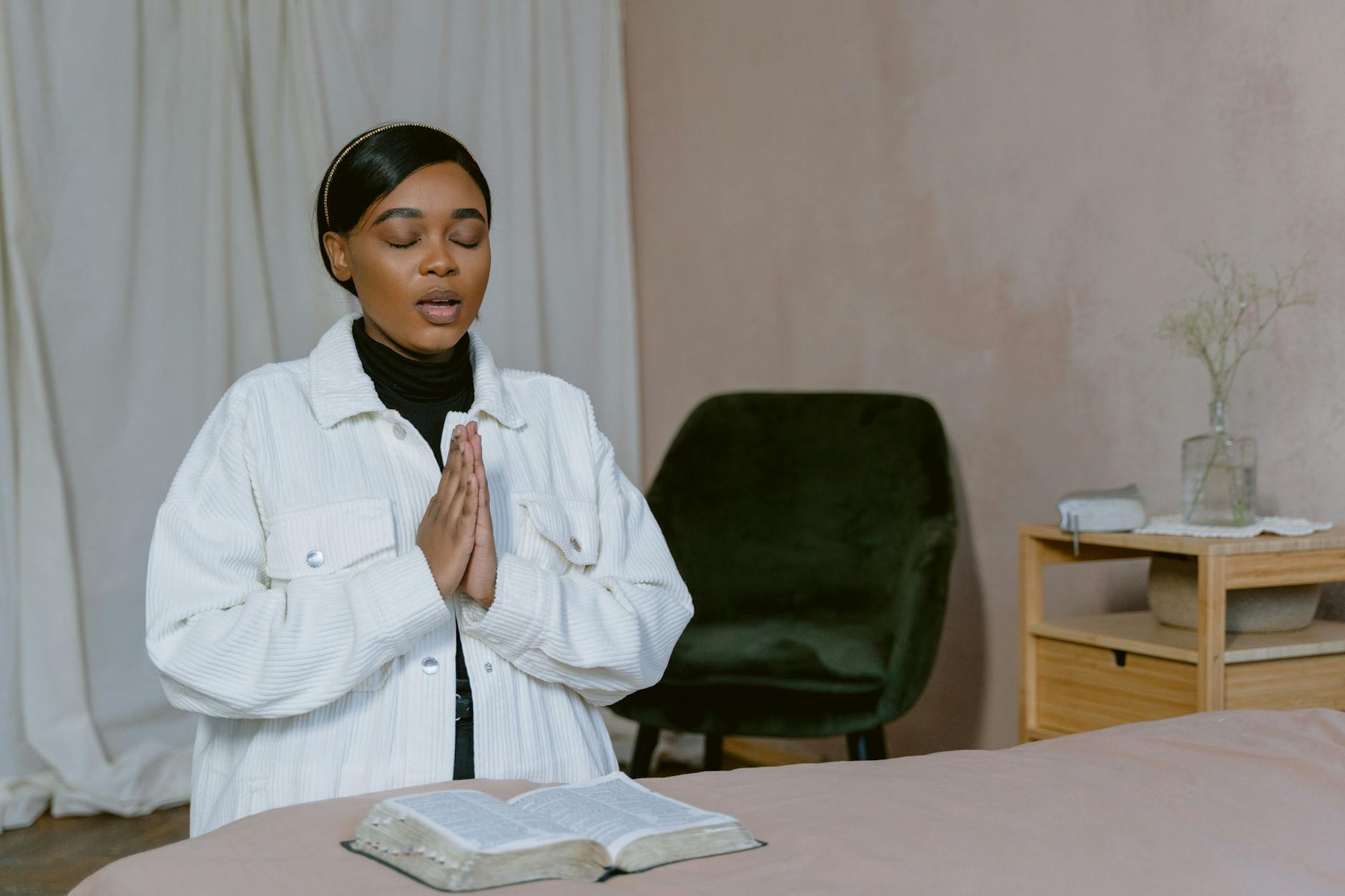
Photo by Fotoboy on Pexels.com

The virtuous woman is a reflection of God’s glory and wisdom. She embodies strength, grace, and unwavering faith, serving as a beacon to her family and community. Proverbs 31:30 declares, “Favor is deceitful, and beauty is vain: but a woman that feareth the Lord, she shall be praised.” Her worth is measured not by fleeting appearances but by her devotion to God.

A virtuous woman is a woman of faith. Her life is anchored in trust and obedience to God’s Word. She prays consistently, seeking His guidance in all matters, knowing that her strength comes from Him. Philippians 4:6 exhorts, “Be careful for nothing; but in every thing by prayer and supplication with thanksgiving let your requests be made known unto God.”

She is a woman of integrity. Her actions align with her words, and her character remains steadfast under pressure. Proverbs 11:3 affirms, “The integrity of the upright shall guide them: but the perverseness of transgressors shall destroy them.” Integrity allows her to lead by example, inspiring trust and respect.

A virtuous woman is diligent in her responsibilities. She manages her household, nurtures her family, and contributes to her community with wisdom and skill. Proverbs 31:27 highlights, “She looketh well to the ways of her household, and eateth not the bread of idleness.” Her diligence reflects her commitment to God’s order and purpose.

Humility defines her demeanor. She does not seek acclaim but honors God through service and modesty. James 4:10 reminds, “Humble yourselves in the sight of the Lord, and he shall lift you up.” Humility cultivates wisdom, patience, and relational harmony.

A virtuous woman is compassionate. She extends mercy and kindness to those in need, embodying Christ’s love. Micah 6:8 instructs, “He hath shewed thee, O man, what is good; and what doth the Lord require of thee, but to do justly, and to love mercy, and to walk humbly with thy God?” Compassion strengthens her community and her testimony.

She exercises self-control, governing her emotions and desires with wisdom. Proverbs 25:28 warns, “He that hath no rule over his own spirit is like a city that is broken down, and without walls.” Through self-discipline, she maintains peace and integrity in her personal and family life.

A virtuous woman is wise in counsel. She listens, discerns, and offers guidance rooted in Scripture. Proverbs 31:26 teaches, “She openeth her mouth with wisdom; and in her tongue is the law of kindness.” Her counsel uplifts, corrects, and instructs with love.

She values education and growth, seeking knowledge that strengthens her mind and spirit. Proverbs 4:7 encourages, “Wisdom is the principal thing; therefore get wisdom: and with all thy getting get understanding.” Her pursuit of understanding equips her for leadership and influence.

Faithfulness marks her relationships. She honors her commitments and fosters trust in her marriage, family, and friendships. Luke 16:10 states, “He that is faithful in that which is least is faithful also in much.” Her loyalty reflects her reverence for God and His covenant principles.

A virtuous woman is a steward of her resources. She manages finances and possessions responsibly, ensuring provision for her family and generosity toward others. Proverbs 31:16 reveals, “She considereth a field, and buyeth it: with the fruit of her hands she planteth a vineyard.” Stewardship demonstrates wisdom and foresight.

She exemplifies courage, facing life’s challenges with faith and resilience. Joshua 1:9 encourages, “Be strong and of a good courage; be not afraid, neither be thou dismayed: for the Lord thy God is with thee whithersoever thou goest.” Courage strengthens her spirit and inspires those around her.

Patience is her companion. She understands that God’s timing is perfect and that growth comes through trials. Romans 5:3-4 teaches, “…tribulation worketh patience; And patience, experience; and experience, hope.” Patience enables her to persevere and remain steadfast in faith.

She cultivates purity of heart and mind. Philippians 4:8 instructs, “Whatsoever things are true, whatsoever things are honest, whatsoever things are just, whatsoever things are pure, whatsoever things are lovely…think on these things.” Her thoughts and actions honor God and protect her influence.

A virtuous woman nurtures spiritual growth in others. She mentors younger women, teaches her children, and encourages her peers in righteousness. Titus 2:3-5 instructs older women to guide the young, reflecting a legacy of godly mentorship.

She is confident in her God-given identity. She does not compare herself to others but embraces her unique gifts and purpose. Proverbs 31:25 affirms, “Strength and honour are her clothing; and she shall rejoice in time to come.” Confidence grounded in God produces joy and stability.

Her speech is uplifting, avoiding gossip and negativity. Proverbs 31:26 emphasizes, “She openeth her mouth with wisdom; and in her tongue is the law of kindness.” Words of encouragement and truth build up her household and community.

A virtuous woman is faithful in worship. She prioritizes communion with God through prayer, study, and obedience. Psalm 122:1 declares, “I was glad when they said unto me, Let us go into the house of the Lord.” Worship shapes her character and aligns her heart with God’s will.

She demonstrates perseverance in adversity, trusting God to sustain her through trials. James 1:12 assures, “Blessed is the man that endureth temptation: for when he is tried, he shall receive the crown of life, which the Lord hath promised to them that love him.” Her steadfastness models faith under pressure.

Ultimately, the virtuous woman’s life is a testimony of God’s wisdom, grace, and guidance. Proverbs 31:30 summarizes, “Favor is deceitful, and beauty is vain: but a woman that feareth the Lord, she shall be praised.” Her legacy is eternal, shaped by devotion, integrity, and love.


The WIFE: The Heart of the House

The wife stands as the quiet pulse of a home, the rhythm that keeps the household alive even when no one notices the steady beat. Her presence carries warmth, order, and sacred purpose. She is not merely an occupant within the walls—she is the heart that gives the house life.

A wife’s strength is often subtle, revealed in the way she hosts peace within her spirit. She cultivates gentleness, dignity, and wisdom, manifesting the essence of biblical womanhood. Her devotion to God frames the foundation of her responsibilities, making her a vessel of divine influence.

In Scripture, the wife is described as a “help meet,” not a subordinate, but a divine counterpart—one crafted by Yah to stand alongside her husband in destiny. Her partnership is purposeful, and her voice is essential to the spiritual climate of the home.

The heart of a house is not loud; it beats quietly. In the same way, a wife’s presence fills the home with unseen blessings. Her prayers shift atmospheres. Her discernment guides decisions. Her patience cultivates growth within the family.

She embodies spiritual intuition, often sensing danger or blessing before it manifests. Her connection to God enables her to perceive what the natural eye may overlook. Through her, families learn to listen for the soft whisper of the Holy Spirit.

A wife is also the keeper of emotional climate. Her words can soothe storms or stir waters. Proverbs teaches that “a wise woman builds her house,” revealing that her speech, discretion, and grace contribute to the home’s foundation of peace.

Her nurturing nature forms the emotional architecture of her children’s hearts. Through affection, boundaries, and prayer, she shapes future generations. Her legacy rests not only in her actions but in the character she molds in her children.

A wife carries the delicate balance of strength and softness. She is resilient yet tender, unwavering yet compassionate. Her smile becomes a refuge for her family, and her presence becomes a stabilizing force when life becomes uncertain.

She is also the embodiment of loyalty and devotion. Through seasons of abundance and seasons of lack, through joys and sorrows, a godly wife remains anchored in covenant. Her love is not casual—it is covenantal, mirroring God’s steadfast love.

In her role, the wife becomes the silent intercessor of the home. She prays for her husband’s strength, for her children’s safety, and for her family’s spiritual covering. Her prayers ascend like incense, unseen but powerful.

Her labor—both physical and emotional—builds the home’s foundation. From managing daily tasks to offering emotional support, her work often goes unnoticed, yet it remains indispensable. She is the quiet commander of order and harmony.

The wife’s wisdom often acts as the spiritual compass of the household. Like Abigail, she brings clarity and protection; like Ruth, she walks in loyalty; like Esther, she intercedes with courage. These examples illuminate the sacred assignment given to godly women.

Her beauty is not solely external but radiates from her spirit. A wife who walks in righteousness shines with an inner glow. Scripture reminds us that favor is deceitful and beauty is vain, but a woman who fears the Lord shall be praised.

As the heart of the home, she helps regulate emotional flow. She becomes the balancing force between encouragement and correction, comfort and discipline. Her discernment guides her in nurturing what is healthy and pruning what is harmful.

When her husband grows weary, she becomes a breath of strength. When her children face challenges, she becomes their support system. Her ability to carry the burdens of those she loves makes her the emotional heartbeat of the home.

She also reflects the nature of the Holy Spirit—comforter, nurturer, teacher. The wife teaches by example and leads with compassion. Through her spiritual sensitivity, she invites God’s presence into every corner of the home.

Her hospitality turns a house into a sanctuary. She creates spaces where love thrives, where family feels safe, and where guests feel welcome. Her hands shape the environment, reflecting her inner peace and devotion.

A wife’s calling is not confined to domestic responsibilities; it includes spiritual leadership alongside her husband. She partners with him in prayer, plans, and visions, strengthening the family’s spiritual trajectory.

Her capacity to forgive demonstrates profound spiritual maturity. Whether reconciling after disagreements or extending grace to her children, her forgiveness becomes a model of God’s love in human form.

Though the world often underestimates the depth of her role, Scripture elevates it. A wife is portrayed as a crown to her husband, a rare jewel, and a blessing from the Lord. Her life adds value and honor to the entire household.

She is also a cultivator of joy. Through celebrations, traditions, and thoughtful gestures, she infuses delight into daily life. Her creativity makes the home feel alive with meaning.

A godly wife seeks constant growth in wisdom, faith, and character. She understands that her spiritual health influences her household, so she prioritizes intimacy with God. Her devotion becomes the well from which her family drinks.

Her identity is rooted not in societal expectations but in divine purpose. She is not measured by comparison but by the calling placed within her by God. Her worth surpasses material measures.

She also stands as a pillar of emotional stability during transitions, losses, and challenges. Her presence reassures the family that God remains faithful, no matter the season. Her faith becomes the anchor when storms arise.

As the heart of the house, the wife embodies unconditional love. Her compassion flows freely, reflecting Christ’s love. Her commitment strengthens the family’s foundation and blesses future generations.

Even in moments of fatigue or discouragement, her perseverance reveals her spiritual strength. She continues to nurture, guide, and pray because she sees the larger vision for her family’s destiny.

The wife’s influence remains even when her children become adults. Her teachings echo in their decisions, her prayers shield them, and her love remains a guiding force. Her legacy extends beyond her lifetime.

She is the living testimony of Proverbs 31—diligent, wise, strong, and gracious. Her life illustrates the beauty of covenant, devotion, and faith-driven leadership. She stands as both queen and servant of her home.

As the heart of the house, she reminds the family of God’s steadfast love. She reflects His compassion, His order, and His peace. Through her, the home becomes a sanctuary, a place where spiritual growth flourishes.

Ultimately, the wife is not simply part of the home—she is the home’s heartbeat. Through her prayers, her wisdom, her strength, and her unwavering love, she ensures that the house is not merely lived in, but truly alive.


References

Holy Bible, King James Version. (1611). Thomas Nelson.

Grudem, W. (2006). Evangelical feminism and biblical truth. Crossway.

Pearse, M. (2014). The Proverbs 31 woman: Virtue and influence in biblical womanhood. Baker Academic.

Piper, J., & Grudem, W. (Eds.). (2021). Recovering biblical manhood and womanhood: A response to evangelical feminism. Crossway.

Stanton, E. (2020). Sacred femininity: The theological roots of biblical womanhood. Zondervan.

Marriage, Role, and Partnership

  • Proverbs 18:22 — He who finds a wife finds a good thing.
  • Genesis 2:18–24 — The wife as helper suitable; unity in marriage.
  • Ephesians 5:22–24 — Wives submitting unto their husbands as unto the Lord.
  • Colossians 3:18 — Submission fitting in the Lord.
  • 1 Peter 3:1–6 — Wives operating in quiet strength and godly character.
  • Titus 2:3–5 — Women as keepers of the home, sober, loving husbands and children.
  • 1 Corinthians 7:3–4 — Mutual responsibility within the marriage covenant.
  • Proverbs 14:1 — A wise woman builds her home.

Character, Virtue & Conduct

  • Proverbs 31:10–31 — The virtuous woman: strength, wisdom, stewardship, and fear of the Lord.
  • 1 Timothy 2:9–10 — Modesty, good works, feminine character.
  • Galatians 5:22–23 — Fruits of the Spirit shaping a wife’s behavior.
  • 1 Samuel 25:3 — Abigail as wise, discerning, gracious.
  • Ruth 1:16–17; 3:11 — Ruth’s loyalty and virtuous reputation.

Love, Support & Family Structure

  • Song of Solomon 1:15; 4:7 — The beauty of love and affection in marriage.
  • Proverbs 12:4 — A virtuous woman is a crown to her husband.
  • Ecclesiastes 4:9–12 — Partnership, unity, strength together.
  • 1 Corinthians 13:4–7 — Love’s character—patient, kind, steadfast.
  • Psalm 128:3 — Wife as a fruitful vine, blessing the home.

Motherhood & Teaching the Children

  • Proverbs 31:26–28 — Mother’s wisdom; children rise and call her blessed.
  • 2 Timothy 1:5 — Influence of a godly mother (Lois and Eunice).
  • Deuteronomy 6:6–7 — Teaching children diligently in the ways of the Lord.
  • Isaiah 66:13 — A mother’s comfort reflecting God’s heart.

Spiritual Strength & Devotion

  • Psalm 46:5 — God in the midst of her; she shall not be moved.
  • Psalm 37:5 — Trusting her life to the Lord.
  • Philippians 4:6–7 — Prayer, peace, emotional steadiness.
  • Joshua 1:9 — Courage and strength in the Lord.
  • Matthew 6:33 — Seeking God first in the home.

Respect, Honor & Communication

  • Proverbs 15:1 — Soft answer turning away wrath.
  • Proverbs 25:11 — A word fitly spoken.
  • James 1:19 — Quick to hear, slow to speak.
  • Ephesians 4:29 — Words that edify.

Wife’s Role, Virtue, and Character

  • Proverbs 31:10–31 — The virtuous woman; strength, wisdom, industry, and honor.
  • Proverbs 12:4 — A virtuous woman is a crown to her husband.
  • Proverbs 14:1 — A wise woman builds her home.
  • Proverbs 19:14 — A prudent wife is from the Lord.
  • Titus 2:3–5 — Character, discretion, holiness, love for husband and children.
  • 1 Peter 3:1–6 — Submissive spirit, inner beauty, quiet strength.

Marriage, Respect, and Partnership

  • Ephesians 5:22–24, 33 — Wives respecting and honoring their husbands.
  • Colossians 3:18 — Wives submitting unto husbands as is fit in the Lord.
  • 1 Corinthians 7:3–5 — Mutual care and marital duty.
  • Genesis 2:18, 21–24 — Wife as helper fit for the man; the two become one flesh.
  • Matthew 19:4–6 — Marriage covenant and unity before God.
  • 1 Peter 3:7 — How husbands should honor wives (useful for balance in the article).
  • Ruth 1:16–17 — Loyalty, covenant spirit, faithfulness (applied typologically).

Motherhood, Home, and Nurturing

  • Proverbs 31:27–28 — Care for the household and children rising to bless her.
  • 1 Timothy 5:14 — Younger women to guide the home.
  • Psalm 127:3–5 — Children as a heritage of the Lord.
  • Proverbs 22:6 — Training up a child.
  • Exodus 20:12 — Foundation for respect within the home.

Prayer, Faith, and Spiritual Strength

  • 1 Samuel 1:9–28 — Hannah’s prayer life, devotion, and sacrifice.
  • Luke 1:45 — Blessed is she that believed.
  • Psalm 46:5 — “God is in the midst of her; she shall not be moved.”
  • Matthew 6:6 — Personal devotion and prayer.
  • James 5:16 — Effectual, fervent prayer of the righteous.

Modesty, Dignity, and Godly Conduct

  • 1 Timothy 2:9–10 — Women adorning themselves modestly with good works.
  • 1 Peter 3:3–4 — Beauty of a meek and quiet spirit.
  • Proverbs 31:25 — Strength and honor are her clothing.

Wisdom, Speech, and Behavior

  • Proverbs 31:26 — She opens her mouth with wisdom.
  • Psalm 37:30–31 — The mouth of the righteous speaks wisdom.
  • James 1:19 — Slow to speak, slow to wrath.
  • Proverbs 15:1 — Soft answer turns away wrath.

Love, Faithfulness, Covenant

  • Song of Solomon 2:16 — “My beloved is mine, and I am his.”
  • Song of Solomon 6:3 — Covenant intimacy and devotion.
  • Malachi 2:14–16 — The wife as companion in covenant.
  • 1 Corinthians 13:4–8 — Charity/love in the home.

What Is a Virtuous Woman According to God?

A virtuous woman is not defined by the world’s fleeting standards of beauty, success, or popularity—she is defined by her character, her obedience to God, and the fruit she bears through a righteous life. Scripture paints a portrait not of perfection, but of discipline, devotion, and dignity. Her worth is rooted in the Most High, not in temporary validation from people or social status. “Favour is deceitful, and beauty is vain: but a woman that feareth the LORD, she shall be praised” (Proverbs 31:30, KJV).

At her core, a virtuous woman fears God. This fear is not terror, but reverence—an awareness that God is sovereign, holy, and worthy of obedience. Her life is guided by scripture, not culture. She seeks God’s approval above all, understanding that her value comes from Him alone. “The fear of the LORD is the beginning of wisdom” (Proverbs 9:10, KJV).

She builds rather than tears down. Her tongue carries kindness and wisdom, not gossip, bitterness, or destruction. “She openeth her mouth with wisdom; and in her tongue is the law of kindness” (Proverbs 31:26, KJV). Even in disagreement, she speaks truth with humility, not pride. She knows that the power of life and death is in the tongue.

A virtuous woman is diligent. She does not live idly or irresponsibly, but uses her gifts wisely. Productivity, stewardship, and discipline mark her life. “She looketh well to the ways of her household, and eateth not the bread of idleness” (Proverbs 31:27, KJV). She is a woman of purpose, not procrastination.

Her confidence is quiet and spiritual—not loud, boastful, or rooted in vanity. There is a strength in her softness and a power in her peace. She does not compete with other women or seek attention through external means. “Whose adorning… let it be the hidden man of the heart… even the ornament of a meek and quiet spirit, which is in the sight of God of great price” (1 Peter 3:3-4, KJV).

Purity is her treasure. She values holiness over sensuality, modesty over attention, sacredness over lust-filled influence. Her body is a temple, not a tool for validation. “Know ye not that ye are the temple of God?” (1 Corinthians 3:16, KJV). She understands her femininity as divine—not a weapon, but a gift.

A virtuous woman supports righteousness in her marriage and in her relationships. She honors a godly husband, contributes to peace in the home, and strengthens unity rather than fueling division. “Every wise woman buildeth her house: but the foolish plucketh it down with her hands” (Proverbs 14:1, KJV). She understands partnership and spiritual alignment.

Her love is rooted in sacrifice, loyalty, and truth—not control, desperation, or emotional neediness. “Charity suffereth long, and is kind… seeketh not her own… rejoiceth in truth” (1 Corinthians 13:4-6, KJV). She loves like Christ—steadfast, faithful, and patient.

A virtuous woman is generous and compassionate. She cares for the needy and extends grace to others. “She stretcheth out her hand to the poor; yea, she reacheth forth her hands to the needy” (Proverbs 31:20, KJV). Her heart is not hardened by the world—she remains tender and servant-minded.

She is wise in choosing companions and influences. She guards her spirit and her peace, avoiding environments and relationships that corrupt character. “Be not deceived: evil communications corrupt good manners” (1 Corinthians 15:33, KJV). She values peace more than popularity.

Her identity is rooted in Christ. She does not measure herself by comparison or trends. She seeks growth, healing, humility, and spiritual maturity, knowing her heavenly Father will perfect her in time. “Being confident of this very thing, that he which hath begun a good work in you will perform it” (Philippians 1:6, KJV).

A virtuous woman is rare, but she is rising in this generation. She is not flawless—she is faithful. She is not worldly—she is wise. She is not loud—she is luminous. She represents the beauty of holiness, the grace of God, and the strength of a surrendered life. “Who can find a virtuous woman? for her price is far above rubies” (Proverbs 31:10, KJV).

May every daughter of Zion strive to walk in this calling—not through self-effort, but through the Spirit of the Most High. True beauty begins in the soul, grows through obedience, and shines through righteousness.

Lessons from Biblical Women for Modern Life. #virtuouswomen #womenoffaith

Photo by Tima Miroshnichenko on Pexels.com

Throughout Scripture, women emerge not only as mothers and wives but also as leaders, visionaries, and vessels of divine purpose. From the Old Testament to the New, their stories carry timeless lessons that transcend culture and era. Today, when modern women wrestle with identity, leadership, motherhood, career, and faith, the examples of biblical women provide profound guidance.

Deborah: Leadership with Wisdom and Courage

Deborah, prophetess and judge over Israel (Judges 4–5, KJV), stands as a model of godly leadership. She led Israel in a time of oppression, guiding military strategies while delivering God’s word with authority. Her story teaches modern women that leadership grounded in wisdom, humility, and obedience to God can transform communities. Today, women called to leadership—whether in the church, workplace, or home—can embrace Deborah’s example of courage without compromising grace.

Ruth: Loyalty and Faithfulness

The Moabite woman Ruth demonstrates loyalty and faith even in loss. Her declaration to Naomi, “Thy people shall be my people, and thy God my God” (Ruth 1:16, KJV), reveals a devotion beyond cultural barriers. Ruth’s faithfulness positioned her to be part of the lineage of Christ. Modern life, marked by broken relationships and fleeting commitments, can be enriched by Ruth’s example of perseverance, loyalty, and choosing integrity over convenience.

Esther: Courage to Speak Truth to Power

Queen Esther exemplifies bravery and discernment. Though hesitant at first, she risked her life to plead for her people, embodying the truth that “for such a time as this” (Esther 4:14, KJV), God positions His people to act. In today’s world, where systemic injustice and moral compromise abound, Esther’s courage encourages modern women to speak truth, defend the vulnerable, and use influence for the greater good.

Hannah: Prayer and Perseverance

Hannah’s story (1 Samuel 1, KJV) reveals the power of persistent prayer. Mocked and burdened by barrenness, she poured out her soul to the Lord and was blessed with Samuel, who became a prophet. Her testimony underscores the importance of resilience in prayer and trust in God’s timing. For modern women facing personal struggles—infertility, grief, or unmet desires—Hannah’s perseverance shows that God listens and answers in His divine season.

Mary, Mother of Jesus: Humility and Obedience

Mary’s acceptance of God’s will—“Be it unto me according to thy word” (Luke 1:38, KJV)—reflects radical obedience. Despite the social risks, she embraced her calling as the mother of the Messiah. Her humility and faith inspire modern women to surrender personal ambitions when God calls, trusting that His plans are greater than fear or societal judgment.

Mary Magdalene: Transformation and Devotion

Delivered from seven demons (Luke 8:2, KJV), Mary Magdalene became a devoted follower of Christ and the first to witness His resurrection. Her story shows the transformative power of grace and unwavering devotion. In an age where women often battle stigmas and labels, her example reminds us that past struggles do not disqualify anyone from becoming a faithful servant and witness of Christ.

Modern Application: Living Their Legacy

These women teach lessons still relevant today: Deborah challenges women to lead with wisdom; Ruth teaches loyalty and integrity; Esther embodies courage; Hannah reveals perseverance in prayer; Mary, mother of Jesus, exemplifies humility and obedience; Mary Magdalene represents redemption and devotion. Each narrative emphasizes that biblical womanhood is not passive but active, powerful, and divinely purposed.

In modern life, these lessons remind women to ground their identity in God’s word, resist societal pressures, and walk with strength clothed in faith. Their stories are not distant tales but living testimonies of how faith, character, and obedience bring transformation across generations.


References

  • The Holy Bible, King James Version.
  • Myers, A. C. (Ed.). (1987). The Eerdmans Bible Dictionary. Eerdmans.
  • Trible, P. (1984). Texts of terror: Literary-feminist readings of biblical narratives. Fortress Press.
  • Brenner, A. (1995). The feminist companion to the Bible. Sheffield Academic Press.
  • Day, P. L. (2007). Gender and difference in ancient Israel. Fortress Press.

Girl Talk Series: High Value Woman

Photo by Avonne Stalling on Pexels.com

“Who can find a virtuous woman? for her price is far above rubies” (Proverbs 31:10, KJV).

The concept of a high-value woman has been celebrated across cultures, but Scripture provides the clearest definition through the model of the Proverbs 31 woman. A high-value woman is not measured solely by her outward appearance or material possessions, but by her godly character, wisdom, discipline, and ability to nurture those entrusted to her care. She embodies both strength and gentleness, intelligence and humility, beauty and virtue. In contemporary discussions, her worth extends beyond social trends, reflecting deep biblical principles, psychological insights, and timeless values of womanhood.

Ten Traits of a High-Value Woman

  1. Godly and virtuous (Proverbs 31:30)
  2. Submissive yet wise and strong (Ephesians 5:22)
  3. Faithful and loyal to her husband
  4. Smart, productive, and a homemaker (Proverbs 31:27)
  5. Maintains attractiveness and self-care
  6. Practices sexual discipline and purity (Hebrews 13:4)
  7. Compassionate, generous, and helps the needy (Proverbs 31:20)
  8. Good mother and nurturer if she has children
  9. Sweet communicator, respectful, and encouraging to her husband (Proverbs 31:26)
  10. Confident, purposeful, and repentant before God

At the heart of a high-value woman’s identity is godliness. She fears the Lord, repents when she falls short, and seeks to live according to God’s will. Proverbs 31:30 reminds us, “Favour is deceitful, and beauty is vain: but a woman that feareth the LORD, she shall be praised.” Unlike superficial measures of value, true worth lies in her devotion to God. Psychology affirms that spiritual grounding contributes to resilience, purpose, and inner peace (Pargament, 2007). A high-value woman thus integrates faith with daily living, allowing her relationship with God to shape her identity and actions.

Second, she is faithful, loyal, and respectful toward her husband. Scripture exhorts wives to honor their husbands: “Wives, submit yourselves unto your own husbands, as unto the Lord” (Ephesians 5:22, KJV). This submission is not servitude, but a form of respect and partnership that honors divine order. A high-value woman communicates with kindness and speaks words that build up her spouse (Proverbs 31:26). Psychology supports this dynamic by highlighting that respect, loyalty, and positive communication are among the strongest predictors of marital satisfaction (Gottman, 2014).

Third, she is a homemaker and nurturer who provides stability, warmth, and structure in the home. Far from being antiquated, homemaking requires intelligence, organization, and foresight. The Proverbs 31 woman “looketh well to the ways of her household, and eateth not the bread of idleness” (Proverbs 31:27, KJV). She is productive, manages resources wisely, and creates an environment that fosters growth for her children and peace for her husband. Modern research shows that domestic competence—meal preparation, budgeting, and family organization—remains crucial to family well-being (Amato, 2005).

Fourth, she embodies sexual discipline and purity. A high-value woman does not give herself away casually but reserves her body for her husband. Hebrews 13:4 affirms the sanctity of marriage: “Marriage is honourable in all, and the bed undefiled: but whoremongers and adulterers God will judge.” By practicing chastity before marriage and fidelity within it, she honors both God and herself. Psychological research demonstrates that self-control and delayed gratification foster greater long-term satisfaction in relationships and life (Mischel, 2014).

Fifth, a high-value woman is marked by compassion and generosity. Proverbs 31:20 states, “She stretcheth out her hand to the poor; yea, she reacheth forth her hands to the needy.” She uses her time, resources, and energy to serve others, reflecting Christlike love. This generosity is not merely financial but extends to emotional support, hospitality, and encouragement. Studies show that altruism is associated with improved well-being, stronger social bonds, and increased life satisfaction (Post, 2005).

Examples of high-value women can be found both biblically and in modern times. Biblically, Ruth exemplifies loyalty and faith as she followed Naomi, declaring, “Thy people shall be my people, and thy God my God” (Ruth 1:16, KJV). Esther displayed courage, wisdom, and submission to God’s purpose in saving her people (Esther 4:14). In the modern world, figures like Coretta Scott King exemplified high-value womanhood, standing faithfully beside Martin Luther King Jr., embodying loyalty, grace, resilience, and purposeful action. Her life reflected both Proverbs 31 virtues and contemporary relevance.

Self-Care Plan for the High-Value Woman

1. Mental Self-Care

A high-value woman nurtures her mind with wisdom, clarity, and purpose.

  • Daily Prayer & Scripture Meditation: Begin and end each day with prayer and reflection on God’s Word (Joshua 1:8, KJV). This builds focus, peace, and discernment.
  • Lifelong Learning: Dedicate at least 30 minutes daily to reading books, listening to podcasts, or studying topics that enrich intellect and spiritual maturity.
  • Journaling: Write thoughts, goals, and reflections to process emotions and maintain clarity (Proverbs 4:7).
  • Digital Boundaries: Limit social media to avoid comparison and overstimulation; replace it with reading, study, or quality conversation.
  • Rest & Sabbath: Prioritize rest as God commanded (Exodus 20:8–10), ensuring one day weekly of spiritual and mental renewal.

2. Physical Self-Care

Her body is the temple of the Holy Spirit; therefore, she maintains health, beauty, and vitality (1 Corinthians 6:19–20).

  • Exercise Routine: At least 30–45 minutes of activity (strength, cardio, flexibility) 4–5 times weekly.
  • Balanced Diet: Whole foods, hydration (8+ glasses of water daily), limited processed sugar, and mindful eating (Daniel 1:12–15 as an example of discipline).
  • Sleep Hygiene: 7–8 hours of quality rest each night. Sleep restores the body, improves mood, and supports hormonal balance.
  • Grooming & Attractiveness: Regular self-care practices such as skincare, hair care, and personal style maintenance—presenting herself with dignity and confidence (Proverbs 31:25: “Strength and honour are her clothing”).
  • Medical Checkups: Regular health screenings and preventive care to steward her body wisely.

3. Emotional Self-Care

A high-value woman maintains peace, balance, and joy in her inner world.

  • Healthy Boundaries: Say “no” to toxic relationships and protect personal energy (Proverbs 4:23: “Keep thy heart with all diligence; for out of it are the issues of life”).
  • Therapy or Mentorship: Engage in counseling, coaching, or godly mentorship for growth and healing when needed.
  • Community & Fellowship: Surround herself with supportive, like-minded women of faith who encourage growth (Hebrews 10:24–25).
  • Practicing Gratitude: Write down three things she is thankful for each day. Psychology shows gratitude increases joy and resilience (Emmons & McCullough, 2003).
  • Creative Expression: Engage in hobbies such as art, music, or writing to release stress and cultivate joy.
  • Affirmations & Speech: Speak life over herself daily; Proverbs 18:21 reminds that “death and life are in the power of the tongue.”

A high-value woman’s self-care plan ensures she is mentally sharp, physically strong, and emotionally stable. By grounding her routines in faith, discipline, and intentional living, she sustains her beauty, wisdom, and influence.

In summary, the high-value woman integrates faith, loyalty, homemaking, discipline, compassion, and wisdom into her daily life. She is virtuous, submissive yet strong, intelligent, attractive, faithful, generous, and purposeful. She communicates with kindness, pleases her husband, nurtures her children, and uplifts her community. Ultimately, her value lies not in fleeting cultural measures but in her alignment with God’s design for womanhood. As Proverbs 31 concludes, “Give her of the fruit of her hands; and let her own works praise her in the gates” (v. 31).

References

  • Amato, P. R. (2005). The impact of family formation change on the cognitive, social, and emotional well-being of the next generation. The Future of Children, 15(2), 75–96.
  • Emmons, R. A., & McCullough, M. E. (2003). Counting blessings versus burdens: An experimental investigation of gratitude and subjective well-being. Journal of Personality and Social Psychology, 84(2), 377–389.
  • Gottman, J. M., & Silver, N. (2015). The seven principles for making marriage work: A practical guide from the country’s foremost relationship expert. Harmony.
  • Mischel, W. (2014). The Marshmallow Test: Mastering self-control. Little, Brown and Company.
  • Pargament, K. I. (2007). Spiritually integrated psychotherapy: Understanding and addressing the sacred. Guilford Press.
  • Post, S. G. (2005). Altruism, happiness, and health: It’s good to be good. International Journal of Behavioral Medicine, 12(2), 66–77.
  • Penedo, F. J., & Dahn, J. R. (2005). Exercise and well-being: A review of mental and physical health benefits associated with physical activity. Current Opinion in Psychiatry, 18(2), 189–193.
  • Watson, D., Clark, L. A., & Tellegen, A. (1988). Development and validation of brief measures of positive and negative affect: The PANAS scales. Journal of Personality and Social Psychology, 54(6), 1063–1070.

Biblical References (KJV)

  • Proverbs 31:10–31 – The Virtuous Woman.
  • Proverbs 4:23 – “Keep thy heart with all diligence; for out of it are the issues of life.”
  • Proverbs 18:21 – “Death and life are in the power of the tongue.”
  • Proverbs 31:25 – “Strength and honour are her clothing; and she shall rejoice in time to come.”
  • Proverbs 31:26 – “She openeth her mouth with wisdom; and in her tongue is the law of kindness.”
  • Proverbs 31:27 – “She looketh well to the ways of her household, and eateth not the bread of idleness.”
  • Proverbs 31:30 – “Favour is deceitful, and beauty is vain: but a woman that feareth the LORD, she shall be praised.”
  • Hebrews 10:24–25 – Fellowship and encouragement.
  • Hebrews 13:4 – Marriage and sexual purity.
  • Joshua 1:8 – Meditation on the Word day and night.
  • 1 Corinthians 6:19–20 – The body as the temple of the Holy Spirit.
  • Exodus 20:8–10 – The Sabbath as rest.

Dilemma: Vanity

She enters rooms like storms of flame,
Hoping all will gasp her name.
With eyes that hunt and lips that lure,
She craves the gaze, intense and pure.

She stalks the hearts of wandering men,
Their weakness feeds her strength again.
She bares her flesh to mask her soul,
A fractured crown, a queen unwhole.

In mirrors, lies become her truth—
A hollow shrine adorned in youth.
She longs for love she’s never earned,
From hollow praise her heart has burned.

To be adored, to be revered,
To silence every inner fear.
She wears ambition like perfume,
And scatters pride through every room.

Her confidence, a shallow stream,
A desperate echo of a dream.
For every compliment she stores,
A thousand doubts still flood her shores.

She buys devotion, buys disguise,
In name-brand lies and jeweled eyes.
But all her wealth cannot conceal
The ache no man or cloth can heal.

Her gaze is laced with lustful fire,
A serpent’s charm, a carnal choir.
Men fall like stars into her snare,
Not knowing demons dwell in there.

She drinks the worship, sweet and bold,
As if her breath could turn to gold.
The ground she walks becomes her stage,
A goddess trapped within a cage.

And in the hush of darkened rooms,
Where silence drowns perfume and plumes,
One truth remains, as shadows creep—
Vanity never lets one sleep.

She is the idol, clothed in skin,
A monument to secret sin.
She smiles—but hides a curse within…
And her name… is Vanity.

🔍 What is Vanity?

Vanity is an excessive concern with one’s appearance, abilities, or social status—often rooted in pride, insecurity, or narcissism.

“Vanity of vanities, saith the Preacher, vanity of vanities; all is vanity.”
Ecclesiastes 1:2, KJV

Vanity is not just external beauty obsession; it’s a spiritual emptiness, a pursuit of admiration or validation that distracts from one’s divine identity and purpose.


🪞 Narcissism & Vanity in Today’s Culture

In psychology, narcissism is characterized by grandiosity, a need for admiration, and a lack of empathy. In today’s society, this manifests through:

  • Self-obsession on social media

  • Posting revealing photos for attention and likes

  • Seeking external validation over inner peace

  • Hypersexualization for profit and approval

  • Low self-esteem disguised as confidence

“In the last days, people will be lovers of themselves, lovers of money, boastful, proud…”
2 Timothy 3:1-5


📱 Social Media & the Rise of Vanity

Social media platforms (like Instagram or TikTok) have created a performance-based culture, where women—and men—seek approval through:

  • Physique-focused selfies 📸

  • Revealing clothing for likes 👍

  • Sexualized dances for followers 👯‍♀️

  • Paid validation via OnlyFans or similar sites 💵

This breeds dopamine addiction, where attention becomes an emotional drug.

“Let your beauty not be external… but the hidden person of the heart, with the incorruptible beauty of a gentle and quiet spirit…”
1 Peter 3:3-4 (ESV)


💔 The Psychological Toll of Vanity

Vanity often masks deep-rooted trauma or insecurity, leading to:

  • Low self-worth

  • Eating disorders (anorexia, bulimia, binge eating)

  • Depression and body dysmorphia

  • Sexual objectification

  • Shame after validation fades

Psychologist Dr. Jean Twenge (2013) links the “selfie generation” to growing mental health issues and narcissistic traits.


💃 How Did Women in the Past Dress?

Historically, women dressed modestly, valuing dignity over seduction. Biblical and ancient cultures saw clothing as an extension of morality and identity, not a tool of temptation.

“In like manner also, that women adorn themselves in modest apparel, with shamefacedness and sobriety…”
1 Timothy 2:9 (KJV)

Biblical women like Ruth, Esther, and Mary were praised for character, not cleavage. They influenced nations through virtue, wisdom, and obedience, not sensual display.


👗 What Does It Mean to Dress Like a Lady?

To be ladylike is to:

  • Dress elegantly and modestly

  • Represent God’s image with honor

  • Avoid clothing that provokes lust or dishonor

  • Reflect inner beauty outwardly

“Charm is deceitful and beauty is vain, but a woman who fears the Lord is to be praised.”
Proverbs 31:30


🚫 Why Abstain from Sex Until Marriage?

Sex outside of marriage leads to:

  • Soul ties

  • Shame or guilt

  • Emotional instability

  • Unwanted pregnancies

  • Disease and spiritual disconnect

“Flee from sexual immorality. Every other sin a person commits is outside the body…”
1 Corinthians 6:18-20

“Marriage is honorable in all, and the bed undefiled: but whoremongers and adulterers God will judge.”
Hebrews 13:4 (KJV)


🛐 Deliverance from Vanity & Eating Disorders

1. Repent and Realign with God

  • Acknowledge that worth comes from being made in God’s image (Genesis 1:27).

  • Confess insecurities and ask for healing (Psalm 34:18).

2. Renew Your Mind

  • Avoid comparisons (2 Corinthians 10:12)

  • Meditate on the Word daily (Romans 12:2)

3. Fast from Social Media

  • Break from toxic platforms

  • Curate content that uplifts spiritually and mentally

4. Surround Yourself with Godly Women

  • Build a circle that encourages holiness, not hype

5. Seek Professional Help if Needed

  • Eating disorders often require therapy, nutritionists, and spiritual counseling


🛑 Advice to Women on Showing Their Bodies Online

Dear sister,

Your body is a temple, not a display shelf. You are more than your curves, your lashes, your followers.

  • When you reveal your body for likes, you are leasing your soul for approval.

  • God sees your worth even in sweatpants and silence.

  • Real love sees you clothed in dignity, not desperation.


📚 References

  • Twenge, J. M. (2013). The narcissism epidemic: Living in the age of entitlement. Atria Books.

  • American Psychological Association. (2022). Eating disorders. https://www.apa.org/topics/eating-disorders

  • Tishkoff, S. A., et al. (2009). The genetic structure and history of Africans and African Americans. Science, 324(5930), 1035–1044. https://doi.org/10.1126/science.1172257

  • Holy Bible, King James Version (KJV)

  • Holy Bible, English Standard Version (ESV)