
Tyson Beckford: The Face That Redefined Male Beauty and Broke Fashion’s Color Line
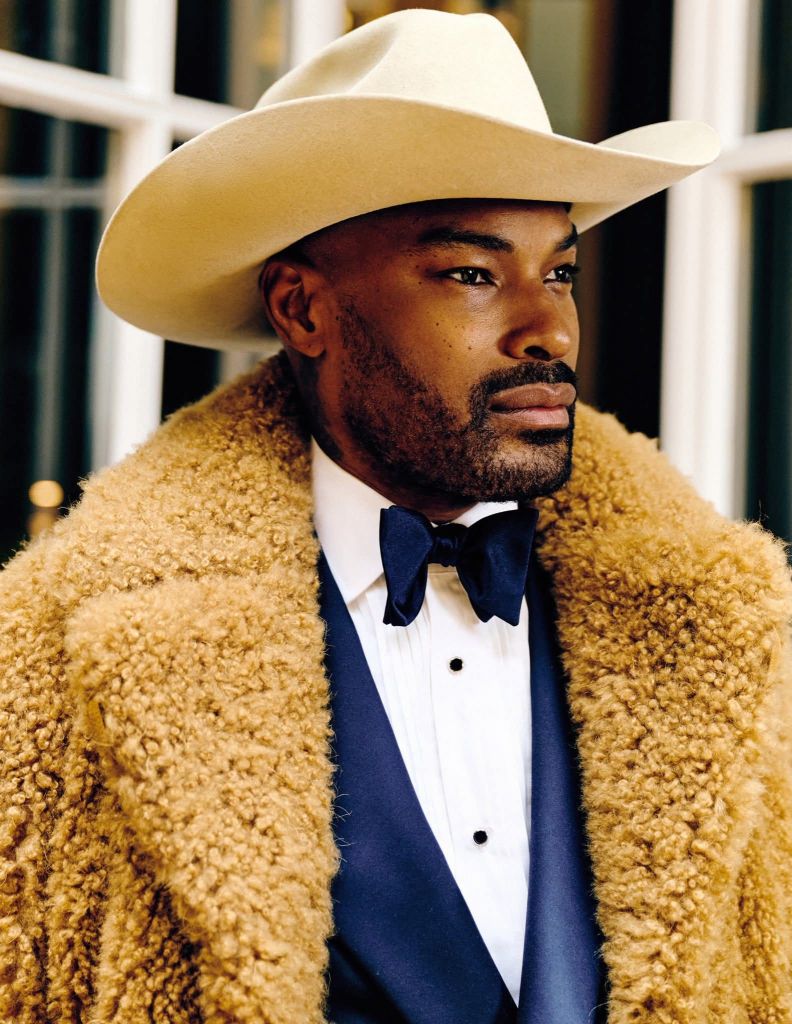
In the world of fashion, where beauty is often dictated by narrow Eurocentric standards, Tyson Beckford emerged as a seismic shift — a face that did not merely model clothes, but redefined what male beauty could look like on a global stage. With his luminous skin, symmetrical features, and effortless masculine presence, Beckford embodied a rare fusion of classical handsomeness and cultural distinction. His beauty was not manufactured; it was ancestral, carrying the genetic poetry of Afro-Caribbean and Chinese-Jamaican heritage, rendered through bone structure, gaze, and physical poise.
What made Beckford extraordinary was not simply that he was handsome, but that his beauty was disruptive. At a time when Black male models were largely marginalized or confined to niche markets, Beckford’s image entered the highest temples of fashion — Polo Ralph Lauren, Vogue, GQ, and global billboards — without dilution or apology. He was not presented as an exception to Black beauty, but as its embodiment: regal, sensual, and universally aspirational. In doing so, Tyson Beckford did not just become a supermodel; he became a cultural symbol of aesthetic liberation.
Tyson Craig Beckford (born December 19, 1970) is a Jamaican-Panamanian American model, actor, and television personality best known for his iconic work as a Ralph Lauren Polo model. He is widely regarded as one of the most successful male supermodels in fashion history and is often credited as being the first Black male supermodel to achieve global prominence in a field historically dominated by white models.
Beckford was born in the Bronx, New York City, to a Jamaican mother, Hillary Dixon Hall, and a Panamanian father, Lloyd Beckford, who himself was of Jamaican and Chinese-Jamaican descent. His mixed Afro-Asian heritage contributes to his distinctive and striking features, which helped set him apart in the modeling world.
Shortly after his birth, his family moved back to Jamaica, where Beckford spent the first seven years of his life before returning to the United States and eventually settling in Rochester, New York. He attended and graduated from Pittsford Mendon High School, where classmates sometimes teased him about his looks before his later success.
Beckford’s entry into modeling was not planned. In 1992, he was approached in Manhattan’s Washington Square Park by editor Erik Lauren Counsel from The Source magazine, who invited him to pose for a style piece — a moment that launched his modeling career.
In 1993, his big break came when Ralph Lauren signed him to front its Polo line of men’s sportswear. The campaign quickly drew international attention and made Beckford a recognizable face in fashion, effectively breaking racial barriers in the industry by placing a Black male model at the center of a major luxury brand campaign.
Beckford’s looks — a blend of Jamaican, Panamanian and Chinese ancestry — were seen as exotic and striking in the early 1990s modeling scene. His features, symmetry, and presence helped him stand out among peers, leading to extensive editorial and advertising work.
Early in his career, Beckford worked with top photographers such as Herb Ritts and Bruce Weber, and appeared on the covers and in the pages of leading fashion magazines including Vogue, GQ, Essence, and Details.
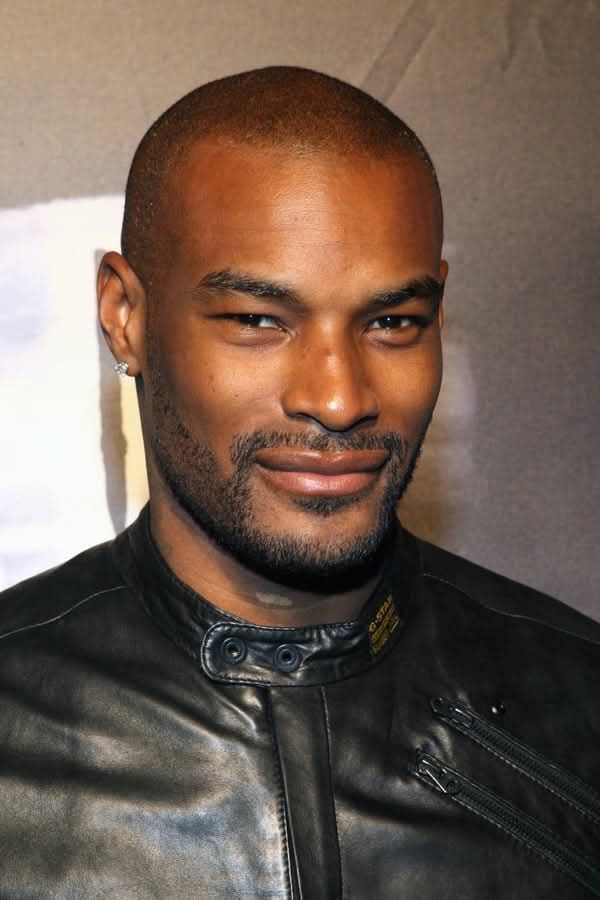
His success with Ralph Lauren and the broader fashion world was rapid. In 1995, VH1 named Beckford “Model of the Year,” and People magazine listed him as one of the “50 Most Beautiful People in the World.” He was also ranked number 38 on VH1’s “40 Hottest Hotties of the ’90s.”
Beyond fashion campaigns and editorials, Beckford expanded into television. He hosted both seasons of Bravo’s Make Me a Supermodel and appeared on reality and entertainment programs. He also judged and mentored models in international versions of the show.
Beckford has spoken openly about the challenges he faced in the industry, including instances of racism and limited diversity. In interviews, he has described fashion as “very racist” at times, critiquing runway casting that excluded Black, Latino, and Asian models and calling for broader inclusivity.
In addition to modeling, Beckford has acted in films including Into the Blue and appeared in music videos such as Britney Spears’ “Toxic,” further cementing his place in pop culture.
On the personal side, Beckford has a son, Jordan Beckford, born in 1998 from a relationship with stylist April Roomet.
He was briefly married to Berniece Julien in 2009, though the marriage ended the same year.
Beckford’s journey from a young man with humble beginnings — including brushes with street life — to one of fashion’s most recognizable male figures illustrates both personal resilience and transformational opportunity. According to Beckford, his late brother Patrick played a crucial role in encouraging him to pursue a legitimate path rather than the dangerous lifestyle that surrounded him in youth.
Despite his success, Beckford has acknowledged that the fashion industry still has room to grow in terms of diversity and representation, emphasizing the importance of including models from a wide range of racial and ethnic backgrounds.
Over three decades after his Polo breakthrough, Beckford continues to influence fashion and representation. In 2025, he honored his legacy with a custom Ralph Lauren ensemble at the Met Gala, celebrating the brand and his role in breaking boundaries in modeling.
Today, Beckford is not only remembered as a face of ’90s fashion but also as a pioneer who helped broaden the visibility of Black and multiracial models in high fashion.
References
Beckford, T. (n.d.). Tyson Beckford biography. Wikipedia. Retrieved from
https://en.wikipedia.org/wiki/Tyson_Beckford
BET Staff. (2016). Tyson Beckford says fashion is the most racist industry. BET. Retrieved from
https://www.bet.com/article/9pem2t/tyson-beckford-says-fashion-is-most-racist-business
Bellazon. (n.d.). Tyson Beckford modeling career profile. Bellazon Model Database. Retrieved from
https://www.bellazon.com/main/topic/5426-tyson-beckford/
People Magazine. (2024). Tyson Beckford explains how he almost avenged his brother’s murder. People. Retrieved from
https://people.com/tyson-beckford-explains-how-he-almost-avenged-his-brothers-murder-8716980
People Magazine. (2025). Tyson Beckford honors his 90s Ralph Lauren Polo campaign at the Met Gala. People. Retrieved from
https://people.com/met-gala-2025-tyson-beckford-honors-his-90s-ralph-lauren-polo-campaign-sharp-tuxedo-exclusive-details-11727831
IMDb. (n.d.). Tyson Beckford – trivia and personal life. Internet Movie Database. Retrieved from
https://www.imdb.com/name/nm0004734/
Arogundade, B. (n.d.). Tyson Beckford: ethnicity, heritage and background. Arogundade Fashion Archive. Retrieved from
https://www.arogundade.com/tyson-beckford-model-his-chinese-asian-ethnicity-nationality-his-mother-parents-family-biography-bio.html
VH1. (1995). Model of the Year Awards Archive. VH1 Networks. Retrieved from
https://www.vh1.com
Ralph Lauren. (n.d.). Polo Ralph Lauren advertising campaigns archive. Ralph Lauren Corporate. Retrieved from
https://corporate.ralphlauren.com
 THE BROWN GIRL DILEMMA