
Introduction
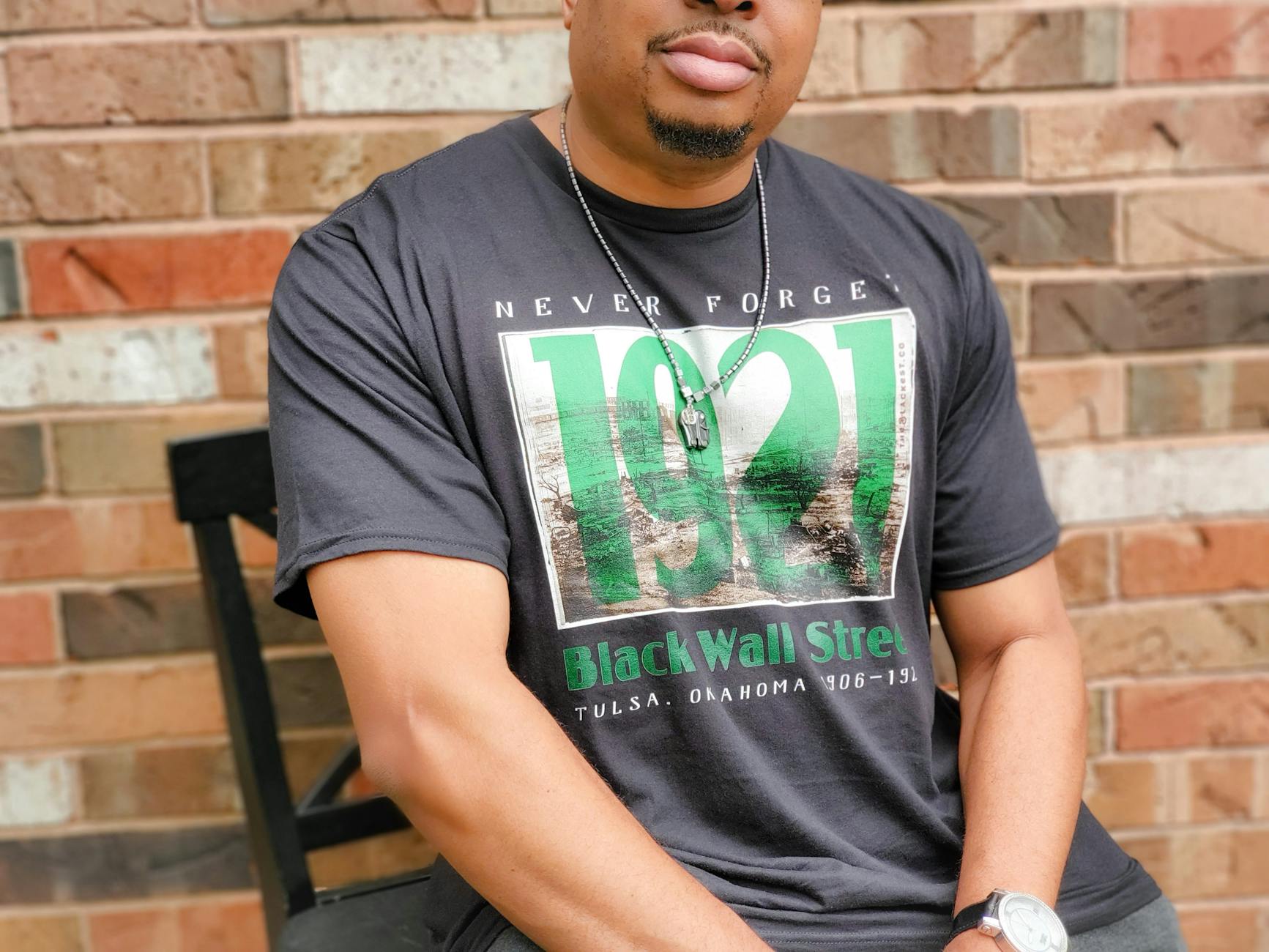
Known as “Black Wall Street,” the Greenwood District of Tulsa, Oklahoma, was one of the most affluent African American communities in the United States in the early 20th century. It symbolized Black excellence, entrepreneurship, and self-sufficiency during a time when Jim Crow laws sought to suppress African American progress. However, this thriving community was violently destroyed in one of the most horrific episodes of racial terrorism in U.S. history—the Tulsa Race Massacre of 1921.
The Birth of Black Wall Street
Greenwood, located in north Tulsa, was founded in 1906 on land initially settled by Black Freedmen and Native Americans, many of whom were formerly enslaved and had received land allotments through the Dawes Act (Johnson, 1998). Visionary entrepreneurs like O.W. Gurley, a wealthy Black landowner from Arkansas, bought 40 acres and helped build a self-sufficient Black community.
By the 1920s, Greenwood boasted:
- Over 300 Black-owned businesses
- Two newspapers
- Schools, libraries, hospitals
- Luxury hotels, grocery stores, law offices, barbershops, theaters, and nightclubs
Some of the most notable establishments included:
- The Stradford Hotel, one of the finest Black-owned hotels in the U.S.
- Williams Dreamland Theatre
- Greenwood Avenue, the bustling economic artery of the district
This self-sustained economy became so prosperous that Booker T. Washington reportedly called it “Negro Wall Street.”
The Incident: Allegation and the Spark
The tragedy began on May 30, 1921, when a 19-year-old Black shoe shiner named Dick Rowland entered an elevator operated by a 17-year-old white woman named Sarah Page in the Drexel Building. Accounts vary, but some say he tripped and grabbed her arm to break his fall. Others claim nothing happened at all. Page screamed, and a clerk called the police. Though Sarah Page later refused to press charges, rumors of an alleged sexual assault spread rapidly through white Tulsa.
On May 31, 1921, a white mob gathered outside the courthouse where Rowland was being held. Armed Black men, including World War I veterans, came to protect him. Tensions escalated into gunfire, and by nightfall, white mobs launched a full-scale assault on Greenwood.
The Destruction of Black Wall Street
For over 18 hours, from the night of May 31 through June 1, 1921, white rioters—many of them deputized by law enforcement—looted, burned, and murdered indiscriminately. They set fire to over 1,200 homes, dozens of churches, businesses, and schools. Reports suggest private planes dropped incendiary bombs on the neighborhood—a rare instance of aerial terrorism on American soil.
Casualty estimates vary:
- Official records say around 36 deaths
- Modern scholars and eyewitnesses estimate 100–300 Black residents were killed (Ellsworth, 2001)
Over 10,000 Black residents were left homeless, and the community’s wealth was wiped out overnight.
Racism at the Core
The attack was fueled by racist resentment and economic jealousy. Many white Tulsans were angry that Black people in Greenwood had achieved so much success while white families in Tulsa struggled economically. The accusation against Rowland was merely a pretext. The real motive was to eradicate Black prosperity and enforce white supremacy.
White mobs faced no legal consequences, and insurance companies denied claims from Black property owners, citing “riot clauses.” The massacre was largely ignored in history books for decades.
Survivors and Testimonies
Some survivors lived into the 21st century and gave harrowing accounts. Notable among them:
- Viola Fletcher, 107 years old, testified before Congress in 2021, saying, “I will never forget the violence… the smell of smoke, bodies in the street, the loss of my childhood.”
- Her brother, Hughes Van Ellis, also a veteran, emphasized how America failed them after they served in its military.
Rebuilding and Present-Day Tulsa
Greenwood began modest rebuilding efforts in the 1920s and 30s, but never recovered its pre-1921 affluence. Systemic racism, redlining, and urban renewal programs (including a highway built through Greenwood) further dismantled its infrastructure.
Today, the area is home to the Greenwood Cultural Center and John Hope Franklin Reconciliation Park, preserving the memory of the massacre.
In 2021, the centennial drew national attention. Some local leaders and descendants called for reparations, but most survivors have not received any formal compensation.
Economically, Tulsa is now growing, but the Black community still experiences vast inequality in wealth, housing, and opportunity (Oklahoma Policy Institute, 2021).
Legacy and Importance
Black Wall Street represents more than tragedy—it symbolizes the potential of Black enterprise, resilience, and innovation in the face of white supremacy. It challenges the narrative that African Americans have not built wealth or institutions. Greenwood was that wealth, was that institution—and it was destroyed not by failure but by hatred.
Conclusion
The story of Black Wall Street and the Tulsa Race Massacre is not just a Black history story—it is an American story. It speaks to the power of Black excellence and the violence of white supremacy. As America reckons with its past, the memory of Greenwood remains a testament to what Black communities can achieve—and what they have suffered.
References
- Ellsworth, S. (2001). Death in a Promised Land: The Tulsa Race Riot of 1921. LSU Press.
- Johnson, H. B. (1998). Black Wall Street: From Riot to Renaissance in Tulsa’s Historic Greenwood District. Eakin Press.
- Oklahoma Policy Institute. (2021). The State of Black Tulsa: Equity Indicators. Retrieved from https://okpolicy.org
- U.S. Congress. (2021). Testimony of Tulsa Race Massacre Survivors. Congressional Record.
 THE BROWN GIRL DILEMMA