
Tag Archives: the male gaze

Shadows of Preference: Navigating Male Gaze and Colorism. #thebrowngirldilemma

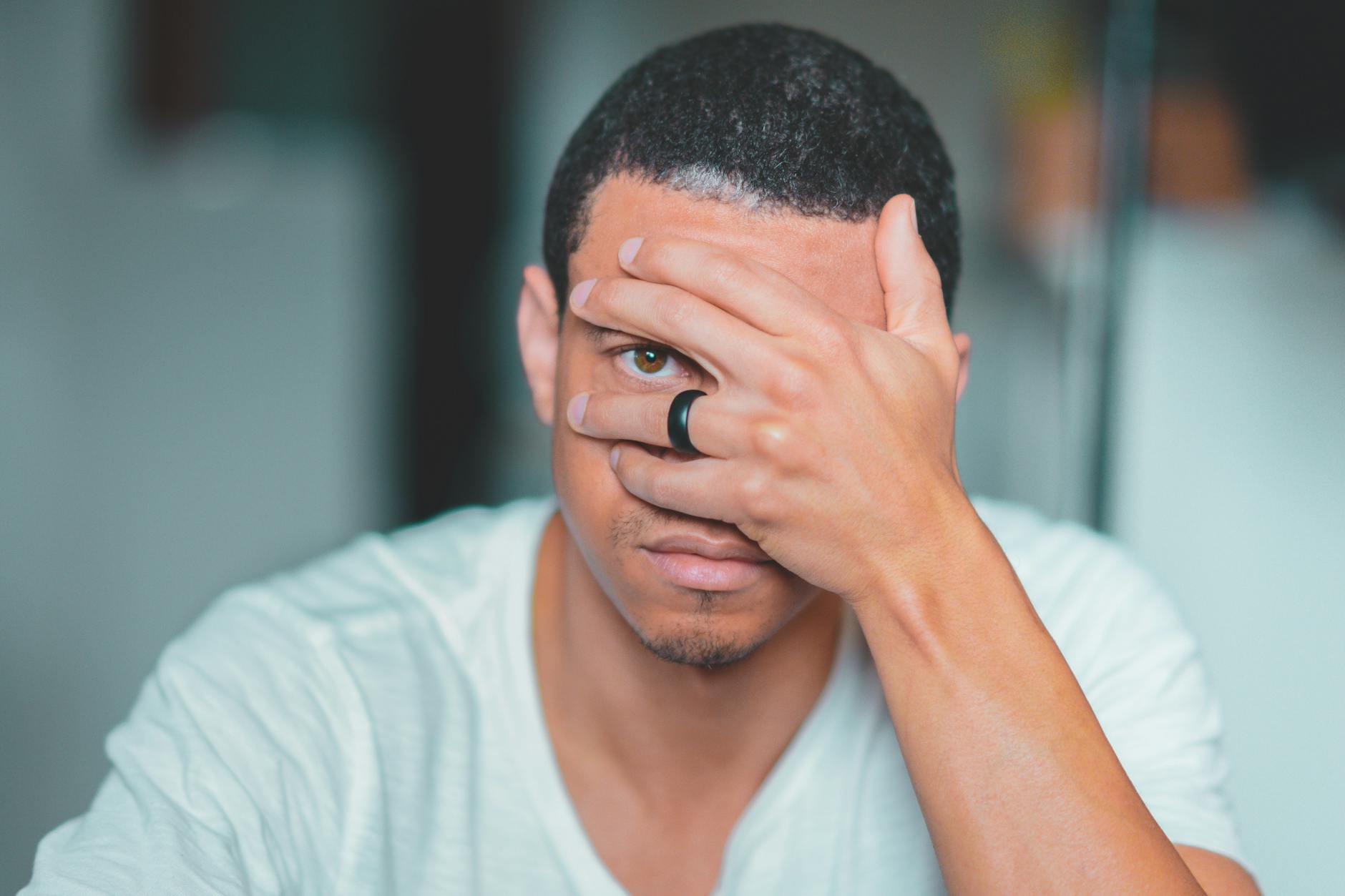
Photo by Craig Adderley on Pexels.com

When preference becomes shadow, Brown girls shine their own light.

Beauty and desirability have always been mediated through the male gaze, but for Brown girls, the gaze is not neutral. It is filtered through colorism, a hierarchy of skin tone preference that privileges lighter complexions and Eurocentric features while marginalizing darker ones. Within this system, Brown beauty often becomes invisible, reduced to stereotypes or subject to conditional acceptance. The politics of attraction reveal that desirability is not simply a matter of individual taste but is shaped by historical legacies, media representation, and cultural bias (Hunter, 2007).

Desirability and Disparity: The Psychology of Attraction in Color

Psychologically, colorism affects how beauty is perceived and valued. Research on implicit bias reveals that individuals often associate lighter skin with attributes like femininity, softness, and sophistication, while darker skin is unfairly linked to aggression, masculinity, or undesirability (Maddox & Gray, 2002). These biases operate beneath conscious awareness, shaping the subconscious foundations of attraction and reinforcing a hierarchy that leaves Brown girls fighting for visibility and validation.

Attraction, in this context, becomes less about personal chemistry and more about navigating social scripts. Social comparison theory demonstrates that when Brown girls consistently encounter cultural messages that devalue their features, they may internalize these standards, resulting in diminished self-esteem and struggles with self-image (Festinger, 1954). The disparity in desirability is thus not a reflection of actual beauty but of distorted cultural conditioning that dictates what is celebrated and what is dismissed.

At the same time, many men who uphold colorist preferences are unaware of the psychological roots of their attraction. They may describe their choices as “just a preference,” but preferences are not created in a vacuum. They are shaped by exposure, cultural conditioning, and the historical privileging of whiteness and lightness. This creates a disparity where Brown girls are simultaneously admired for their strength, style, and resilience but overlooked in romantic desirability.

When Love Meets Color: Dating, Bias, and the Brown Girl Experience

The dating world is often where colorism is most starkly revealed. Studies on partner selection show that lighter-skinned women are more likely to be perceived as suitable for marriage, while darker-skinned women are often relegated to roles of casual relationships or fetishized encounters (Robinson & Ward, 1995). For Brown girls, this translates into painful experiences of rejection, where bias masquerades as taste, and love becomes entangled with structural inequity.

Brown girls often share testimonies of being overlooked in favor of lighter-skinned counterparts, not because of incompatibility but because of ingrained notions of prestige and desirability attached to skin tone. This bias fractures the experience of dating, making it not only about personal compatibility but also about negotiating one’s place within a racially stratified beauty economy. The sting of rejection becomes heavier when it is tied not to personality or values but to features that reflect ancestry and identity.

Yet, despite these barriers, many Brown women redefine love and attraction on their own terms. By rejecting narrow definitions of beauty, they cultivate self-confidence, embrace cultural pride, and seek partners who see beyond colonial legacies of preference. Campaigns such as #UnapologeticallyBrown and #MelaninPoppin amplify this resistance, creating communities where Brown women affirm each other’s worth, beauty, and desirability. Love, when rooted in authenticity rather than bias, becomes both possible and revolutionary.

Toward a New Standard

Ultimately, navigating the male gaze and colorism requires both societal change and personal reclamation. As long as colorist standards define desirability, Brown girls will continue to wrestle with invisibility and inequity. However, when beauty hierarchies are exposed, challenged, and dismantled, attraction can be reimagined as a space of inclusivity and truth. Love that honors the full spectrum of skin tones and features is not only more just but also more deeply human.


References

Festinger, L. (1954). A theory of social comparison processes. Human Relations, 7(2), 117–140.

Hunter, M. (2007). The persistent problem of colorism: Skin tone, status, and inequality. Sociology Compass, 1(1), 237–254.

Maddox, K. B., & Gray, S. A. (2002). Cognitive representations of Black Americans: Reexploring the role of skin tone. Personality and Social Psychology Bulletin, 28(2), 250–259.

Robinson, T. N., & Ward, J. V. (1995). African American adolescents and skin color. Journal of Black Psychology, 21(3), 256–274.

Beyond the Surface: Beauty, Desire, and the Male Mind.

Photo by Samad Ismayilov on Pexels.com

In human relationships, the question of what draws a man to a woman has long been the subject of debate. While beauty may initially capture attention, many women have experienced the frustration of being chosen primarily for physical appearance rather than character, intellect, or shared values. Understanding why this happens requires exploring psychological research, cultural conditioning, and biblical wisdom.


Psychologically, physical attractiveness triggers a primal response linked to reproductive instincts. Evolutionary psychology suggests that men often equate beauty with youth, health, and fertility (Buss, 2019). This does not mean all men are shallow; rather, their initial attraction is often guided by visual cues. In modern society, media saturation has amplified this bias, with beauty being elevated as a key marker of desirability. This explains why many women feel reduced to their appearance, especially in the dating phase, before deeper qualities are recognized.


Beauty is subjective, but across cultures, men tend to respond to traits such as facial symmetry, clear skin, and certain body proportions (Grammer & Thornhill, 1994). However, beauty is not purely physical—it can also encompass feminine charm, grace, and the way a woman carries herself. Still, the initial spark for many men is visual. This emphasis is reinforced by societal conditioning, where advertisements, films, and social media repeatedly pair male desire with physical perfection.


Do Men Lust After a Woman’s Beauty?

Yes, lust is often a factor. Lust is a desire focused primarily on physical gratification, whereas love is sacrificial and enduring. Biblically, lust is warned against because it distorts God’s purpose for relationships. Jesus taught, “Whosoever looketh on a woman to lust after her hath committed adultery with her already in his heart” (Matthew 5:28, KJV). Lust objectifies, reducing a woman to her body, whereas biblical love values her as a whole person.


Social psychology indicates that physical attractiveness can overshadow personality in first impressions, a phenomenon known as the “halo effect” (Dion et al., 1972). Men may assume that beauty correlates with other positive traits, even without evidence. Additionally, peer influence and societal status play roles—being with a beautiful woman can be perceived as a social achievement. Unfortunately, this sometimes leads men to overlook women with exceptional character, kindness, and intellect.


Statistics on Beauty vs. Intelligence Preferences

Research from the University of California (Li et al., 2002) found that when men were given hypothetical dating profiles, physical attractiveness was ranked higher than intelligence in short-term mate selection. However, for long-term relationships, intelligence and kindness began to rank higher. A 2018 YouGov poll found that 64% of men initially notice appearance first, while 27% notice personality first—suggesting beauty dominates first impressions, but is not the sole determinant for lasting bonds.

10 Celebrities Men Admire:

Highest ranking of all time: Halle Berry and Angelina Jolie among men of different nationalities.

  1. Margot Robbie
    • Widely recognized for her classic beauty and radiant presence, Margot consistently ranks high in Golden Ratio-based beauty lists NFL Jerseys Free Shipping Store.
  2. Zendaya
    • Celebrated for her flawless features and charisma, she scores prominently in symmetry rankings and visual appeal polls The SunBeauty Mirror.
  3. Ana de Armas
    • Known for her sultry allure and expressive eyes, she ranks high in beauty app scores and is a consistent fan favorite iRocketBeauty Mirror.
  4. Gal Gadot
  5. Scarlett Johansson
    • A long-standing sex symbol, she’s continues to score highly for timeless appeal and sensuality iFashion StylesReddit.
  6. Taylor Swift
  7. Lupita Nyong’o
    • Admired for her radiant beauty and elegance, often celebrated in rankings that include both aesthetic and inspirational qualities NFL Jerseys Free Shipping Store.
  8. Jisoo (BLACKPINK)
    • A global icon of 21st-century elegance, she ranks extremely high for symmetry and beauty in Asian and global beauty app rankings Beauty Mirror.
  9. Bella Hadid
    • Frequently cited as one of the top beauties of 2025 due to her striking features and modeling accomplishments Brain Quiz Time.
  10. Deepika Padukone
    • Globally celebrated for her grace and timeless beauty, especially in Indian and international media Brain Quiz TimeWikipedia.

Context & Insights

  • Scientific Perspective: Many of these celebrities feature in beauty studies using the Greek Golden Ratio, which quantifies facial symmetry and proportions as markers of perceived beauty New York PostThe Sun.
  • Fan & Survey Data: Surveys—such as those on Reddit—highlight how men and others rate attractiveness, with Gal Gadot, Ana de Armas, Scarlett Johansson, and others at the top Reddit.
  • Cultural Influence: Pop culture, media exposure, and personal branding elevate these women not just for beauty, but for confidence, authenticity, and achievements—factors that resonate deeply across audiences.

Beauty is inherently subjective, yet these celebrities stand out by consistently captivating the perceptions of both males and the general public with a mix of symmetry, charisma, cultural impact, and grace. If you’re curious about their ranking dynamics or want comparisons across beauty studies, polls, or cultural contexts, just let me know!


The Bible warns against choosing a wife based solely on outward beauty: “Favour is deceitful, and beauty is vain: but a woman that feareth the LORD, she shall be praised” (Proverbs 31:30, KJV). Samson’s downfall began when he chose women based on appearance without discerning their hearts (Judges 14:3). 1 Samuel 16:7 reminds us, “The LORD seeth not as man seeth; for man looketh on the outward appearance, but the LORD looketh on the heart.”


Biblically and practically, a man should value godly character, kindness, emotional maturity, and shared vision for life. Proverbs 31 describes the ideal woman as industrious, wise, and compassionate, with her fear of the Lord as her crowning virtue. A man should look beyond beauty to find a partner who will be a source of encouragement, wisdom, and spiritual strength—a woman who can walk alongside him in both trials and triumphs.


Conclusion

Beauty may open the door, but it is character that keeps the relationship strong. While men may be biologically inclined to notice beauty first, spiritual discernment calls them to see deeper. Choosing a partner is one of life’s most profound decisions, and a man who values a woman’s faith, heart, and wisdom will build a foundation that physical attraction alone can never sustain.


References

Buss, D. M. (2019). Evolutionary psychology: The new science of the mind. Routledge.

Dion, K., Berscheid, E., & Walster, E. (1972). What is beautiful is good. Journal of Personality and Social Psychology, 24(3), 285–290.

Grammer, K., & Thornhill, R. (1994). Human (Homo sapiens) facial attractiveness and sexual selection. Ethology, 100(3), 283–294.

Li, N. P., Bailey, J. M., Kenrick, D. T., & Linsenmeier, J. A. (2002). The necessities and luxuries of mate preferences. Journal of Personality and Social Psychology, 82(6), 947–955.

Beauty Mirror. (2025). Top 10 most beautiful celebrities according to Beauty Mirror app – women. Retrieved from https://blog.beauty-mirror.com/posts/top-10-most-beautiful-celebrities-according-to-beauty-mirror-app-women

Brain Quiz Time. (2025). World’s top 10 most beautiful women in 2025. Retrieved from https://brainquiztime.com/worlds-top-10-most-beautiful-women-in-2025-quiz

National Football League Jerseys Free Shipping Store. (2025). Top 10 most beautiful women in the world 2025 ranked according to science. Retrieved from https://nfljerseysfreeshippingstore.com/article/top-10-most-beautiful-women-in-the-world-2025-ranked-according-to-science

New York Post. (2025, January 23). Scientific formula reveals 10 most beautiful supermodels in the world. Retrieved from https://nypost.com/2025/01/23/lifestyle/scientific-formula-reveals-10-most-beautiful-supermodels-in-the-world

Reddit. (2025). Which female celebrities do men find most attractive? Retrieved from https://www.reddit.com/r/SampleSize/comments/rr8u5e

The Sun. (2025). World’s most beautiful women revealed according to Golden Ratio – and there’s a shock winner. Retrieved from https://www.thesun.co.uk/fabulous/31021386/worlds-most-beautiful-women-golden-ratio