
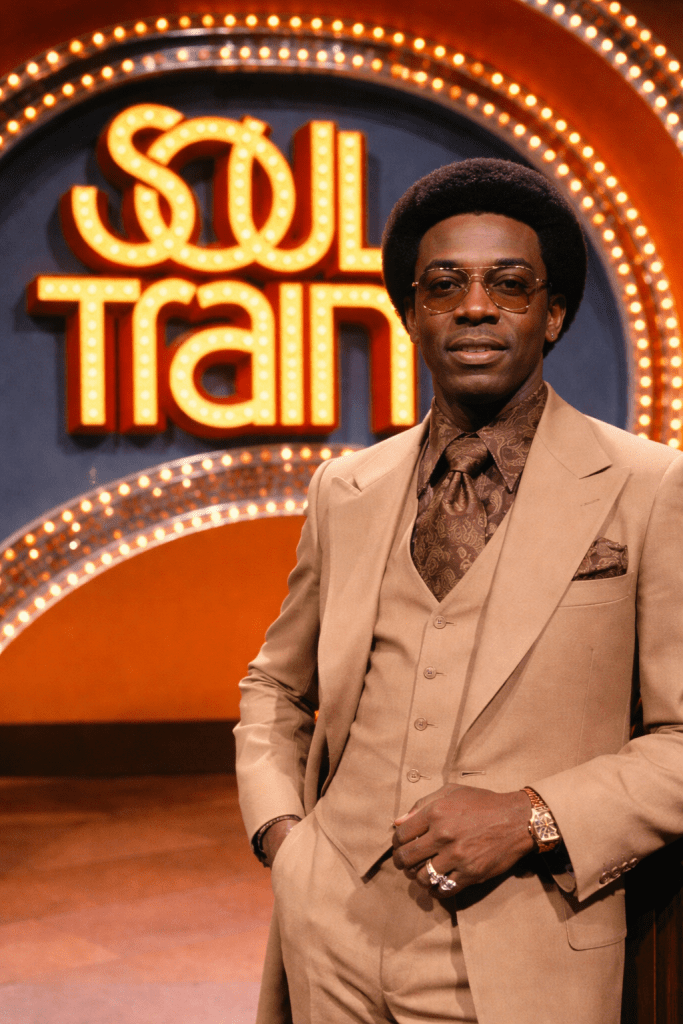
When Soul Train first aired in 1971, it was more than a television program—it was a cultural declaration. Branded “the hippest trip in America,” the show became a weekly sanctuary where Black music, fashion, and joy were broadcast unapologetically into millions of homes. At a time when mainstream television offered limited and often distorted portrayals of African Americans, Soul Train centered Black artistry with elegance, style, and pride.
The visionary behind the show was Don Cornelius, a former Chicago police officer and radio DJ whose deep baritone voice and calm authority became synonymous with the program. Born on September 27, 1936, in Chicago, Illinois, Cornelius developed an early love for broadcasting. After working in insurance sales and law enforcement, he transitioned into radio at WVON, a prominent Black-oriented station in Chicago.
In 1970, Cornelius created a local dance program on Chicago’s WCIU-TV featuring live performances and dancing teens. Its immediate success demonstrated a demand for authentic Black entertainment. With ambition and business acumen, Cornelius syndicated the show nationally in 1971, launching Soul Train into living rooms across America.
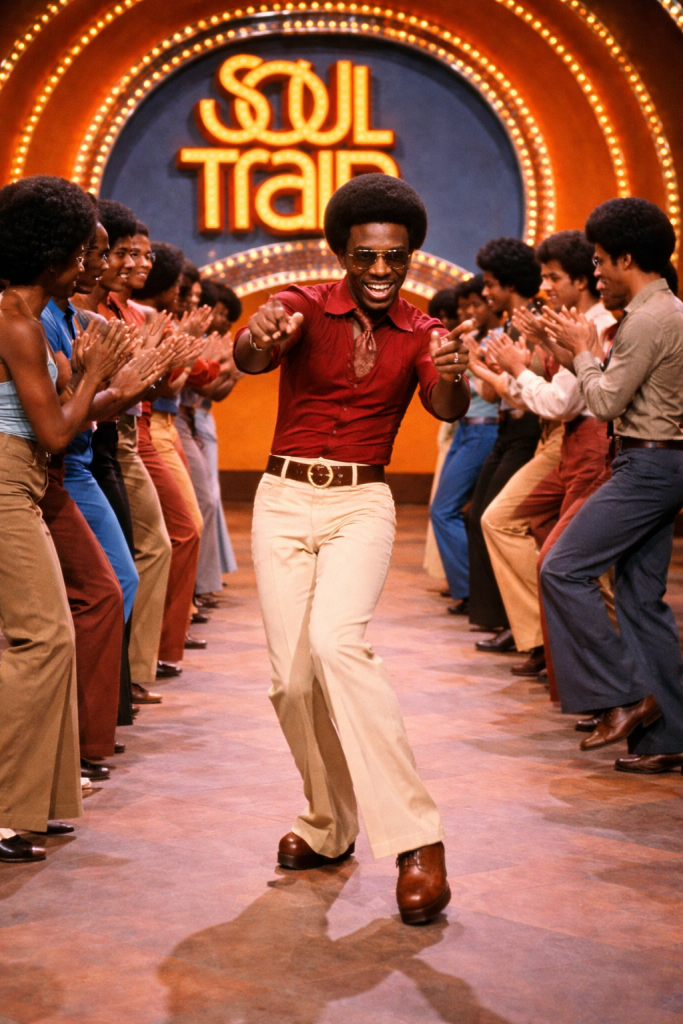
The show’s format was revolutionary. It featured live performances from emerging and established R&B, soul, and later funk and disco artists, alongside high-energy dancers whose style influenced fashion and street culture. The famed “Soul Train Line,” where dancers formed two rows and showcased individual flair, became an iconic symbol of self-expression.
Throughout the 1970s and 1980s, Soul Train hosted legendary performers including Aretha Franklin, Stevie Wonder, James Brown, The Jackson 5, and Whitney Houston. For many artists, appearing on Soul Train was a rite of passage and a gateway to broader audiences.
Cornelius maintained strict control over his production. He insisted on Black ownership at a time when few African Americans controlled nationally syndicated programs. His business model was groundbreaking, ensuring that the cultural capital generated by Black creativity benefited Black entrepreneurs.
In 1987, Cornelius expanded the brand by creating the Soul Train Music Awards, which celebrated achievements in R&B, soul, gospel, and later hip-hop. The awards show provided recognition for artists often overlooked by mainstream institutions like the Grammys.
Don Cornelius’s personal life, however, was complex. He was married twice and had two sons, Anthony and Raymond. Despite his professional success, he faced personal struggles, including depression and legal issues stemming from domestic disputes in the late 2000s.
On February 1, 2012, Cornelius died in Los Angeles from a self-inflicted gunshot wound. His death was ruled a suicide. The loss stunned the entertainment world, prompting tributes that underscored his immense cultural impact. He was 75 years old.
Cornelius’s signature closing phrase—“And as always in parting, we wish you love, peace, and soul”—became etched into American memory. His voice carried authority, smoothness, and dignity, reinforcing the show’s ethos of unity and cultural pride.
The theme song “Soul Train (Hot Potato),” performed by King Curtis in the early years, helped define the show’s sonic identity. Later, the most recognized theme, “TSOP (The Sound of Philadelphia),” performed by MFSB featuring The Three Degrees, became a number-one hit in 1974 and cemented the show’s musical legacy.
The program also served as a launching pad for artists who would later dominate popular culture. The exposure provided by Soul Train often translated into record sales, touring opportunities, and mainstream visibility. It helped integrate Black musical innovation into the broader American soundtrack.
Beyond music, the show influenced fashion trends. Afros, bell-bottoms, platform shoes, sequins, and bold prints became staples of 1970s style, broadcast weekly to a national audience. The dancers were not merely background performers; they were cultural ambassadors.
In 1993, Cornelius stepped down as host, though the show continued with guest hosts until its final episode in 2006. By then, it had aired for 35 years, making it one of the longest-running first-run syndicated programs in American television history.
The legacy of Soul Train extended into film and documentary. In 2021, Summer of Soul and other retrospectives reignited conversations about Black music archives and cultural preservation, though specifically in 2022, the series American Soul dramatized the creation of Soul Train, portraying Cornelius’s rise and personal struggles.
Official Hosts of Soul Train
Don Cornelius (1971–1993)
Creator and original host. His deep baritone voice, calm delivery, and signature closing line defined the show for over two decades.
Guest Host Era (1993–1997)
After Cornelius stepped down in 1993, the show used rotating celebrity guest hosts for several seasons rather than appointing a permanent replacement immediately.
Mystro Clark (1997–2000)
The first permanent host after Cornelius. He brought a youthful, late-90s R&B/hip-hop energy to the show.
Shemar Moore (2000–2003)
Yes — Shemar Moore was one of the official hosts. Before becoming widely known for acting roles on The Young and the Restless and later Criminal Minds, he hosted Soul Train during its early 2000s era. His charisma, physique, and charm appealed to a new generation of viewers and added a modern flavor to the brand.
Dorian Gregory (2003–2006)
The final permanent host before the show ended in 2006. Gregory carried the program through its concluding seasons.
The influence of Soul Train can be traced in later music television programs, including 106 & Park and other platforms that center Black youth culture. Its DNA is embedded in award shows, dance competitions, and music video aesthetics.
In 2012, Cornelius was posthumously honored with tributes at the BET Awards, affirming his foundational role in shaping Black entertainment media. Industry leaders credited him with building an institution that validated generations of artists.
Academically, Soul Train is often examined as a site of cultural resistance and representation. Scholars argue that it countered dominant narratives by showcasing Black excellence, entrepreneurship, and aesthetic innovation during the post–Civil Rights era.
The program also functioned as a historical archive. Episodes now serve as visual documentation of evolving Black style, choreography, and musical trends from soul and funk to early hip-hop. It captured cultural shifts in real time.
Today, Soul Train remains a symbol of unapologetic Black joy. Don Cornelius’s vision transformed a local dance show into a global brand that honored the rhythm of a people. His life story—marked by ambition, struggle, triumph, and tragedy—reflects both the promise and pressure of pioneering success.
“Soul Train” was never just a show; it was a movement. And as Cornelius always reminded viewers, its journey was guided by love, peace, and soul.
References
George, N. (1988). The Death of Rhythm and Blues. Pantheon Books.
Guerrero, E. (1993). Framing Blackness: The African American Image in Film. Temple University Press.
Harris, M. (2014). “Soul Train and the Construction of Black Cool.” Journal of Popular Culture, 47(3), 567–585.
Jet Magazine Archives (1971–2012). Johnson Publishing Company.
Robinson, E. (2012). Don Cornelius, ‘Soul Train’ Creator, Dies at 75. Los Angeles Times.
Smithsonian National Museum of African American History and Culture. (n.d.). Soul Train Collection Archives.
 THE BROWN GIRL DILEMMA