
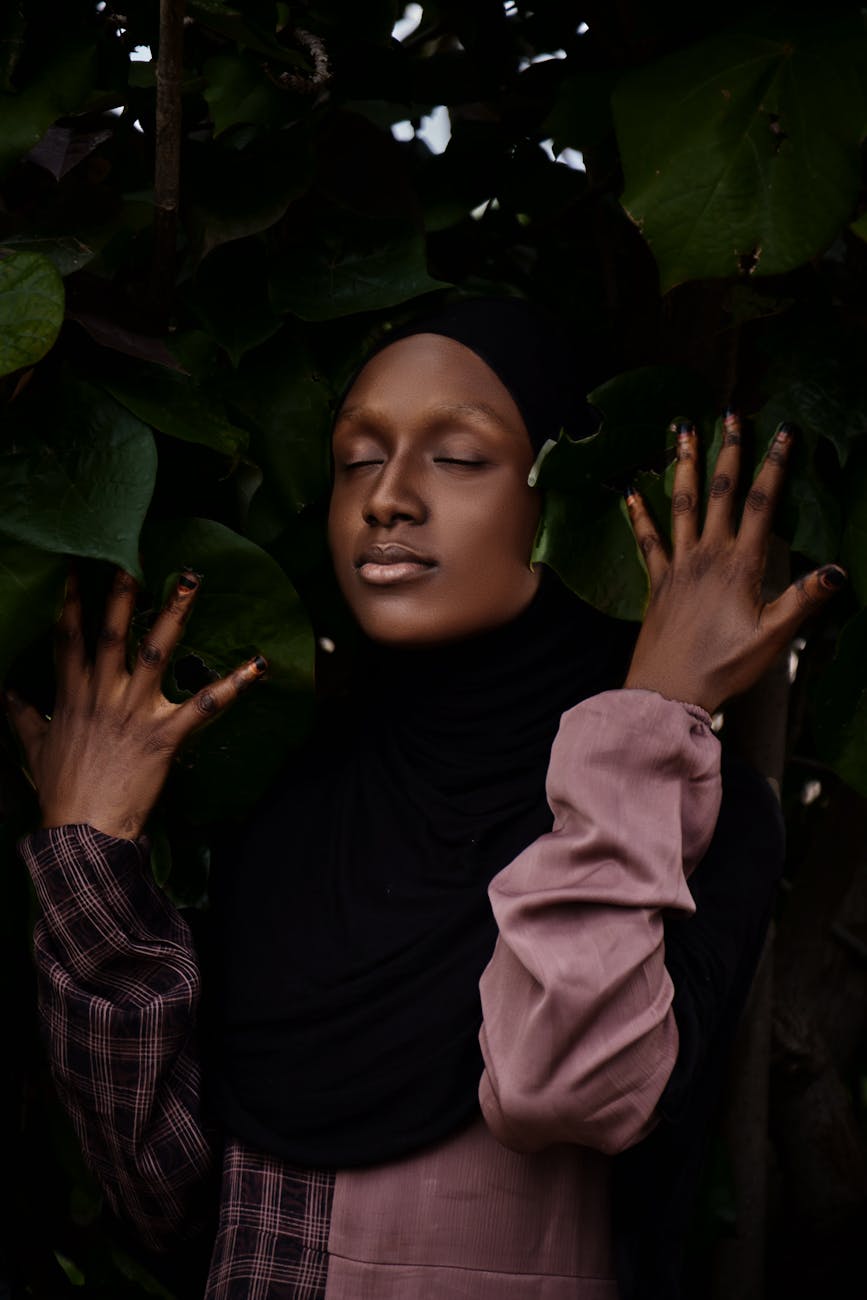
There is a power that comes from living in brown skin—a power the world often misunderstands, mislabels, or diminishes. To be a brown girl is to walk through life both seen and unseen, celebrated and silenced, loved and judged through the lens of color. Every shade tells a story, and every story carries the weight of survival, beauty, and truth. This is the testimony of tone—the unspoken language of melanin that has shaped our identity and the way the world perceives us.
Being brown is not a uniform experience; it is a spectrum of existence. Between light and dark lies an entire geography of complexion, each shade bearing its own burden and blessing. Brown girls stand at the crossroads of colorism, where acceptance can depend on just how much light the skin reflects. Our tone becomes both mirror and battleground, measuring us against ideals we never created but were born to challenge.
From an early age, many brown girls are taught to navigate the politics of appearance. Family members may speak in coded language: “She’s a nice color,” “Don’t stay in the sun too long,” or “You’re getting darker.” These comments, wrapped in love, are heavy with internalized fear—a fear passed down from generations marked by colonial rule and racial stratification. They echo a past where lighter skin meant proximity to privilege and darker skin meant proximity to pain.
Colorism, a child of racism, thrives quietly within communities of color. It separates sisters, ranking beauty on a scale rooted in European aesthetics. In classrooms, in workplaces, and in dating choices, the tone of a woman’s skin can shape how she is valued. Studies continue to show that lighter-skinned women are perceived as more competent, approachable, and desirable (Hunter, 2007). These unspoken hierarchies leave brown and dark-skinned women fighting for validation in a world that still equates fairness with worth.
The brown girl grows up learning the art of adaptation—how to smile softly enough not to seem intimidating, how to lighten foundation, straighten hair, or use filters to “blend in.” Society calls it beauty; psychology calls it survival. Behind every curated image lies a quiet fatigue from performing palatability for a gaze that refuses to see the fullness of her humanity.
But beneath that fatigue is fire. When the brown girl speaks, she does not whisper. She speaks the truth that beauty was never meant to be confined to a color chart. She declares that her tone is not a limitation but a lineage, a living record of ancestry written in pigment. Every shade of brown is a monument to those who endured, created, and thrived despite the violence of erasure.
The truth behind the tone is that brownness holds memory. It remembers the sun of Africa, the soil of the Caribbean, the warmth of Latin America, and the mysticism of South Asia. It is global, sacred, and connected. Colonialism tried to fragment that unity by teaching the colonized to despise their reflection, to compete rather than commune. Yet the brown girl’s skin remains a testament—it absorbs light and transforms it, just as her spirit absorbs pain and turns it into art, activism, and faith.
Media representation has often failed to capture the depth of brownness. When it does, it frequently sanitizes or fetishizes it. Lighter tones dominate screens, while darker ones are typecast or ignored. The result is psychological distortion—a message that beauty and desirability exist on a gradient tilted toward whiteness. For many brown girls, representation becomes a hunger, a longing to see oneself reflected with dignity rather than diluted for consumption.
But the modern brown girl is rewriting that narrative. Through film, music, literature, and social media, she tells her own story—raw, unfiltered, and unapologetic. Movements like #MelaninPoppin and #UnfairAndLovely have become digital revolutions, pushing back against centuries of exclusion. Visibility becomes liberation. Speaking becomes healing.
Emotionally, the journey toward self-acceptance is layered. It requires peeling back the lies taught by both society and family, confronting the ways we’ve internalized comparison. It means forgiving ourselves for believing that lighter was better, for chasing a reflection that was never truly ours. Healing begins when we stop asking for permission to be beautiful and start defining beauty through our own lens.
The tone of brown skin is not just visual—it is spiritual. It carries the energy of endurance, creativity, and divine craftsmanship. In biblical symbolism, the earth is brown, the first human was formed from dust, and creation itself was birthed from color. To be brown is to resemble the ground that sustains all life. Our tones are sacred, kissed by creation, and ordained with purpose.
Yet the world still measures women through lenses of desirability rather than dignity. The brown girl challenges that measurement. She demands to be seen not just as beautiful but as brilliant, complex, and whole. Her tone does not beg for approval; it commands respect. She is the embodiment of contrast and harmony, light and shadow coexisting in one divine design.
The truth behind the tone is also historical. Colonization redefined color as currency, turning complexion into a social passport. Post-slavery societies upheld these hierarchies through institutions that rewarded “fairness” and punished “darkness.” From the paper bag tests of the early 20th century to the casting biases of today, colorism has remained a subtle weapon of division. The brown girl carries that legacy but refuses to be bound by it.
Psychologically, this rebellion is revolutionary. To love one’s brown skin in a world that profits from bleaching creams and filters is to defy centuries of conditioning. It is to reclaim the body as sacred ground, not a site of shame. It is to rewire the mind from scarcity to abundance, from comparison to celebration.
The brown girl’s tone also speaks of resilience. It tells of women who raised children, led revolutions, built nations, and healed communities while being overlooked. It speaks of grandmothers who wore their darkness like armor, mothers who protected their children from the sting of prejudice, and daughters who now demand to be seen in full light.
Culturally, brown women have always shaped the world’s rhythm—through language, art, food, and faith. Their influence transcends borders, yet their contributions are often minimized. To reclaim the truth behind the tone is to center those voices, to remind the world that the global South, the brown nations, have always been the heartbeat of civilization.
Still, confession remains part of the journey. Many brown girls admit that even as they preach self-love, they are still learning it. Healing is not linear; it is layered like our tones. It is saying, “I love my skin,” even on days when the world does not. It is wearing brown not as burden but as blessing.
When the brown girl speaks, she speaks for generations. Her voice carries the hush of grandmothers, the hymns of mothers, and the hope of daughters yet to come. She speaks for every shade of brown silenced by shame and every hue still fighting for visibility. Her tone is truth, and her truth is freedom.
The tone of brown is not just color—it is culture, consciousness, and calling. It reflects the light of every sun that has ever kissed this earth. It is the hue of legacy, of life, of love that endures. The brown girl no longer asks to be seen; she commands to be remembered. And when she speaks, her words paint the world in truth.
References
Fanon, F. (1952). Black skin, white masks. Grove Press.
hooks, b. (1992). Black looks: Race and representation. South End Press.
Hunter, M. (2007). The persistent problem of colorism: Skin tone, status, and inequality. Sociology Compass, 1(1), 237–254.
Russell, K., Wilson, M., & Hall, R. (1992). The color complex: The politics of skin color among African Americans. Anchor Books.
Tate, S. A. (2016). Black beauty: Aesthetics, stylization, politics. Routledge.
 THE BROWN GIRL DILEMMA