
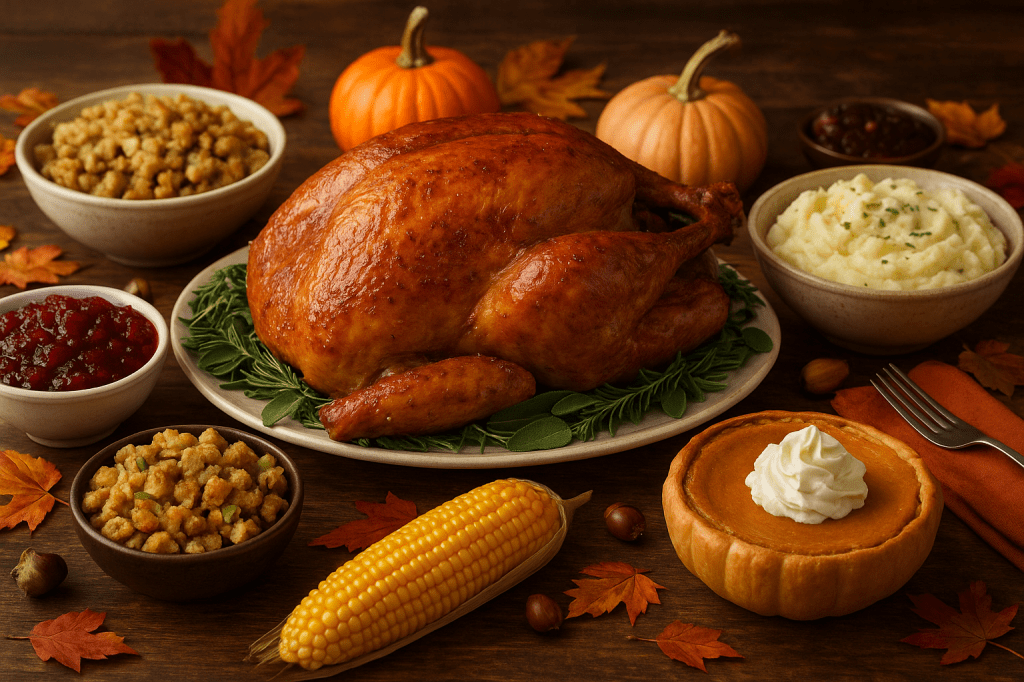
Thanksgiving is often portrayed as a day of gratitude, family, and feasting. In American culture, it represents unity and blessing, where families gather around tables filled with turkey, stuffing, and pies. However, behind this warm and commercialized tradition lies a dark and often ignored history—one rooted in colonial violence, religious hypocrisy, and the near extermination of Indigenous peoples. The sanitized story of Pilgrims and Native Americans sharing a friendly meal hides the pain, suffering, and spiritual deception that marked the true origins of the holiday (Loewen, 1995).
The traditional narrative teaches that in 1621, Pilgrims and the Wampanoag people came together in harmony to celebrate a successful harvest. Yet, historical records reveal that this so-called “first Thanksgiving” was not an annual holiday but a one-time event, following a violent year of disease, displacement, and death among Native tribes (Silverman, 2019). European settlers brought smallpox and other diseases that wiped out up to 90% of the Indigenous population before the Pilgrims even landed (Mann, 2006). Gratitude was expressed not for coexistence, but for survival—at the expense of Native lives.
The Wampanoag, led by Chief Massasoit, initially aided the Pilgrims, teaching them farming and fishing techniques. However, this alliance was short-lived. Within decades, English colonists expanded aggressively, seizing land, enslaving Native people, and destroying entire communities. The peace was broken, culminating in King Philip’s War (1675–1676), where thousands of Native Americans were killed, and their leaders’ heads were displayed on pikes in Puritan towns (Lepore, 1998). These were the true fruits of colonial “thanksgiving.”
The holiday’s darker meaning becomes clearer when one examines the 1637 “Thanksgiving” proclaimed by Massachusetts Bay Governor John Winthrop. This celebration followed the massacre of over 700 Pequot men, women, and children who were burned alive in their village (Churchill, 1997). The colonists saw this mass killing as divine victory and gave thanks to their God for their triumph. This was one of the first recorded official “Thanksgivings”—a day of rejoicing over genocide.
Many historians note that Puritan theology intertwined with imperial conquest. They believed they were a “chosen people,” sent by God to establish a new Israel in the “New World.” This ideology justified enslavement, land theft, and extermination of those deemed “heathen” or “savage.” Ironically, this mirrors the biblical warnings in Deuteronomy 28 about a nation that would destroy others in arrogance, forgetting God’s laws. The holiday, therefore, is not truly about gratitude but about domination under the guise of divine destiny.
Thanksgiving’s pagan undertones trace back to harvest festivals in ancient Europe. Long before the Pilgrims, pagans celebrated Samhain, Lammas, and other feasts to honor deities of fertility and agriculture (Frazer, 1922). When colonists adopted these traditions, they combined them with their version of Christian thanksgiving rituals, blending idolatrous symbolism with supposed piety. The turkey, cornucopia, and other elements have roots in pagan fertility and sun worship.
By the 19th century, the holiday was nationalized by President Abraham Lincoln in 1863, during the Civil War. He proclaimed a national Thanksgiving Day to promote unity and national repentance. Yet, this proclamation came amid ongoing wars against Indigenous tribes on the western frontier (Blakemore, 2017). Even in its rebranding as a “holy day of gratitude,” the holiday remained steeped in hypocrisy—thankfulness to God for blessings built upon oppression and stolen land.
The Turkey – The Pagan Symbol of Sacrifice
The centerpiece of the Thanksgiving table, the turkey, represents far more than a meal. In ancient European and Native harvest rituals, animals—especially birds—were sacrificed to fertility gods and harvest deities to ensure abundance in the coming year (Frazer, 1922). The turkey, a bird native to North America, became the colonial substitute for the European rooster or boar, which were once offered to gods like Demeter (Greek) or Ceres (Roman).
For Puritans and settlers, the turkey took on biblical symbolism as a “clean” bird suitable for feasting, but it also retained the underlying idea of a blood offering. The act of roasting and carving the bird resembles ancient rites of thanksgiving sacrifices, where flesh and blood were shared among the people as a sign of covenant.
In essence, the turkey symbolizes harvest sacrifice—a ritualistic meal to honor abundance and human dominion over nature. Yet, spiritually, many see this as a pagan distortion of the biblical thanksgiving offering, since the Most High never commanded such ritual feasts tied to agricultural gods (Leviticus 23 outlines holy feasts, none of which resemble Thanksgiving).
2. Cranberry Sauce – The Blood of the Earth
Cranberries, with their deep red color, symbolize blood—both the blood spilled during Native American massacres and the blood of sacrifice in pagan harvest rituals. In Indigenous tradition, cranberries were used in pemmican (a dried meat mixture) as a sacred fruit symbolizing life and endurance. However, colonists commercialized and repurposed the berry to represent sweetness and celebration after conquest.
When the Puritans gave “thanks” following massacres like the 1637 Pequot slaughter, cranberry dishes were often present in harvest meals that followed. Over time, cranberry sauce came to symbolize peace and unity, but its original color and use echo the earth’s blood, the lives taken, and the “thank offerings” given after war.
Spiritually, the sauce can be seen as a blood libation—a food offering representing the lifeblood of conquered peoples, now sweetened to cover the bitterness of the past. The crimson dish, placed at the center of every table, becomes a silent reminder of violence turned into tradition.
3. The Corn and the Cornucopia – Pagan Fertility and Sun Worship
Corn, or maize, is often placed on tables and in decorations, symbolizing harvest abundance. The cornucopia (horn of plenty) originates directly from ancient Greek and Roman mythology. It was associated with Amalthea, the goat who nursed Zeus, whose horn overflowed with fruit and grain. This horn became a pagan emblem of fertility, prosperity, and the favor of the gods (Frazer, 1922).
When colonists adopted it into Thanksgiving imagery, they were essentially reviving this ancient idol in Christian clothing. The overflowing horn represents earthly blessing without repentance—a form of false thanksgiving that focuses on material abundance rather than spiritual gratitude. In biblical terms, such symbols parallel the worship of Baal and Ashtoreth, where fertility and harvest were celebrated through feasting, wine, and ritualized excess (Jeremiah 7:18).
4. The Feast and the Table – A Covenant of Assimilation
Sharing a meal as a “peace ritual” was a common act among pagans and colonizers alike. The Thanksgiving table symbolizes covenant, but not between man and God—it represented the colonial covenant of domination, where Native allies were invited to feast only to later be betrayed.
Eating together was used politically to signify submission or alliance. Spiritually, it mimics the covenant meal described in Exodus 24, but without divine sanction. Thus, the Thanksgiving feast became a man-made covenant of cultural assimilation—thanksgiving not to the Creator, but to the state and its prosperity.
5. Pumpkin Pie and Sweet Dishes – Idolatry of Indulgence
Pumpkin and sweet pies symbolize indulgence and pleasure, echoing the harvest celebrations of ancient agrarian societies. The sweetness represents the completion of the agricultural cycle, the “reward” of labor. In pagan rites, sweetened foods were often used as offerings to household gods or spirits of the dead during harvest festivals like Samhain (Hutton, 1996).
Today, these pies reflect modern excess—consumption as comfort, gluttony as gratitude. Scripture warns, “Whose god is their belly, and whose glory is in their shame” (Philippians 3:19, KJV). The pie becomes not merely dessert, but a metaphor for America’s tendency to sweeten its sins.
6. The Ritual of Saying Grace – Sanctifying the Unsanctified
Praying over the Thanksgiving meal may seem godly, but historically it was used to Christianize a pagan act. The Puritans replaced the name of old gods with “God” but kept the ritual structure—feasting after conquest and harvest. This blending of worship mirrors the Israelites’ sin in Exodus 32, when they declared a “feast unto the LORD” but worshipped a golden calf.
True thanksgiving is commanded in Scripture, but it must be directed toward obedience and righteousness (1 Thessalonians 5:18). Blessing food that was prepared in remembrance of oppression or rooted in false worship does not sanctify the act; it masks it.
7. The Parade and Festivities – Modern Idolatry
The Macy’s Thanksgiving Day Parade and televised events symbolize modern America’s devotion to spectacle and consumption. Giant floats, corporate mascots, and celebrities replace ancient idols, but the spirit is the same—public rejoicing before the gods of entertainment and wealth.
Ancient pagan festivals also featured processions with effigies of gods and fertility symbols. Today’s parades and football games serve as secular “rituals of joy” for the national religion of materialism. The Most High warned against adopting the ways of the nations, saying, “Learn not the way of the heathen” (Jeremiah 10:2, KJV).
8. The Act of Carving – Symbolic Sacrifice
The moment of carving the turkey has ceremonial undertones—it mirrors the cutting of flesh in sacrificial feasts. In old-world rituals, the act of slicing the offering symbolized covenant renewal, where a leader or priest would divide the animal to represent shared participation in the deity’s blessing.
In modern Thanksgiving, the patriarch of the family often performs the carving, symbolizing his headship over the household’s “sacrifice.” This continuation of symbolic animal offering aligns with ancient rites to gods of harvest and plenty rather than the Most High, who rejected such idolatrous ceremonies.
9. The Leftovers and “Harvest Blessings” – Spirit of Greed
Even the tradition of saving and hoarding leftovers stems from superstition. In early European harvest festivals, saving the final portion of food was believed to please the “spirit of the grain” or the harvest god, ensuring next year’s fertility.
Today, it manifests as gluttony and excess—a false sense of security rooted in abundance rather than faith. The Most High commanded His people not to hoard manna, teaching them to rely daily on Him (Exodus 16:19–20).
10. The Overall Ritual – False Thanksgiving
When we combine the turkey (sacrifice), cranberry (blood), corn (fertility), and feast (covenant), we see a clear pattern. Thanksgiving, though marketed as a Christian holiday, is actually a synchronized ritual—a merging of ancient pagan harvest worship with colonial nationalism. It expresses gratitude not for divine righteousness, but for human prosperity and domination.
It teaches people to be thankful for what they possess, not who God is; for material abundance, not moral restoration.
Conclusion
The foods and customs of Thanksgiving carry deep spiritual and historical meanings—none of which are innocent. Each symbol ties back to pagan harvest rites, colonial conquest, and man’s attempt to sanctify self-made traditions. True thanksgiving, according to Scripture, must be done “in spirit and in truth” (John 4:24, KJV), not through rituals rooted in idolatry or injustice.
For believers seeking to honor the Most High, the focus should shift from the table to the altar of the heart—from feasting on flesh to feeding on truth. Gratitude that ignores the blood of the oppressed or the origins of ritual is not thanksgiving—it is desecration disguised as devotion.
For Native Americans, Thanksgiving is not a celebration but a day of mourning. Since 1970, many Indigenous groups have gathered at Plymouth Rock for the National Day of Mourning to honor their ancestors and protest historical revisionism. They fast instead of feast, reminding the world that the survival of Native peoples is an act of resistance, not colonial benevolence (Newell, 1998).
Spiritually, many see Thanksgiving as part of America’s cycle of self-deception—a yearly ritual that covers sin with sentimentality. The Bible warns against offering sacrifices of praise while injustice prevails: “When ye spread forth your hands, I will hide mine eyes from you…your hands are full of blood” (Isaiah 1:15, KJV). Gratitude means little when it ignores the suffering of others.
For the descendants of enslaved Africans, Thanksgiving is equally complex. Enslaved Black people often used the holiday as a rare moment of rest, while their enslavers thanked God for bountiful harvests gained through forced labor. Later, during the Great Migration, many Black families reclaimed the holiday as a time of community and survival, infusing it with resilience and faith rather than nationalism (Harris, 2012). Yet the question remains—can one truly “give thanks” for freedom in a system still rooted in the oppression of one’s ancestors?
The real meaning behind Thanksgiving, then, depends on perspective. For colonizers, it marked divine favor. For Indigenous and Black people, it symbolized conquest and hypocrisy. Spiritually, it reflects the same deception seen in other man-made holidays like Christmas and Easter—pagan in origin and cloaked in Christian imagery to appease the masses. As the Apostle Paul wrote, “What concord hath Christ with Belial?” (2 Corinthians 6:15, KJV). One cannot mix righteousness with idolatry.
In modern times, Thanksgiving has evolved into a celebration of consumption. The day of “gratitude” leads directly into Black Friday—one of the most materialistic and greed-driven events of the year. This shift exposes the spirit behind the holiday: not holiness, but consumerism, gluttony, and false peace. The original spirit of conquest has simply taken a new form.
Nevertheless, believers in the Most High can redeem the idea of gratitude by detaching it from colonial roots. True thanksgiving is not bound to a date or tradition—it is a daily posture of humility before God. The psalmist declares, “O give thanks unto the LORD; for he is good: for his mercy endureth for ever” (Psalm 136:1, KJV). Real thankfulness acknowledges both blessing and justice.
Acknowledging the truth about Thanksgiving does not mean rejecting gratitude, but rejecting lies. It means facing history honestly, mourning the innocent blood shed, and breaking free from cultural traditions that glorify sin. The Most High calls His people to “come out of her, my people” (Revelation 18:4, KJV)—to separate from pagan customs disguised as holy.
By uncovering the dark history of Thanksgiving, we free ourselves from the illusion of innocence. The holiday serves as a mirror reflecting America’s unresolved sins: genocide, slavery, and greed. Only by repentance and truth-telling can a nation be healed.
In truth, Thanksgiving is not about food or family—it is about remembrance. For Indigenous peoples, it remembers loss and survival. For the faithful, it should recall the Most High’s mercy despite human corruption. Gratitude that ignores justice is hollow, but thanksgiving that honors truth becomes worship in spirit and in truth (John 4:24, KJV).
Therefore, the real meaning behind Thanksgiving is not the feast, but the reckoning. It is the reminder that every table built on oppression must be overturned. And until that happens, every prayer of “thanks” must also be a cry for truth and restoration.
References
Blakemore, E. (2017). The twisted history of Thanksgiving. National Geographic.
Churchill, W. (1997). A Little Matter of Genocide: Holocaust and Denial in the Americas, 1492 to the Present. City Lights.
Frazer, J. G. (1922). The Golden Bough: A Study in Magic and Religion. Macmillan.
Harris, L. (2012). The meanings of Thanksgiving in Black America. Journal of African American Studies, 16(3), 243–258.
Lepore, J. (1998). The Name of War: King Philip’s War and the Origins of American Identity. Knopf.
Loewen, J. W. (1995). Lies My Teacher Told Me: Everything Your American History Textbook Got Wrong. The New Press.
Mann, C. C. (2006). 1491: New Revelations of the Americas Before Columbus. Vintage Books.
Newell, J. (1998). Thanksgiving: A National Day of Mourning. Wampanoag Tribe of Gay Head.
Silverman, D. J. (2019). This Land Is Their Land: The Wampanoag Indians, Plymouth Colony, and the Troubled History of Thanksgiving. Bloomsbury.Frazer, J. G. (1922). The Golden Bough: A Study in Magic and Religion. Macmillan.
Hutton, R. (1996). The Stations of the Sun: A History of the Ritual Year in Britain. Oxford University Press.
Silverman, D. J. (2019). This Land Is Their Land: The Wampanoag Indians, Plymouth Colony, and the Troubled History of Thanksgiving. Bloomsbury.
KJV Bible. (1611/1769). Authorized King James Version.
 THE BROWN GIRL DILEMMA