
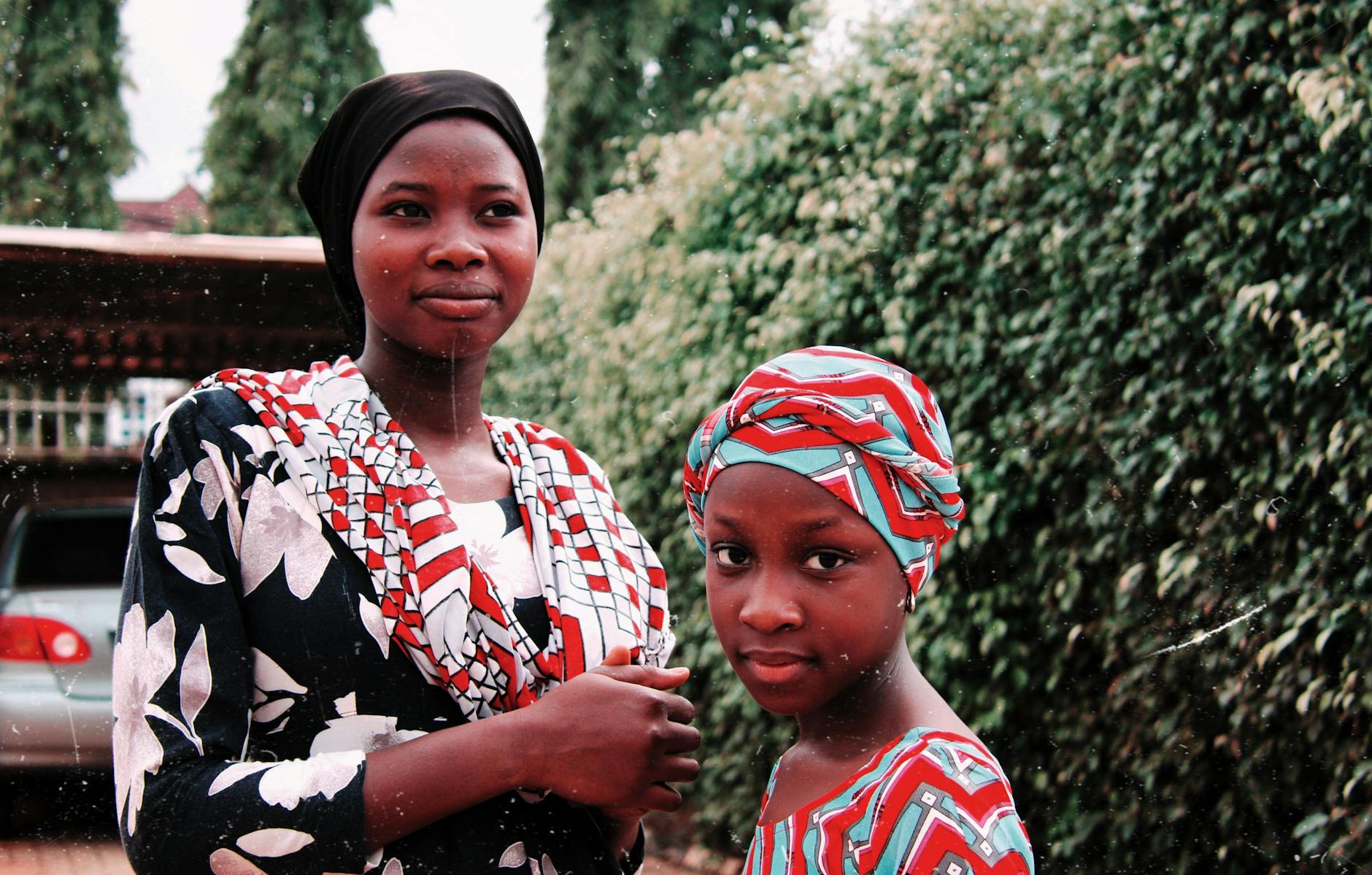
The question, “Do you speak African?” lands with an awkward thud — part curiosity, part ignorance, part wound. It reveals not only what others fail to know but also what history has taken from the brown girl who hears it. The question is not neutral; it is a microaggression wrapped in innocence, a symptom of the colonial erasure that fractured language and lineage.
To ask someone if they “speak African” is to mistake a continent for a country, and a civilization for a dialect. Africa, home to over 1,500 languages and countless dialects, cannot be reduced to a single tongue (Eberhard, Simons, & Fennig, 2022). The question exposes how deeply Western education has flattened the African world — a world once rich with linguistic kingdoms, oral histories, and sacred speech.
For the brown girl in America, this question stings differently. It is not just about language; it is about belonging. Her ancestors once spoke languages now lost — tongues silenced by chains and rewritten through slavery. The question reminds her of what she cannot retrieve: the sound of her motherland’s lullabies.
The transatlantic slave trade did not just steal bodies; it stole languages. Enslaved Africans from different regions were deliberately mixed to prevent communication and rebellion (Gomez, 1998). Over time, English became the imposed tongue, and ancestral languages were criminalized. The linguistic death that followed was cultural genocide disguised as civilization.
Thus, when someone asks, “Do you speak African?” the brown girl feels the ache of disconnection. She wants to answer, “I would if they hadn’t beaten it out of my blood.”
Language is identity — it shapes how one thinks, dreams, and remembers. When language dies, memory fractures. For many descendants of the African diaspora, English became both a prison and a canvas — a forced medium turned into a tool of survival. Out of this tension emerged the dialects and rhythms of Black English, Caribbean patois, and Creole, each carrying fragments of forgotten worlds (Rickford, 2016).
Yet the irony persists: the same world that mocks African languages as “primitive” now romanticizes accents and aestheticizes African words for fashion and marketing. This selective celebration strips context, transforming heritage into decoration.
To the brown girl, “Do you speak African?” sounds like an echo of every moment she’s been told she’s too Black for some and not African enough for others. She exists between worlds — Westernized but not white, diasporic but disconnected. Her tongue carries history’s contradictions.
Cultural alienation often follows diaspora children who have been taught to speak the language of their oppressors more fluently than the language of their ancestors. They master English syntax but long for ancestral rhythm — the music in words they’ve never known.
This longing shows up in art, poetry, and music. From Langston Hughes’s blues to Beyoncé’s Black Is King, artists continually reach across oceans to reconnect the severed speech of their lineage. Their art becomes translation — a spiritual form of speaking “African” in a world that forgot how to listen.
The brown girl learns that language is more than vocabulary. It’s gesture, rhythm, call, and response. She speaks African every time she hums a gospel tune in a minor key, every time her laughter fills a room with rhythm, every time her hands punctuate her words like ancestral drums.
Her speech carries the DNA of lost languages — echoes of Yoruba, Igbo, and Wolof wrapped in English phrasing. Her slang, her tone, her cadence — all are living languages of survival. What others call “improper” is actually linguistic memory resisting erasure (Smitherman, 2000).
Still, the weight of that question lingers. It reminds her that ignorance is not harmless. Every careless question keeps history misunderstood. To say “African” as though it were a single language reveals how empire rewrote geography and reduced multiplicity to stereotype.
Western colonial systems erased Africa’s intellectual complexity, painting the continent as uniform and inferior. Missionaries and colonizers banned indigenous languages in schools, promoting European tongues as “civilized” (Ngũgĩ wa Thiong’o, 1986). The result was not just silence but shame.
The brown girl inherits that shame unconsciously — the hesitation to pronounce African names, the anxiety of mispronunciation, the internalized fear of sounding “too foreign.” These linguistic insecurities are the aftershocks of colonization.
But reclamation begins with awareness. Each generation of brown girls learns to unlearn. She begins to study African languages, wear names that carry meaning, and honor accents once mocked. She reclaims sound as identity.
The movement toward linguistic reconnection has become a spiritual revival. Across the diaspora, Black Americans and Afro-Caribbeans are learning Yoruba, Swahili, and Twi — not merely as languages, but as portals to ancestral consciousness (Ani, 1994).
For the brown girl, this journey feels like resurrection. Each new word is a heartbeat returning to the body of her culture. Each phrase feels like homecoming.
Yet she knows that fluency is not the only path to identity. To “speak African” is also to live African — to embody its values of community, rhythm, resilience, and reverence for spirit. It is to carry Africa in one’s breath, one’s laughter, one’s survival.
When others ask, “Do you speak African?” she now answers differently. She says, “Yes, I speak it in the way I live, love, and remember.”
She speaks it in her boldness, in the way she tells truth with rhythm, in the way her words refuse to be small. She speaks it in her dialect — the language that was never fully lost, just remixed through pain and perseverance.
Her lips form English words, but her spirit speaks Africa’s music. She carries within her every language that empire tried to destroy.
Her tongue, once colonized, is now consecrated. Through her, Africa speaks again.
So the next time the question comes — “Do you speak African?” — she will smile softly and say, “I am African, and that is enough.”
For her very existence is a language — a sacred syntax of survival written in melanin, rhythm, and divine memory.
References
Ani, M. (1994). Yurugu: An African-centered critique of European cultural thought and behavior. Africa World Press.
Collins, P. H. (2000). Black feminist thought: Knowledge, consciousness, and the politics of empowerment. Routledge.
Eberhard, D. M., Simons, G. F., & Fennig, C. D. (Eds.). (2022). Ethnologue: Languages of the world (25th ed.). SIL International.
Gomez, M. A. (1998). Exchanging our country marks: The transformation of African identities in the colonial and antebellum South. University of North Carolina Press.
Ngũgĩ wa Thiong’o. (1986). Decolonising the mind: The politics of language in African literature. James Currey.
Rickford, J. R. (2016). African American vernacular English: Features, evolution, educational implications. Blackwell.
Smitherman, G. (2000). Talkin and testifyin: The language of Black America. Wayne State University Press.
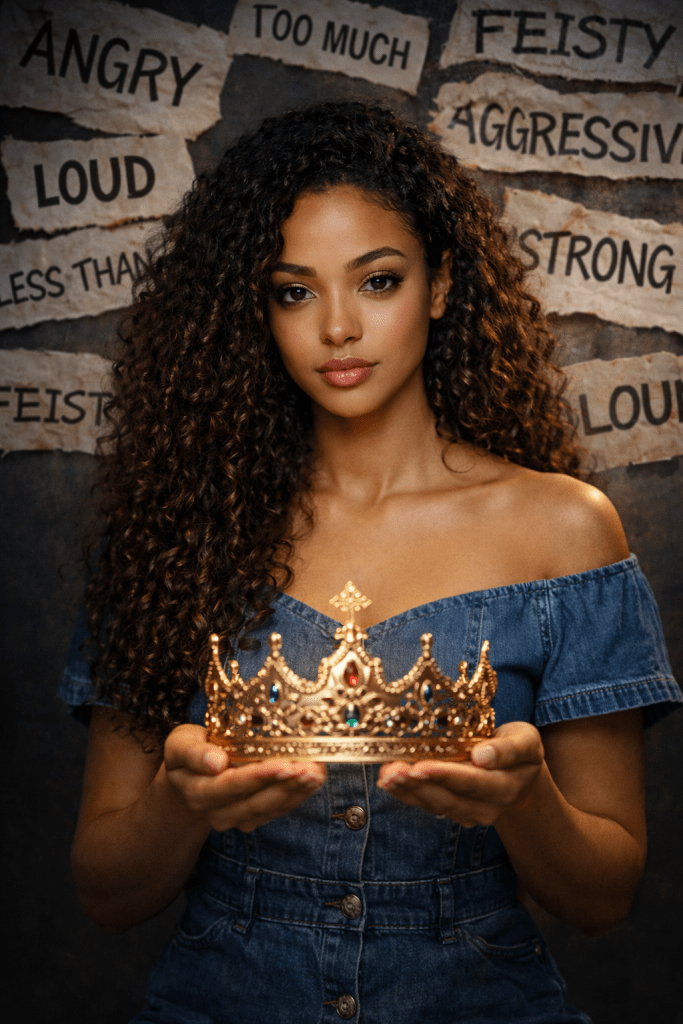
 THE BROWN GIRL DILEMMA