
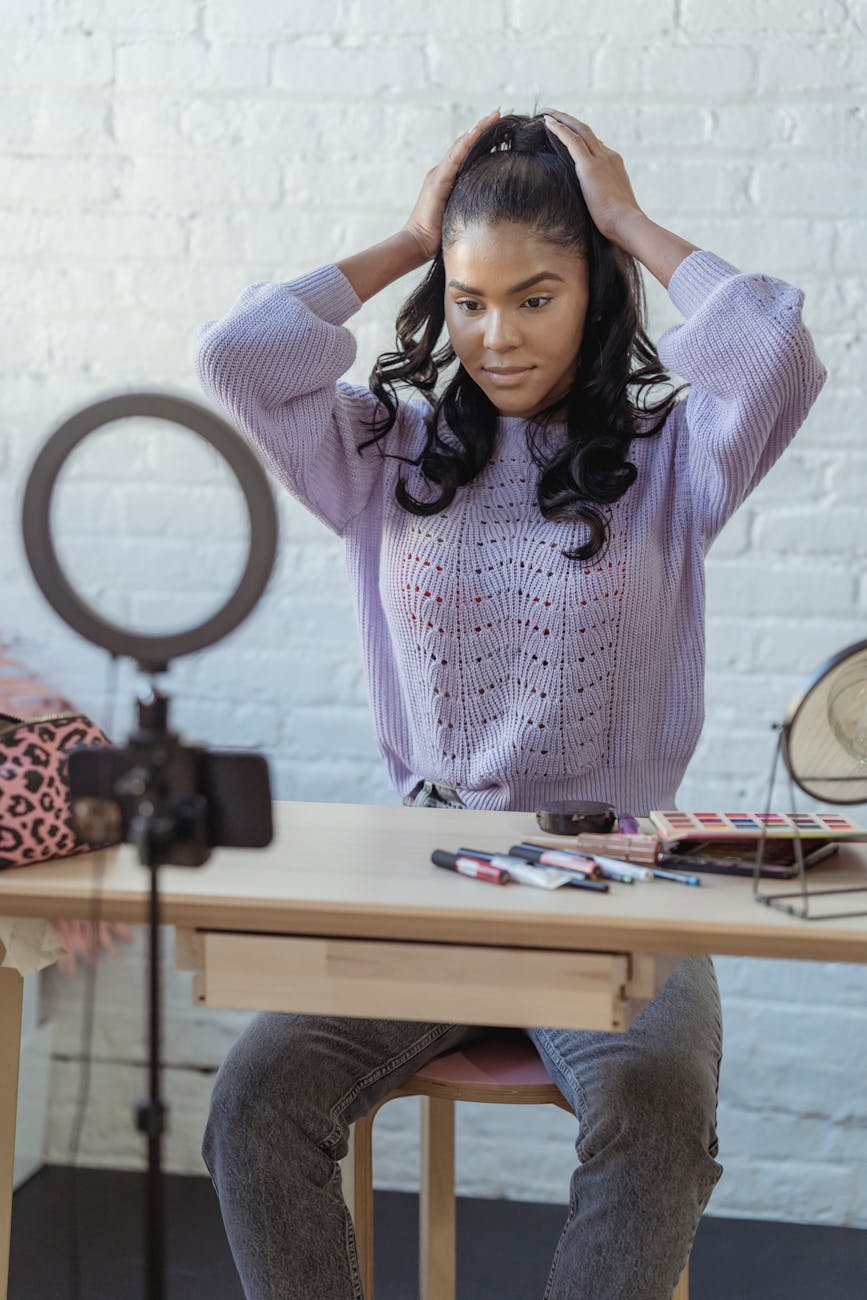
In the modern era, social media has become a pervasive force shaping perceptions of beauty, self-worth, and identity. Platforms like Instagram, TikTok, and YouTube offer unprecedented opportunities for self-expression and connection, yet they also present unique challenges, particularly for Brown and Black women. The constant exposure to curated images, filtered content, and influencer culture creates what can be described as a “digital mirror,” reflecting societal ideals that are often unattainable or exclusionary. Understanding the impact of social media on beauty perception and self-esteem is essential for cultivating resilience and positive self-image.
Social Media and the Construction of Beauty
Social media operates as a cultural lens, magnifying dominant beauty standards while simultaneously offering a platform for diverse representation. Research shows that frequent exposure to idealized images online can lead to social comparison, self-criticism, and body dissatisfaction (Fardouly et al., 2015). For Brown women, these comparisons are compounded by colorism, where lighter skin tones are often favored and amplified in mainstream content. The digital mirror, therefore, can both empower and undermine, depending on the type of content consumed and the framing of beauty standards.
The Role of Influencers and Representation
Influencers who embrace diversity and authentic representation play a pivotal role in reshaping perceptions of beauty online. Figures like Issa Rae, Lupita Nyong’o, and Adut Akech challenge Eurocentric ideals and normalize melanin-rich beauty. Representation in social media feeds offers validation, encourages self-expression, and promotes self-esteem among viewers who see themselves reflected positively. Research indicates that media representation significantly affects self-perception, particularly in marginalized communities where societal standards have historically excluded them (Tiggemann & Slater, 2014).
Psychological Impacts of the Digital Mirror
While social media can affirm identity, it also exposes users to negative commentary, trolling, and colorist remarks. This can exacerbate anxiety, depressive symptoms, and feelings of inadequacy (Valkenburg et al., 2017). The digital mirror not only reflects societal beauty ideals but can also amplify internalized biases. For Brown women, this dual effect underscores the importance of critical engagement and media literacy: understanding the difference between curated content and reality is crucial for mental well-being.
Strategies for Healthy Engagement
Building resilience in the digital age requires intentional strategies. Curating social media feeds to prioritize diverse and affirming content, limiting screen time, and practicing mindfulness while online can mitigate negative impacts. Engaging with communities that celebrate melanin-rich beauty, such as hashtags like #BrownSkinPoppin or #MelaninMagic, fosters empowerment and self-affirmation. Additionally, creators and viewers alike benefit from remembering that digital portrayals are often filtered, edited, and idealized, and do not define one’s inherent beauty or worth.
Transforming Social Media into a Tool for Empowerment
Beyond personal self-esteem, social media can serve as a platform for advocacy, education, and cultural pride. Brown women can leverage their digital presence to challenge colorism, amplify underrepresented voices, and create content that affirms diverse beauty. By transforming social media from a potential source of insecurity into a tool for empowerment, users can assert agency over how their image and identity are represented.
Digital Self-Care Guide for Brown Girls: Maintaining Confidence on Social Media
- Curate Your Feed – Follow creators, influencers, and accounts that celebrate diversity, melanin-rich beauty, and positive representation. Unfollow or mute content that triggers comparison or insecurity.
- Limit Screen Time – Set intentional boundaries for social media usage to prevent fatigue and constant exposure to unrealistic standards.
- Practice Mindful Scrolling – Notice your emotional reactions while online. Pause or disengage if content negatively impacts your self-esteem.
- Engage with Affirming Communities – Participate in groups and hashtags like #MelaninMagic, #BrownSkinPoppin, or #NaturalBeauty, which promote self-love and cultural pride.
- Remember the Filter Effect – Understand that photos are often curated, edited, or staged. Real life is not always reflected online.
- Post Authentically – Share your experiences, natural beauty, and personal achievements. Authentic content fosters connection and counters unrealistic portrayals.
- Journal or Reflect – After browsing social media, write down affirmations or moments that celebrate your skin, hair, or cultural identity.
- Seek Support – Talk to friends, family, or mentors when online negativity affects your mood or self-perception.
- Use Social Media for Advocacy – Transform negative experiences into education or awareness campaigns, challenging colorism and stereotypes.
- Affirm Your Worth Daily – Regularly remind yourself that beauty is not dictated by likes, comments, or online trends.
- Balance Inspiration and Comparison – Follow accounts that inspire, but avoid measuring your worth against curated online highlights.
- Celebrate Every Shade – Embrace your unique tone and features as part of your identity. Share and celebrate them with pride.
Conclusion
The digital mirror of social media reflects both societal beauty standards and individual perceptions, shaping self-esteem in complex ways. For Brown and Black women, exposure to curated content can either reinforce colorist ideals or serve as a space for affirmation and representation. Through intentional engagement, media literacy, and community support, social media can become a tool for empowerment rather than harm. Understanding the dynamics of the digital mirror allows women to navigate online spaces with confidence, celebrate their unique beauty, and resist the pressures of unrealistic or exclusionary standards.
References
- Fardouly, J., Diedrichs, P. C., Vartanian, L. R., & Halliwell, E. (2015). Social comparisons on social media: The impact of Facebook on young women’s body image concerns and mood. Body Image, 13, 38–45.
- Tiggemann, M., & Slater, A. (2014). NetGirls: The Internet, Facebook, and body image concern in adolescent girls. International Journal of Eating Disorders, 47(6), 630–643.
- Valkenburg, P. M., Meier, A., & Beyens, I. (2017). Social media use and adolescents’ self-esteem: A meta-analysis. Review of General Psychology, 21(4), 340–352.
 THE BROWN GIRL DILEMMA