Tag Archives: relationship

💔🧠 Toxic Relationships: A Psychological and Biblical Analysis 🧠💔

Photo by MART PRODUCTION on Pexels.com

💔🧠 🧠💔

“Make no friendship with an angry man; and with a furious man thou shalt not go: Lest thou learn his ways, and get a snare to thy soul.” (Proverbs 22:24-25, KJV)


Defining Toxic Relationships

A toxic relationship is one in which the psychological, emotional, or spiritual well-being of an individual is consistently undermined by another. In psychology, such relationships are characterized by patterns of manipulation, control, gaslighting, jealousy, or chronic disrespect (Lubit, 2002). Unlike healthy relationships, which foster growth and mutual support, toxic ones drain vitality and create cycles of dependency and harm. Toxicity may manifest in romantic partnerships, friendships, family ties, or professional settings. Importantly, toxic relationships are not always outwardly abusive; some are covert, operating through subtle criticism, guilt-tripping, or emotional withdrawal. The Bible acknowledges this destructive dynamic, warning believers to “be not deceived: evil communications corrupt good manners” (1 Corinthians 15:33, KJV).


The Psychology of Toxic Relationships

Psychologically, toxic relationships are often fueled by unresolved trauma, attachment insecurity, or personality disorders such as narcissism. Narcissistic partners, for instance, thrive on admiration and control, often disregarding the emotional needs of others (Campbell & Miller, 2011). Victims may develop symptoms of anxiety, depression, or complex trauma due to constant invalidation. Cognitive dissonance frequently arises when individuals rationalize abuse, believing loyalty or love requires enduring harm. This dynamic mirrors trauma bonding, where cycles of affection and mistreatment create powerful emotional entrapment (Carnes, 1997). Understanding this psychology helps victims recognize that toxicity is not a failure of their love but a dysfunction in the other’s character.


Toxicity Within Families: Parents and Relatives

When toxicity arises in family contexts, the psychological burden intensifies. Parents who are narcissistic, manipulative, or emotionally absent can leave lasting scars on children’s identity formation (Miller, 1997). The Bible acknowledges the complexity of family loyalty, commanding honor toward parents (Exodus 20:12, KJV), yet it also instructs believers to prioritize God’s truth over toxic ties: “He that loveth father or mother more than me is not worthy of me” (Matthew 10:37, KJV). Thus, while honoring family, one must also establish boundaries when relationships become destructive. Toxic relatives may disguise control as “care,” but scripture urges discernment: “From such turn away” (2 Timothy 3:5, KJV).


Toxic Friends vs. Toxic Family

Although toxic behaviors manifest in both friends and family, there are nuanced differences. Toxic friends are usually easier to separate from, as friendships are voluntary and external to one’s bloodline. In contrast, toxic family relationships carry cultural, emotional, and sometimes financial ties that complicate disengagement. Psychologically, betrayal from a parent or sibling often results in deeper wounds due to violated expectations of unconditional support (Johnson, 2019). However, both groups use similar toxic strategies—manipulation, envy, or exploitation. The Bible acknowledges false friends: “A man that hath friends must shew himself friendly: and there is a friend that sticketh closer than a brother” (Proverbs 18:24, KJV). In contrast, some biological relatives may not demonstrate this closeness, highlighting that loyalty must be based on character, not blood alone.


The Nine Steps to Breaking Free

Breaking free from toxic relationships requires intentional psychological and spiritual steps.

  1. Recognition – Acknowledge the relationship is harmful, refusing denial.
  2. Education – Learn about toxic behaviors (narcissism, gaslighting, codependency).
  3. Boundaries – Establish clear limits, even if guilt arises.
  4. Support Systems – Seek trusted friends, mentors, or church community.
  5. Therapy/Professional Help – Cognitive-behavioral therapy aids in rebuilding self-worth.
  6. Spiritual Anchoring – Ground identity in God’s truth (Psalm 27:10, KJV).
  7. Detachment – Limit or cut off contact when necessary.
  8. Healing Work – Engage in journaling, prayer, and self-care practices.
  9. Rebuilding Healthy Relationships – Replace toxic ties with life-giving connections.

For victims of parental toxicity, recourse may include limited contact or supervised interaction, while preserving respect where possible. In cases of spousal abuse, separation or divorce may be necessary to preserve life and well-being, aligning with biblical principles of peace (1 Corinthians 7:15, KJV).


Narcissism and the Markers of Toxicity

Narcissism epitomizes toxicity, characterized by entitlement, lack of empathy, manipulation, and exploitation (Twenge & Campbell, 2009). Narcissistic parents may belittle children to maintain superiority, while narcissistic partners may gaslight spouses into self-doubt. Key markers to avoid include: chronic lying, jealousy, emotional invalidation, controlling behavior, blame-shifting, and cycles of idealization and devaluation. Scripture cautions against aligning with such individuals: “Proud and haughty scorner is his name, who dealeth in proud wrath” (Proverbs 21:24, KJV). Avoidance, rather than reform, is often the wisest course, as attempts to “fix” toxic people usually deepen entanglement.


Example of a Toxic Relationship

Consider a woman married to a narcissistic spouse who alternates between flattery and humiliation. He isolates her from friends, controls finances, and constantly undermines her intelligence. Psychologically, she feels trapped, doubting her worth and fearing abandonment. Spiritually, she recalls Proverbs 14:1 (KJV): “Every wise woman buildeth her house: but the foolish plucketh it down with her hands.” Realizing her husband’s behavior destroys rather than builds, she seeks pastoral counsel, therapy, and eventually separation, choosing preservation over prolonged destruction. Her journey exemplifies how knowledge and faith together break cycles of toxicity.


Conclusion: The Solution and Hope

Toxic relationships are not inevitable prisons but destructive patterns that can be broken. Psychology provides tools for recognition and recovery, while Scripture offers wisdom for discernment and healing. The solution lies in boundaries, support, therapy, and spiritual anchoring. Whether in friendships, family, or romantic partnerships, believers must remember that peace and love are the hallmarks of God-centered relationships: “Follow peace with all men, and holiness, without which no man shall see the Lord” (Hebrews 12:14, KJV). Overcoming toxicity is both a psychological and spiritual liberation—an act of reclaiming one’s God-given dignity.


References

  • Campbell, W. K., & Miller, J. D. (2011). The handbook of narcissism and narcissistic personality disorder. Wiley.
  • Carnes, P. (1997). The betrayal bond: Breaking free of exploitive relationships. Health Communications.
  • Johnson, S. M. (2019). Attachment theory in practice: Emotionally focused therapy for individuals, couples, and families. Guilford Press.
  • Lubit, R. (2002). The long-term impact of narcissistic abuse. Psychiatric Times.
  • Miller, A. (1997). The drama of the gifted child: The search for the true self. Basic Books.
  • Twenge, J. M., & Campbell, W. K. (2009). The narcissism epidemic: Living in the age of entitlement. Free Press.


🕵🏽‍♀️ When Love Turns Dangerous: Recognizing and Responding to Obsessive Attachment 🕵🏽‍♀️

Photo by Alex Green on Pexels.com

🕵🏽‍♀️ 🕵🏽‍♀️

Obsession, in psychological terms, is an intense and often intrusive fixation on a person, idea, or object that dominates thought and behavior, frequently at the expense of healthy boundaries (American Psychiatric Association, 2013). Unlike healthy attraction or affection, obsession is characterized by an inability to disengage mentally or emotionally, leading to controlling or possessive tendencies. In relationships, this fixation may initially appear as devotion but can quickly escalate into behaviors that are emotionally draining, manipulative, or even threatening. The Bible offers insight into the dangers of obsessive attachment, cautioning in Proverbs 4:23 (KJV), “Keep thy heart with all diligence; for out of it are the issues of life.” This verse emphasizes guarding emotional and spiritual well-being from harmful entanglements.

A person can become obsessed with you for various reasons—often rooted in insecurity, unmet emotional needs, or unresolved trauma. Attachment theory suggests that individuals with anxious or fearful attachment styles may latch onto a romantic partner in an attempt to avoid abandonment (Hazan & Shaver, 1987). Obsession can also stem from idealization, where the individual projects unrealistic expectations onto their partner. In such cases, the relationship is less about mutual love and more about the obsessive person’s internal emotional void. The KJV Bible warns in 1 Corinthians 13:5 that love “seeketh not her own,” implying that genuine affection is selfless, not self-serving or controlling.

Four key signs may indicate that someone is obsessively attached to you. First, they demand constant contact, becoming distressed or angry when you do not respond immediately. Second, they display excessive jealousy or suspicion without cause. Third, they attempt to control aspects of your life, such as friendships, time, or appearance. Fourth, they exhibit mood swings tied to your availability or perceived interest. Men who are obsessed may express it through overt control, monitoring, or aggressive confrontation, while women may exhibit constant emotional checking-in, manipulation through guilt, or social sabotage. Both patterns signal a lack of respect for personal autonomy.

The difference between obsession and stalking lies in behavior escalation and legality. Obsession can remain private and internal, with intrusive thoughts and emotional dependency, whereas stalking involves repeated, unwanted behaviors that cause fear or distress and may violate the law (Sheridan & Grant, 2007). Stalking is often the severe manifestation of obsession, where the person’s fixation overrides respect for legal and personal boundaries. This distinction is critical for identifying when a situation shifts from emotionally unhealthy to potentially dangerous.

Protecting yourself from an obsessed individual begins with recognizing the signs early and establishing firm boundaries. Limit personal information, maintain independent social circles, and communicate your discomfort directly. If necessary, involve trusted friends, family, or authorities. The Bible counsels in Proverbs 22:3 (KJV), “A prudent man foreseeth the evil, and hideth himself: but the simple pass on, and are punished.” This highlights the need for discernment and proactive steps to protect one’s safety and peace. From a psychological standpoint, distancing yourself from obsessive individuals prevents reinforcement of their behaviors and gives space for both parties to recalibrate emotionally.

Ultimately, spotting the signs of obsessive attachment empowers you to choose healthier relationships and avoid destructive entanglements. A “better mate” is one who demonstrates mutual respect, emotional stability, and a love grounded in biblical principles—marked by patience, kindness, and self-control (Galatians 5:22–23). Understanding the psychology of obsession, coupled with biblical wisdom, equips you to navigate relationships with discernment, ensuring that affection is reciprocal, healthy, and God-centered.


References

American Psychiatric Association. (2013). Diagnostic and statistical manual of mental disorders (5th ed.). American Psychiatric Publishing.

Hazan, C., & Shaver, P. (1987). Romantic love conceptualized as an attachment process. Journal of Personality and Social Psychology, 52(3), 511–524. https://doi.org/10.1037/0022-3514.52.3.511

Sheridan, L., & Grant, T. (2007). Is cyberstalking different? Psychology, Crime & Law, 13(6), 627–640. https://doi.org/10.1080/10683160701340528

The 10 Signs a Man Is Stringing You Along

When Love Is an Illusion: Recognizing and Responding to a Man Who Strings You Along

Photo by Erik Mclean on Pexels.com

Relationships flourish when mutual commitment, clarity, and respect are present (Gottman & Silver, 2015). However, some men deliberately keep women emotionally invested without offering genuine commitment—a tactic often referred to as stringing along. This behavior is both psychologically damaging and spiritually dangerous, as it breeds confusion, emotional instability, and wasted years.


10 Signs a Man Is Stringing You Along

  1. He Avoids Defining the Relationship – Months or years pass, yet he resists labels like “girlfriend” or “fiancée.”
  2. Inconsistent Communication – Some days he is attentive, other days emotionally absent without explanation.
  3. Keeps You at Arm’s Length from His Inner Life – You haven’t met his family or close friends despite significant time together.
  4. He Talks About the Future… Vaguely – He dangles promises (“someday we’ll…”) without taking concrete steps.
  5. He Prioritizes Convenience Over Commitment – He contacts you mainly when it benefits him.
  6. Lack of Effort in Building Emotional Intimacy – Conversations remain shallow or avoid important life topics.
  7. Keeps Options Open – Engages in flirtatious behavior or remains active on dating apps.
  8. Emotional Hot-and-Cold Patterns – You never feel secure because his affection fluctuates.
  9. No Progress Over Time – The relationship feels stagnant despite your effort.
  10. He Makes You Feel You’re “Asking for Too Much” – Genuine needs are framed as unreasonable demands.

Why Do Some Men String Women Along?

From a psychological standpoint, men may string women along for several reasons:

  • Fear of Commitment – Avoidance due to past trauma or desire for freedom (Levine & Heller, 2010).
  • Ego Boost – Enjoying female attention without the responsibility of a relationship.
  • Emotional Immaturity – Inability to handle the demands of partnership.
  • Backup Plan Mentality – Keeping a woman “on the hook” while exploring other options.
  • Selfishness – Prioritizing personal gratification over another person’s emotional well-being.

Biblically, this aligns with the description of double-minded men—unstable and unreliable (James 1:8, KJV).


What Kind of Man Strings You Along—and Why?

  • The Commitment-Phobic – Wants intimacy but not responsibility.
  • The Opportunist – Uses a woman’s resources, time, or body without intention to marry.
  • The Serial Dater – Thrives on novelty and avoids settling down.
  • The Insecure Man – Keeps you for validation but fears true vulnerability.

Proverbs warns against aligning with a man who “flattereth with his tongue” (Proverbs 26:28, KJV), because deceitful intentions corrupt trust.


How to Detect the Warning Signs Early

  • Observe consistency between words and actions (Matthew 7:16).
  • Pay attention to how he prioritizes you in public and private life.
  • Assess whether his plans include you beyond convenience.
  • Watch for defensiveness when discussing commitment.

What to Do if You’re Being Strung Along

  1. Clarify Your Boundaries – Define what you need and communicate it directly.
  2. Set a Time Limit – Avoid letting months or years pass without progress.
  3. Don’t Confuse Chemistry with Commitment – Emotional and physical attraction are not proof of intention.
  4. Seek Wise Counsel – Proverbs 15:22 reminds us that “without counsel purposes are disappointed.”
  5. Be Willing to Walk Away – Protect your dignity and emotional health.

5 Ways a Man Shows He Truly Wants You

  1. He Pursues You Consistently – Effort is steady, not situational.
  2. He Makes His Intentions Clear – There’s no guessing about his commitment.
  3. He Integrates You into His Life – Family, friends, and future plans.
  4. He Invests in Your Growth – Supports your goals and well-being.
  5. He Works to Resolve Conflicts – Disagreements don’t make him disappear.

How Long Should You Give a Man Before Leaving?

While timelines vary, healthy relationships typically progress toward clarity within 6–12 months (Knox & Schacht, 2016). If after a year there is no forward movement toward exclusivity or marriage, Proverbs 4:23—“Keep thy heart with all diligence”—reminds you not to squander emotional resources.


What Does the Bible Say About Men Who String Women Along?

Scripture condemns deceit, manipulation, and using others for selfish gain:

  • James 1:8 – “A double minded man is unstable in all his ways.”
  • Proverbs 26:28 – “A lying tongue hateth those that are afflicted by it.”
  • 1 Corinthians 14:33 – “For God is not the author of confusion, but of peace.”
  • Ephesians 5:25 – Men are commanded to love their wives sacrificially, not exploit them.
  • Matthew 7:16 – “Ye shall know them by their fruits.”

A man who deliberately strings a woman along is acting outside God’s design for love, which calls for honesty, covenant, and care.


References
Gottman, J., & Silver, N. (2015). The seven principles for making marriage work. Harmony Books.
Knox, D., & Schacht, C. (2016). Choices in relationships: An introduction to marriage and the family. Cengage Learning.
Levine, A., & Heller, R. (2010). Attached: The new science of adult attachment and how it can help you find—and keep—love. TarcherPerigee.

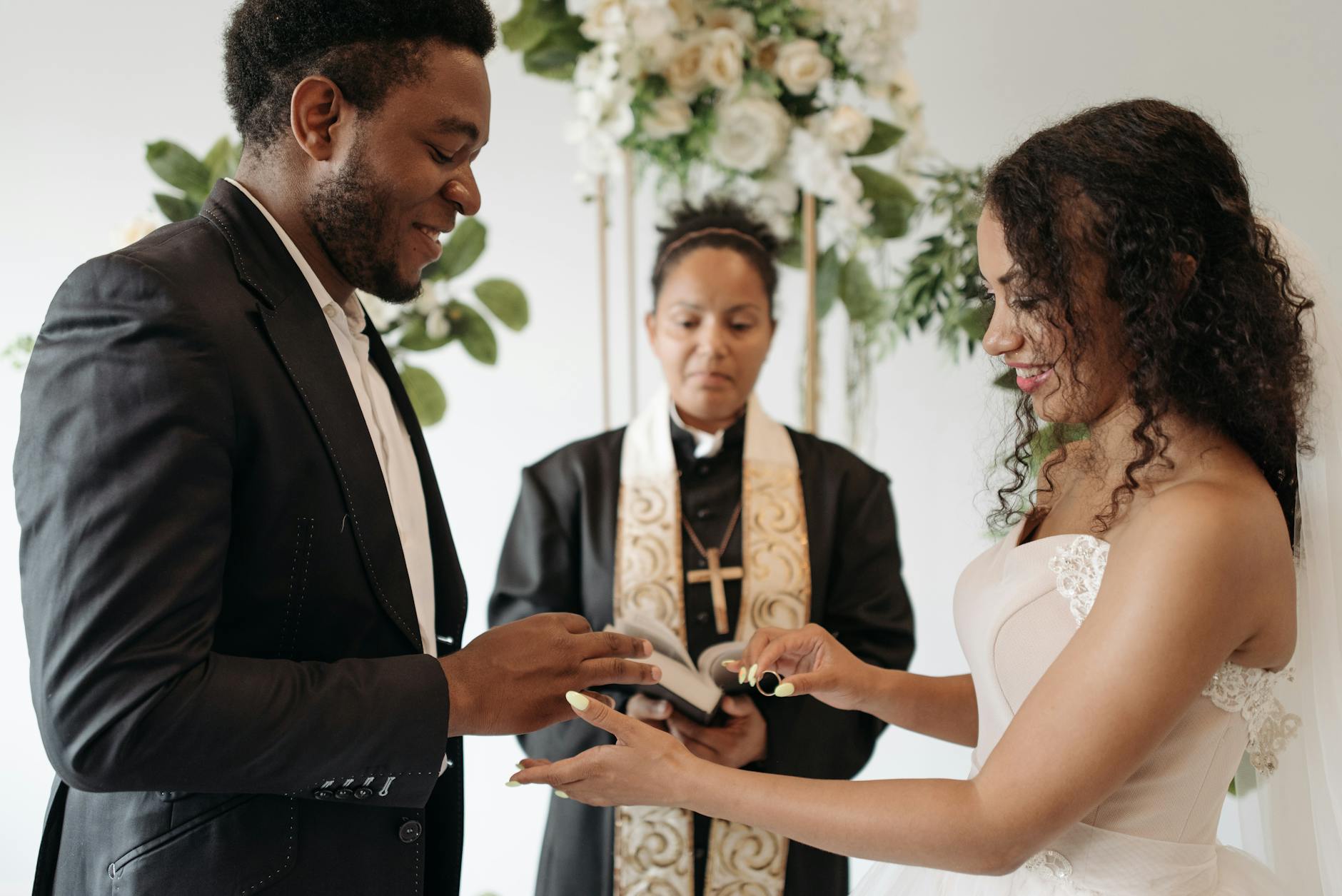
How to Be a Good and Godly Wife

A Biblical and Psychological Perspective

Photo by Agung Prakoso BayuAdi on Pexels.com

The institution of marriage is one of the earliest and most sacred covenants established by God (Genesis 2:24, KJV). The Bible’s model for a godly wife integrates reverence for the Lord, commitment to her husband, and the nurturing of the home. In contemporary psychology, these same virtues—mutual respect, emotional intelligence, and selflessness—are essential predictors of marital satisfaction and family stability (Gottman & Silver, 2015). Understanding how to live out these biblical principles with wisdom enables women to flourish in their roles as wives, mothers, and spiritual stewards of the household.


I. Biblical Foundation for a Godly Wife

Scripture outlines the qualities of a virtuous wife in detail. Proverbs 31 describes her as industrious, wise, compassionate, and devoted to her family. The apostle Paul emphasizes in Ephesians 5:22–24 (KJV) that wives should submit to their own husbands “as unto the Lord,” not as an act of inferiority, but as a reflection of divine order. Submission in biblical terms means honoring the leadership role of the husband while exercising her own God-given wisdom and gifts (Titus 2:4–5, KJV).


II. Psychological Perspective

From a psychological standpoint, marriage thrives when both partners display emotional regulation, mutual respect, and shared values (Stanley, Rhoades, & Whitton, 2010). Research on healthy relationships shows that a supportive wife fosters emotional stability in her spouse, which in turn strengthens the marital bond and provides a secure environment for children (Karney & Bradbury, 2005). Emotional intelligence—understanding and managing one’s own emotions while empathizing with others—is a key factor in being a loving and wise helpmeet (Goleman, 1995).


III. Ten Traits of a Good and Godly Wife

  1. Faithfulness – Remains loyal in heart, speech, and conduct (Proverbs 31:11, KJV).
  2. Respect for Her Husband – Honors his leadership (Ephesians 5:33, KJV).
  3. Wisdom and Discernment – Speaks with kindness and avoids foolish words (Proverbs 31:26, KJV).
  4. Diligence – Works hard to manage the home and contribute to its well-being (Proverbs 31:13, 27, KJV).
  5. Compassion – Cares for the poor and needy (Proverbs 31:20, KJV).
  6. Self-Control – Maintains godly behavior even under stress (1 Peter 3:4, KJV).
  7. Encouragement – Strengthens her husband with words of affirmation (Proverbs 12:4, KJV).
  8. Modesty – Dresses in a way that honors God and avoids immodesty (1 Timothy 2:9–10, KJV).
  9. Hospitality – Opens her home and heart to others (Hebrews 13:2, KJV).
  10. Prayerfulness – Covers her family in consistent intercession (Philippians 4:6, KJV).

IV. Behaviors to Avoid

A godly wife must guard against traits and behaviors that undermine love and respect:

  • Nagging and Quarreling (Proverbs 21:9, KJV)
  • Disrespect or Contempt (Ephesians 5:33, KJV)
  • Gossip and Slander (Proverbs 16:28, KJV)
  • Laziness (Proverbs 31:27, KJV)
  • Vanity and Pride (Proverbs 31:30, KJV)

Psychology confirms that contempt, criticism, and stonewalling are some of the most destructive patterns in marriage (Gottman & Silver, 2015).


V. Biblical Modesty and Dress

Modesty in dress is both an outward reflection of inward holiness and a safeguard against distraction or temptation. The Bible commands women to adorn themselves “in modest apparel, with shamefacedness and sobriety” (1 Timothy 2:9, KJV). Modesty is not about drabness but about self-respect, dignity, and honoring God with our appearance. Psychology supports the idea that clothing influences perception—modest dress fosters respect and communicates self-control (Adam & Galinsky, 2012).


VI. Becoming the Biblical Wife

To embody the biblical wife is to live in alignment with God’s Word, to respect her husband’s role without losing her own voice, and to cultivate an atmosphere of peace in the home. This requires daily spiritual discipline—prayer, study of Scripture, humility, and a heart set on service rather than self-promotion.


VII. Teaching Daughters to Be Godly Wives

Titus 2:3–5 (KJV) instructs older women to teach the younger women “to love their husbands, to love their children, to be discreet, chaste, keepers at home, good, obedient to their own husbands.” Mothers must model godly womanhood before their daughters, teaching:

  • The value of purity before marriage.
  • The strength found in gentleness and wisdom.
  • Skills for managing a household.
  • How to pray and read Scripture daily.

Psychologically, daughters who witness healthy marriages and loving motherly guidance are more likely to form strong, stable relationships themselves (Amato, 2000).


Conclusion

A good and godly wife is a woman who embodies biblical virtues, exercises emotional intelligence, and builds her home on a foundation of faith and love. She is not defined by cultural fads but by the eternal wisdom of God’s Word. By teaching these principles to daughters, mothers ensure that the legacy of godly womanhood is preserved for generations.


References

Adam, H., & Galinsky, A. D. (2012). Enclothed cognition. Journal of Experimental Social Psychology, 48(4), 918–925.
Amato, P. R. (2000). The consequences of divorce for adults and children. Journal of Marriage and the Family, 62(4), 1269–1287.
Goleman, D. (1995). Emotional intelligence. Bantam Books.
Gottman, J., & Silver, N. (2015). The seven principles for making marriage work. Harmony Books.
Karney, B. R., & Bradbury, T. N. (2005). Contextual influences on marriage. Current Directions in Psychological Science, 14(4), 171–174.
Stanley, S. M., Rhoades, G. K., & Whitton, S. W. (2010). Commitment: Functions, formation, and the securing of romantic attachment. Journal of Family Theory & Review, 2(4), 243–257.

Dilemma: Leveling Up as a Godly Wife

Biblical Principles, Intellectual Partnership, and the Role of Support in Marriage

Photo by Pavel Danilyuk on Pexels.com

In modern discourse, the phrase “leveling up” often describes personal growth, self-improvement, and the intentional pursuit of higher standards in one’s life. While secular definitions may focus on financial status, aesthetics, or social capital, within the biblical framework, “leveling up” as a wife is rooted in character, spiritual maturity, and the ability to nurture a godly and harmonious home. Proverbs 18:22 (KJV) declares, “Whoso findeth a wife findeth a good thing, and obtaineth favour of the Lord.” This statement highlights not only the blessing of marriage but also the intrinsic value of a godly wife to her husband’s life, mission, and spiritual walk.


The Meaning of “Leveling Up” in a Biblical Marriage

“Leveling up” in the context of biblical womanhood is the intentional act of aligning one’s actions, mindset, and spirit with God’s standards for marriage. This involves spiritual growth (2 Peter 3:18), emotional maturity (Proverbs 31:25), and the cultivation of virtues such as kindness, humility, and wisdom. It is not about material perfection but about embodying the qualities that make a wife a source of stability, inspiration, and strength.


Biblical Principles of Being a Wife

The Bible presents a multi-dimensional view of the role of a wife. Key passages include:

  • Submission and Respect: “Wives, submit yourselves unto your own husbands, as unto the Lord” (Ephesians 5:22, KJV). Biblical submission is not about oppression but about honoring the divine order and supporting the husband’s leadership.
  • Helper and Partner: Genesis 2:18 identifies the wife as a “help meet,” meaning a suitable helper, complementing her husband’s mission and vision.
  • Virtue and Diligence: Proverbs 31 describes a wife who is industrious, wise, and compassionate, managing her home well and caring for her household’s needs.
  • Faithfulness: Hebrews 13:4 emphasizes marital fidelity as a covenant before God.

Practical Ways to Level Up as a Wife

  1. Listening and Communication Skills – James 1:19 advises being “swift to hear, slow to speak.” Effective listening fosters trust, minimizes conflict, and helps a wife better understand her husband’s emotional and spiritual needs.
  2. Culinary and Home Management Skills – Providing healthy, well-prepared meals (Proverbs 31:15) and maintaining a clean, peaceful home environment demonstrate care and respect for the family.
  3. Supportive Partnership – A wife’s encouragement can uplift a man in moments of doubt (Ecclesiastes 4:9–10). She helps him focus on his calling by providing stability and reassurance.
  4. Emotional and Spiritual Encouragement – Praying together and for each other strengthens the spiritual bond (1 Thessalonians 5:11).

Choosing a Husband: Beyond Looks

The Bible warns against relying solely on appearances: “Favour is deceitful, and beauty is vain: but a woman that feareth the Lord, she shall be praised” (Proverbs 31:30). Compatibility, shared faith, integrity, and a man’s commitment to God’s purpose are more important than physical attraction alone.


What Godly Men Look For

Research and biblical teaching suggest that godly men often value:

  • Spiritual maturity (Proverbs 31:10–12)
  • Trustworthiness
  • Emotional support
  • Intellectual companionship
  • Respect and admiration

The Five Love Languages in Marriage

Dr. Gary Chapman (1992) identifies five primary ways people express and receive love:

  1. Words of Affirmation
  2. Acts of Service
  3. Receiving Gifts
  4. Quality Time
  5. Physical Touch

Understanding a husband’s primary love language allows a wife to meet his emotional needs more effectively, fostering deeper intimacy and connection.


Conclusion

Leveling up as a wife means committing to personal growth, aligning with biblical values, and becoming a partner who nurtures her husband’s well-being spiritually, emotionally, and physically. Proverbs 18:22 is not merely a poetic line but a reminder that a godly wife is both a blessing and a source of divine favor. By embracing biblical principles, practical skills, and emotional intelligence, a wife can create a marriage that reflects God’s design and thrives in love and unity.


References

  • Chapman, G. (1992). The five love languages: How to express heartfelt commitment to your mate. Northfield Publishing.
  • Holy Bible, King James Version.
  • Peters, R. (2020). Marriage God’s Way: A Biblical Recipe for Healthy, Joyful Relationships. Christian Focus Publications.
  • Thomas, G. (2015). Sacred marriage: What if God designed marriage to make us holy more than to make us happy? Zondervan.