
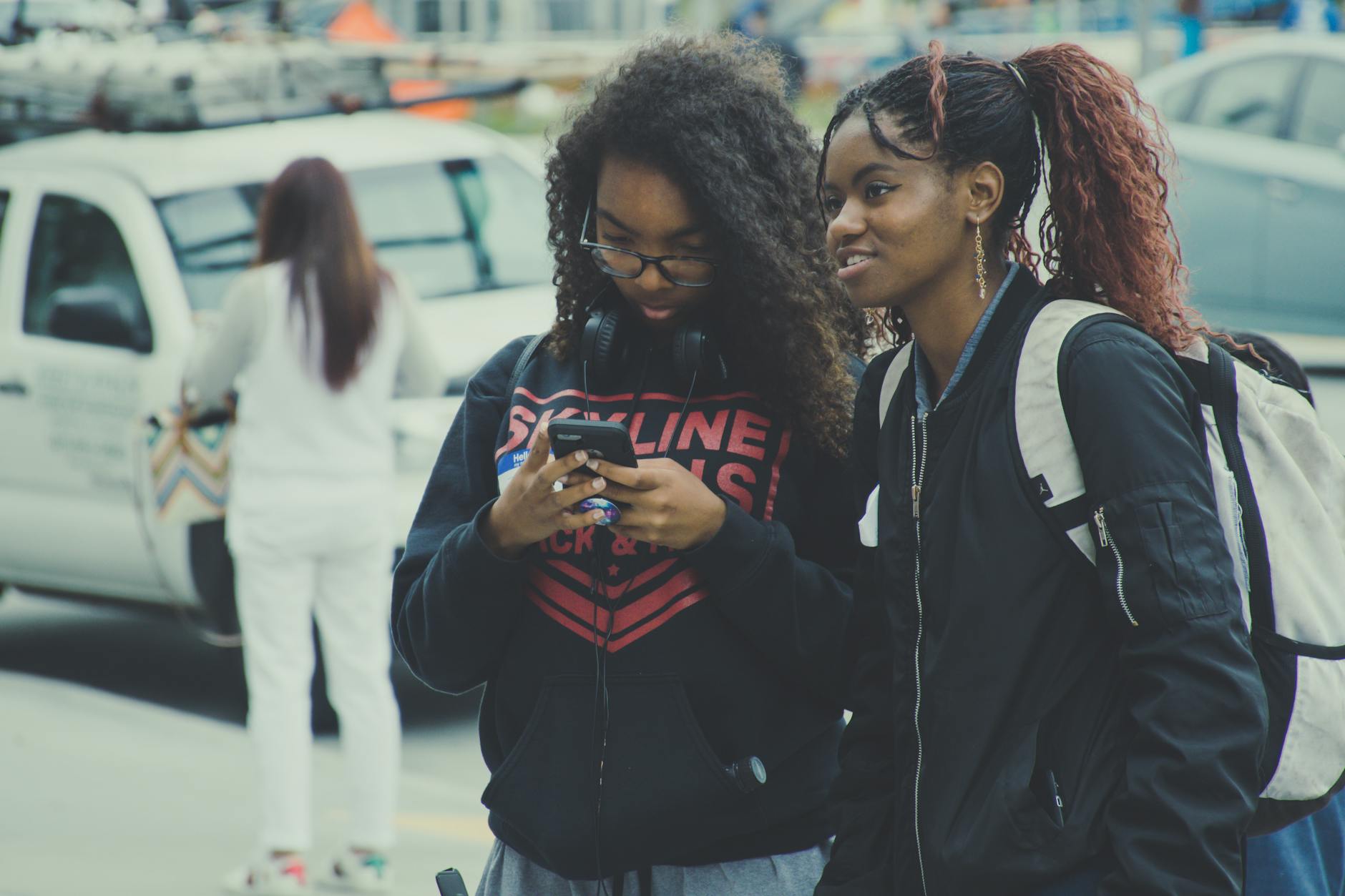
Brown girls have historically been subjected to cultural narratives that devalue their natural beauty, heritage, and potential. From colonialism to modern media, societal standards have often privileged lighter skin, Eurocentric features, and conformity to Western ideals. Redefining radiance requires Brown girls to reclaim their narratives, celebrate melanin-rich skin, natural hair textures, and culturally distinctive features, and assert agency over how they are seen and valued in society (Hunter, 2007).
Media representation plays a pivotal role in shaping perceptions. While light-skinned women like Yara Shahidi, Salli Richardson, and Mari Morrow frequently dominate visibility, dark-skinned women such as Lupita Nyong’o, Issa Rae, and Kenya Moore are redefining what beauty, talent, and influence look like on a global stage. Their prominence challenges Eurocentric beauty norms, providing young Brown girls with relatable role models who validate their identity and aesthetics (Byrd & Tharps, 2014).
Education and mentorship serve as critical tools for narrative reclamation. Programs like Black Girls CODE, Girls Who Code, and culturally responsive curricula equip Brown girls with skills, confidence, and networks to thrive academically and professionally. These initiatives foster critical thinking, resilience, and self-efficacy, allowing girls to navigate societal biases while asserting their value and potential (Banks, 2015).
Cultural affirmation strengthens the reclaiming of narratives. Celebrating heritage, history, and art rooted in African and diasporic traditions cultivates pride and counters internalized bias. Workshops, storytelling sessions, and community events provide platforms for Brown girls to explore identity, share experiences, and amplify their voices in spaces that have historically marginalized them (Hunter, 2007).
Psychologically, embracing one’s narrative promotes self-esteem and resilience. Internalizing societal preference for lighter skin can erode confidence, but representation, mentorship, and cultural affirmation foster pride and authenticity. Social comparison theory illustrates how exposure to positive role models reduces the negative impact of biased media, empowering girls to redefine beauty and success on their own terms (Festinger, 1954; Fardouly et al., 2015).
Faith and spiritual grounding offer an enduring framework. Proverbs 31:30 (KJV) teaches, “Favour is deceitful, and beauty is vain: but a woman that feareth the LORD, she shall be praised.” Anchoring identity in character, integrity, and divine purpose empowers Brown girls to value themselves beyond societal or media-driven hierarchies, embracing both talent and aesthetics with confidence.
Redefining radiance requires a multi-dimensional approach that integrates media literacy, mentorship, cultural affirmation, education, and spiritual grounding. By claiming their narrative, Brown girls challenge historical biases, assert agency over representation, and inspire future generations to embrace melanin-rich beauty, talent, and identity with pride. Through this reclamation, true radiance emerges—not merely as a reflection of physical appearance, but as a manifestation of confidence, resilience, and authenticity.
The Brown girl experience is shaped by the dual forces of cultural celebration and systemic bias. Colorism, media representation, and societal expectations have historically devalued darker complexions, creating barriers to self-esteem, visibility, and opportunity. Yet empowerment is possible when girls cultivate shade-conscious pride, personal strength, and intentional self-love, supported by practical tools, mentorship, and cultural affirmation (Hunter, 2007).
Self-love begins with recognizing inherent worth beyond external validation. Darker-skinned girls often internalize biases from media, peer comparison, and societal preference for lighter skin. Affirming one’s beauty, intellect, and capability counters these pressures, fostering psychological resilience and positive identity formation. Techniques such as journaling, affirmations, and self-reflection encourage internalization of these values (Festinger, 1954).
Mentorship is a powerful tool for growth. Connecting with successful role models like Lupita Nyong’o, Issa Rae, and Kenya Moore provides guidance, inspiration, and a tangible example of achievement and visibility. Mentors can teach skills, navigate systemic challenges, and model confidence, reinforcing that self-worth is not determined by skin tone but by talent, resilience, and authenticity (Banks, 2015).
Cultural literacy and affirmation cultivate pride in heritage. Brown girls benefit from learning about African and diasporic history, art, and achievements, fostering identity rooted in context rather than imposed narratives. Community programs, storytelling sessions, and cultural workshops validate experiences and features historically marginalized, reinforcing pride in melanin-rich skin, hair textures, and features (Byrd & Tharps, 2014).
Media literacy equips Brown girls to critically navigate biased content. Social media and mainstream media often reinforce Eurocentric ideals, but teaching girls to deconstruct these messages promotes agency. Recognizing algorithmic biases, challenging stereotypical representations, and seeking diverse role models allow girls to embrace authentic beauty and reject internalized colorism (Fardouly et al., 2015).
Spiritual grounding enhances both resilience and ethical self-conception. Proverbs 31:30 (KJV) reminds, “Favour is deceitful, and beauty is vain: but a woman that feareth the LORD, she shall be praised.” Faith emphasizes character and virtue over superficial metrics, enabling Brown girls to navigate societal pressures with confidence, integrity, and grounded self-worth. Spiritual practices, prayer, and scriptural study provide reinforcement of identity beyond appearance.
Finally, practical lifestyle strategies reinforce self-love. Skincare routines, embracing natural hair, personal style, and physical wellness practices allow Brown girls to celebrate their bodies while enhancing confidence. These tangible expressions of self-care reinforce internal affirmation and act as outward markers of pride in identity, heritage, and aesthetic beauty.
In conclusion, tools for the Brown girl experience encompass self-love, mentorship, cultural affirmation, media literacy, spiritual grounding, and practical self-care. By integrating these strategies, Brown girls can navigate systemic bias, reclaim narratives of beauty and worth, and cultivate resilience, pride, and authenticity. Shade, strength, and self-love become interconnected pillars, ensuring that identity, talent, and melanin-rich beauty are celebrated fully and unapologetically.
References
Banks, J. A. (2015). Cultural diversity and education: Foundations, curriculum, and teaching. Routledge.
Byrd, A. D., & Tharps, L. L. (2014). Hair Story: Untangling the Roots of Black Hair in America. St. Martin’s Press.
Fardouly, J., Diedrichs, P. C., Vartanian, L. R., & Halliwell, E. (2015). Social comparisons on social media: The impact of Facebook on young women’s body image concerns and mood. Body Image, 13, 38–45.
Festinger, L. (1954). A theory of social comparison processes. Human Relations, 7(2), 117–140.
Hunter, M. (2007). The persistent problem of colorism: Skin tone, status, and inequality. Sociology Compass, 1(1), 237–254.
 THE BROWN GIRL DILEMMA