
Tag Archives: Queen of Sheba

Biblical History: 👑 Queen Makeda (The Queen of Sheba)

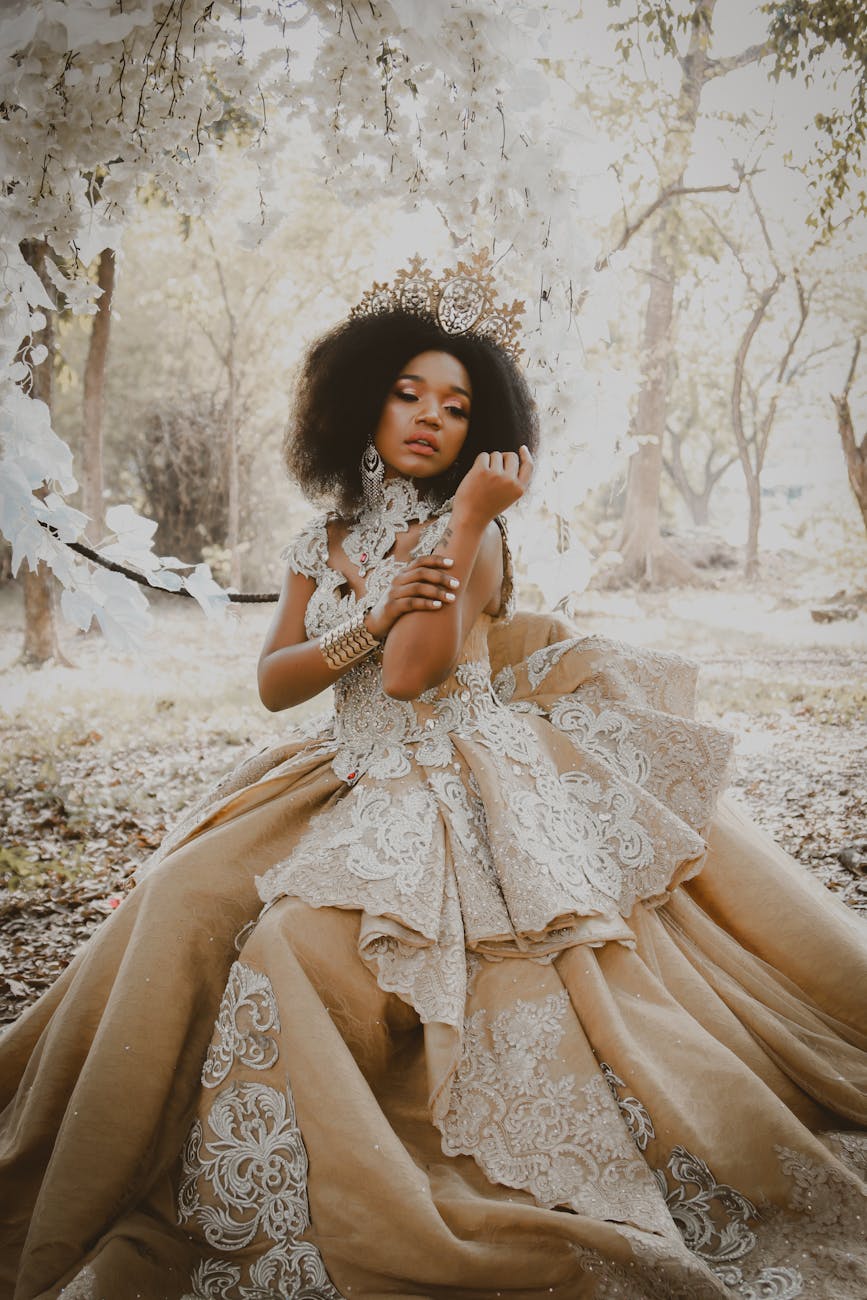
Photo by John Ray Ebora on Pexels.com

👑 Wisdom, Beauty, and Global Influence 👑

Queen Makeda, famously known as the Queen of Sheba, is celebrated as one of the most iconic figures in both biblical and Ethiopian history. Her story reflects an extraordinary combination of beauty, intelligence, and diplomacy, setting the standard for melanated female leadership. The King James Version recounts: “And when the queen of Sheba heard of the fame of Solomon, she came to prove him with hard questions at Jerusalem, with a very great train, and camels that bare spices, and very much gold, and precious stones” (1 Kings 10:1–2, KJV). This narrative highlights her initiative, intellect, and regal presence.

Makeda’s journey to Jerusalem was a deliberate test of Solomon’s wisdom. She arrived not merely as a traveler but as an intellectual equal seeking knowledge and insight. Her ability to pose profound questions reflects a sophisticated understanding of governance, diplomacy, and theology. In doing so, she embodies the ideal that leadership is rooted in both mind and character.

Biblical accounts emphasize her discernment and spiritual awareness. Upon witnessing Solomon’s wisdom, she “praised the Lord with all her heart” (1 Kings 10:7, KJV), demonstrating that recognition of true wisdom extends beyond human intellect to divine insight. Makeda’s reverence for knowledge and God’s guidance aligns her story with Proverbs 3:13 (KJV): “Happy is the man that findeth wisdom, and the man that getteth understanding.”

Makeda’s wealth and strategic presentation of gifts — spices, gold, and precious stones — reflect her political acumen. These offerings were not mere tokens; they were symbolic of her nation’s prosperity and her ability to negotiate alliances. Proverbs 31:16 (KJV) similarly highlights foresight and resourcefulness: “She considereth a field, and buyeth it: with the fruit of her hands she planteth a vineyard.” Makeda’s diplomacy demonstrates that intellectual beauty complements material and strategic intelligence.

Psychologically, Makeda exemplifies the archetype of a melanated queen whose confidence derives from competence, presence, and poise. Leadership studies suggest that individuals who combine charisma with cognitive skill are often more persuasive and effective in negotiations (Bass & Riggio, 2006). Makeda’s story illustrates this principle: her influence extended beyond physical beauty to mental acuity and strategic thinking.

Culturally, Ethiopian traditions elevate Makeda’s legacy as a mother of kings. According to tradition, she bore King Solomon’s son, Menelik I, founder of the Solomonic dynasty. This lineage symbolizes a fusion of divine favor, royal authority, and melanated excellence. Her story continues to inspire pride in African heritage and affirm the historical significance of Black queenship.

Comparisons with other African queens reinforce her archetype. Queen Nzinga of Angola, like Makeda, combined beauty with exceptional military and diplomatic skill, resisting colonization and preserving her people’s autonomy. Similarly, Hatshepsut of Egypt balanced aesthetic elegance with political authority, ruling successfully as a pharaoh. These comparisons show that Makeda’s integration of intellect, beauty, and leadership is a recurring theme in African history.

Makeda’s beauty is consistently noted alongside her intellect. Biblical and historical texts emphasize her regal appearance, but her acclaim arose from her wisdom and discernment as much as from her looks. 1 Kings 10:10 (KJV) reports the lavish gifts she gave Solomon: “And she gave the king an hundred and twenty talents of gold, and of spices very great store, and precious stones: there came no more such abundance of spices as these which the queen of Sheba gave to king Solomon.” These gestures indicate her aesthetic refinement, strategic vision, and wealth.

From a psychological perspective, Makeda’s story demonstrates the principle of “integrated leadership,” in which beauty, charisma, and intellect reinforce one another. Leadership psychology argues that such integration enhances influence, credibility, and cross-cultural diplomacy. Makeda’s engagement with Solomon illustrates how aesthetics and intellect can operate synergistically to achieve diplomatic and spiritual outcomes.

Her global cultural impact is significant. Makeda has been celebrated in Ethiopian art, literature, and music for centuries. She inspired medieval European tales and modern novels, symbolizing a powerful, intelligent Black woman who navigates international relations with skill. Contemporary discussions of female leadership and melanated beauty often invoke her story as a reference point.

Makeda’s spiritual significance is also profound. Her recognition of Solomon’s God reflects alignment with divine wisdom and ethical governance. Proverbs 31:25 (KJV) states, “Strength and honour are her clothing; and she shall rejoice in time to come.” Her story exemplifies this scripture, demonstrating that true queenship intertwines moral integrity with worldly power.

Her legacy extends into symbolism and pedagogy. She is taught in Ethiopian schools and celebrated during cultural festivals, reinforcing the value of intellect, diplomacy, and beauty for young melanated women. By embodying a model where wisdom and aesthetics coexist, she challenges modern narratives that separate beauty from intelligence.

Makeda’s story also intersects with gender studies, illustrating the capacities of women to wield influence in patriarchal societies. Her ability to negotiate, question, and impress Solomon shows that melanated women historically exercised agency and power in both public and private spheres, often shaping dynastic and political trajectories.

In conclusion, Queen Makeda’s life reflects a timeless combination of wisdom, beauty, and leadership. Her diplomatic visit to King Solomon, the gifts she presented, and the lineage she established all reinforce her status as a paradigmatic melanated queen. She serves as a historical and spiritual model for intelligence, strategic thinking, and regal poise, leaving a legacy that continues to inspire leaders, scholars, and admirers of melanated beauty worldwide.


References

  • Bass, B. M., & Riggio, R. E. (2006). Transformational leadership. Psychology Press.
  • Hamilton, V. P. (1990). The Book of Kings: Commentary. Eerdmans.
  • Leslau, W. (1979). Ethiopian historical records and the Queen of Sheba. University of California Press.
  • The Holy Bible, King James Version.
  • Wasyliw, P. (2007). Queens and queenship in African history. African Studies Review, 50(2), 65–90.
The Bible Series: The Queen of Sheba

The Queen of Sheba is one of the most fascinating figures in biblical history, embodying wisdom, wealth, and diplomacy. She is renowned for her visit to King Solomon, a journey that has captivated scholars, theologians, and historians for centuries. While the Bible provides limited information about her personal background, her story has had a lasting impact on biblical narrative, African and Arabian history, and cultural lore.

Her exact lineage is not explicitly detailed in Scripture, but she is traditionally associated with the kingdom of Sheba, believed by most scholars to have been located in the region that is now modern-day Yemen and parts of Ethiopia (1 Kings 10:1; 2 Chronicles 9:1, KJV). The kingdom of Sheba was noted for its wealth, trade networks, and prosperity, making the Queen a figure of considerable influence and authority. Some traditions suggest she was of noble or royal descent, entrusted with the governance and diplomatic affairs of her people.

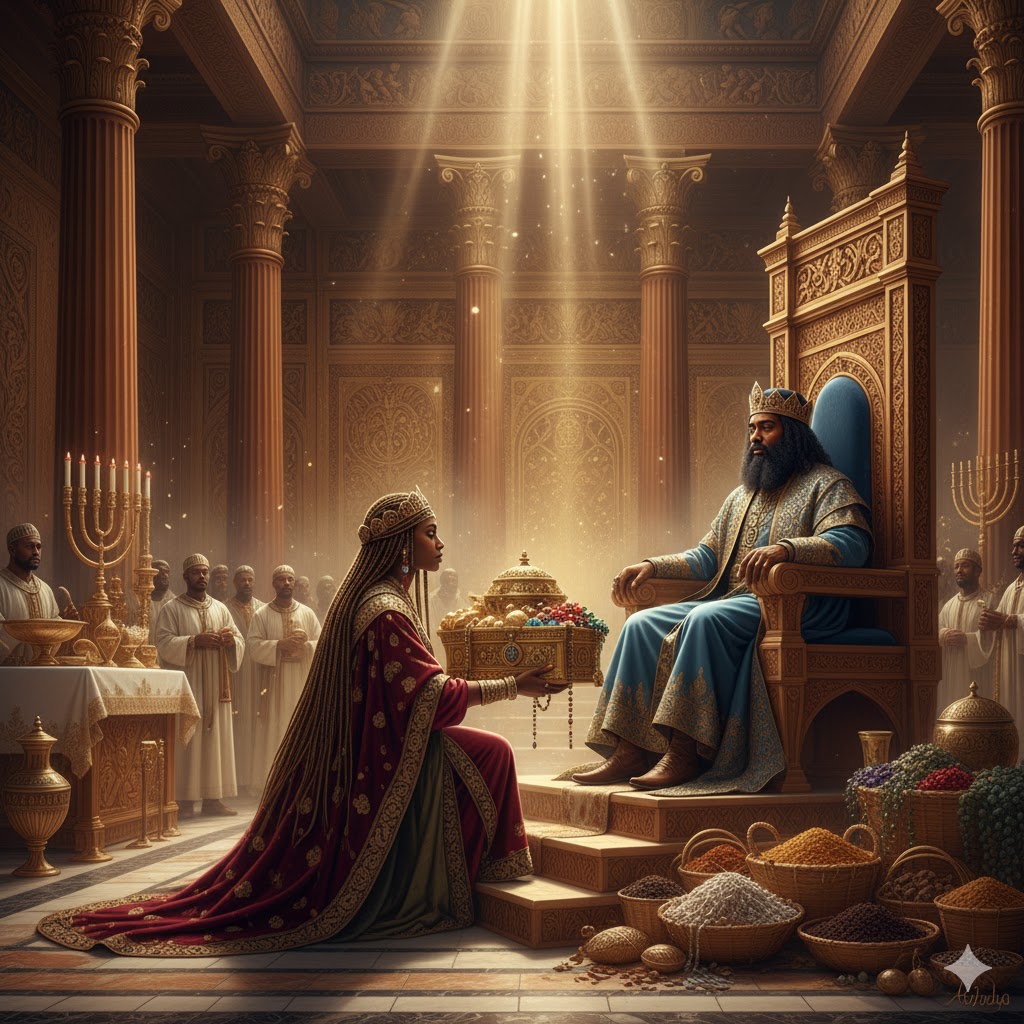
The Queen of Sheba is most famously known for her journey to Jerusalem to meet King Solomon. According to 1 Kings 10:1–2 (KJV), she came “to prove him with hard questions,” bringing with her spices, gold, and precious stones. Her visit demonstrates her curiosity, intelligence, and political acumen. She sought to test Solomon’s renowned wisdom, which God had granted him in abundance, and her arrival reflects the diplomatic interactions between kingdoms during this era.

Her impact on King Solomon and the biblical narrative was profound. Solomon’s wisdom impressed her greatly, and she praised the God of Israel, acknowledging the divine source of his understanding. 1 Kings 10:3–4 (KJV) records that she spoke of “all that was in thine heart; nothing was too hard for thee,” highlighting the mutual respect and admiration between the two rulers. Her recognition of Solomon’s God underscores her spiritual insight and capacity for acknowledging divine authority.

The Queen’s gifts to Solomon were equally significant. Gold, spices, and precious stones symbolized the wealth of her kingdom and the esteem in which she held Solomon. In turn, Solomon gave her “all her desire, whatsoever she asked” (1 Kings 10:13, KJV). This exchange illustrates the ancient practice of gift-giving as a means of diplomacy, alliance-building, and recognition of wisdom and power.

Her story reflects the significance of female leadership in the ancient world. The Queen of Sheba demonstrates that women held power, influence, and diplomatic authority even in male-dominated societies. Her ability to negotiate, question, and engage with the wisest king of Israel illustrates that wisdom and leadership are not confined by gender.

From a biblical perspective, her recognition of Solomon’s God and her worshipful response (1 Kings 10:5, KJV) highlight a spiritual dimension of her character. She was open to truth and divine wisdom, demonstrating humility despite her own wealth and power. This interaction emphasizes that spiritual discernment often transcends nationality, culture, and personal status.

Her visit also had economic and cultural implications. The trade of gold, spices, and rare commodities between Sheba and Israel strengthened regional alliances and established patterns of wealth exchange in the ancient Near East. These exchanges contributed to the prosperity of Solomon’s reign and the international renown of Israel as a center of wisdom and trade.

In Scripture, the Queen of Sheba serves as a symbol of inquisitiveness, courage, and reverence for divine wisdom. Her willingness to travel great distances, to test knowledge, and to offer gifts reflects a proactive and discerning spirit, illustrating how nations could engage with Israel respectfully and meaningfully.

1 Kings 10:6–7 (KJV) describes her astonishment at Solomon’s palace, his table, and the wealth of Israel. Her visit therefore highlights not only spiritual and intellectual admiration but also a recognition of material abundance and strategic governance. Shebeans and Israelites alike could witness the blessings of God manifesting in tangible prosperity.

The Queen of Sheba’s narrative also underscores the universal reach of God’s wisdom. Her recognition of the Lord’s power and Solomon’s God-given wisdom signals that divine truth transcends boundaries. She exemplifies how individuals outside of Israel could encounter God’s glory and acknowledge His sovereignty.

Her story inspired later biblical and historical interpretations. Jewish, Christian, and Islamic traditions expand upon her narrative, portraying her as a wise and discerning monarch whose life was intertwined with divine providence. While extra-biblical sources offer embellishments, the biblical account remains concise, focusing on wisdom, gifts, and worship as hallmarks of her visit.

2 Chronicles 9:1–12 (KJV) parallels the account in 1 Kings 10, affirming the Queen’s journey, her questions, and the treasures exchanged. This repetition in Scripture emphasizes the significance of her visit, reinforcing her role as a notable historical and spiritual figure in Israel’s story.

The Queen of Sheba is also a figure of inspiration in African and Arabian cultural history. Her legacy transcends Scripture, influencing art, literature, and folklore. Her visit to Solomon symbolizes intercultural dialogue, the pursuit of wisdom, and the bridging of nations through mutual respect and recognition of divine guidance.

Biblical scholars often note that her engagement with Solomon exemplifies the virtue of humility in the pursuit of wisdom. Despite her own prominence and resources, she approached Solomon as a seeker, acknowledging that human understanding is enriched by divine insight.

Her impact on Solomon’s reign cannot be understated. The encounter reaffirmed Israel’s international stature and showcased the appeal of Godly wisdom to foreign nations. She validated the importance of Israel’s covenant relationship with God, offering a tangible example of how divine favor attracts recognition from afar.

Finally, the Queen of Sheba reminds us of the integration of wealth, power, and spiritual discernment. Her story teaches that material prosperity is best guided by wisdom, reverence, and humility. She remains a timeless model for leadership, diplomacy, and the recognition of God’s hand in human affairs.

In conclusion, the Queen of Sheba is a remarkable biblical figure whose influence resonates in history, culture, and faith. Her lineage, wisdom, and diplomatic engagement with Solomon reveal a woman of insight, courage, and reverence. She embodies the beauty of intellect, leadership, and spiritual discernment, leaving a legacy that continues to inspire scholars, theologians, and believers across generations.


KJV Bible References

  • 1 Kings 10:1–13, KJV
  • 2 Chronicles 9:1–12, KJV
  • Genesis 12:1, KJV (contextual reference on divine calling and journey)
  • Psalm 139:14, KJV (on being “fearfully and wonderfully made”)