
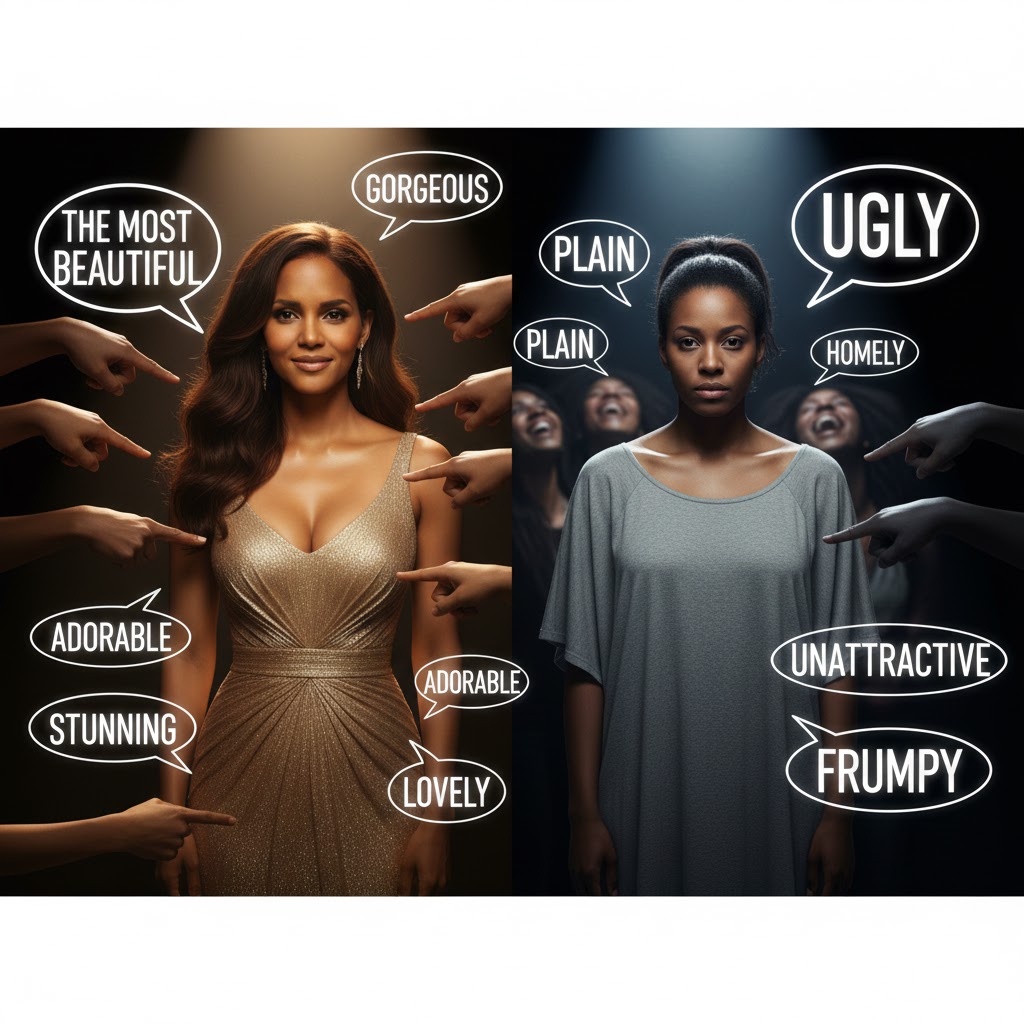
Colorism wounds most deeply because it turns the mirror inward. When beauty, worth, and intelligence are subconsciously linked to lighter skin, darker-skinned individuals are taught to reject their own reflection. This rejection is not innate—it is learned, reinforced, and normalized.
Psychological research shows that repeated exposure to biased imagery shapes implicit self-evaluation. Children absorb color hierarchies early, often before they can articulate them. Proverbs warns, “As he thinketh in his heart, so is he” (Proverbs 23:7, KJV), revealing how internal belief structures shape identity.
The media plays a central role in reinforcing colorist norms. Lighter-skinned figures are overrepresented as love interests, protagonists, and symbols of success. Darker-skinned characters are often masculinized, villainized, or erased altogether. This imbalance conditions desire and aspiration.
Colorism also affects attachment and intimacy. Studies indicate that darker-skinned women face higher rates of rejection in dating markets, while darker-skinned men are hypersexualized or criminalized (Russell et al., 1992). These patterns distort relational expectations and self-worth.
Biblically, this reflects a failure to see oneself as God sees. David declares, “I will praise thee; for I am fearfully and wonderfully made” (Psalm 139:14, KJV). Colorism undermines this praise, replacing divine affirmation with colonial aesthetics.
Healing from colorism requires more than confidence—it requires deprogramming. Therapeutic approaches that address racialized trauma align with Scripture’s call for renewal of the mind (Romans 12:2, KJV). Without this renewal, self-rejection persists even in success.
Colorism is not vanity—it is injury. And like all injuries, it demands treatment, truth, and restoration.
References
The Holy Bible, King James Version.
Russell, K., Wilson, M., & Hall, R. (1992). The color complex.
Fanon, F. (1952). Black skin, white masks.
 THE BROWN GIRL DILEMMA