Tag Archives: princeton

Book Review: Dr. Michael Eric Dyson’s Why I Love Black Women.

Book Review: Why I Love Black Women by Michael Eric Dyson
⭐️⭐️⭐️⭐️⭐️ (5/5)
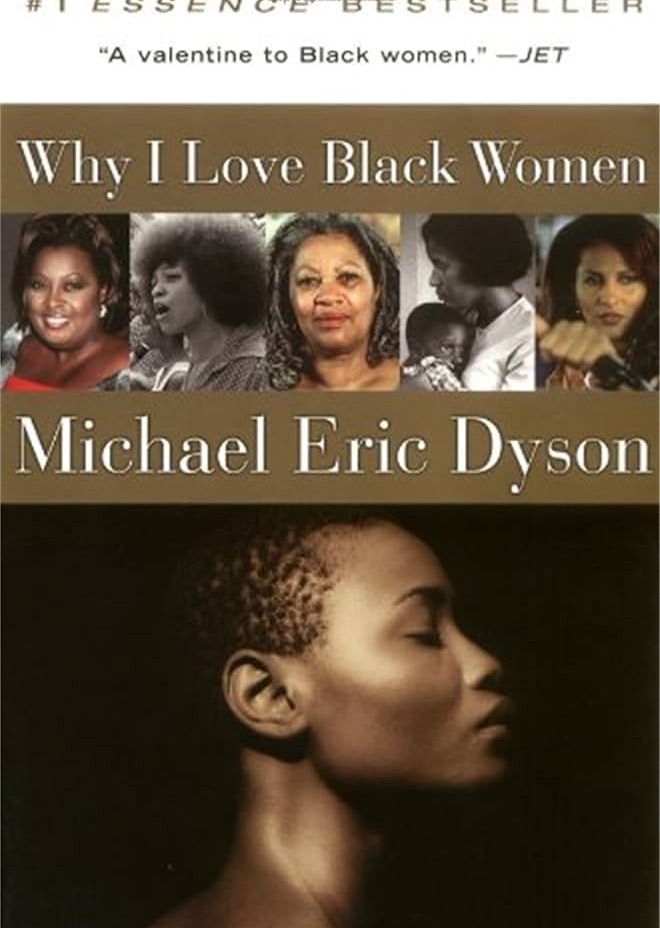
All photographs are the property of their respective owners.

In a society where Eurocentric standards of beauty often dominate the media, fashion, and even romantic ideals, Why I Love Black Women by Dr. Michael Eric Dyson is a deeply affirming and poetic tribute to the strength, beauty, and soul of Black women. With eloquence, reverence, and a heartfelt sense of gratitude, Dyson reclaims the narrative, elevating the Black woman from the margins to the center—where she has always belonged.

This book is more than just a love letter. It is a cultural, intellectual, and emotional reckoning. Dyson weaves personal experiences, historical insight, and cultural commentary to portray Black women as both divine and real—complex, resilient, sensual, brilliant, and beautiful in ways that are too often overlooked or dismissed.

A Breathtaking Portrait of Black Womanhood

Dyson’s words flow with a kind of gospel rhythm, offering both testimony and tribute. From his mother to his mentors, lovers, icons, and even strangers, each chapter is devoted to a different Black woman or type of Black woman who shaped his worldview. He reflects on women like Rosa Parks, Toni Morrison, his own grandmother, and everyday sisters who, as he says, “walked through the fire and made it out smelling like cocoa butter and victory.”

In his own words:

“Black women have helped me to learn how to love. They have taught me about courage. They have fed my soul with their passion and intelligence and joy.”
—Michael Eric Dyson, Why I Love Black Women (2003)

His appreciation extends beyond the physical: he honors the intellect, dignity, spiritual power, and emotional depth of Black women. Dyson does not offer empty praise—he uplifts with intellectual rigor and heartfelt sincerity. His admiration is not rooted in idealization but in lived truth and deep respect.

A Voice of Authority and Empathy

Michael Eric Dyson, born in Detroit, Michigan, is one of the most respected public intellectuals and cultural critics of our time. A former Baptist minister, he combines scholarship with soul, and his work spans race, politics, religion, and pop culture. He earned his Ph.D. in religion from Princeton University and has taught at institutions such as the University of Pennsylvania, Georgetown University, and currently, Vanderbilt University, where he holds the position of Distinguished University Professor of African American and Diaspora Studies.

Dyson is also a prolific author, having written more than 20 books, including Tears We Cannot Stop: A Sermon to White America and The Black Presidency: Barack Obama and the Politics of Race in America. His voice is trusted, his insight sharp, and his compassion unmatched.

He is married to Marcia L. Dyson, a writer, minister, and activist in her own right—making them a powerhouse couple in both love and advocacy.

Why It Matters

Why I Love Black Women is not just a personal narrative—it is a cultural intervention. In an era where Black women are often devalued or fetishized, Dyson dares to speak truth to their power, to celebrate their beauty inside and out, and to give them the flowers they so rightfully deserve.

His writing leaves you breathless not because it flatters, but because it affirms. It reminds readers—especially Black women—that they are seen, valued, and deeply loved.

Final Thoughts

This book is a must-read for anyone who wishes to better understand the heart of a Black intellectual and the unshakable importance of Black women in shaping families, communities, and the cultural landscape. Dyson offers more than admiration—he offers reverence. And in doing so, he challenges us all to love Black women out loud.

Rating: ⭐️⭐️⭐️⭐️⭐️ (5/5)
Essential Reading. Soulful. Celebratory. Revolutionary.


References:

  • Dyson, M. E. (2003). Why I Love Black Women. Basic Civitas Books.
  • Dyson, M. E. (2017). Tears We Cannot Stop: A Sermon to White America. St. Martin’s Press.
  • Dyson, M. E. (2016). The Black Presidency: Barack Obama and the Politics of Race in America. Houghton Mifflin Harcourt.
  • Vanderbilt University Faculty Profile: Dr. Michael Eric Dyson – vanderbilt.edu
  • Marcia L. Dyson – marciadyson.com

Cornel West: The Black Einstein

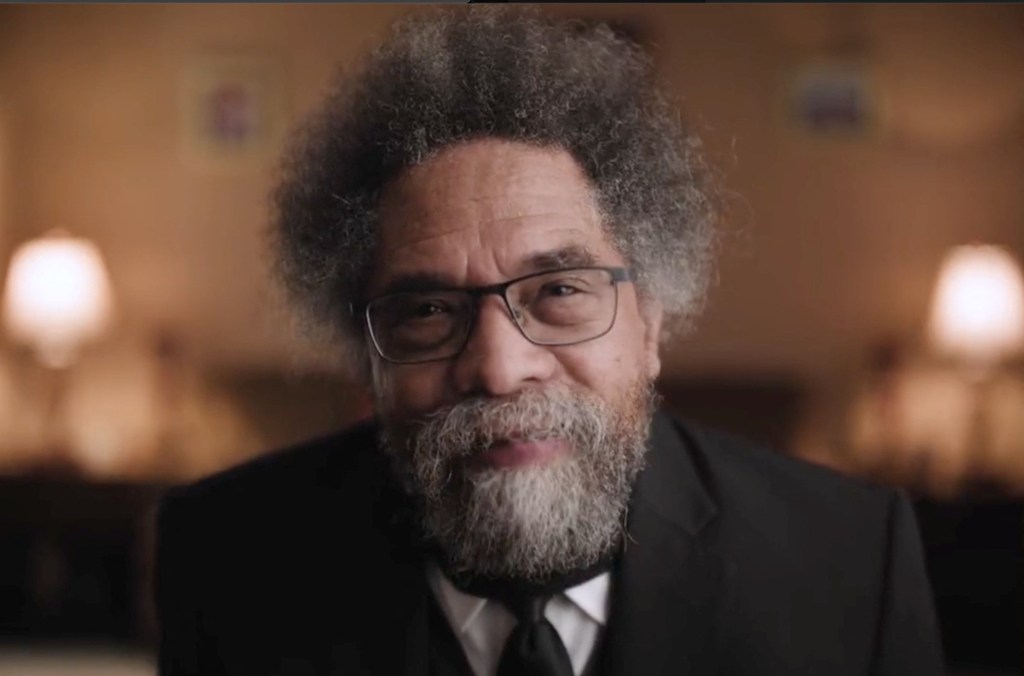
The Intellectual Force of Nature, Dr. Cornel West: A Modern-Day Philosopher Rooted in Black Excellence, The Black Einstein.

This photograph is the property of its respective owner; no copyright infringement intended.

With his signature three-piece suit, wild, halo-like hair, and untamed beard, Dr. Cornel West is more than a scholar—he’s a cultural force. When he speaks, a poetic style of conversing emerges, equal parts preacher, philosopher, and jazz musician. His gapped tooth flashes as he weaves complex thoughts with the ease of a griot and the rhythm of the blues. Whether in academia, activism, or the arts, West mesmerizes the world with his brilliance and moral fire.

From Tulsa to the World Stage

Born on June 2, 1953, in Tulsa, Oklahoma—a city steeped in Black resilience and the memory of the 1921 massacre—Cornel West emerged from the Bible Belt with a calling: to pursue truth and justice at all costs. He graduated magna cum laude from Harvard in just three years, and later earned his Ph.D. in philosophy from Princeton, becoming the first Black person to do so.

His academic reach includes professorships at Harvard, Yale, Princeton, and Union Theological Seminary. But West doesn’t dwell solely in ivory towers. He meets people where they are—on the streets, in churches, in protests, and through screens.

Race Matters—and So Does West

In 1993, West published Race Matters, a seismic work that shattered illusions about a “post-racial” America. The collection of essays, confronting issues like Black nihilism, identity politics, and systemic injustice, became an intellectual touchstone. It’s required reading in both university syllabi and grassroots organizing circles, forever reshaping how America talks about race.

The book’s impact on the Black community was both emotional and intellectual—it gave language to the pain, hope, and righteous anger simmering under decades of systemic neglect. West didn’t just analyze injustice; he bore witness to it, making him a pillar of Black excellence alongside figures like James Baldwin, Angela Davis, and bell hooks.

Philosopher, Prophet, President?

In a bold political move, Dr. West ran for President of the United States as an independent candidate, challenging both major parties and offering a vision rooted in truth, justice, and love. His campaign was less about power and more about principle—calling for universal healthcare, demilitarization, workers’ rights, and the spiritual revival of a morally decaying society.

Though he faced an uphill battle in a deeply polarized political landscape, West’s campaign was a philosophical journey that placed the poor, the working class, and the oppressed at the center of the conversation. “I’m running for truth and justice,” he declared, echoing the same prophetic tradition that guided Martin Luther King Jr.

The Matrix and the Message

Dr. West’s impact extends beyond the pulpit and podium. His role as Councilor West in The Matrix Reloaded and The Matrix Revolutions introduced him to a new generation. With philosophical insight, even in a sci-fi blockbuster, he played a compelling figure of wisdom and resistance. In fact, he also contributed commentary on The Matrix DVD alongside philosopher Ken Wilber, offering deep metaphysical analysis that blurred the lines between Hollywood and the Hegelian dialectic.

A Mind Like Einstein, A Voice Like No Other

Albert Einstein’s intelligence reshaped the scientific world, but Cornel West’s intellect confronts the moral fabric of society. Both men used their brilliance to challenge injustice—Einstein was outspoken against American segregation, while West has spent a lifetime battling the evils of racism, greed, and militarism.

To call Cornel West a “Black Einstein” is not a statement of comparison in field, but one of intellectual gravity and world-changing potential. If one were to compile a list of the greatest speakers the world has ever known—Martin Luther King Jr., Malcolm X, Winston Churchill, Maya Angelou—Dr. West would be in their midst. His ability to turn academic theory into poetic truth makes him one of the most compelling orators of our time.

Conclusion: A Living Legacy

Cornel West is a rare soul—a philosopher who walks with the people, a scholar who sings the blues of the oppressed, and a revolutionary who believes in radical love. His fusion of faith, intellect, and activism places him not just in the pages of history, but in the hearts of those still fighting for a just world.

As West often reminds us, “Justice is what love looks like in public.” And whether he’s delivering a lecture, marching for peace, or offering commentary in a science fiction epic, Cornel West embodies that public love in every word, every gesture, and every idea.


References:

  • West, C. (1993). Race Matters. Beacon Press.
  • Union Theological Seminary. Faculty Page: Dr. Cornel West – utsnyc.edu
  • Dyson, M. E. (2001). Holler if You Hear Me: Searching for Tupac Shakur.
  • Taylor, K.-Y. (2016). From #BlackLivesMatter to Black Liberation. Haymarket Books.
  • The Matrix Reloaded & Revolutions (2003), Warner Bros.
  • Einstein, A. (1946). “The Negro Question.” Pageant Magazine.