
Why do Most black men prefer light skin.
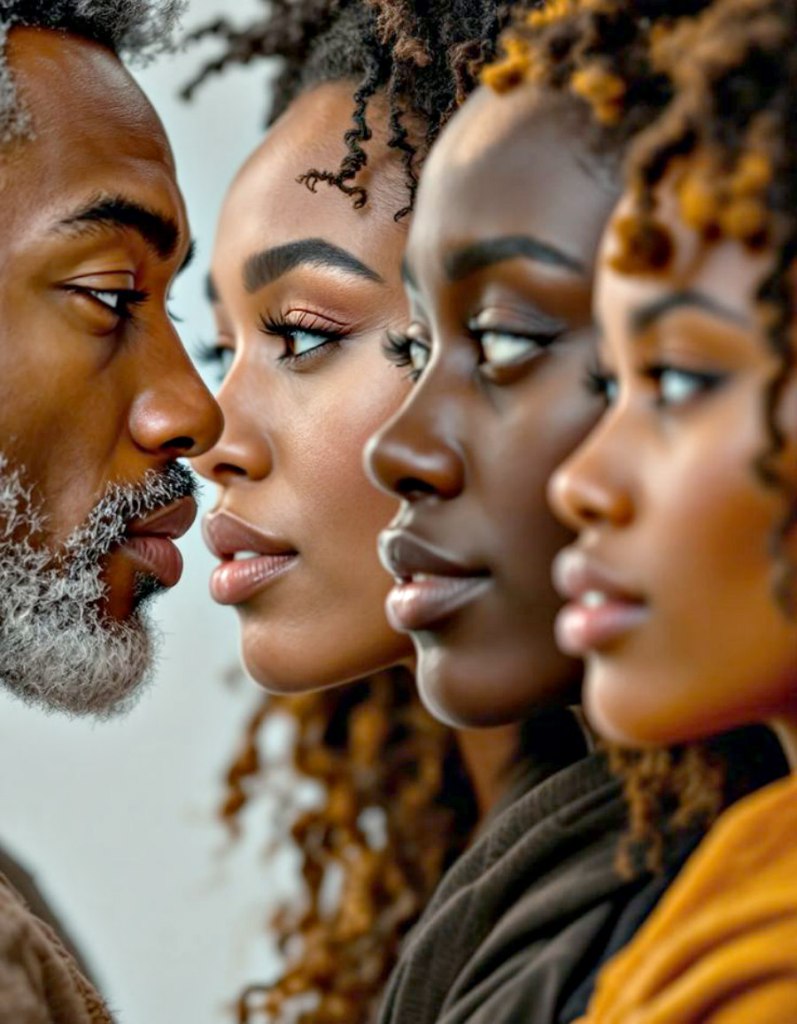
Beauty has never been purely personal; it is mediated through social, cultural, and historical forces. One of the most insidious influences is the male gaze, a term coined by Laura Mulvey (1975) to describe the way visual culture positions women as objects of male desire. In contemporary society, this gaze intersects with racial bias, creating a hierarchy in which lighter-skinned women are often perceived as more desirable.
This preference for light skin among men, particularly in African-descended communities, is not incidental but rooted in colonial histories. During slavery and colonization, lighter skin became associated with privilege, proximity to whiteness, and access to social mobility, while darker skin was stigmatized as inferior (Hunter, 2007). These historical hierarchies persist, shaping contemporary attraction and desirability standards.
The media has played a central role in perpetuating these biases. Advertising, television, and film often celebrate lighter-skinned women as the epitome of beauty, while darker-skinned women are underrepresented or stereotyped. This visibility bias reinforces the notion that lighter skin equals social value, intelligence, and romantic desirability (Banks, 2019).
Psychologically, men are not immune to cultural conditioning. Social learning theory suggests that people internalize the norms and preferences prevalent in their society (Bandura, 1977). Consequently, men may be unconsciously influenced by media representations, familial attitudes, and peer reinforcement that favor light-skinned women, even when their personal values suggest otherwise.
Eurocentric beauty ideals—straight hair, narrow noses, and lighter skin—also inform this bias. These standards were historically imposed on colonized populations to assert racial hierarchy and maintain power structures (Painter, 2010). The association of these traits with superiority has trickled down through generations, subtly influencing what men perceive as attractive.
Colorism, the preferential treatment of lighter-skinned individuals within the same racial group, magnifies these effects. Research shows that lighter-skinned women often receive more attention, admiration, and social opportunities than their darker-skinned peers (Hunter, 2011). This preferential treatment extends into romantic attraction, where light skin can be erroneously equated with status, beauty, and compatibility.
The male gaze is also reinforced through social and economic factors. Historically, lighter-skinned women were more likely to receive education, employment, and upward mobility. Men seeking partners with social advantage may unconsciously associate lighter skin with access to resources, subtly biasing their attraction (Jones, 2018).
Psychological studies further reveal that men are drawn to features culturally associated with femininity and delicacy—traits that Eurocentric standards have historically emphasized in light-skinned women. Fuller lips, wider noses, and darker skin, common among darker-skinned women, have been unjustly coded as less “feminine” under these biased frameworks (Frisby, 2004).
Social media exacerbates these preferences. Platforms like Instagram and TikTok algorithmically amplify images conforming to mainstream beauty norms, often favoring lighter skin tones. This constant exposure normalizes light-skinned beauty as aspirational, subtly shaping male desire through repetitive visual reinforcement (Thompson, 2020).
Family and community dynamics also contribute to internalized preferences. Boys growing up in communities where lighter skin is praised and darker skin is stigmatized often adopt these hierarchies as standards of desirability. These learned biases are rarely questioned, becoming a “default” lens through which men view romantic partners.
The male gaze, therefore, is both a cultural and psychological phenomenon. It is not inherently malicious but is shaped by centuries of systemic preference and visual conditioning. Men’s attraction to light-skinned women is frequently a reflection of societal pressures rather than purely personal choice.
Intersectionality complicates this phenomenon. Light-skinned women may still face gender-based oppression, but their skin tone can provide a form of privilege in romantic and social contexts. Darker-skinned women, conversely, navigate compounded biases related to both gender and skin tone, often facing marginalization in attractiveness hierarchies (Hunter, 2007).
Critically, attraction is not static or universal. Many men consciously reject colorist ideals and appreciate beauty across the spectrum. Nevertheless, the persistence of systemic preferences indicates that bias culture exerts a subtle but powerful influence on collective notions of desirability.
Education and awareness are crucial in dismantling these biases. By understanding the historical and cultural roots of colorism and the male gaze, individuals can critically examine their preferences and challenge unconscious assumptions (Banks, 2019). Media literacy programs and representation initiatives can also mitigate the impact of visual conditioning.
Empowerment movements that celebrate darker-skinned women challenge these entrenched standards. Campaigns such as #UnfairAndLovely and #DarkIsBeautiful reframe beauty narratives, highlighting the elegance, strength, and desirability of women across the melanin spectrum (Thompson, 2020).
Men can actively participate in redefining attraction by consciously expanding their notions of beauty. Recognizing that societal conditioning may shape desire allows for more authentic, inclusive, and equitable standards of love and partnership.
The male gaze is intertwined with social validation. Men may be influenced by the admiration or approval of peers when selecting romantic partners, reinforcing a preference for light-skinned women. This social feedback loop perpetuates a biased culture, even among men who intellectually reject colorist standards.
Historical fetishization of light skin also informs contemporary patterns of desire. Colonizers idealized lighter-skinned women and often sexually exploited them, creating long-lasting cultural associations between desirability, access, and skin tone (Painter, 2010). These legacies subtly influence male perceptions of attractiveness today.
It is important to differentiate between attraction and objectification. Valuing light skin without addressing its historical baggage perpetuates superficiality and ignores the richness of cultural diversity. True appreciation of beauty requires acknowledging history while celebrating the full spectrum of features in Black communities.
In conclusion, the preference for light-skinned women among many men is not merely personal but deeply rooted in colonial history, media representation, and social conditioning. The male gaze, compounded by biased culture, has historically valorized Eurocentric features, shaping romantic desire in ways that reinforce systemic hierarchies. Addressing these biases requires conscious reflection, cultural critique, and the celebration of beauty in all its diverse expressions.
References
- Bandura, A. (1977). Social learning theory. Prentice Hall.
- Banks, I. (2019). Hair matters: Beauty, power, and Black women’s identity. NYU Press.
- Frisby, C. M. (2004). Beauty, body image, and the media. Routledge.
- Hunter, M. L. (2007). The persistent problem of colorism: Skin tone, status, and inequality. Sociology Compass, 1(1), 237–254.
- Hunter, M. L. (2011). Race, gender, and the politics of skin tone. Routledge.
- Jones, A. (2018). Colorism and psychological effects in youth. Journal of Black Psychology, 44(2), 123–145.
- Mulvey, L. (1975). Visual pleasure and narrative cinema. Screen, 16(3), 6–18.
- Painter, N. I. (2010). The history of White people. W. W. Norton & Company.
- Thompson, C. (2020). Afrocentric beauty and social media activism. Cultural Studies Review, 26(3), 55–74.
 THE BROWN GIRL DILEMMA