
From Canadian beauty queen and pop icon to born-again Christian minister
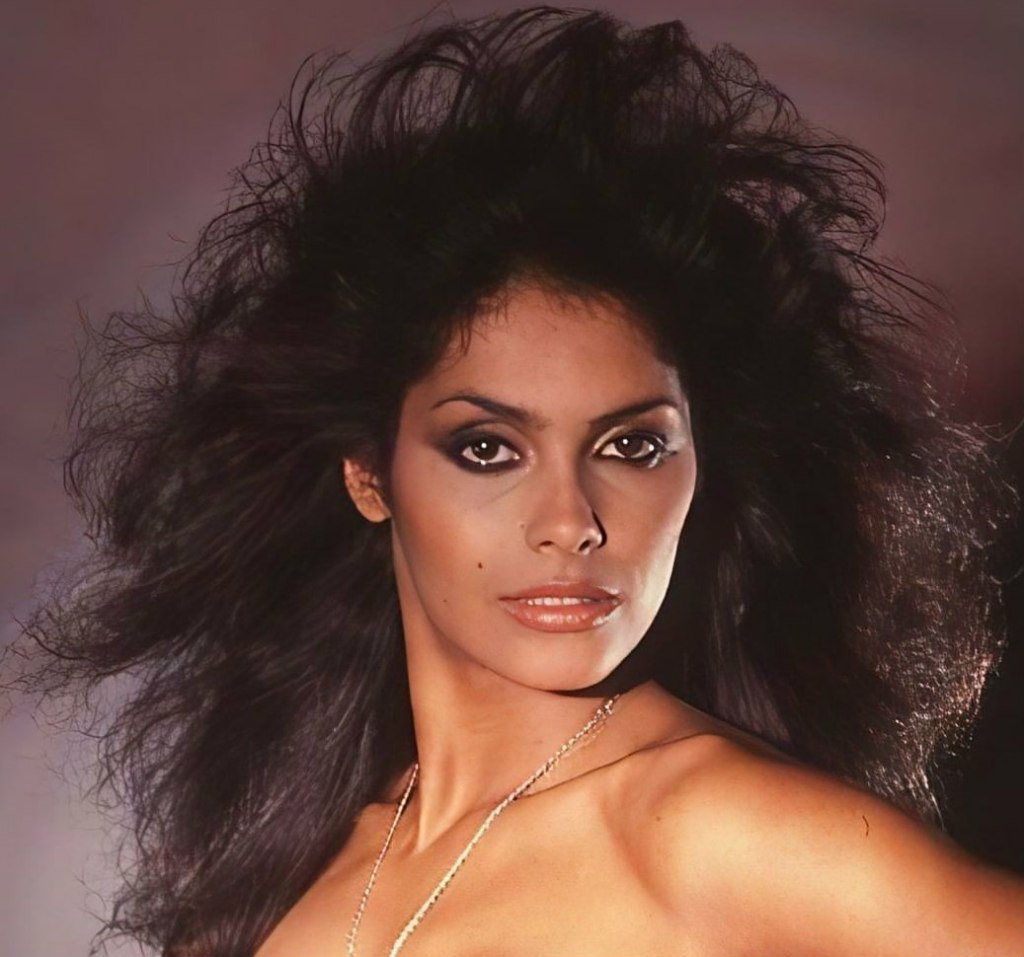
She looked like a mirror of me. I saw her and thought, that’s me in female form.” — — Prince
Denise Matthews, known to the world as Vanity, embodied a rare and arresting form of beauty—one that felt almost mythic. With her almond-shaped eyes, glowing skin, racially ambiguous features, and effortless beauty, she represented the archetype of the 1980s “Ebony Doll”: a woman whose presence commanded attention before she ever spoke a word. Vanity was not merely admired; she was desired, elevated into fantasy, and projected onto screens and stages as an icon of glamour and Black feminine mystique.
Yet the most profound chapter of her life unfolded far from the spotlight. After years of fame, addiction, and near-death, Vanity experienced a spiritual awakening that led her to renounce celebrity culture entirely. She publicly surrendered her stage name, calling it a false identity, and dedicated the rest of her life to Jesus Christ and Christian ministry. In doing so, she became one of the rare figures in pop history whose legacy is not defined only by beauty and desire, but by repentance, faith, and radical transformation—an “Ebony Doll” who walked away from the world to choose God.
Denise Katherine Matthews (January 4, 1959 – February 15, 2016), professionally known as Vanity, was a Canadian model, singer, songwriter, actress, and later a Christian evangelist. She rose to global fame in the early 1980s as the frontwoman of the provocative pop-funk group Vanity 6, created and produced by Prince. Her life became a powerful narrative of beauty, fame, addiction, redemption, and spiritual rebirth.
Denise Matthews was born in Niagara Falls, Ontario, Canada. She was of mixed racial heritage, with a Black father and a mother of German and Jewish descent. From a young age, Denise gravitated toward modeling and performance. She entered beauty competitions and gained national recognition when she won Miss Niagara Hospitality (1977) and later competed in Miss Canada (1978). These early achievements established her as a rising figure in Canadian beauty culture and opened doors to professional modeling. She was one of the most beautiful celebrities.

Following her pageant success, Matthews relocated to New York City, where she signed with the prestigious Zoli Model Agency. Though she did not fit traditional high-fashion height standards, her magnetic presence, camera appeal, and sensual confidence made her highly marketable. She appeared in commercials, print advertisements, and international modeling campaigns, including work in Japan.
Her early image combined innocence and eroticism, foreshadowing the bold persona she would later embody as Vanity.
Denise’s career took a dramatic turn after meeting Prince at the 1980 American Music Awards. Prince saw in her a female reflection of his own artistic identity and envisioned her as the centerpiece of a new musical project.
Originally, Prince proposed highly explicit stage names, but Denise refused one of them and accepted “Vanity” instead. The name symbolized both beauty and self-obsession—qualities that became central to her public persona.
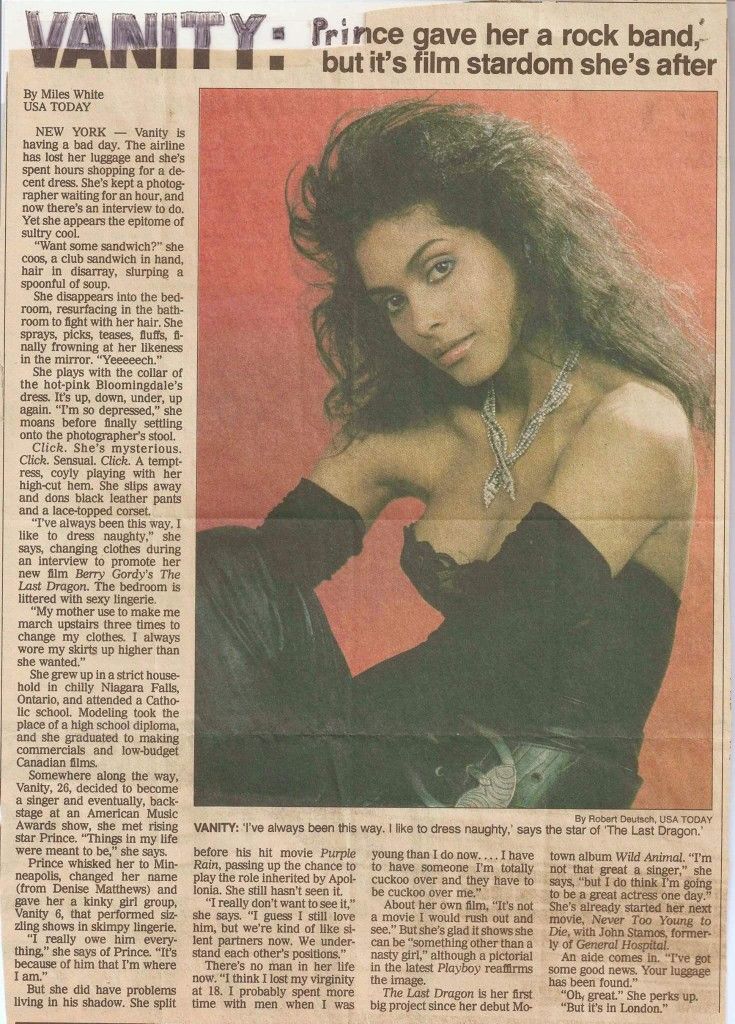
Prince formed Vanity 6, a three-woman group that blended sexual imagery, synth-funk music, and provocative performance aesthetics. The group’s lingerie-styled outfits and explicit lyrics made them cultural lightning rods.
Their breakout hit “Nasty Girl” (1982) became a defining anthem of the decade, reaching #1 on the U.S. Billboard Dance Chart and turning Vanity into a global sex symbol.
After leaving Vanity 6, Denise signed with Motown Records and launched a solo career. She released two albums:
- Wild Animal (1984)
- Skin on Skin (1986)
Her single “Under the Influence” charted on Billboard’s R&B and Dance rankings.
In parallel, she pursued acting, appearing in major films including:
- The Last Dragon (1985)
- 52 Pick-Up (1986)
- Never Too Young to Die (1986)
- Action Jackson (1988)
Vanity became one of the most visible Black female celebrities of the era, blending beauty, sexuality, and pop culture power.
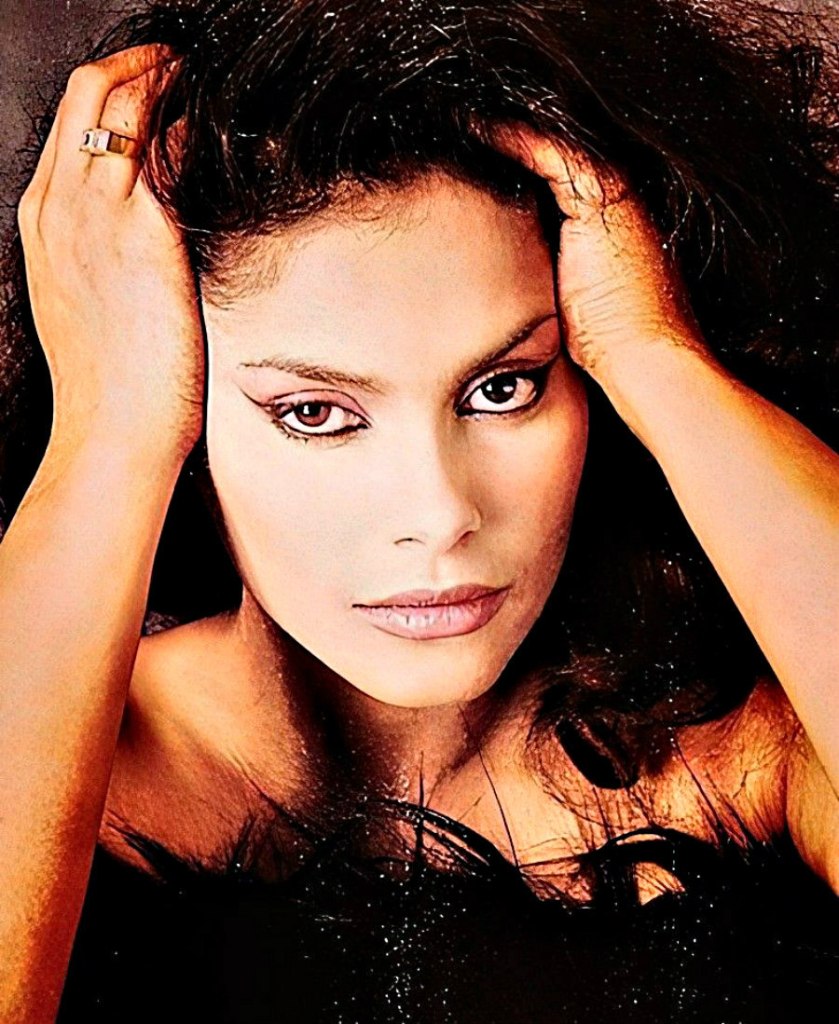
Vanity’s beauty and fame attracted high-profile relationships throughout the 1980s, including musicians and rock stars. However, behind the glamorous image were deep struggle with substance abuse.
In 1995, she married former NFL player Anthony Smith after a brief courtship. The marriage ended in divorce, and Smith later became infamous after being convicted of multiple murders and receiving life imprisonment. This period marked a traumatic chapter in her personal life.
By the early 1990s, Vanity’s cocaine addiction had devastated her health. In 1994, she suffered near-fatal kidney failure. During her hospitalization, she reported a spiritual encounter with Jesus Christ, which she described as a divine intervention that saved her life.
She immediately renounced the “Vanity” persona, abandoned secular entertainment, and became a born-again Christian evangelist.

Denise founded Pure Hearts Ministries in California and dedicated her life to preaching, counseling, and sharing her testimony about spiritual transformation, repentance, and redemption.
She later published her autobiography:
Blame It On Vanity: Hollywood, Hell and Heaven (2010), detailing her journey from fame to faith.
Years of substance abuse permanently damaged her kidneys. She underwent a kidney transplant in 1997 and later suffered from sclerosing encapsulating peritonitis, a rare and painful abdominal disease.
After multiple surgeries and long-term dialysis, Denise Matthews died on February 15, 2016, at age 57, in Fremont, California, from kidney failure.
Vanity remains a symbol of Black feminine beauty, erotic power, and cultural transformation. As an “Ebony Doll,” she embodied the intersection of beauty, visibility, and spirituality—first as a singer-actress and later as a woman who publicly rejected celebrity culture in favor of faith.
Her life stands as a rare testimony of radical personal change within the entertainment industry, illustrating the spiritual cost of fame and the possibility of redemption.
References
Matthews, D. (2010). Blame It On Vanity: Hollywood, Hell and Heaven. Destiny Image Publishers.
Vanity. (n.d.). In Wikipedia. https://en.wikipedia.org/wiki/Vanity_(singer)
Vanity 6. (n.d.). In Wikipedia. https://en.wikipedia.org/wiki/Vanity_6
Nasty Girl (Vanity 6 song). (n.d.). In Wikipedia. https://en.wikipedia.org/wiki/Nasty_Girl_(Vanity_6_song)
Time Magazine. (2016). Vanity, singer and actress, dies at 57. https://time.com/4225112/vanity-denise-mathews-dead/
The Washington Post. (2016). Denise Matthews, troubled pop singer known as Vanity, dies at 57.
Vogue. (2016). Vanity’s legacy: Prince, pop culture, and the erotic imagination.
AOL Entertainment. (2016). Denise “Vanity” Matthews dies at 57.
Billboard. (1984–1986). Chart history for “Under the Influence”.
 THE BROWN GIRL DILEMMA