
🎤 The Voice of a Generation…..
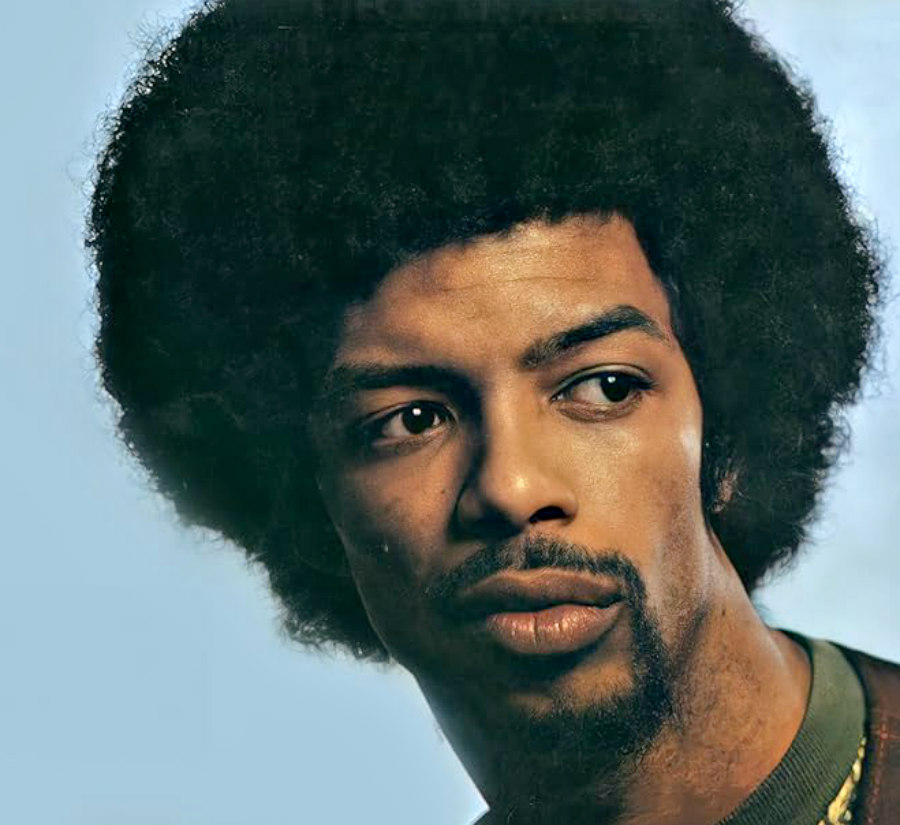
Gil Scott-Heron was a poet, musician, novelist, and spoken-word prophet whose powerful lyrics and uncompromising critique of systemic racism made him a towering figure in Black consciousness and American protest culture. Best known for his seminal work “The Revolution Will Not Be Televised,” Scott-Heron used jazz, funk, and poetry to expose the hypocrisy of American democracy and ignite a deeper understanding of Black identity, oppression, and resilience.
🪶 Biography: A Revolutionary Mind
Gilbert Scott-Heron was born on April 1, 1949, in Chicago, Illinois, and raised in Jackson, Tennessee and later The Bronx, New York. His mother, Bobbie Scott, was a librarian and opera singer; his father, Gil Heron, was a Jamaican-born professional soccer player and the first Black man to play for Scotland’s Celtic FC. Scott-Heron was intellectually precocious, winning a full scholarship to the elite Fieldston School in New York and later attending Lincoln University—a historically Black university in Pennsylvania—where he began collaborating with future jazz great Brian Jackson.
He later earned his master’s degree in creative writing from Johns Hopkins University, blending literary talent with political activism and music.
📢 “The Revolution Will Not Be Televised” – A Cultural Detonation
First recorded in 1970, “The Revolution Will Not Be Televised” became an anthem for Black power and radical critique. Delivered in a gritty, urgent tone over a sparse conga beat, the piece warned against passive consumption of media, urging Black Americans to reject corporate distractions and confront real-world oppression.
“The revolution will not be brought to you by Xerox…The revolution will not go better with Coke.”
It rejected commercialism and fake liberalism, shaking the Black community out of political slumber. For many, it was a wake-up call to reclaim agency, identity, and justice—decades before terms like “woke” were popularized. It remains a cornerstone of hip-hop, neo-soul, and conscious rap, influencing artists like Public Enemy, Kendrick Lamar, Common, and Kanye West.
💍 Marriage, Family, and Struggles
Scott-Heron was married to Brenda Sykes, an actress, and had several children, including Gia Scott-Heron, a poet. His personal life, however, was often turbulent. He struggled with drug addiction, particularly crack cocaine, which led to multiple arrests and prison stints.
He died on May 27, 2011, in New York City, reportedly from complications related to HIV/AIDS, as well as pneumonia.
🏆 Awards and Recognition
Despite his commercial limitations, Scott-Heron was widely revered:
- Grammy Lifetime Achievement Award (posthumously, 2012)
- BET Honors and various tributes by musical peers
- Inducted into the Rock and Roll Hall of Fame (2021) under the category of Early Influence
Critics often credit him as the “godfather of rap,” though he personally rejected the label, arguing that his work was rooted more in Blues, Jazz, and Soul-inflected poetry than the structure of hip-hop.
📚 Literary Work: The Vulture (1970)
Gil Scott-Heron was also an accomplished novelist. His debut novel The Vulture was a gripping urban murder mystery that explored themes of race, violence, and identity in Harlem. The story follows the murder of a young Black man and the perspectives of four friends as they try to uncover the truth.
Written when he was just 19, the novel was raw, honest, and infused with street dialect, jazz rhythms, and sociopolitical tension. Scott-Heron wrote it because he saw literature as another weapon to confront societal neglect and expose the real conditions of inner-city youth. The novel was praised for giving voice to disenfranchised Black characters in a way few literary works had done before.
🤍 Reception from White America
Scott-Heron’s message was unapologetically pro-Black and critical of systemic whiteness, so mainstream (largely white) America viewed him with caution, if not outright hostility. However, progressive white intellectuals and musicians appreciated his genius. Over time, as social justice became a broader conversation, even mainstream outlets began to recognize his prophetic insight.
🧠 What He Thought and Said
Scott-Heron was not only a performer but also a philosopher of Black struggle. One of his most quoted lines:
“The first revolution is when you change your mind.”
—Gil Scott-Heron, The Mind of Gil Scott-Heron (1978)
He believed liberation began with mental transformation—a message that deeply influenced Black consciousness movements.
🔥 Legacy and Influence
Scott-Heron’s work laid the foundation for conscious hip-hop, Black Lives Matter rhetoric, and modern spoken word. His uncompromising style still echoes through the works of artists like Nas, Mos Def, Erykah Badu, and Common.
Though he passed away in 2011, Gil Scott-Heron’s prophetic voice still resonates in every protest, every poem, and every performance that dares to tell the truth.
📚 References
- Scott-Heron, G. (1970). The Vulture. World Publishing Company.
- Scott-Heron, G. (1978). The Mind of Gil Scott-Heron. Payback Press.
- Vincent, R. (2011). Gil Scott-Heron obituary. The Guardian. https://www.theguardian.com/music/2011/may/28/gil-scott-heron-obituary
- NPR Music. (2011). Remembering Gil Scott-Heron, The Godfather Of Rap. https://www.npr.org/2011/05/27/136723816
- Rock & Roll Hall of Fame. (2021). Gil Scott-Heron Inductee Biography. https://www.rockhall.com/inductees/gil-scott-heron
- Carr, J. (2020). “The Revolution Will Not Be Televised” and the Media Myth. African American Review, 53(1-2), 57–72.
 THE BROWN GIRL DILEMMA