
Tag Archives: poems

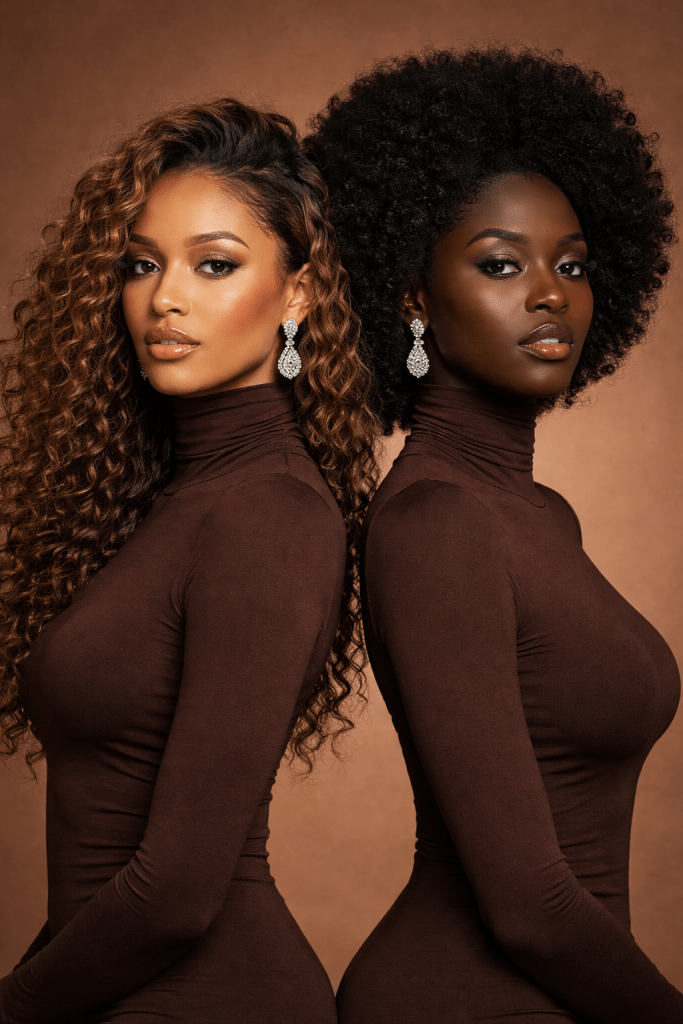
My Light-Skinned Privilege, Her Dark-Skinned Disadvantage.

From a Light Brown Girl, To all Brown Girls

I walk through doors,
They open wide for me,
A shade lighter, a step brighter,
The world smiles differently on me.

Her skin, kissed by night,
Absorbs the sun, absorbs the stares,
She carries the weight of centuries,
Of whispers, judgments, and unseen bars.

I’ve tasted doors that swung freely,
Opportunities served on silver plates,
She knocks, waits, sometimes bleeds,
The world is unsure if she belongs at all.

I see her in mirrors, in classrooms,
In magazines that promise beauty
But only echo my reflection back,
Ignoring her rich, radiant hue.

We share the same blood, the same roots,
But the world measures our worth differently,
She’s exotic, she’s dangerous, she’s wrong,
While I float, almost invisible, in favor.

I want to hug her, lift her, tell her—
The color of her skin is not a curse,
Though the world has learned to punish it,
We must learn to celebrate it.

Her darkness is not a shadow,
Not a fault, not a mistake;
It’s the soil from which strength blooms,
It’s the sun that refuses to fade.

I feel guilt in my privilege,
A heaviness I cannot ignore,
For every door that opens for me,
I remember one that stayed shut for her.

Still, we are sisters in melanin,
Bound by love and shared history,
I will use my lighter shade as leverage,
To fight for her, lift her, honor her.

Brown girl, do not bow to the bias,
Do not shrink, do not fade;
Your hue is power, your skin is glory,
And together, we rewrite the story.

Colorism, the preferential treatment of lighter-skinned individuals within the same racial or ethnic group, is a pervasive and often unspoken issue in society. Growing up as a light-skinned Black woman, I have noticed the subtle advantages afforded to me: from assumptions of intelligence and beauty to greater social acceptance and professional opportunities. My complexion has often allowed me to navigate spaces more easily, receiving compliments and access that my darker-skinned peers, particularly women, frequently do not. These advantages, though sometimes invisible to me, are real and cumulative, shaping opportunities and perceptions over a lifetime.

Conversely, darker-skinned Black women often face systemic biases that limit their visibility and opportunities. From media representation to workplace dynamics, society tends to privilege lighter complexions, equating them with beauty, sophistication, and competence. My darker-skinned sisters encounter microaggressions, exclusion, and negative stereotypes that are often justified as personal preference but rooted in historical oppression. This disparity highlights not only societal prejudice but also the internalized hierarchies that continue to divide and marginalize within our communities.

The tension between light and dark skin is further complicated by interpersonal relationships and professional networking. I have witnessed situations where lighter-skinned colleagues are promoted faster, receive more public recognition, or are perceived as more approachable, while darker-skinned peers are overlooked despite equal or superior skill. These inequities reinforce a system where privilege operates quietly yet powerfully, subtly shaping careers, friendships, and social mobility. Understanding this dynamic requires acknowledgment of both historical factors and contemporary manifestations of colorism, recognizing that the skin tone divide has tangible and lasting effects.

Addressing these disparities requires both awareness and action. Those of us with light-skinned privilege must consciously leverage our advantages to uplift darker-skinned peers rather than perpetuate subtle hierarchies. Celebrating the beauty, intellect, and leadership of darker-skinned individuals, challenging biased perceptions, and advocating for equity in representation and opportunity are essential steps. By examining the dual realities of light-skinned privilege and dark-skinned disadvantage, we can confront the insidious ways colorism shapes our communities and begin fostering a culture of genuine inclusivity.

References

Hunter, M. L. (2007). The persistent problem of colorism: Skin tone, status, and inequality. Sociology Compass, 1(1), 237–254. https://doi.org/10.1111/j.1751-9020.2007.00006.x

Keith, V. M., & Herring, C. (1991). Skin tone and stratification in the black community. American Journal of Sociology, 97(3), 760–778. https://doi.org/10.1086/229750

Russell-Cole, K., Wilson, M., & Hall, R. E. (2013). The color complex: The politics of skin color among African Americans (2nd ed.). Harper Perennial.

Maddox, K. B., & Gray, S. A. (2002). Cognitive representations of Black Americans: Re-examining the role of skin tone. Personality and Social Psychology Bulletin, 28(2), 250–259. https://doi.org/10.1177/0146167202282008

Hill, M. L. (2017). Beauty, privilege, and colorism in Black communities. Journal of African American Studies, 21(3), 243–262. https://doi.org/10.1007/s12111-017-9345-0
🌹 1000 Roses 🌹

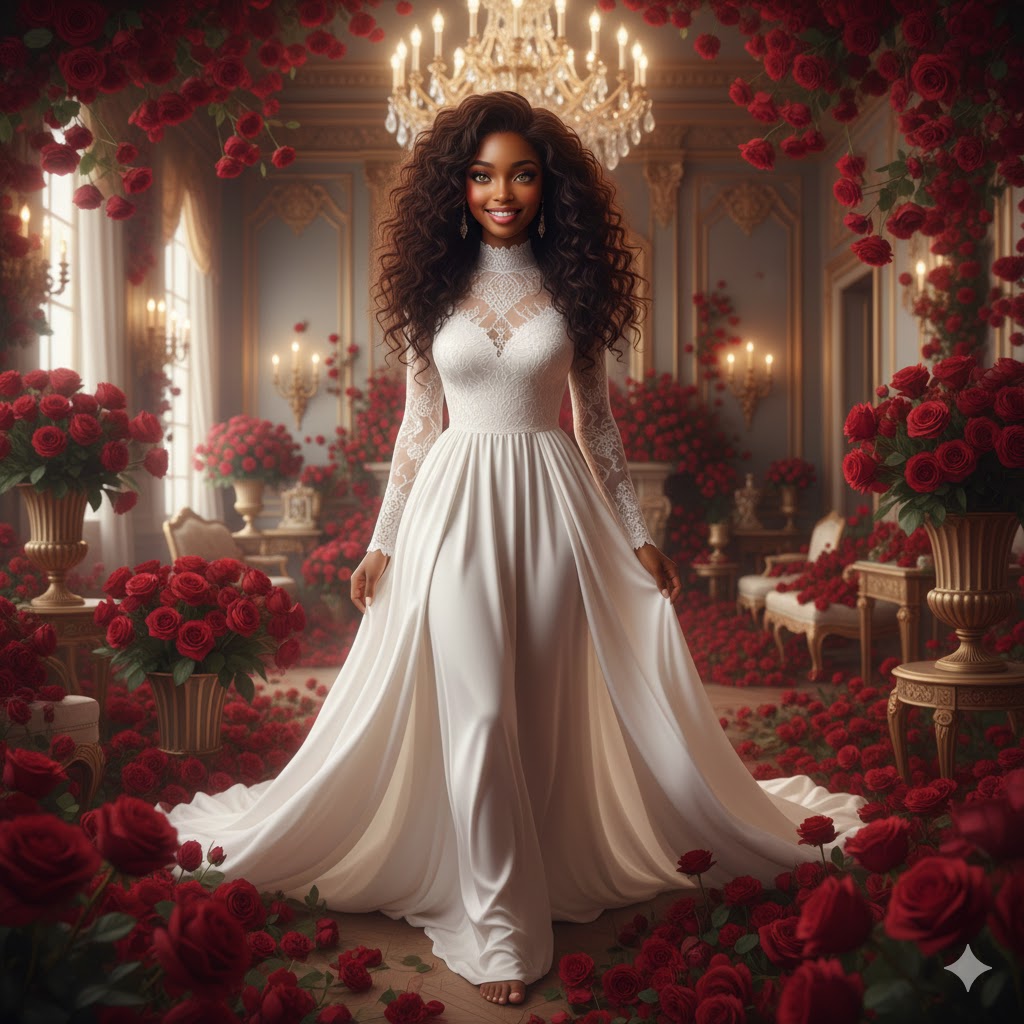
From Author: I want to take a moment to express my gratitude to the men who have honored me with roses throughout my life—1,000 roses, given on 11 different occasions. Some were gestures from royalty, others from friends, and some from my late husband, whose love and memory remain etched in my heart. Every 1000 roses, no matter the giver, has been a symbol of affection, devotion, and the moments of beauty that have graced my journey. This poem, 1000 Roses, is a reflection of that gratitude and the emotions woven into every petal.


1000 Roses

A thousand roses, each a whispered vow,
In moments fleeting, I remember them now.
Blush of dawn, crimson fire, softest white,
Each bloom a story, a memory alight.

Some came with crowns, from men of high place,
Royalty’s hand, a gesture of grace.
Their petals spoke of elegance, rare,
A fleeting dance of splendor and care.

Some came from friends, steady and true,
With laughter and warmth in every hue.
No titles, no crowns, just hearts aligned,
In the giving, love’s simplicity I find.

And some came from the one who shared my days,
My late husband, whose love lit my way.
Each rose a heartbeat, tender and near,
A fragrance of comfort that lingers here.

I traced their petals, soft as whispered prayer,
Felt their presence, their thoughtfulness rare.
A thousand roses, yet each distinct,
A tapestry of hearts, delicately linked.

Some roses wore the blush of shy delight,
Some burned with passion, fierce as night.
Some whispered secrets only I could hear,
Some held laughter, some held a tear.

Each occasion, a mark upon my soul,
A thousand roses, making me whole.
The numbers grow, yet the feeling stays,
In silent reflection, in sunlight rays.

I thank the givers, known and unknown,
For every rose, how my heart has grown.
In velvet folds, love’s language unfurls,
A thousand roses, a thousand worlds.

They remind me that love wears many hues,
In red and gold, and gentle blues.
In every petal, a story of grace,
A thousand roses, a thousand embraces.

Through time and memory, each bloom survives,
A fragrant echo of cherished lives.
And though some hands now rest beyond,
Their roses remain, forever fond.

A thousand roses, yet still I see,
The depth of love that surrounds me.
Royalty, friendship, a husband’s devotion,
All carried to me on petals’ motion.

So here I stand, with gratitude deep,
For every rose, for every keep.
A thousand roses, eleven times given,
Each a whisper of heaven, a fragment of heaven.

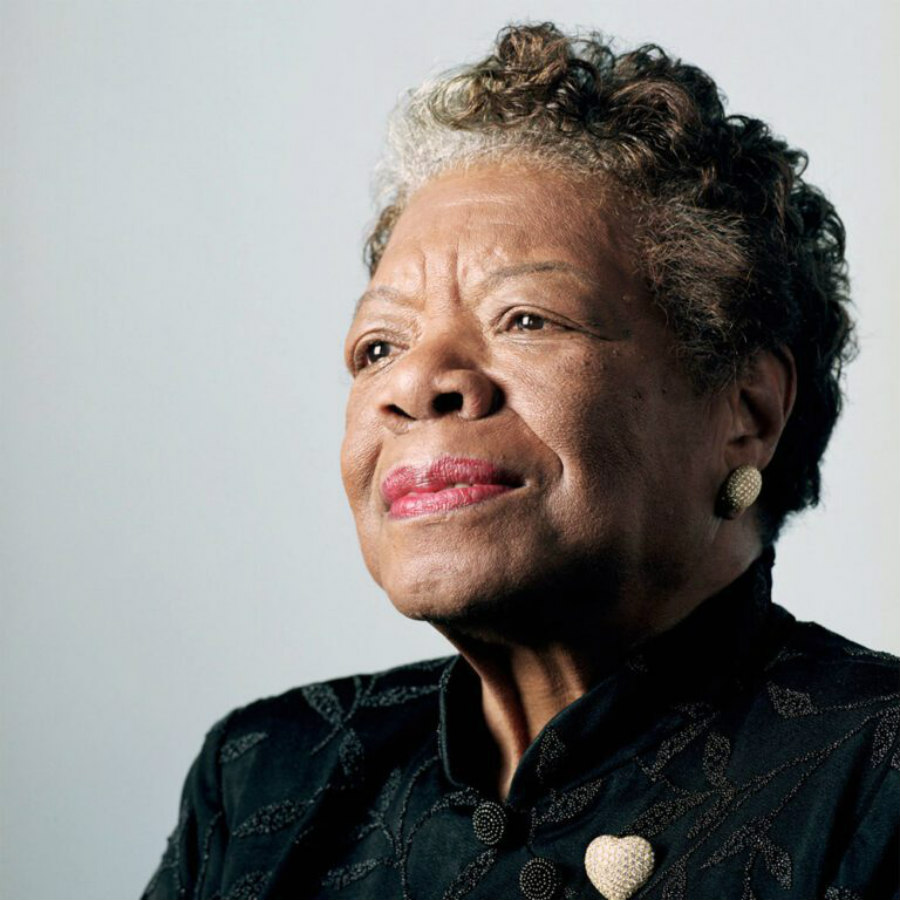
AUTHOR SPOTLIGHT: Maya Angelou

Maya Angelou: A Caged Bird Who Soared—The Voice, The Vision, The Victory of a Phenomenal Woman

This photograph is the property of its respective owner. No infringement intended.

Few figures in American history have embodied the spirit of resilience, eloquence, and cultural pride quite like the late great, Dr. Maya Angelou. Born Marguerite Annie Johnson on April 4, 1928, in St. Louis, Missouri, she emerged as one of the most influential poets, memoirists, performers, and activists of the 20th and 21st centuries. Her life’s work defied categorization, transcending literature and the arts to become a moral and cultural compass for Black America and the world.

Angelou’s early life was marked by trauma and hardship. After her parents’ divorce, she was sent to live with her grandmother in the deeply segregated town of Stamps, Arkansas. At the age of eight, she was sexually abused by her mother’s boyfriend. Following this traumatic experience, Angelou stopped speaking for nearly five years. It was during this long silence that her love for literature was born. The works of Black writers like Paul Laurence Dunbar and Langston Hughes became her refuge, and words—though unspoken—became her means of survival. Later in life, she famously declared, “There is no greater agony than bearing an untold story inside you” (I Know Why the Caged Bird Sings, 1969). This became the heartbeat of her writing.

Her literary debut, I Know Why the Caged Bird Sings, is widely considered a cornerstone of American memoir. Published in 1969, it recounts her youth marked by racism, trauma, and transformation. It was one of the first widely read autobiographies by a Black woman that dealt openly with sexual violence, racial oppression, and personal rebirth. Angelou’s voice was raw yet refined—she did not write to entertain, but to liberate. For Black Americans, particularly Black women, her story was a mirror and a map: a reflection of their pain, and a guide to their power.

While Angelou’s literary career was monumental, her 1978 poem Phenomenal Woman cemented her as a cultural icon. Written in a time when Eurocentric beauty standards dominated media and society, the poem was a defiant love letter to Black femininity and natural confidence. It celebrated the curves, poise, rhythm, and strength of women whose beauty could not be defined by magazine covers. She wrote:

“It’s in the reach of my arms,
The span of my hips,
The stride of my step,
The curl of my lips.
I’m a woman
Phenomenally.”

With this work, Angelou redefined beauty—not as something adorned, but as something lived. The poem resonated deeply with women of all backgrounds and became a rallying cry for body positivity and self-respect. She wrote not for applause but for affirmation—of identity, dignity, and womanhood.

Throughout her career, Maya Angelou received numerous accolades. She was awarded more than 50 honorary degrees, three Grammy Awards for her spoken-word albums, and was nominated for Tony and Emmy Awards for her acting and screenwriting. Her literary work was complemented by her activism; she worked alongside Dr. Martin Luther King Jr. and Malcolm X, and was deeply involved in Pan-Africanist movements during her time living abroad in Ghana and Egypt. In 1993, she recited her poem On the Pulse of Morning at President Bill Clinton’s inauguration, becoming the second poet in U.S. history to be so honored. Later, in 2011, President Barack Obama awarded her the Presidential Medal of Freedom, the highest civilian honor in the nation.

Angelou’s personal life was as layered as her professional one. She was married briefly to Tosh Angelos, a Greek sailor, though the marriage ended in divorce. She adopted “Angelou,” a variation of her birth and married names, as her stage name. She had one son, Guy Johnson, whom she gave birth to at the age of seventeen. Her devotion to him was unwavering, and he often spoke of her strength, describing her as “the greatest woman I’ve ever known.” Her fierce independence and sacrifices as a single mother gave depth to her understanding of womanhood and motherhood, which often permeated her writing.

Despite her fame, Angelou remained deeply connected to her roots and committed to uplifting her community. Her influence reached far beyond the literary world. She appeared in films such as Roots (1977), Poetic Justice (1993), and How to Make an American Quilt (1995), and directed Down in the Delta (1998), a poignant film about healing and generational restoration. She was a frequent guest on television, notably with Oprah Winfrey, and her impact on popular culture spanned generations. Her words were sampled in music, quoted in speeches, and recited at women’s empowerment events across the globe.

Angelou was revered in the Black community as a truth-teller, a mother figure, and a living ancestor. While some white institutions initially resisted her unapologetic Blackness, she eventually won universal acclaim. Yet she never sought white validation. She understood that her work was rooted in telling the Black truth—and that truth had the power to shake systems and heal souls.

Her poem Phenomenal Woman continues to be a timeless ode to self-worth. When asked about the inspiration behind it, Angelou explained that she wanted to give women permission to be proud of their presence, not just their appearance. She wrote:

“Now you understand
Just why my head’s not bowed.
I don’t shout or jump about
Or have to talk real loud.
When you see me passing,
It ought to make you proud.”

The poem’s resonance was not only literary but deeply personal to women who had been told to shrink themselves. Angelou’s command was simple: be big, be bold, be phenomenal.

She also had personal pleasures—she loved gumbo, Southern cuisine, jazz music, gardening, and Shakespeare. These interests grounded her as a woman of both intellect and heart, rooted in heritage but always reaching for something transcendent.

When asked about her inspiration, Angelou always pointed back to her childhood silence. It was her muteness, paradoxically, that gave her voice such force. Writing became her resurrection. As Pearl Bailey, her dear friend and fellow performer, once said: “She’s more than a writer. She’s a spirit. A thunderous force of truth wrapped in grace.”

After Angelou’s passing in 2014, her son Guy Johnson reflected on her legacy with reverence, saying: “My mother lived a life of deep honesty, and in doing so, she gave millions permission to tell their own truths.”

Maya Angelou was not merely a woman of letters—she was a woman of legacy. Her work endures not because she conformed, but because she dared to live—and write—the truth. She was, and remains, a phenomenal woman in every sense. Her voice still sings, still soars, reminding generations that even a caged bird can rise and touch the heavens.


References

Angelou, M. (1969). I Know Why the Caged Bird Sings. Random House.
Angelou, M. (1995). Phenomenal Woman: Four Poems Celebrating Women. Random House.
Obama, B. (2011). Presidential Medal of Freedom Recipients. The White House Archives.
Johnson, G. (2014). Interview on the legacy of Maya Angelou. National Public Radio (NPR).
Bailey, P. (1985). Reflections on Maya Angelou. Ebony Magazine.