
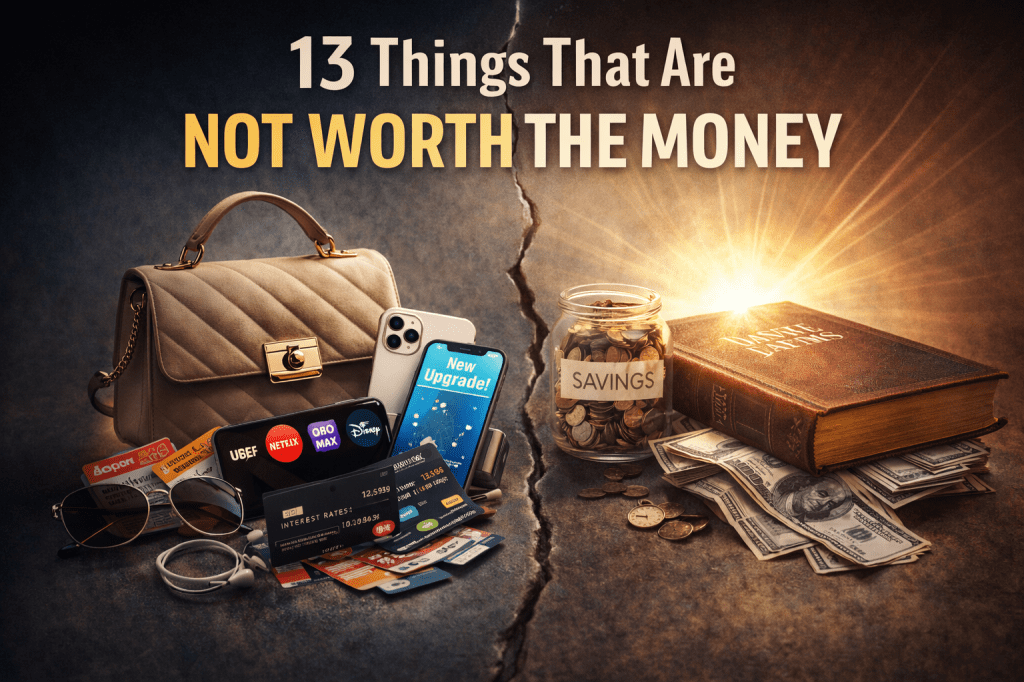
In a world dominated by consumer culture, Black individuals, like everyone else, are constantly bombarded with messages equating self-worth with spending. While financial literacy is often overlooked, the Bible provides timeless guidance on stewardship, discernment, and avoiding unnecessary debt (Proverbs 21:20, KJV; Luke 14:28, KJV). The following thirteen expenses often drain wealth without providing lasting value:
- Credit Card Interest
High-interest debt is one of the fastest ways to erode financial stability. Carrying a balance on a credit card with 20%+ interest can turn small purchases into large financial burdens. Avoiding unnecessary debt is both a practical and biblical principle, as Proverbs 22:7 warns: “The rich ruleth over the poor, and the borrower is servant to the lender.” - New Cars
Vehicles depreciate rapidly. A car loses 20–30% of its value within the first year. Investing in a slightly used car can save tens of thousands over time. - Designer Handbags and Luxury Goods
Luxury items may provide temporary satisfaction, but they rarely increase in value. The desire for status can lead to financial compromise, contradicting biblical principles of contentment (Hebrews 13:5, KJV). - Upgrading Phones Every Year
Technology upgrades are often marketed as essential. However, most smartphones function well for 2–3 years, making annual upgrades unnecessary. - Food Delivery Services
Convenience comes at a high cost. Preparing meals at home is healthier and significantly more affordable. Apps may charge delivery fees, service fees, and inflated menu prices. - Streaming Services or Excess Subscriptions
Paying for multiple streaming platforms or unused subscriptions (like Netflix, Hulu, Disney+, or fitness apps) drains money silently. Consolidation or periodic review is essential. - Renting for Status
Living in an expensive apartment simply to showcase lifestyle rather than necessity is financially unwise. Wealth-building requires intentional saving over superficial spending. - Impulse Online Shopping
Online shopping often targets emotions, not needs. Unplanned purchases accumulate over time, leading to unnecessary clutter and financial stress. - Haircuts and Beauty Appointments
Monthly salon visits for haircuts or styling can add up. Learning basic hair care or extending appointment intervals is cost-effective without sacrificing appearance. - Eating Out Frequently
Restaurant meals can be 3–5 times more expensive than home-cooked alternatives. Regularly eating out impacts health and finances. - Unused Memberships or Gym Subscriptions
Paying for services not used is equivalent to throwing money away. Review subscriptions quarterly and cancel what isn’t utilized. - Lottery Tickets or Gambling
The odds of winning are extremely low. These expenses often feed the hope of instant wealth rather than actual wealth accumulation. - Trendy Apparel or Fashion Cycles
Fast fashion encourages constant spending. Clothing that is versatile, durable, and timeless is a better investment than chasing seasonal trends.
Additional Considerations:
- Expensive coffee or beverages purchased daily. Over a year, a $5 coffee habit can cost $1,800+.
- Extended warranties or insurance for inexpensive electronics. Often, self-insurance or careful handling suffices.
- Cosmetic procedures or elective medical treatments that are primarily aesthetic and not medically necessary.
Biblical and Practical Financial Guidance
- Contentment over Consumption – Hebrews 13:5 urges believers to be content with what they have.
- Planning Ahead – Luke 14:28 encourages calculating costs before committing to spending.
- Stewardship – Proverbs 21:20 teaches that wise saving leads to abundance, not squandering on fleeting pleasures.
- Avoiding Debt – Romans 13:8 reminds us to owe nothing to anyone except love; financial obligations can enslave if mismanaged.
References
Collins, J. (2010). Rich dad poor dad: What the rich teach their kids about money that the poor and middle class do not! Plata Publishing.
Dave Ramsey. (2017). The total money makeover: Classic edition. Thomas Nelson.
Kiyosaki, R. T., & Lechter, S. L. (2000). Cashflow quadrant: Rich dad’s guide to financial freedom. Plata Publishing.
O’Neill, B. (2018). Financial literacy and the psychology of spending: Understanding consumer behavior. Journal of Financial Counseling and Planning, 29(2), 280–295.
The Holy Bible, King James Version. (1769/2017). Cambridge University Press.
 THE BROWN GIRL DILEMMA