
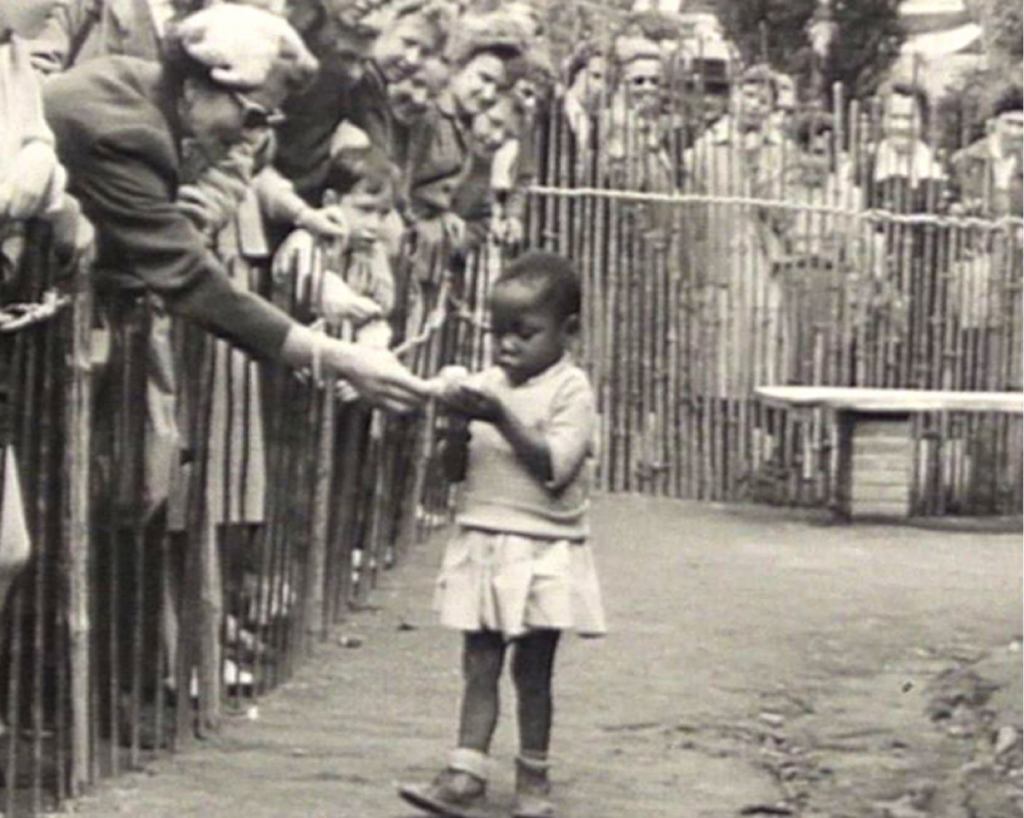
Human Zoos: Colonial Spectacle and the Dehumanization of Black Bodies
In the late 19th and early 20th centuries, Europe and the United States hosted infamous exhibitions known as “human zoos”—or ethnological expositions—in cities such as Paris, London, Antwerp, Hamburg, Milan, Barcelona, and New York. These public displays featured Black Africans, Indigenous peoples, and other non‑European groups in staged “native villages” or zoo-like settings for mass spectatorship. Visiting audiences, numbering in the tens or even hundreds of thousands per event, were encouraged to gawk at foreigners presented as “primitive” or “savage” (Blanchard et al., 2011; Westin, 2020).
Purpose and Origins
Human zoos were born from colonial ambition and scientific racism. European imperial powers used these displays to validate their civilizing missions and assert racial hierarchies, equating whiteness with civilization and darkness with primitiveness (Qureshi, 2011). At the 1895 African Exhibition in London’s Crystal Palace, for example, Somalis were brought from Somaliland to perform daily rituals, war dances, and village routines in artificial huts—reinforcing notions of racial inferiority to European culture (Wikipedia, 2025) Wikipedia+1Foreign Affairs Forum+1Wikipedia.
Scientific Racism and Eugenics
Figures such as Carl Hagenbeck, Madison Grant, William Temple Hornaday, and Henry Fairfield Osborn played central roles in the popularization of human zoos. They argued, using social Darwinist reasoning, that certain races were biologically superior—thus justifying colonial domination through pseudo‑scientific authority (Brepols, 2025; Osborn & Grant writings) The New Yorker+5brepolsonline.net+5The Hill+5.
Ota Benga and the Bronx Zoo Exhibit
One of the most infamous cases was that of Ota Benga, a Congolese man exhibited in 1904 at the St. Louis World’s Fair and again in 1906 in the Bronx Zoo’s “Monkey House,” where he was caged alongside apes. This spectacle drew nearly 250,000 visitors in just a few days. Prominent figures such as Madison Grant and Hornaday defended the exhibition as scientific and educational, while African American ministers condemned it as profoundly degrading (New Yorker, 2022; Guardian, 2015; CNN, 2015) Wikipedia+12The New Yorker+12The Bronx Daily | Bronx.com+12.
Public outcry by Black clergy led to Benga’s temporary release, and decades later (2020), the Bronx Zoo formally apologized for its “unconscionable racial intolerance” (NBC, 2020) Wikipedia+13NBC New York+13The Hill+13.
Wider European Exhibits
Across Europe, nations hosted dozens of human zoos. In Brussels (1897), a Congolese “village” with more than 250 individuals was displayed; at least seven reportedly died during the exhibit (Foreign Affairs Forum, 2025) CNN+5Nofi Media+5Foreign Affairs Forum+5. Spain hosted Algerians, Filipinos, and Fang people in exhibitions that lasted into the 1940s (Wikipedia, 2025) WikipediaNofi Media.
Why European Societies Exhibited Black People
The motives were several:
- Imperialist Propaganda: To glorify colonial rule and justify exploitation of “inferior” peoples.
- Scientific Legitimization: Ethnologists used live exhibits to “prove” racial hierarchies and evolutionary differences (Blanchard et al., 2011) The Washington Post+9Foreign Affairs Forum+9understandingslavery.com+9Wikipedia+10Wikipedia+10The Bronx Daily | Bronx.com+10.
- Mass Entertainment: These exhibitions attracted millions, reinforcing racist stereotypes through spectacle (Foreigh Affairs Forum, 2025) Foreign Affairs Forum.
Legacy and Psychological Impact
These dehumanizing exhibitions inflicted trauma on those displayed and reinforced widespread racism. Between 1870 and 1940, over 1.4 billion people attended such exhibitions, conditioning generations to perceive Black bodies as exotic curiosities rather than equal humans (Foreign Affairs Forum, 2025) Foreign Affairs Forum.
Moreover, these spectacles shaped advertising, postcards, academic narratives, and politics—embedding a distorted racial gaze that persisted long after the exhibitions ended (Humanzoos.net) Human Zoos+3Nofi Media+3Wikipedia+3.
Conclusion
Human zoos were not innocent curiosities but instruments of oppression. They brought colonial logic into popular culture, weaponizing display as a means of asserting hierarchies and denying humanity. By analyzing these exhibitions through historical, scientific, and ethical lenses, we confront the roots of modern racism and articulate why Europeans treated Black people with such systemic cruelty. Understanding this history is essential to dismantling lingering racial bias and reaffirming the dignity of every human being.
References
- Blanchard, P., Boëtsch, G., & Snoep, N. J. (2011). Sauvages: Au cœur des zoos humains. Actes Sud.
- CNN. (2015, June 3). When the Bronx Zoo exhibited a man in an iron cage. CNN Opinion Wikipediabrepolsonline.net+11CNN+11Creation.com+11.
- Foreign Affairs Forum. (2025, Jan 24). Human zoos: Anatomy of colonial dehumanization. Nofi Media.
- Humanzoos.net. Understanding Slavery Initiative: The Human Zoo Case Study. Wikipedia+5understandingslavery.com+5Human Zoos+5.
- New Yorker. (2022, Mar 7). The Elephant in the Courtroom The New Yorker.
- Osborn, H. F., & Grant, M. (Early 20th c.). The Passing of the Great Race. King, The New Press.
- Qureshi, S. (2011). Peoples on Parade: Exhibitions, Empire and Anthropology in Nineteenth‑Century Britain. University of Chicago Press.
- Turner, Pamela Newkirk. (2015). The man who was caged in a zoo. The Guardian Wikipedia+6Read Sector+6The Hill+6Wikipedia+1Wikipedia+1Human Zoos+2The Guardian+2CNN+2.
- Wikipedia. (2025). Ota Benga; 1895 African Exhibition; Human zoo; Scientific racism. Foreign Affairs Forum+14Wikipedia+14Read Sector+14.
- Westin, G. (2020). Anthropological controversies: The ‘crimes’ and misdemeanours that shaped a discipline. Palgrave Macmillan.
 THE BROWN GIRL DILEMMA