
In the aftermath of Reconstruction, when the promise of Black citizenship was steadily being dismantled across the American South, a remarkable experiment in self-determination emerged in the Mississippi Delta. Mound Bayou was founded in 1887 as an all-Black town built on the principles of economic independence, political autonomy, and racial dignity. Conceived during the height of Jim Crow repression, it stood as a bold counter-narrative to white supremacy—an intentional “fortress” of Black sovereignty in hostile territory.
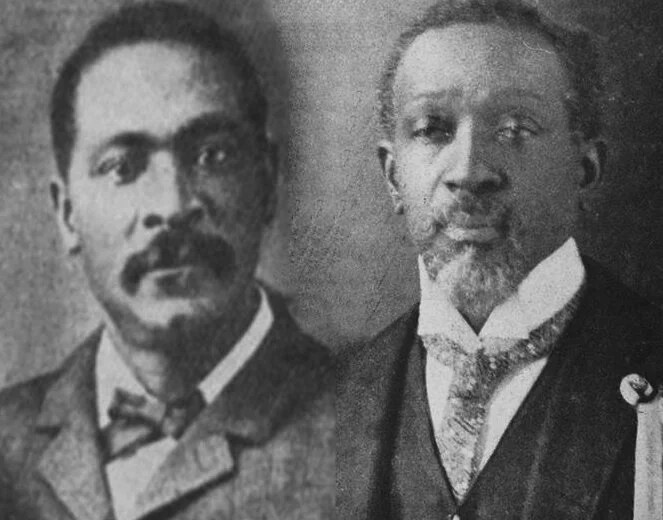
The founders of Mound Bayou were Isaiah T. Montgomery and his cousin Benjamin T. Green, both formerly enslaved men and sons of Benjamin Montgomery, who had been enslaved by Joseph E. Davis, brother of Jefferson Davis. Benjamin Montgomery had managed the Davis plantation and developed substantial administrative and agricultural expertise, which he passed on to his sons. After emancipation, Isaiah and Benjamin Green carried forward a vision of Black landownership and community governance rooted in self-reliance.
The Mississippi Delta in the late nineteenth century was fertile ground agriculturally but socially perilous for Black people. Sharecropping and debt peonage trapped many formerly enslaved families in cycles of economic dependency. Lynching and racial violence were pervasive. In this climate, Montgomery and Green sought to carve out a space where Black citizens could exercise full civic participation without white interference. They purchased land from the Louisville, New Orleans, and Texas Railway and began plotting a town.
Mound Bayou was deliberately located along the railroad line, which provided economic access while preserving geographic separation. The founders named the town after the nearby bayou and ancient Native American mounds in the region. From its inception, the town was self-governed by Black officials—mayors, police officers, merchants, and educators—forming one of the earliest fully autonomous Black municipalities in the United States.
Economic development was central to its survival. The town established cotton gins, general stores, and farms. Over time, it developed banks, insurance companies, and schools. Black professionals—doctors, lawyers, and teachers—found refuge and opportunity there. By the early twentieth century, Mound Bayou had become a symbol of Black enterprise, often cited alongside other independent Black communities such as Tulsa’s Greenwood District.
One of the most discussed early incidents illustrating the town’s social boundaries involved a white train conductor or traveler who reportedly stepped off a train in Mound Bayou, unaware that it was an all-Black town. According to local oral histories, he expected the usual racial deference accorded to whites in the South. Instead, he encountered a community that did not operate under Jim Crow norms of subservience. The shock was mutual: white intrusion was rare, and the town’s residents made clear that governance and authority there rested in Black hands. While versions of the story vary, the incident became emblematic of Mound Bayou’s guarded autonomy—a literal and symbolic “fortress” in the Delta.
Despite its ideals, the town’s leadership faced difficult political choices. In 1890, Isaiah T. Montgomery served as a delegate to the Mississippi Constitutional Convention. In a controversial move, he supported provisions that effectively disenfranchised many Black voters through poll taxes and literacy tests. Montgomery argued that political compromise was necessary to protect Mound Bayou from violent reprisal and to ensure its survival within a white-dominated state. His decision has remained a subject of scholarly debate, reflecting tensions between pragmatism and principle.
During the early 1900s, national Black leaders took notice. Booker T. Washington visited Mound Bayou and praised it as a model of Black self-help and industrial progress. Washington’s philosophy of economic advancement before political agitation aligned with Montgomery’s approach. The town was frequently cited in speeches and publications as proof that Black communities could thrive independently.
By 1907, Mound Bayou had a hospital, the Taborian Hospital, founded by the Knights and Daughters of Tabor, a Black fraternal organization. The hospital became one of the most important medical facilities for African Americans in Mississippi, providing care at a time when segregation barred them from white institutions. Health care, education, and business infrastructure reinforced the town’s status as a refuge.
The Great Migration altered the town’s trajectory. As millions of African Americans left the South for northern and western cities, Mound Bayou experienced population fluctuations. Mechanization in agriculture reduced labor needs, and economic challenges mounted. Yet the town endured, maintaining its identity as a symbol of Black resilience.
During the Civil Rights Movement, Mound Bayou again became significant. Activists and organizations such as the Student Nonviolent Coordinating Committee found support networks there. The town’s history of self-governance made it receptive to voter registration drives and community organizing efforts aimed at dismantling Jim Crow laws.
Federal anti-poverty programs in the 1960s, including initiatives under President Lyndon B. Johnson’s War on Poverty, brought new investments into the Mississippi Delta. Mound Bayou became a site for community health centers and economic development programs, linking its nineteenth-century origins to twentieth-century struggles for structural reform.
Throughout its existence, the town has embodied a paradox: it was both separatist in structure and integrative in aspiration. Its founders did not seek isolation for its own sake but protection from violence and degradation. In doing so, they created a civic experiment in Black nationalism long before that term gained popular currency.
The legacy of Isaiah T. Montgomery remains complex. To some, he was a visionary architect of Black autonomy; to others, his compromise at the 1890 convention symbolized accommodation to white supremacy. Yet without his political navigation, Mound Bayou may not have survived its vulnerable infancy.
Mound Bayou’s story also intersects with broader patterns of Black town formation across the South and West, including communities founded in response to racial terror and land exclusion. These towns were acts of resistance—physical manifestations of a people determined to claim space, cultivate land, and govern themselves.
Culturally, Mound Bayou fostered a sense of dignity that countered prevailing narratives of Black inferiority. Children grew up seeing Black authority normalized—Black teachers instructing, Black officers enforcing law, Black entrepreneurs building wealth. This psychological impact cannot be overstated in a region structured by racial hierarchy.
Though its population has declined from its early peak, the town remains incorporated and inhabited. Its very endurance is testimony to the durability of its founding vision. Streets laid in 1887 still carry the memory of aspiration etched into Delta soil.
Today, historians revisit Mound Bayou as part of a larger reconsideration of Reconstruction and its aftermath. Rather than viewing the post-Reconstruction era solely through the lens of Black disenfranchisement, scholars now emphasize Black institution-building and strategic survival. Mound Bayou stands at the center of that reinterpretation.
It was not merely a town but an argument—an embodied thesis that formerly enslaved people could master land, capital, and governance despite systemic obstruction. In the middle of the Delta, surrounded by plantations that once symbolized bondage, rose a community determined to rewrite destiny.
Mound Bayou endures as a sovereign dream carved from cotton fields and conviction. It reminds the nation that even under siege, Black Americans built fortresses of hope—self-fashioned citadels of dignity in the shadow of oppression.
References
Anderson, J. D. (1988). The education of Blacks in the South, 1860–1935. University of North Carolina Press.
Franklin, J. H., & Moss, A. A. (2000). From slavery to freedom: A history of African Americans (8th ed.). McGraw-Hill.
Green, A. (1999). Mound Bayou: An all-Black town in the Mississippi Delta. Mississippi Historical Society.
Montgomery, I. T. (1890). Speech at the Mississippi Constitutional Convention.
Washington, B. T. (1901). Up from slavery. Doubleday.
Woodruff, N. (2003). American Congo: The African American freedom struggle in the Delta. Harvard University Press.
 THE BROWN GIRL DILEMMA