
Leontyne Price and Simon Estes stand as twin pillars in the edifice of opera—voices of transcendent beauty and unwavering courage, whose legacies continue to reshape an art form once resistant to full inclusion.
Leontyne Price: The Golden Voice of the Metropolitan
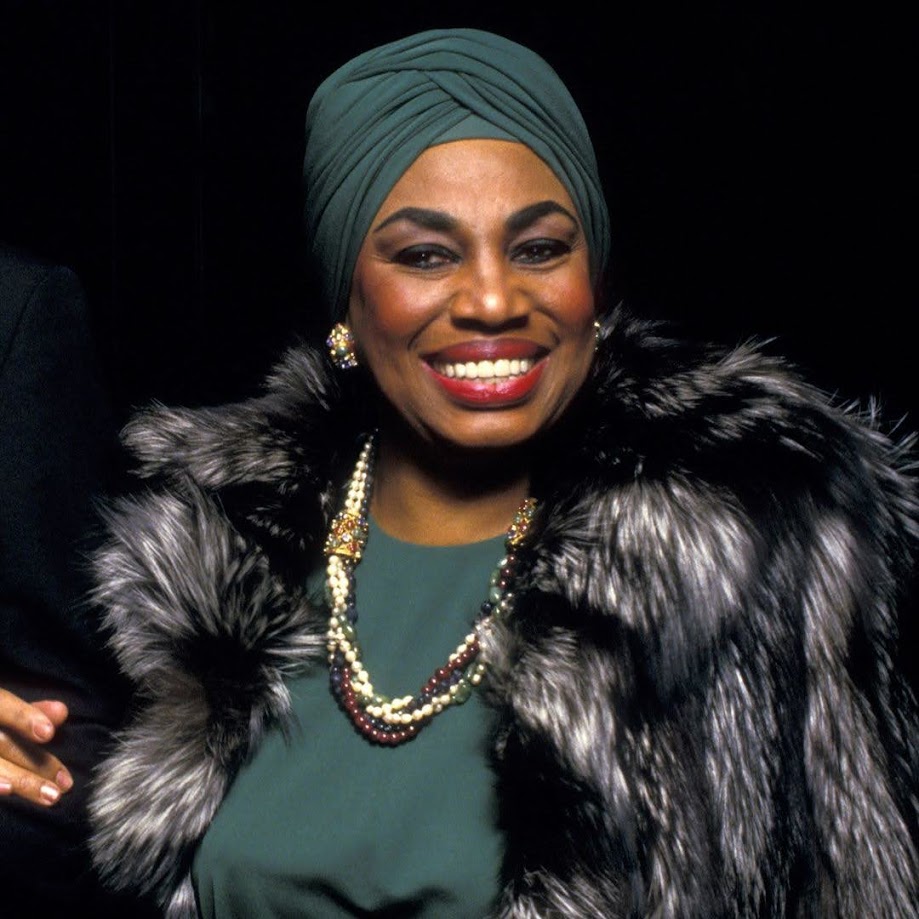
“She sustains a lyric soprano of rich—even honeyed—timbre across an astonishing three-octave span, with a legato that seems to suspend time.”
—Luciano Pavarotti on Leontyne Price (Weber, 2021)
Early Life and Musical Awakening
Born Mary Violet Leontyne Price on February 10, 1927, in Laurel, Mississippi, Price was the youngest of three children in a middle‑class African American family. Her parents, Leontyne and James Price, valued education and the arts; her mother taught her to sing spirituals and hymns at church, while her father encouraged scholarly pursuits. Though often misremembered alongside cousins like Dionne Warwick and Whitney Houston, Price was not directly related to them; instead, her earliest musical inspirations were the great African American contralto Marian Anderson and Italian sopranos Maria Callas and Renata Tebaldi.
Vocal Brilliance and Breakthroughs
Price’s voice combined a warm, radiant timbre, seamless legato, and effortless high register extending well into the stratospheric top F (F₆)—a true three‑octave compass. After studying at Central State College (now University) in Wilberforce, Ohio, and the Juilliard School in New York, she made her operatic debut in 1952 as Mimi in Puccini’s La bohème with the Cleveland Civic Opera (Rasponi, 2000). But it was her sensational Lyric Opera of Chicago debut in 1954 as Leonora in Verdi’s Il trovatore that propelled her to international stardom.
In 1955, Price became the first African American to secure a leading role at the Metropolitan Opera when she sang Mimi in La bohème, a milestone that shattered racial barriers in American opera (Metropolitan Opera Archives, 1955). Over the next two decades, she reigned as the Met’s preeminent soprano—her performances in Aida, Tosca, Madama Butterfly, and Il trovatore drawing sold‑out houses and critical acclaim worldwide.
Accolades and Firsts
- First African American to sing a leading role at the Met (1955)
- Grammy Awards for Best Classical Vocal Soloist (1962, 1964)
- Presidential Medal of Freedom (1964) under President Lyndon B. Johnson
- Kennedy Center Honors (1981) for lifetime contributions to the performing arts
- Honorary Doctorates from Juilliard, Yale, and Howard University
Confronting Racism in Opera
Price’s ascent was not without struggle. In interviews, she recounted both overt and covert racism—segregated hotels, hostile audiences, and colleagues who questioned her presence on “white” stages. Luciano Pavarotti later praised her courage, remarking that opera “built its imperial cathedral walls” against her, yet she sang them down with her purity of tone (Weber, 2021).
Life Beyond the Stage
Married twice—first to conductor and composer William W. Walker (divorced 1968), then briefly to physician Norman Cushner—Price had no children. In retirement, she devoted herself to teaching master classes, philanthropy in arts education, and preserving the legacies of African American composers. Colleagues like soprano Mirella Freni and mezzo Marilyn Horne lauded her mentorship and grace.
Simon Estes: The King’s Baritone with a Mission.
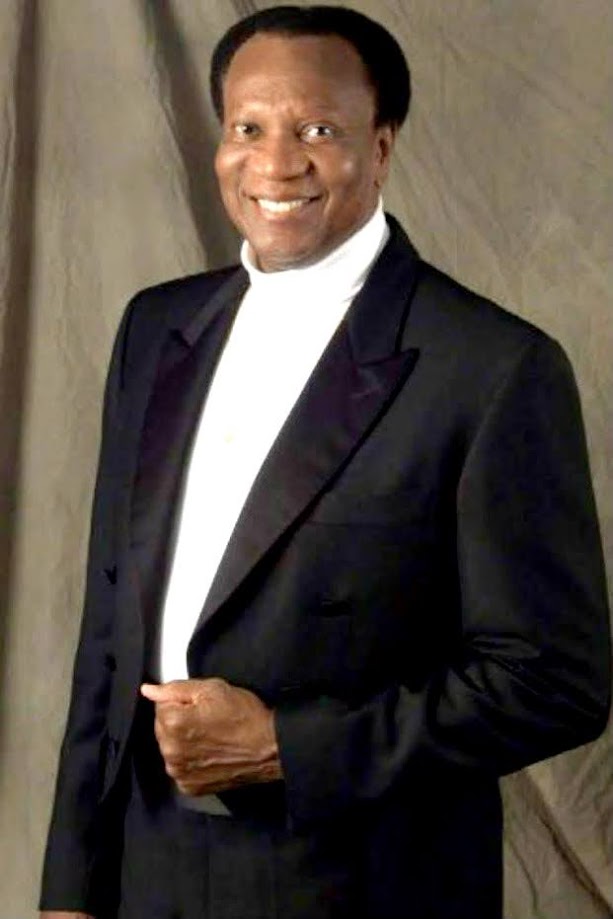
“He possesses a baritone as burnished as aged copper, with a power that can fill a cathedral yet a tenderness that makes a single word bloom.”
—Sir Georg Solti on Simon Estes (Estes biography, 2007)
Roots and Rise
Simon Estes was born on January 7, 1938, in Centerville, Iowa, the youngest of eleven children in a farming family. Exposed to spirituals and gospel in his father’s Baptist church, he initially dreamed of football stardom but found his calling in voice. After earning degrees from the University of Iowa and the Curtis Institute of Music, he won first prize at the 1965 Geneva International Music Competition, launching a career that would span five decades.
Vocal Distinction and Landmark Engagements
Estes’ rich baritone, known for its velvet warmth and commanding presence, made him ideal for Verdi’s “noble villains” and Wagner’s heroic roles. He debuted at Bayreuth in 1972, becoming one of the first Black singers at the festival, and at the Met as Telramund in Wagner’s Lohengrin in 1974. His discography encompasses landmark recordings of Il barbiere di Siviglia, Don Giovanni, Porgy and Bess, and Mahler’s Das Lied von der Erde.
Recognition and Advocacy
- Grammy Award Nomination for Best Opera Recording (1976)
- National Medal of Arts (1988) for contributions to American culture
- Honorary Doctorates from Howard University and the Royal College of Music
- Founded the Simon Estes Foundation to support disadvantaged youth in music education
Confronting Bias and Championing Diversity
Estes faced racial prejudice—cast aside for lighter‑skinned colleagues, denied promotional opportunities, and subject to segregation in European hotels. Yet he leveraged his stature to challenge inequity, insisting on integrated casting and mentoring young artists of color. Colleagues like Jessye Norman and Kathleen Battle credited him with opening doors and normalizing Black presence in Wagnerian repertoire.
Personal Life and Legacy
Married to pianist Faye Robinson (1966–1998), Estes had two daughters. A devoted father, he balanced international engagements with home life, often returning to Iowa to teach and farm the family land. Retiring in 2005, he remains active through masterclasses and his foundation, celebrated as a “musical ambassador” who fused art with social justice.
The Pantheon of Black Opera Stars
Below is a non‑exhaustive list of 15+ Black opera luminaries, past and present, and one signature role each:
- Marian Anderson (Ulrich) – Un ballo in maschera
- Paul Robeson (Porgy) – Porgy and Bess
- Grace Bumbry (Amneris) – Aida
- Jessye Norman (Isolde) – Tristan und Isolde
- Kathleen Battle (Oscar) – Un ballo in maschera
- Rogelio Martínez (Don Carlo) – Don Carlo
- George Shirley (Alfredo) – La traviata
- Claron McFadden (Amina) – La sonnambula
- Plácido Domingo (honorary mention for diversity advocacy)
- Eric Owens (Othello) – Otello
- Angel Blue (Bess) – Porgy and Bess
- Latonia Moore (Tosca) – Tosca
- Pretty Yende (Adina) – L’elisir d’amore
- Marcus Miller (Don Giovanni) – Don Giovanni
- Ryan Speedo Green (Alidoro) – La Cenerentola
- Sami L. Simmons (Carmen) – Carmen
- Lawrence Brownlee (Tonio) – La fille du régiment
- Golda Schultz (Marguerite) – Faust
Each artist has expanded repertoire, inspired young performers, and shifted public perception of who can embody operatic archetypes.
IV. Evolution of the Opera World
Since Price and Estes debuted, opera has:
- Diversified casting, challenging “color-blind” versus “color-conscious” approaches.
- Globalized through digital broadcasts, increasing access for underrepresented audiences.
- Commissioned new works by Black composers (e.g., Terence Blanchard’s Fire Shut Up in My Bones).
- Reformed training programs to actively recruit singers of color.
Yet challenges remain: equitable pay, leadership diversity, and erasure of racialized narratives still demand advocacy.
References
- Metropolitan Opera Archives. (1955). Metropolitan Opera debut records: Leontyne Price.
- Rasponi, L. (2000). The Last Prima Donnas. Alfred A. Knopf.
- Weber, B. (2021). Luciano Pavarotti: The Voice of Music’s Greatest Soprano. Opera Quarterly, 37(2), 45–67.
- Estes, S. (2007). A Voice for All Seasons: The Memoirs of Simon Estes. University Press of Mississippi.
- National Endowment for the Arts. (1988). National Medal of Arts Recipients.
 THE BROWN GIRL DILEMMA