
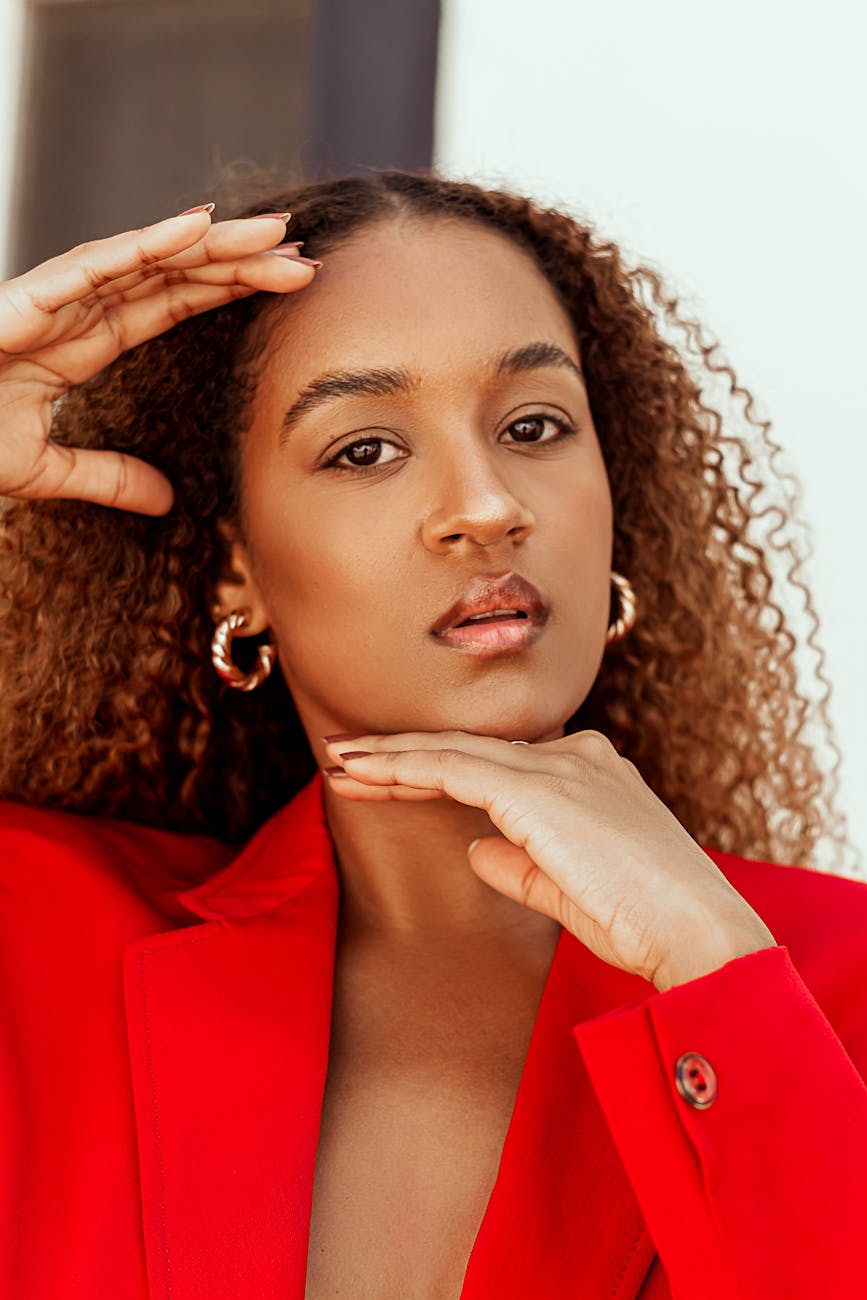
Sisters, let us have a real conversation about beauty. From the moment we are born, society places us under a microscope: how we look, how we dress, the color of our skin, the shape of our bodies. Beauty is celebrated, envied, and even worshiped. Yet beauty can also be misunderstood, manipulated, and turned into a burden. So what is beauty really? Where does it come from, and what makes a woman truly beautiful—inside and out?
The Origin of Physical Beauty: Genetics and Inheritance
On a physical level, beauty has roots in genetics. Features such as symmetrical faces, clear skin, and healthy hair are linked to indicators of health and fertility (Rhodes, 2006). Science shows that facial symmetry and proportional features are often unconsciously perceived as “beautiful” because they reflect genetic stability. Our physical features—skin tone, hair texture, body type—are part of the inheritance of our ancestors. Black women, for example, carry unique genetic traits that the world both fetishizes and envies: melanin-rich skin, full lips, and natural curves that defy Western beauty ideals.
But while genetics play a role in shaping appearance, they do not define the fullness of beauty.
The Burden and Blessing of Beauty
Beauty can be both a blessing and a curse. It opens doors, captures attention, and even inspires admiration. Yet, it also provokes envy, jealousy, and objectification. Many women have learned that being considered beautiful can draw not only favor but also unwanted advances, superficial friendships, and false assumptions about character. Proverbs 31:30 reminds us: “Favour is deceitful, and beauty is vain: but a woman that feareth the Lord, she shall be praised” (KJV).
Why Men Worship Beauty
Across cultures and time, men have idolized beauty. In many cases, this “worship” is less about love and more about desire. Psychology calls this mate selection bias—men are often drawn to visible markers of health and fertility (Buss, 2019). Yet, when beauty is elevated above substance, it creates shallow relationships built on attraction rather than covenant.
Why Women Alter Themselves for Beauty
We live in an age where women feel pressured to modify themselves to fit an unattainable ideal. Cosmetic surgery, BBLs (Brazilian Butt Lifts), and fillers have grown into a multi-billion-dollar industry fueled by insecurity and comparison (American Society of Plastic Surgeons, 2023). Social media intensifies this pressure, showcasing airbrushed, filtered images that create unrealistic standards. Instead of celebrating natural uniqueness, society rewards conformity to artificial perfection.
Beauty According to the Bible
Scripture redirects our focus from the external to the eternal:
- “Whose adorning let it not be that outward adorning of plaiting the hair, and of wearing of gold, or of putting on of apparel; But let it be the hidden man of the heart, in that which is not corruptible, even the ornament of a meek and quiet spirit, which is in the sight of God of great price” (1 Peter 3:3–4, KJV).
- “Favour is deceitful, and beauty is vain: but a woman that feareth the Lord, she shall be praised” (Proverbs 31:30, KJV).
- “Strength and honour are her clothing; and she shall rejoice in time to come” (Proverbs 31:25, KJV).
According to the Bible, true beauty is found in:
- A meek and quiet spirit (1 Peter 3:4).
- The fear of the Lord (Proverbs 31:30).
- Strength and honor (Proverbs 31:25).
- Wisdom and kindness (Proverbs 31:26).
🌸 Sarah: Beauty That Endured Through Age
Sarah, the wife of Abraham, is the first woman in Scripture described for her beauty. The Bible records that even in her old age, her beauty was so remarkable that Abraham feared men would kill him to take her.
- Genesis 12:11–15 (KJV): “Behold now, I know that thou art a fair woman to look upon… the Egyptians beheld the woman that she was very fair.”
- Genesis 20:2 (KJV): King Abimelech desired Sarah because of her beauty.
Her story reveals both the blessing and danger of physical attractiveness. Though admired, her beauty also placed her in vulnerable situations. Yet, Sarah’s true legacy was not her outward beauty but her faith—she became the mother of nations and is celebrated in Hebrews 11:11 for her belief in God’s promise.
🌸 Rachel: A Woman of Lovely Form and Countenance
Rachel, the beloved wife of Jacob, is described as both beautiful in form and face. Her beauty stirred deep love and devotion in Jacob, who labored 14 years to marry her.
- Genesis 29:17 (KJV): “Leah was tender eyed; but Rachel was beautiful and well favoured.”
- Genesis 29:20 (KJV): Jacob served seven years for Rachel, which “seemed unto him but a few days, for the love he had to her.”
Rachel’s beauty was undeniable, yet her story also shows that beauty alone does not protect from hardship. She endured barrenness, jealousy with her sister Leah, and eventually died giving birth to Benjamin (Genesis 35:16–19). Her beauty attracted love, but her life demonstrates that beauty cannot shield us from trials.
🌸 Judith: Beauty as a Weapon of Deliverance
Judith, from the Apocrypha (Book of Judith), is perhaps one of the most powerful examples of beauty being used by God for deliverance. She was a widow, known for her righteousness, wisdom, and striking appearance.
- Judith 8:7 (KJV, Apocrypha): “Now Judith was a fair woman to look upon, and her husband left her gold, and silver, and menservants, and maidservants, and cattle, and lands: and she remained upon them.”
- Judith 10:4 (KJV, Apocrypha): She adorned herself to appear even more beautiful before entering the Assyrian camp.
- Judith 10:23 (KJV, Apocrypha): The Assyrian soldiers marveled, saying, “Who can despise this people, that have among them such women? Surely it is not good to leave one man of them alive, for if they be let go, they shall deceive the whole earth.”
Judith’s beauty captivated General Holofernes, but it was her courage, faith, and wisdom that saved Israel. She used beauty not for vanity but as a tool of deliverance ordained by God.
✨ Lessons from Their Beauty
- Sarah shows us that beauty may endure across time, but faith leaves the truest legacy.
- Rachel reminds us that beauty can inspire devotion, but it cannot prevent suffering.
- Judith demonstrates that beauty coupled with faith and wisdom can be a powerful weapon for God’s purposes.
The Spiritual Dangers of Beauty
As much as beauty can be a gift, it can also be a snare when it leads to vanity, pride, or self-worship. Ezekiel 28 describes the downfall of Lucifer, who was corrupted by his own beauty and pride. Likewise, women today can fall into the trap of placing identity solely in appearance, chasing validation from men or social media instead of God.
- Vanity: “Charm is deceitful” (Proverbs 31:30)—physical beauty fades, but women who idolize their looks risk losing focus on eternal values.
- Pride: Excessive obsession with appearance breeds arrogance and comparison.
- Idolatry of Self: When beauty becomes an idol, it replaces God with the worship of self, fame, or fleshly validation.
This is why Paul warned in Romans 1:25 about those who “worshipped and served the creature more than the Creator.” Beauty must never become a throne we sit on to exalt ourselves.
What Makes a Woman Truly Beautiful?
While the world elevates physical features, what endures is a woman’s mind, character, and spirit. Intelligence, kindness, resilience, and humility shine brighter than any physical trait. A beautiful woman is one who uplifts others, walks in purpose, and carries dignity. Her confidence is not rooted in her reflection but in her values.
The Most Beautiful Black Women and Their Reflections on Beauty
Throughout history, women like Cicely Tyson, Naomi Campbell, Halle Berry, and Lupita Nyong’o have redefined beauty. Lupita Nyong’o has spoken openly about overcoming colorism and learning to embrace her dark skin, calling beauty “something you have to cultivate yourself.” Cicely Tyson emphasized that beauty without purpose is shallow, while Halle Berry highlighted that true beauty is tied to kindness and authenticity.
These women remind us that Black beauty is not only physical—it is cultural, spiritual, and intellectual.
The Social Media Effect: Insecurity and Comparison
Platforms like Instagram and TikTok magnify beauty pressures. The constant stream of curated images fosters comparison, leading many women to feel inadequate. Studies show that excessive social media use is directly linked to body dissatisfaction and low self-esteem (Fardouly et al., 2018). Beauty has become performance-based, tied to likes, follows, and validation rather than authenticity.
Traits Greater Than Physical Beauty
A woman’s lasting legacy is not her looks but her personality traits and virtues:
- Wisdom: Offering guidance rooted in truth.
- Compassion: Seeing and serving others.
- Integrity: Living with honesty and strength.
- Resilience: Standing firm in trials.
- Faith: Trusting God above all else.
These traits inspire respect and love that physical appearance alone can never secure.
Conclusion
Sisters, beauty is complex. It is part genetic, part cultural, and often a double-edged sword. While men may worship it, and while industries profit from our insecurities, the truth remains: beauty without character is empty. The Bible reminds us to seek the kind of beauty that cannot fade—the beauty of a God-fearing, wise, compassionate, and dignified spirit.
Let us not waste our energy chasing the world’s temporary standards but instead cultivate the eternal virtues that make us radiant in the sight of God.
“Strength and honour are her clothing; and she shall rejoice in time to come” (Proverbs 31:25, KJV).
References
- American Society of Plastic Surgeons. (2023). Plastic surgery statistics report. https://www.plasticsurgery.org/
- Buss, D. M. (2019). Evolutionary psychology: The new science of the mind. Routledge.
- Fardouly, J., Diedrichs, P. C., Vartanian, L. R., & Halliwell, E. (2018). Social comparisons on social media: The impact of Facebook on young women’s body image concerns and mood. Body Image, 13, 38–45.
- Rhodes, G. (2006). The evolutionary psychology of facial beauty. Annual Review of Psychology, 57, 199–226.
 THE BROWN GIRL DILEMMA