
“The Lord will make a way somehow.”
(A recurring expression of faith often attributed to Good Times -Florida Evans’ character.)
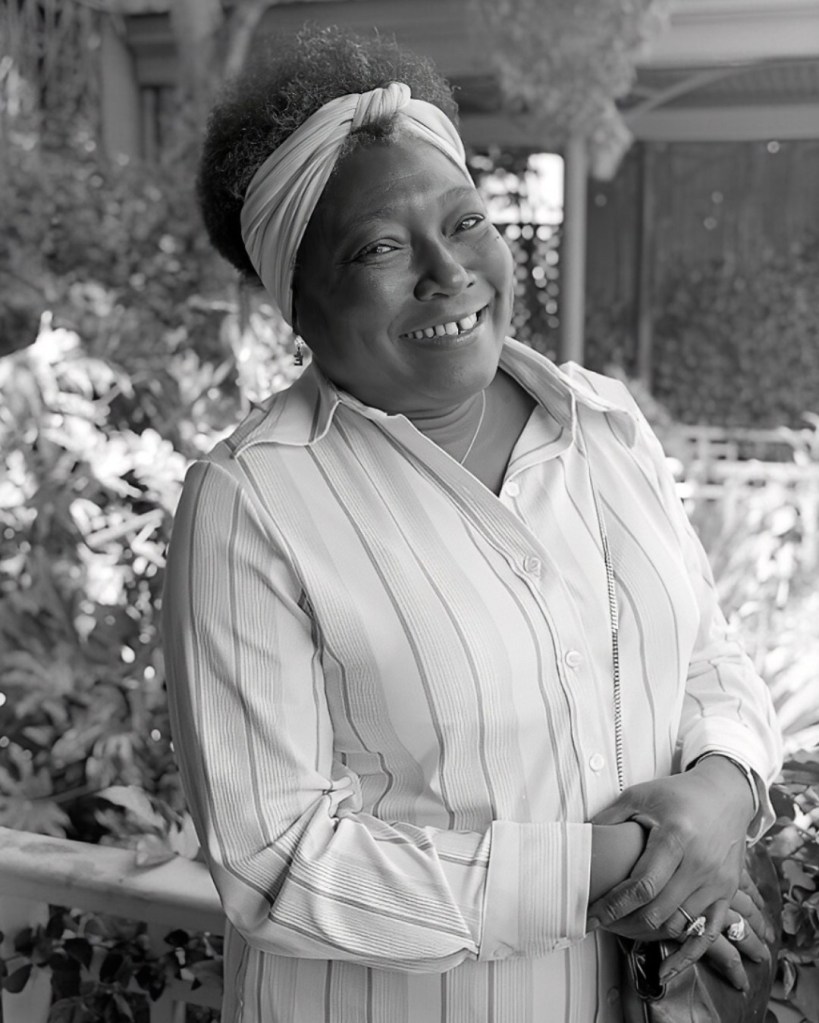
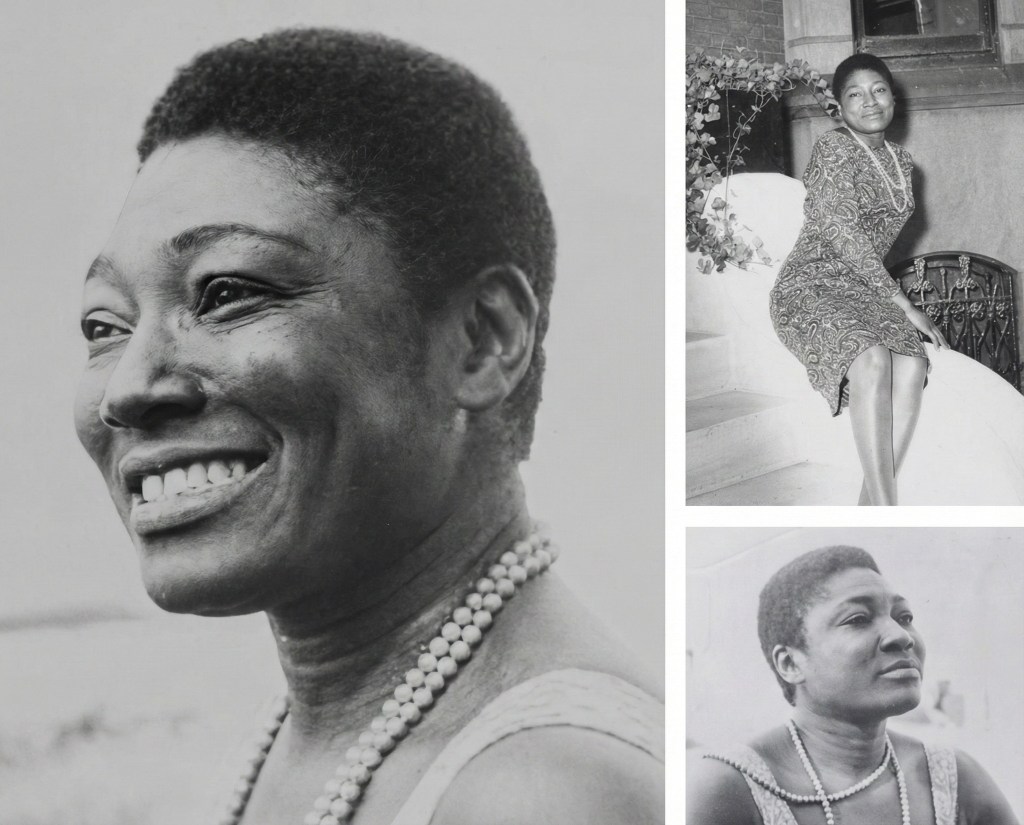
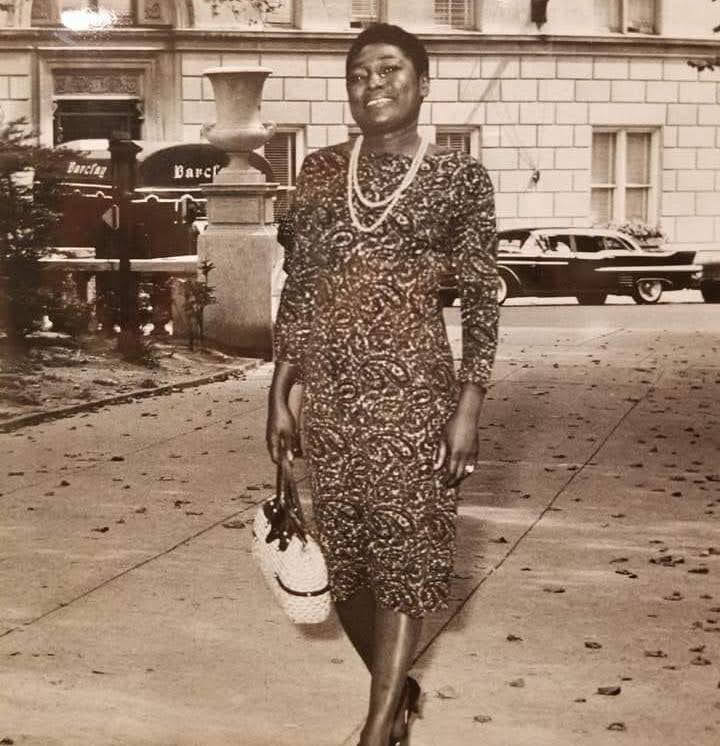
Esther Rolle was one of the most respected and principled actresses in American television history, celebrated for her powerful portrayal of Black womanhood, dignity, and cultural authenticity. Born Esther Elizabeth Rolle on November 8, 1920, in Pompano Beach, Florida, she was the daughter of Bahamian immigrants and the tenth of eighteen children. Her upbringing in a large, disciplined, Caribbean household deeply shaped her worldview, instilling in her a strong sense of moral responsibility, cultural pride, and commitment to excellence.
Rolle moved to New York City in the 1940s, where she pursued formal education in the arts. She studied drama at Hunter College and later at The New School for Social Research, becoming immersed in theater and Black intellectual circles during the Harlem Renaissance’s later cultural wave. Her early career was rooted in stage acting, particularly in socially conscious and politically engaged theater that addressed the realities of Black life in America.
Before achieving television fame, Esther Rolle was heavily involved in the Negro Ensemble Company, a groundbreaking Black theater organization dedicated to producing serious dramatic works by and about African Americans. She also appeared in numerous stage productions, including The Blacks, Blues for Mister Charlie, and The Moon Besieged, which solidified her reputation as a serious dramatic actress rather than a stereotypical performer.
Rolle’s breakthrough into mainstream television came through her role as Florida Evans, a character she originally played on the sitcom Maude (1972–1974). Florida was the maid for Maude Findlay, portrayed by Bea Arthur, and quickly became one of the most beloved characters on the show due to Rolle’s warmth, realism, and emotional depth. Her performance was so compelling that producers developed a spin-off series centered entirely on her character and family.
“Damn, damn, damn!”
This line became her signature catchphrase on the show and is one of the most iconic phrases in American television history. Florida would often say it in moments of frustration, disbelief, or righteous anger—usually when dealing with J.J.’s foolishness or the family’s struggles.
But culturally and historically, “Damn, damn, damn!” is the phrase that made Esther Rolle a household name and entered pop culture permanently.
This spin-off became the iconic sitcom Good Times (1974–1979), making Esther Rolle the first Black woman to star as the lead mother in a network television sitcom. As Florida Evans, Rolle portrayed a strong, loving, God-fearing Black mother raising her family in the Chicago housing projects. The show addressed serious issues such as poverty, racism, unemployment, and systemic inequality—topics rarely explored honestly on television at the time.
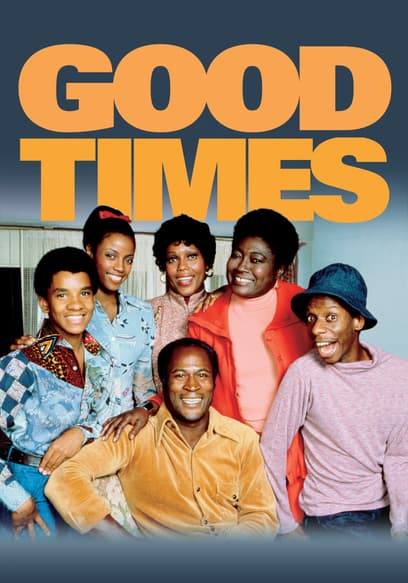
Rolle was deeply committed to positive Black representation and frequently challenged the show’s producers when she felt the characters were becoming too stereotypical or degrading. She famously objected to the direction of the character J.J., believing his exaggerated behavior undermined the dignity of Black men. At one point, she temporarily left the show due to these concerns, demonstrating her integrity and refusal to compromise her values for fame.
Esther Rolle’s activism extended beyond the screen. She was a vocal advocate for civil rights, Black empowerment, and cultural responsibility in media. She believed television had a moral duty to portray Black families with complexity, intelligence, and respect, rather than as caricatures for entertainment. Her philosophy made her one of the earliest figures to challenge systemic racism within Hollywood from an insider position.
In addition to television, Rolle built an extensive filmography. Her notable film roles include Cleopatra Jones (1973), The Bingo Long Traveling All-Stars & Motor Kings (1976), Rosewood (1997), and Driving Miss Daisy (1989), where she played Idella, the domestic worker whose subtle performance added emotional gravity to the film. She also starred in Down in the Delta (1998), directed by Maya Angelou, in one of her final and most celebrated roles.
Esther Rolle was also highly active in voice acting and children’s programming, most notably as the voice of Shug Avery in The Color Purple animated series and as Nana in The Proud Family. Her voice, like her presence, carried authority, wisdom, and maternal warmth, making her an intergenerational cultural icon.
Despite her public visibility, Rolle maintained a relatively private personal life. She was married once, briefly, to Oscar Robinson, but had no children of her own. Nevertheless, she became a symbolic mother figure to millions of Black Americans, especially women who saw themselves reflected in her strength, resilience, and grace.
Esther Rolle received numerous awards and honors throughout her career. She won a Primetime Emmy Award in 1979 for her role in the television film Summer of My German Soldier. She was also nominated for multiple Emmy and NAACP Image Awards and received honorary doctorates for her contributions to arts and culture.
Her cultural impact cannot be overstated. Esther Rolle redefined what it meant to be a Black woman on television. At a time when Black female characters were often limited to servants or comic relief, Rolle brought depth, spirituality, intelligence, and moral authority to every role she played. She insisted that Black women be shown as thinkers, leaders, and nurturers of their communities.
Rolle’s power was not rooted in celebrity, but in principle. She wielded influence through moral clarity, intellectual rigor, and cultural responsibility. She refused roles that demeaned Black people and challenged producers, networks, and writers to elevate their storytelling. In this sense, her power was both political and spiritual.
She viewed acting as a form of ministry and social responsibility, once stating that she felt accountable not just to audiences, but to history itself. Her work was never about ego or fame; it was about legacy, truth, and representation.
Esther Rolle passed away on November 17, 1998, at the age of 78, after complications from diabetes. Her death marked the end of an era, but her influence continues to shape Black television, film, and cultural consciousness.
Today, Esther Rolle is remembered as more than an actress. She is remembered as a cultural guardian, a matriarch of Black media, and a woman who used her platform to fight for dignity, truth, and justice. Her legacy lives on in every strong Black female character who is allowed to be complex, intelligent, and fully human.
References
Bogle, D. (2016). Primetime blues: African Americans on network television. Farrar, Straus and Giroux.
Coleman, R. (1999). Esther Rolle obituary. The New York Times.
Gates, H. L., Jr. (2014). The Black church and the African American experience. Oxford University Press.
Rolle, E. (1993). Interview in Ebony Magazine. Johnson Publishing.
Smith, J. (2003). Black women and television representation. Journal of African American Studies, 7(2), 45–62.
NAACP. (1998). Esther Rolle lifetime achievement recognition.
IMDb. (2024). Esther Rolle filmography.
Encyclopedia Britannica. (2023). Esther Rolle biography.
 THE BROWN GIRL DILEMMA