
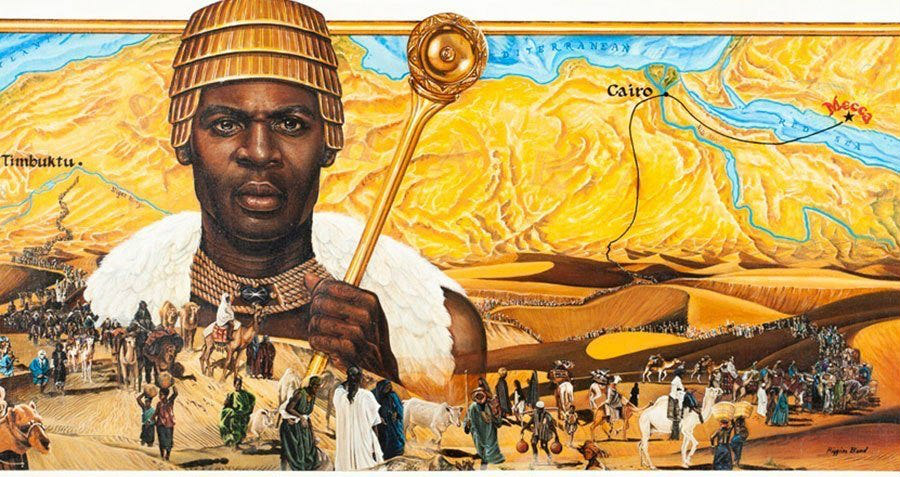
Throughout world history, few figures have embodied the fusion of wealth, wisdom, and spiritual devotion like Mansa Musa, the 14th-century emperor of the Mali Empire. Revered as the richest man to have ever lived, Mansa Musa’s legacy goes far beyond gold and grandeur—it encompasses a transformative reign that elevated West Africa to global prominence through trade, scholarship, and religious devotion. His life is not only a celebration of African excellence but a benchmark for leadership that still inspires Africa’s billionaires today.
The Life and Rise of a Golden Monarch
Musa Keita I, known as Mansa Musa, ascended to the throne of Mali in 1312 AD. He inherited power from his predecessor, Abu Bakr II, who is believed to have set sail on an ambitious voyage across the Atlantic Ocean in search of new lands. Musa, a devout Muslim, ruled over an empire that stretched over 2,000 miles, encompassing parts of present-day Mali, Senegal, Gambia, Niger, Nigeria, Guinea, and Mauritania. He was the 10th Mansa, or “King of Kings,” of the Mali Empire and quickly set out to establish a reign that would be remembered for centuries.
Mansa Musa was married to Queen Inari Kunate, and though historical records do not provide exact details of his family, it is known that he had children, including a son named Magha who succeeded him briefly. As a ruler, Musa exemplified not only administrative excellence but a commitment to faith, justice, and community prosperity.
His wealth is legendary. Scholars estimate that, adjusted for inflation, Musa’s personal fortune could have reached as much as $400–500 billion. This would make him richer than today’s tech moguls like Elon Musk or Jeff Bezos. Unlike modern billionaires whose assets are often tied to stock markets, Mansa Musa’s wealth was tangible—gold, land, and control over critical trade routes that moved salt, ivory, slaves, and knowledge across the Sahara.
Mali Under Mansa Musa: The Empire of Learning and Wealth
The Mali Empire thrived under Musa’s leadership, becoming one of the most sophisticated and wealthy civilizations in world history. Its strength was rooted in control of the trans-Saharan trade network, particularly the gold and salt trades. Mali was so rich in gold that the commodity became central to its international image.
One of Mansa Musa’s most remarkable accomplishments was his 1324 pilgrimage to Mecca, known as the Hajj. This journey was not only a religious obligation but a political statement. He traveled with a caravan reportedly consisting of 60,000 men, including 12,000 slaves and 100 camels each carrying hundreds of pounds of gold. His generosity was so overwhelming in places like Cairo and Medina that he caused significant inflation, devaluing gold for a decade in some regions. This pilgrimage placed Mali on the map for European and Arab chroniclers, and Mansa Musa’s name began appearing in global records, including the Catalan Atlas of 1375.
Upon returning to Mali, Musa commissioned the construction of mosques, madrasas (Islamic schools), and libraries. Timbuktu, under his guidance, blossomed into a world-renowned center of Islamic scholarship and trade. The University of Sankoré in Timbuktu attracted scholars from across Africa and the Middle East. Mansa Musa also hired Andalusian architects, such as Abu Ishaq Es Saheli, who introduced new architectural designs, including the Djinguereber Mosque, still standing today.
The Legacy of Wealth and Spirituality
Mansa Musa’s legacy is not simply one of wealth but one of moral and cultural responsibility. He utilized his riches to invest in education, infrastructure, and religious institutions. His reign exemplified the African tradition of communal wealth—what benefits the king must benefit the people. He modeled the ideal that leadership is stewardship.
Although no direct quotes from Mansa Musa survive, the 14th-century historian Al-Umari described him as “a young man of black complexion with a pleasant face and good figure…he spoke rarely, and always with mildness.” This suggests a man of humility and discipline, despite his immense riches. His image—an African king holding a nugget of gold—became an icon in European maps, redefining Western ideas of African civilization and prosperity.
Ancient African Kingdoms of Wealth and Power
Mali was not alone in its splendor. Ancient Africa was home to several other prosperous kingdoms, such as:
- Ghana Empire – Preceding Mali, rich in gold and trade.
- Songhai Empire – Successor to Mali, known for military might and scholarship.
- Benin Kingdom – Famous for bronze artwork and diplomatic relations with Europeans.
- Great Zimbabwe – A southern African kingdom renowned for its stone cities and cattle wealth.
- Axum (Ethiopia) – A powerful Christian empire with vast trade routes.
- Kongo Kingdom – Central African monarchy known for its diplomacy and Catholic conversion.
- Kanem-Bornu – Islamic empire with military power and trade.
- Nubia/Kush – Ancient civilization that rivaled Egypt.
These kingdoms were centers of commerce, technology, military strategy, and cultural identity—dispelling the colonial myth of a dark and stagnant precolonial Africa.
Modern Billionaires: Today’s African Kings
In today’s world, African billionaires carry the legacy of wealth and leadership, though in modern industries:
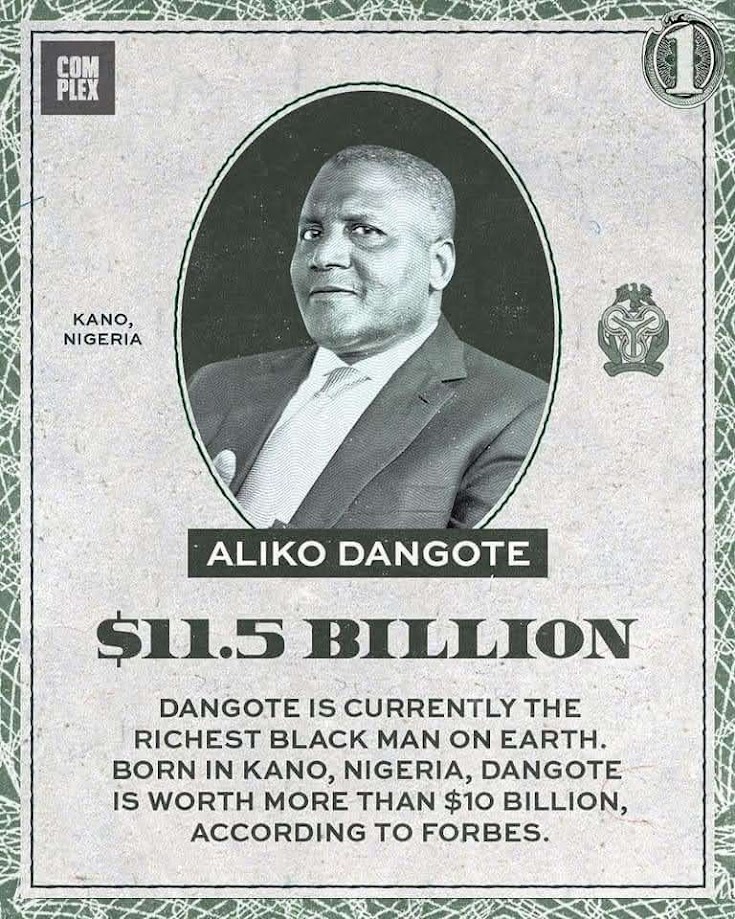
- Aliko Dangote of Nigeria is Africa’s richest man (net worth ~$13.5 billion). His conglomerate dominates the cement, sugar, and oil industries. His foundation supports education, health, and disaster relief across the continent.
- Nassef Sawiris of Egypt (net worth ~$9.5 billion) has interests in construction and sports. He represents North African industrial influence.
- Patrice Motsepe of South Africa, a mining tycoon, was the first Black African on Forbes’ billionaire list. He has pledged much of his wealth to philanthropy through the Motsepe Foundation.
These modern magnates embody a mission to uplift their communities through investment, innovation, and infrastructure—principles that echo the communal values of kings like Mansa Musa.
Comparing Mansa Musa and Elon Musk
Elon Musk, the 21st-century industrialist, has a net worth fluctuating between $230–$250 billion, depending on stock market conditions. His wealth is rooted in futuristic technologies: electric cars, space exploration, and AI. Mansa Musa’s wealth, by contrast, was more immediate and liquid—gold, territory, and people. Economists suggest Musa’s adjusted fortune may have doubled or even tripled Musk’s, making him arguably the wealthiest individual in human history.
However, the true contrast lies in how their wealth was used. Mansa Musa’s riches fueled religious, intellectual, and social development, whereas modern billionaires often focus on innovation and privatized enterprise.
Conclusion: The Sovereign of Sovereigns
Mansa Musa’s name resounds through history not merely as a wealthy king, but as a beacon of divine kingship, cultural enlightenment, and Pan-African pride. He ruled with a blend of Islamic piety and African rootedness, proving that African civilizations were not only rich in gold but in governance, faith, and vision. His story reminds us that Africa’s greatness is not a myth—it is a memory, and a mandate to reclaim.
In honoring Mansa Musa today, we celebrate not only a king of gold, but a king of purpose. His reign challenges contemporary Africans and the diaspora to return to a model of leadership that centers wealth around wisdom and prosperity around people.
References
Gates Jr., H. L. (2011). The African Americans: Many Rivers to Cross. SmileyBooks.
Hunwick, J. O. (1999). Timbuktu and the Songhay Empire: Al-Sa’dī’s Taʾrīkh al-Sūdān down to 1613 and other contemporary documents. Brill.
Levtzion, N., & Hopkins, J. F. P. (2000). Corpus of early Arabic sources for West African history. Markus Wiener Publishers.
Forbes. (2025). World’s Billionaires List. Retrieved from https://www.forbes.com
World History Encyclopedia. (2023). Mansa Musa. Retrieved from https://www.worldhistory.org/Mansa_Musa_I/
 THE BROWN GIRL DILEMMA