
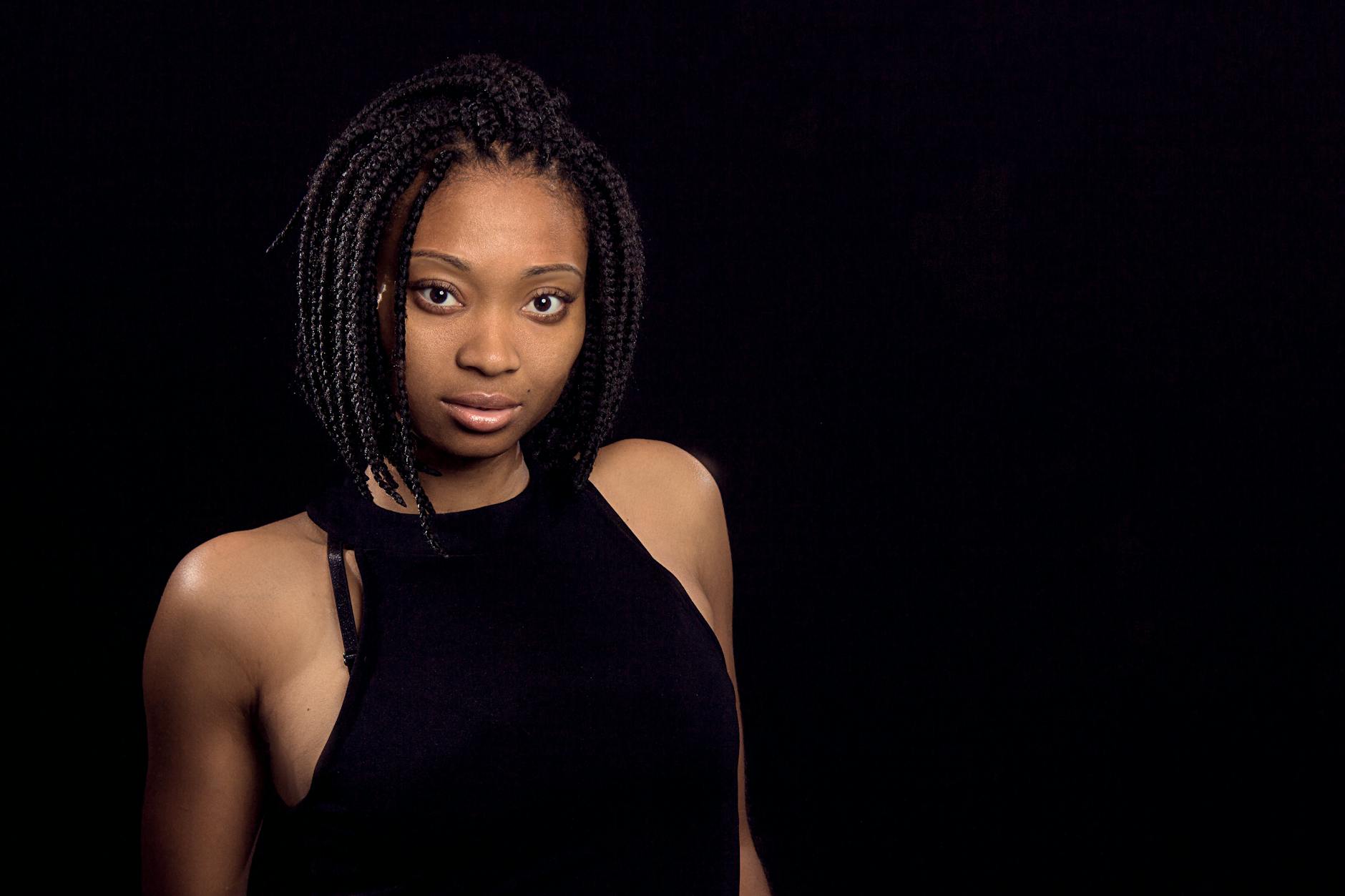
To live in the middle hue is to exist in a space that is simultaneously visible and invisible. Brown-skinned women occupy a unique position within the color spectrum of Black beauty, standing between the lighter complexions that society often privileges and the darker complexions that increasingly symbolize resistance and resilience. This positioning creates a distinctive lived experience marked by tension, invisibility, and resilience.
Historically, colorism has shaped the trajectory of Black identity in profound ways. During slavery, skin tone was a marker of social hierarchy, with lighter-skinned individuals often placed in domestic roles and darker-skinned individuals subjected to field labor (Hunter, 2007). Brown-skinned women often stood somewhere in between, navigating ambiguous roles that reflected neither full privilege nor complete marginalization.
The legacy of these hierarchies remains. Contemporary psychology shows that skin tone significantly influences perceptions of attractiveness, intelligence, and competence (Hill, 2002). Brown-skinned women frequently find themselves overlooked, as if their shade renders them “neutral”—not exalted, not despised, but quietly ignored. This invisibility defines much of the “middle hue” experience.
Celebrities like Gabrielle Union, Nia Long, Sanaa Lathan, and Regina King exemplify this dynamic. Each has built a successful career, yet their complexions have not been consistently framed as cultural standards of beauty. Instead, they are remembered for talent, relatability, or resilience—qualities that, while admirable, subtly reflect society’s tendency to place brown-skinned women in the background rather than at the center.
The Bible offers an antidote to these hierarchies. Song of Solomon 1:5 (KJV) declares: “I am black, but comely, O ye daughters of Jerusalem.” The Shulamite’s affirmation reminds us that all shades of melanin, including the middle hues, are divinely beautiful. God’s design resists society’s categories, declaring beauty where humanity places division.
The psychological toll of colorism cannot be ignored. Social identity theory suggests that individuals derive worth from group belonging (Tajfel & Turner, 1986). When brown-skinned women are neither fully included in the praise of light skin nor in the pride of dark skin, they experience a fractured sense of belonging, resulting in anxiety, insecurity, and disconnection.
This fractured identity is especially pronounced in adolescence. Many young brown-skinned girls grow up hearing remarks such as, “You’re not light enough to be pretty” or “You’re not dark enough to be bold.” These microaggressions plant seeds of confusion and create internal struggles with identity. Living in the middle hue becomes a quiet battle for self-worth.
Romantic dynamics further illustrate this struggle. Research demonstrates that skin tone plays a role in partner preference and marriage patterns (Keith & Herring, 1991). Light-skinned women are often idealized as “trophy wives,” while dark-skinned women are increasingly celebrated for embodying cultural pride. Brown-skinned women, however, are frequently relegated to the “safe” or “average” category, reinforcing the pain of invisibility.
Yet, living in the middle hue also fosters resilience. Brown-skinned women often cultivate strength in navigating spaces that fail to affirm them. Celebrities like Regina King demonstrate this resilience, using their influence to expand representation and redefine what beauty, leadership, and artistry look like for women in the middle hue.
In popular culture, the erasure of brown skin persists. Spike Lee’s School Daze highlighted the tension between light and dark, but women of middle hues were largely sidelined, reflecting society’s reluctance to acknowledge their struggle. The middle hue continues to be minimized, even when discussions of colorism are at the forefront.
Anthropology describes this as liminality—existing on thresholds without belonging fully to either category (Turner, 1969). Brown-skinned women embody this liminal state, straddling two poles but never fully claimed by either. Living in the middle hue is, therefore, a cultural limbo marked by complexity and nuance.
Theologically, this liminality contradicts God’s design. Genesis 1:27 (KJV) affirms, “So God created man in his own image.” This declaration dismantles any human-created hierarchies. In God’s view, brown skin is not “middle” or secondary—it is equally part of His image, carrying the fullness of divine artistry.
Healing begins when brown-skinned women embrace this truth. Spiritual grounding reminds them that they are “fearfully and wonderfully made” (Psalm 139:14, KJV). Psychology echoes this, emphasizing that self-affirmation practices empower marginalized groups to resist internalized bias (Steele, 1988). Living in the middle hue can shift from invisibility to empowerment when women affirm their worth daily.
Representation in media is essential for healing. When brown-skinned women are centered as protagonists, love interests, and cultural icons, they redefine the narrative. Icons like Gabrielle Union, who has spoken openly about her experiences, help dismantle the silence surrounding the middle hue.
Intergenerational affirmation also plays a critical role. Brown-skinned mothers and mentors must teach young girls that their skin tone is not a compromise but a crown. Affirmation at home combats the cultural messages that reinforce invisibility, ensuring that the next generation lives confidently in their middle hue.
Community is another vital tool. Sisterhood spaces, where women affirm one another regardless of complexion, dismantle color hierarchies. Ecclesiastes 4:9-10 (KJV) emphasizes the power of support: “For if they fall, the one will lift up his fellow.” Healing requires unity, not competition, across the spectrum of Black womanhood.
The middle hue also represents balance. Brown skin carries the warmth of light tones and the richness of dark ones, embodying a harmony that reflects cultural wholeness. Rather than existing as a compromise, the middle hue symbolizes the blending of beauty across the spectrum.
Ultimately, living in the middle hue is both a challenge and an opportunity. The challenge lies in navigating invisibility, stereotypes, and comparison. The opportunity lies in embracing resilience, balance, and divine affirmation. Brown-skinned women represent a richness that society must learn to celebrate, not sideline.
In the end, living in the middle hue is not about being “in between”—it is about standing in fullness. Brown-skinned women are not halfway to beauty, nor shadows of extremes. They are radiant in their own right, carrying the glory of divine creation. When this truth is embraced, the blues of invisibility give way to the joy of affirmation.
References
- Hill, M. E. (2002). Skin color and the perception of attractiveness among African Americans: Does gender make a difference? Social Psychology Quarterly, 65(1), 77–91.
- Hunter, M. (2007). The persistent problem of colorism: Skin tone, status, and inequality. Sociology Compass, 1(1), 237–254.
- Keith, V. M., & Herring, C. (1991). Skin tone and stratification in the Black community. American Journal of Sociology, 97(3), 760–778.
- Steele, C. M. (1988). The psychology of self-affirmation: Sustaining the integrity of the self. Advances in Experimental Social Psychology, 21, 261–302.
- Tajfel, H., & Turner, J. (1986). The social identity theory of intergroup behavior. In S. Worchel & L. W. Austin (Eds.), Psychology of intergroup relations (pp. 7–24). Nelson-Hall.
- Turner, V. (1969). The ritual process: Structure and anti-structure. Aldine.
- The Holy Bible, King James Version.
 THE BROWN GIRL DILEMMA