
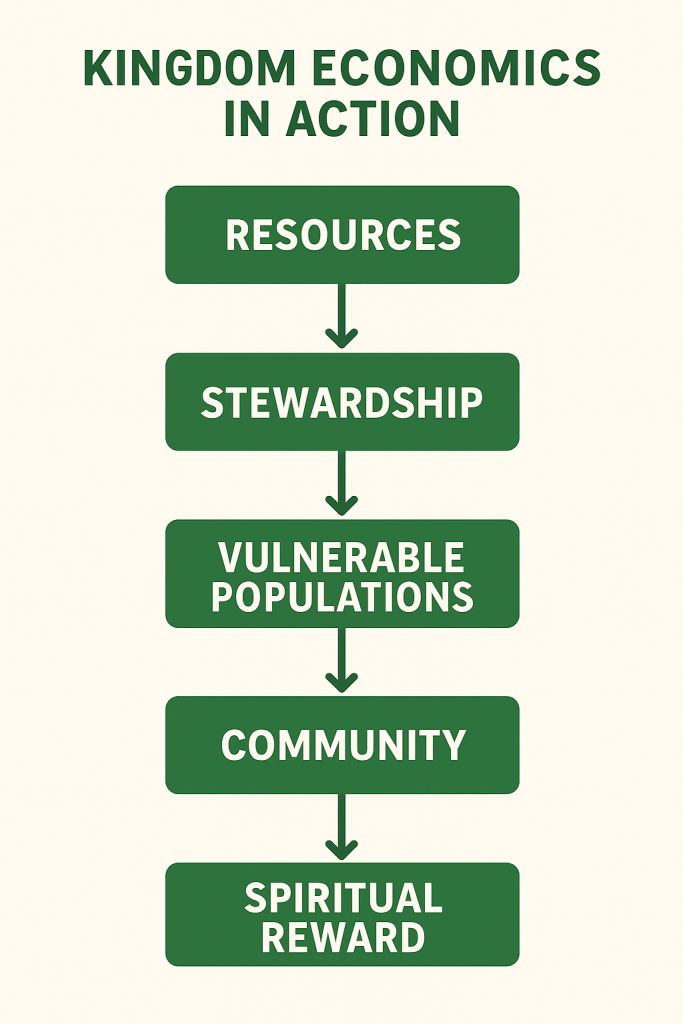
The concept of wealth within the biblical framework transcends material accumulation and economic prosperity. True kingdom wealth is rooted in stewardship, divine purpose, and service to others rather than self-indulgence or exploitation. The Most High’s design for wealth has always been redemptive, restorative, and righteous. As Deuteronomy 8:18 (KJV) declares, “But thou shalt remember the LORD thy God: for it is he that giveth thee power to get wealth, that he may establish his covenant.”
In contrast to the materialism and capitalism that dominate worldly systems, biblical prosperity is covenantal—it exists to advance the will of God, care for the poor, and sustain the community. Wealth in the Kingdom is a trust, not a trophy. It is never meant to enslave the believer’s heart but to empower righteous influence.
The Psychology of Wealth and Purpose
From a psychological perspective, wealth tends to magnify the moral and emotional state of its possessor. Materialism often leads to a distorted self-concept, where identity becomes tied to possessions (Kasser, 2016). In contrast, individuals guided by intrinsic values—such as compassion, stewardship, and purpose—display greater emotional stability and fulfillment. Scripture reinforces this truth in Luke 12:15 (KJV): “A man’s life consisteth not in the abundance of the things which he possesseth.”
The Kingdom mindset therefore shifts the believer’s focus from acquisition to assignment. This transformation represents a renewal of the mind (Romans 12:2), where wealth becomes an instrument of righteousness. Kingdom wealth serves people, not pride.
Stewardship vs. Ownership
In biblical theology, humans are not owners but stewards of God’s resources. Psalm 24:1 (KJV) affirms, “The earth is the LORD’s, and the fulness thereof.” Every possession—whether land, talent, or intellect—belongs ultimately to God. This truth humbles the heart and neutralizes greed. Psychologically, stewardship fosters gratitude, accountability, and ethical decision-making, countering the ego-driven impulses of capitalism.
Wealth as a Test of Character
Wealth reveals what is hidden in the heart. Proverbs 11:28 (KJV) warns, “He that trusteth in his riches shall fall.” The psychology of power and wealth often exposes deeper insecurities, leading to overcompensation through control, consumption, or social dominance. In God’s Kingdom, however, power is authenticated through service (Mark 10:44). The greatest test of prosperity is whether one remains humble and generous amid abundance.
The Kingdom Economy
Unlike the capitalist model based on competition and scarcity, the Kingdom economy is grounded in abundance and cooperation. In Acts 4:34–35 (KJV), the early church practiced communal distribution: “Neither was there any among them that lacked.” Their model demonstrates divine equity, where prosperity is shared, not hoarded. Kingdom economics thus aligns with divine justice, prioritizing human need over greed.
Wealth and Responsibility
The Bible consistently associates wealth with moral responsibility. In 1 Timothy 6:17–18 (KJV), Paul instructs, “Charge them that are rich… that they be rich in good works, ready to distribute, willing to communicate.” The accumulation of wealth without generosity invites judgment (James 5:1–3). From a psychological lens, generosity enhances well-being, while greed fuels anxiety and social isolation (Layous et al., 2012).
The Devil’s Counterfeit Kingdom
When Satan offered Jesus “all the kingdoms of the world” in Matthew 4:8–9 (KJV), he was not lying about possessing them temporarily. The “kingdoms” represent systems—political, economic, religious, and cultural—governed by pride, corruption, and idolatry. These include Babylon (economic greed), Rome (military power), Egypt (enslavement and control), and Sodom (pleasure and moral decay). Each symbolizes a facet of worldly dominion designed to draw humanity away from divine authority.
Who Truly Holds Power?
While earthly rulers boast of influence, Scripture affirms that all true power belongs to God. Psalm 62:11 (KJV) states, “Power belongeth unto God.” The devil’s power is temporal and deceptive, operating through fear, manipulation, and vanity. The believer’s power, by contrast, flows from righteousness, truth, and the indwelling Spirit of God (Acts 1:8).
The Ethics of Giving and Receiving
Biblical wealth ethics emphasize balance—both giving and receiving in alignment with God’s will. Proverbs 3:9–10 (KJV) encourages, “Honour the LORD with thy substance… so shall thy barns be filled with plenty.” Giving is not loss but investment into eternal purpose. Psychologically, altruistic giving correlates with increased happiness and self-worth (Post, 2005).
God’s Heart for Widows
The Bible repeatedly emphasizes that widows are among the most vulnerable members of society. In ancient Israel, widows often lacked financial support because they were dependent on their husbands. God commands His people to care for them, reflecting His justice and mercy:
- Deuteronomy 10:18 (KJV):“He doth execute the judgment of the fatherless and widow, and loveth the stranger, in giving him food and raiment.”
- God Himself is described as a defender and provider for widows. Helping widows aligns us with His character.
- Psalm 68:5 (KJV):“A father of the fatherless, and a judge of the widows, is God in his holy habitation.”
- God identifies as the protector of widows, showing that caring for them is an extension of worshiping Him.
2. Old Testament Instructions
In the Mosaic Law, caring for widows was often tied to practical provision, especially through gleaning, charity, and justice:
- Exodus 22:22–24 (KJV):“Ye shall not afflict any widow, or fatherless child. If thou afflict them in any wise, and they cry at all unto me, I will surely hear their cry.”
- Oppressing a widow was equated with oppressing God Himself. The law ensured widows were protected, not exploited.
- Deuteronomy 14:29 (KJV): The tithe and offerings were to be shared with “the stranger, the fatherless, and the widow.”
- God’s economic system included widows as beneficiaries, ensuring they could survive even if they lacked a male provider.
- Ruth 2:2–3 (KJV): Ruth, a widow, was allowed to glean in Boaz’s field.
- This illustrates practical giving: providing access to resources and opportunity, not only handouts.
3. New Testament Principles
In the New Testament, the church formalized support for widows as part of spiritual and social responsibility:
- 1 Timothy 5:3–4 (KJV):“Honour widows that are widows indeed. But if any widow have children or nephews, let them learn first to shew piety at home, and to requite their parents: for that is good and acceptable before God.”
- The apostle Paul distinguishes between widows who are truly alone and those with family. Giving is primarily for those who lack other support.
- 1 Timothy 5:9–10 (KJV): Paul outlines qualifications for widows who receive support from the church. They must be reputable, have a good testimony, and show hospitality.
- This shows that giving to widows was not indiscriminate; it was intended to support godly women in need.
- James 1:27 (KJV):“Pure religion and undefiled before God and the Father is this, To visit the fatherless and widows in their affliction, and to keep himself unspotted from the world.”
- Caring for widows is a central marker of true, undefiled religion.
4. Psychological and Spiritual Effects of Giving to Widows
Psychologically, giving to widows combats societal neglect, reduces fear and isolation, and reinforces dignity. It fosters empathy and gratitude, while breaking selfishness in the giver.
Spiritually, giving reflects God’s heart, cultivates generosity, and aligns the giver with kingdom principles of justice, mercy, and righteousness (Proverbs 19:17). It is both a blessing for the widow and a spiritual investment for the giver.
5. Modern Application
In contemporary practice, giving to widows can take many forms:
- Financial Support – Direct gifts, stipends, or assistance with bills.
- Community Assistance – Helping with groceries, housing, or medical needs.
- Spiritual Encouragement – Visiting, praying with, and mentoring widows.
- Opportunity Creation – Providing jobs, training, or means of self-sufficiency.
The principle remains the same: widows who lack other support are to be cared for as a reflection of God’s love.
Summary:
Giving to widows in the Bible is both a command and a blessing. It demonstrates godliness (James 1:27), honors God’s heart (Deut. 10:18), and is part of a believer’s duty to the vulnerable. True giving is intentional, respectful, and empowering, not merely a formality or charity.
Capitalism vs. Kingdom Commerce
Capitalism thrives on competition, but the Kingdom thrives on cooperation. The capitalist mindset promotes profit even at the expense of people, while the Kingdom system promotes productivity that blesses the community. Proverbs 16:8 (KJV) declares, “Better is a little with righteousness than great revenues without right.” Kingdom wealth prioritizes justice and sustainability over short-term gain.
Materialism and the Empty Self
Materialism offers a false sense of security and identity. The psychological phenomenon known as the “empty self” (Cushman, 1990) describes modern individuals who fill emotional voids with consumerism. This aligns with Ecclesiastes 5:10 (KJV): “He that loveth silver shall not be satisfied with silver.” The more we pursue things, the less fulfilled we become.
The Role of Contentment
Contentment anchors the believer against covetousness. Philippians 4:11 (KJV) declares, “I have learned, in whatsoever state I am, therewith to be content.” Contentment is not complacency but spiritual stability—the confidence that God is the source of all provision. Psychologically, contentment reduces envy and fosters peace of mind.
Economic Justice and the Poor
The Bible commands economic justice. Proverbs 19:17 (KJV) promises, “He that hath pity upon the poor lendeth unto the LORD.” Neglecting the poor is a spiritual offense (Ezekiel 16:49). Capitalist societies often ignore systemic poverty, perpetuating inequality through unjust systems. Kingdom wealth, by contrast, redistributes blessings to uplift others.
Wealth and Worship
Money is morally neutral—it becomes holy or corrupt depending on intent. Jesus warned in Matthew 6:24 (KJV): “Ye cannot serve God and mammon.” Worshipping wealth enslaves the soul, while surrendering it sanctifies our stewardship. Kingdom-minded believers see every dollar as an opportunity to manifest God’s glory through impact.
The Transformation of Power
In worldly terms, power controls others. In the Kingdom, power serves others. Jesus redefined authority in John 13 when He washed His disciples’ feet. Kingdom power is exercised through humility, self-discipline, and obedience. True power is never domination—it is transformation.
The Psychological Trap of Greed
Greed is both spiritual and psychological bondage. It originates from fear of lack and manifests as insatiable craving. Research links greed to increased depression and moral disengagement (Seuntjens et al., 2015). Spiritually, greed is idolatry (Colossians 3:5). The cure is gratitude—a posture that restores perspective and peace.
Restoring the Divine Order of Wealth
God designed wealth to sustain creation and bless humanity. When believers align finances with faith, they reverse the curse of exploitation. Malachi 3:10 (KJV) highlights the principle of tithing as a covenant of trust and reciprocity. Obedience in giving opens spiritual and material abundance.
Cultural Power and Influence
The “kingdoms of this world” include cultural dominance—media, education, and entertainment. These systems shape thought, normalize sin, and influence behavior. Kingdom citizens are called to engage culture without conforming to it (Romans 12:2). Influence should lead to illumination, not imitation.
Reclaiming Dominion
When Christ rose from the grave, He declared, “All power is given unto me in heaven and in earth” (Matthew 28:18, KJV). This statement reclaimed humanity’s lost dominion. The believer’s authority, therefore, is not in possessions but in position—being seated with Christ in heavenly places (Ephesians 2:6).
Wealth and the End Times
Revelation 18 depicts Babylon’s economic collapse, symbolizing the fall of corrupt world systems. Those who trusted in materialism mourned, but the saints rejoiced because divine justice prevailed. This eschatological vision warns believers not to build eternal hope on temporary wealth.
Power Reimagined Through Service
Jesus taught that leadership in the Kingdom is servant-centered (Matthew 20:26–28). This redefines greatness as the ability to lift others rather than exalt oneself. The psychology of servant leadership demonstrates higher emotional intelligence and resilience (Greenleaf, 2002).
The Eternal Value of Generosity
Generosity is a heavenly investment that yields eternal dividends. Matthew 6:20 (KJV) instructs, “Lay up for yourselves treasures in heaven.” Acts of giving create legacy, spiritual growth, and divine favor. The more one gives, the more one reflects the image of the Giver.
Conclusion
Kingdom wealth is not defined by possessions but by purpose. It aligns prosperity with righteousness, power with service, and influence with integrity. Materialism, capitalism, and the worldly pursuit of power lead to spiritual poverty, while Kingdom stewardship produces eternal fruit. True wealth is measured not by what one owns but by what one gives. In the end, all power, all glory, and all wealth belong to the Most High, who alone reigns forever.
References (KJV & Academic):
- The Holy Bible, King James Version.
- Cushman, P. (1990). Why the self is empty: Toward a historically situated psychology. American Psychologist, 45(5), 599–611.
- Kasser, T. (2016). Materialistic values and goals. Annual Review of Psychology, 67, 489–514.
- Layous, K., et al. (2012). The benefits of prosocial spending. Journal of Positive Psychology, 7(5), 377–389.
- Post, S. (2005). Altruism, happiness, and health: It’s good to be good. International Journal of Behavioral Medicine, 12(2), 66–77.
- Seuntjens, T. G., et al. (2015). Greed: A motivational and social comparison perspective. Personality and Individual Differences, 74, 153–158.
- Greenleaf, R. K. (2002). Servant leadership: A journey into the nature of legitimate power and greatness. Paulist Press.
 THE BROWN GIRL DILEMMA