
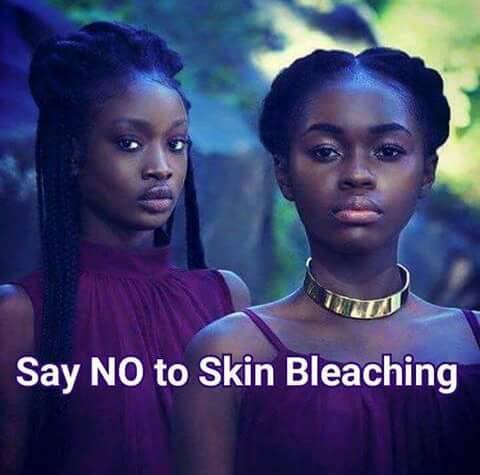
“My teenage years were plagued by the idea that light skin was better skin. There were adverts on TV … I felt that I was not considered beautiful because of my complexion. My self-worth was deeply compromised in those years.” –– Lupita Nyong’o
Throughout history, beauty has not merely been an aesthetic pursuit but a reflection of power, status, and identity. The modern obsession with light skin, despite its dangers and toxic implications, is one of the most telling examples of how deeply colonialism has shaped global perceptions of worth. Even in the face of severe health risks from mercury-based skin-whitening creams, millions continue to use them, driven by an invisible yet powerful ideology: that lighter is better.
To understand this fixation, one must first look to history. The global conquest of Europe during the colonial era redefined the hierarchy of human value. Through political domination, missionary education, and cultural imperialism, whiteness was not only privileged but sanctified. From Africa to Asia, and the Caribbean to Latin America, colonized people internalized the myth that white skin was the mark of civility, intelligence, and beauty (Hunter, 2007).
During the Renaissance period, this idealization of whiteness was reinforced through art, literature, and religion. White women were portrayed in paintings as divine, ethereal, and pure. Pale skin became a symbol of wealth and class, as only those who did not labor under the sun could afford to be fair. This visual narrative of “fairness equals virtue” became embedded in the social consciousness of the Western world (Glenn, 2008).
As colonialism expanded, these Eurocentric ideals traveled globally, becoming the beauty gospel imposed upon darker nations. Fair skin became not just a preference but a social passport. In many societies, lighter complexions opened doors to better marriage prospects, employment opportunities, and higher social standing. This stratification birthed what sociologists call colorism—a system of discrimination based on skin tone within one’s own race (Russell, Wilson & Hall, 2013).
In Asia, the legacy of colonialism and caste further reinforced this mindset. Skin-lightening creams became billion-dollar industries in countries like India, South Korea, and the Philippines. Advertisements depicted fair-skinned women as more successful, desirable, and confident, cementing the false equation between fairness and happiness. The slogan “Fair is Lovely,” once used by a leading Indian brand, became both a marketing triumph and a cultural tragedy.
Africa, too, bears the scars of this color complex. The introduction of European beauty standards during colonial occupation devalued the natural features of Black people. From hair texture to skin tone, everything dark was labeled “undesirable.” As a result, some individuals began using harmful bleaching agents to emulate European features, unaware that they were absorbing toxins and erasing the beauty of their own heritage (Charles, 2009).
In the Americas, the legacy of slavery compounded these issues. Enslaved Africans with lighter skin were often given preferential treatment, allowed to work in the master’s house rather than in the fields. This created divisions within the Black community that persist today, where lighter skin is often perceived as more acceptable or beautiful, echoing the “house slave versus field slave” dichotomy (Keith & Herring, 1991).
The psychological damage of colorism runs deep. It fosters self-hatred, envy, and a lifelong pursuit of unattainable beauty standards. The constant bombardment of light-skinned models in magazines, movies, and advertisements perpetuates the illusion that dark skin is something to overcome rather than embrace. The media, acting as the modern missionary, continues to preach the gospel of whiteness through filters, Photoshop, and casting decisions.
Yet, this obsession is not born of vanity alone—it is a byproduct of systemic conditioning. Generations have been raised to equate whiteness with success and darkness with deficiency. This internalized racism manifests as economic behavior: billions spent annually on skin-lightening products, surgeries, and treatments, often marketed as “brightening” or “toning” to disguise their true purpose (Glenn, 2008).
Spiritually, this phenomenon mirrors the biblical warning against conforming to worldly standards. Romans 12:2 (KJV) reminds believers: “And be not conformed to this world: but be ye transformed by the renewing of your mind.” The obsession with lightness is a form of conformity—a submission to a false idol of beauty that profits from insecurity.
Psychologically, the pursuit of lighter skin reflects an inferiority complex rooted in generational trauma. When an entire race has been told for centuries that they are less than human, the desire to approximate the oppressor’s image becomes a coping mechanism, albeit a destructive one. This cycle of psychological bondage mirrors the words of Proverbs 23:7 (KJV): “For as he thinketh in his heart, so is he.”
Health-wise, the implications are severe. Mercury, hydroquinone, and corticosteroids—common in bleaching products—cause skin thinning, kidney failure, neurological damage, and in extreme cases, death. What begins as a quest for beauty often ends in tragedy, revealing the literal toxicity of self-rejection.
However, a global awakening is underway. Movements such as “Dark Is Beautiful” in India and “Melanin Poppin’” in the United States are reclaiming the beauty of darker tones. Black and brown creators are challenging the dominance of Eurocentric beauty on social media, promoting self-love, and redefining what it means to be beautiful.
The conversation around skin color is not merely cosmetic—it is cultural, political, and spiritual. To embrace one’s melanin is to resist centuries of indoctrination and to honor the divine craftsmanship of creation. Genesis 1:27 (KJV) declares, “So God created man in his own image.” If all shades come from God, then no shade is superior.
Media responsibility also plays a crucial role in dismantling this narrative. Representation matters. When darker-skinned women are seen as heroines, scholars, and leaders, they challenge the subconscious biases formed through decades of white-centered beauty imagery. Change in perception begins with visibility.
Economically, promoting natural beauty empowers local industries and rejects exploitative global beauty chains that profit from colonial residue. Supporting melanin-positive brands is an act of resistance—a declaration that beauty no longer bows to a Eurocentric ideal.
In conclusion, the obsession with fair skin is neither new nor benign. It is the residue of colonization, perpetuated through art, religion, and commerce. The solution lies in education, representation, and spiritual renewal. To reclaim beauty in all its shades is to reclaim one’s identity, worth, and freedom from psychological slavery.
When people learn to see themselves as God created them—fearfully and wonderfully made—the market for inferiority collapses. The true revolution begins not with lighter skin, but with enlightened minds.
References (APA 7th Edition)
Charles, C. A. D. (2009). Skin bleaching, self-hate, and black identity in Jamaica. Journal of Black Studies, 40(2), 153–170. https://doi.org/10.1177/0021934708315587
Glenn, E. N. (2008). Yearning for lightness: Transnational circuits in the marketing and consumption of skin lighteners. Gender & Society, 22(3), 281–302. https://doi.org/10.1177/0891243208316089
Hunter, M. (2007). The persistent problem of colorism: Skin tone, status, and inequality. Sociology Compass, 1(1), 237–254. https://doi.org/10.1111/j.1751-9020.2007.00006.x
Keith, V. M., & Herring, C. (1991). Skin tone and stratification in the Black community. American Journal of Sociology, 97(3), 760–778. https://doi.org/10.1086/229819
Russell, K., Wilson, M., & Hall, R. (2013). The Color Complex (Revised): The Politics of Skin Color Among African Americans. Anchor Books.
The Holy Bible, King James Version. (n.d.). Bible Gateway. https://www.biblegateway.com
 THE BROWN GIRL DILEMMA