
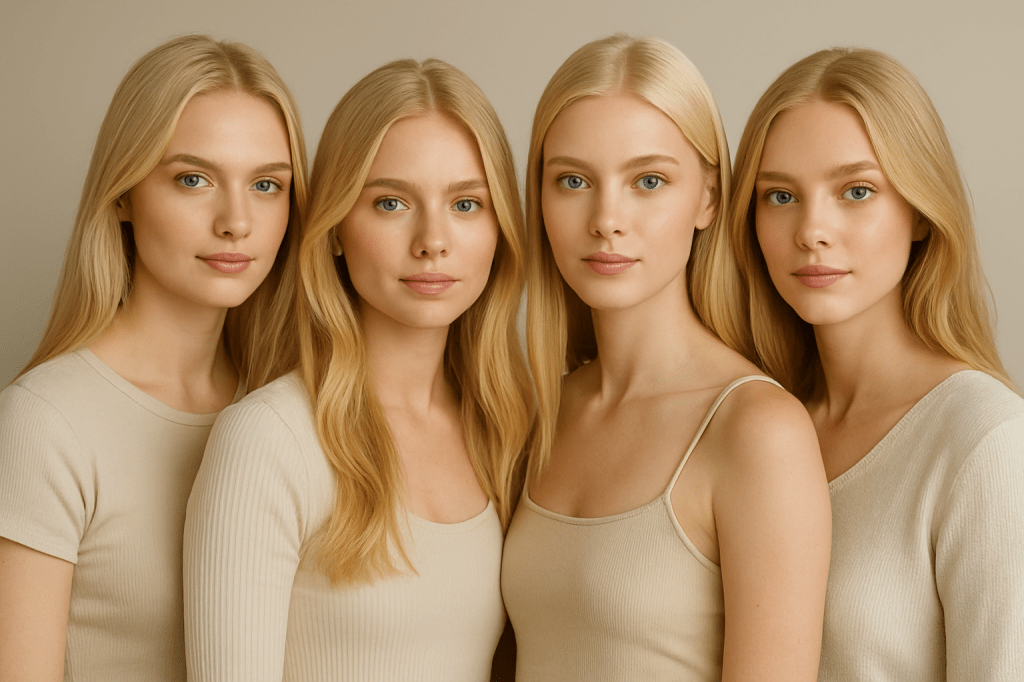
The concept of “blonde hair supremacy” has long shaped Western ideals of beauty, establishing a hierarchy even within whiteness itself. This ideology, rooted in centuries of Eurocentric preference, privileges women with blonde hair and blue eyes, symbolizing purity, desirability, and social power. Within this system, the image of the fair-haired, light-eyed woman became not just an aesthetic ideal but a cultural and racial marker that influenced fashion, film, and identity formation throughout the twentieth century.
In American culture, the blonde archetype rose to prominence during the 1950s and 1960s, coinciding with Hollywood’s golden age. Actresses like Marilyn Monroe, Grace Kelly, and Farrah Fawcett embodied the so-called “ideal woman”—white, blonde, and radiant. Their image was meticulously marketed through cinema, advertisements, and magazines, reinforcing the notion that lighter features represented not only beauty but also innocence and superiority. This visual monopoly excluded women of darker complexions, hair, and eyes, even among white women themselves.
Model and actress Kim Alexis, for example, became one of the quintessential blonde supermodels of the 1980s, gracing the covers of Vogue, Elle, and Sports Illustrated. Her beauty—defined by her golden hair and blue eyes—epitomized the mainstream aesthetic of the era. Similarly, Christie Brinkley, another icon of the same decade, was marketed as the “All-American Girl.” Her long blonde hair and bright smile symbolized youthful perfection, becoming a marketing standard for brands from CoverGirl to Coca-Cola.
Farrah Fawcett, meanwhile, became a cultural phenomenon in the 1970s with her feathered blonde hair and dazzling smile. Her poster, depicting her in a red swimsuit, sold millions and established her as the ultimate beauty symbol of her time. These women were not merely admired—they were used to define femininity itself. The message was clear: to be beautiful was to be blonde, thin, and white.
Yet even within whiteness, colorism operated as a silent divider. Brunettes, redheads, and women with darker features often faced subtle bias in media representation. While brunettes were sometimes portrayed as “smart” or “serious,” blondes were seen as desirable and approachable—the epitome of male fantasy. This dynamic created an intra-racial hierarchy that mirrored the larger racial colorism imposed on Black and brown women.
Historically, the glorification of blonde hair and blue eyes has roots in European pseudo-scientific racial theories from the 19th and early 20th centuries. Thinkers such as Arthur de Gobineau and Madison Grant associated fair features with racial purity and superiority, concepts later exploited by Nazi propaganda. The “Aryan ideal” became both a political and aesthetic weapon that reinforced systemic racism, influencing beauty standards far beyond Europe.
In American advertising, blonde hair became a shorthand for trustworthiness, innocence, and wealth. During the post–World War II boom, advertisers overwhelmingly selected blonde women to sell everything from soap to cigarettes. A lighter look suggested cleanliness, prosperity, and moral virtue. As a result, darker-haired or ethnically ambiguous women were often sidelined, exoticized, or cast as the “other.”
The media’s fixation on blonde beauty continued well into the 1990s and early 2000s. Models such as Claudia Schiffer and actresses like Cameron Diaz and Gwyneth Paltrow carried forward the tradition. Their success perpetuated a standard that was as much about race and class as it was about hair color. To be blonde was to be marketable—and to conform to the expectations of a predominantly white, Western gaze.
However, this “white girl’s colorism” also exposed the contradictions within white femininity. Women who did not fit the blonde mold—such as Winona Ryder, Anne Hathaway, or Monica Bellucci—were often cast as “edgy” or “mysterious,” relegated to roles that contrasted the wholesome allure of their blonde counterparts. Hollywood systematically used hair color to typecast femininity itself, establishing psychological and social divisions.
The impact of blonde supremacy extends beyond media representation. Sociologists have observed that hair color can influence professional success, dating preferences, and even perceptions of intelligence. Studies have shown that blonde women are often perceived as more youthful and sexually attractive, though not always as competent. This paradoxical stereotype—“the dumb blonde”—reveals how whiteness itself is tiered and manipulated to maintain gender and racial power structures.
The fascination with blonde hair also extends to global markets, where Western beauty ideals continue to shape standards. In Asia, Africa, and Latin America, the demand for blonde wigs, dyes, and blue contact lenses reflects the lingering legacy of colonial aesthetics. The image of blonde beauty remains aspirational, reinforcing the cultural dominance of Eurocentric features worldwide.
In contemporary pop culture, the legacy of the blonde hierarchy persists. From Barbie’s platinum locks to the filtered perfection of social media influencers, blonde beauty continues to dominate algorithms and advertising. Yet, a growing awareness challenges this monopoly. Celebrities like Beyoncé, Rihanna, and Zendaya have redefined what “blonde” can mean—appropriating the symbol and recontextualizing it within Black beauty.
Despite these shifts, the cultural script of blonde supremacy remains powerful. It subtly dictates who gets visibility, validation, and admiration. Even among white women, colorism functions as a social currency—blonde often equating to higher status, desirability, and femininity. The effect is an internalized bias that reinforces patriarchal and racialized beauty structures.
The stories of Kim Alexis, Christie Brinkley, and Farrah Fawcett illustrate how the blonde ideal was constructed and maintained. These women, while undoubtedly talented and charismatic, were elevated because they fit a specific, racially loaded template of beauty. Their images became benchmarks that influenced generations of women, shaping everything from hairstyle trends to cosmetic surgery preferences.
Let’s look at the celebrated physical beauty of today’s leading blonde actresses — Margot Robbie, Scarlett Johansson, Jennifer Lawrence, and Nicole Kidman — through a balanced, cultural and aesthetic lens. Each embodies a different version of the modern “blonde ideal,” reflecting how beauty has evolved beyond uniformity while still carrying echoes of the traditional blonde archetype that has dominated Western media.
Margot Robbie: The Modern Golden Muse
Margot Robbie represents a contemporary evolution of blonde beauty — one that blends classic glamour with natural vitality. Her golden-blonde hair, luminous skin, and symmetrical facial structure recall old Hollywood icons like Grace Kelly and Veronica Lake, yet she possesses a modern confidence that redefines the archetype. Her eyes, a pale blue-green, add to her ethereal quality, creating contrast and depth against her tanned complexion. What distinguishes Robbie’s beauty is its balance of innocence and authority: she can shift seamlessly from the sensuality of The Wolf of Wall Street to the playfulness and empowerment of Barbie. Her facial symmetry, delicate yet strong jawline, and high cheekbones align with many scientific measures of aesthetic appeal, while her demeanor projects a confidence that challenges passive beauty tropes.
Scarlett Johansson: The Classic Bombshell Reimagined
Scarlett Johansson embodies the sensual blonde archetype often associated with the “Hollywood siren.” With her soft golden hair, full lips, and almond-shaped green eyes, Johansson evokes the timeless allure of actresses like Marilyn Monroe — yet with a contemporary twist of mystery and self-awareness. Her beauty is characterized by balance: a heart-shaped face, voluptuous features, and expressive eyes that suggest both vulnerability and strength. Johansson’s blonde persona has often been tied to femininity and desire, but her career choices — from Lost in Translation to Marriage Story — have reframed her image as one of depth and introspection. She symbolizes a shift in how blonde beauty can coexist with complexity, intellect, and emotional power.
Jennifer Lawrence: The Relatable All-American Blonde
Jennifer Lawrence’s beauty embodies warmth and accessibility rather than untouchable perfection. Her sandy-blonde hair and blue-gray eyes, combined with an expressive face and lively personality, make her the archetype of the “girl next door” reimagined for the modern age. Her features are less sculpted and more open, conveying authenticity and natural charm. Lawrence’s beauty resonates because it feels achievable — she represents the kind of blonde aesthetic that bridges glamour with humanity. Even when styled for luxury campaigns or red-carpet appearances, her appeal lies in her spontaneity and unfiltered confidence. In contrast to the icy distance of older blonde ideals, Lawrence projects sincerity, humor, and relatability.
Nicole Kidman: The Regal and Ethereal Blonde
Nicole Kidman’s beauty has long been described as ethereal — a combination of porcelain skin, fine golden-blonde hair, and crystalline blue eyes. Her tall, statuesque frame and delicate bone structure evoke a timeless elegance reminiscent of European aristocracy. Kidman’s features — elongated facial proportions, high cheekbones, and translucent complexion — give her a luminous quality under light, often enhanced by minimalistic styling. Her beauty is less about sensuality and more about refinement; she embodies the dignified, almost otherworldly aspect of blonde femininity. Through decades in film, Kidman’s evolving hairstyles — from soft waves to sleek platinum — have mirrored her artistic transformations, maintaining her as one of Hollywood’s enduring icons of sophistication.
The Symbolism of Their Blonde Beauty
Together, these actresses illustrate how “blonde beauty” has diversified while maintaining its symbolic power in Western culture. Robbie’s sunlit glamour, Johansson’s sensual mystique, Lawrence’s approachable vitality, and Kidman’s aristocratic poise demonstrate four distinct interpretations of the same archetype. Historically, blonde hair represented purity, wealth, and desirability, but today it has become more fluid — capable of expressing rebellion, intellect, or authenticity.
Cultural Reflection
In a world increasingly aware of inclusivity, these women’s images still reflect how society continues to equate lightness with idealized femininity. Each actress, however, redefines the blonde standard by embedding depth, independence, and nuance within it. Robbie uses humor and intelligence to expand the archetype; Johansson infuses sensuality with emotional realism; Lawrence disrupts perfection with honesty; and Kidman merges elegance with resilience.
Their physical beauty — characterized by the interplay of hair color, eye contrast, facial proportion, and aura — continues to influence global beauty trends, but their power lies in their ability to transcend the traditional “white blonde” stereotype. They remind audiences that blonde hair no longer dictates fragility or conformity — it can signify strength, creativity, and individuality.
Meanwhile, women who did not conform to this mold often faced exclusion. Darker-haired white women, particularly those of Southern European, Jewish, or Slavic descent, were historically viewed as less “American” or less pure. The preference for blonde hair thus acted as a proxy for whiteness itself—an aesthetic measure of cultural belonging.
Psychologically, the preference for blonde hair ties into deeper cultural myths of light and darkness, purity and sin. Literature, film, and art have long used light-colored hair as a metaphor for goodness, while darker hair often signified danger or seduction. These tropes conditioned generations to associate moral and aesthetic superiority with fairer features.
As the 21st century progresses, conversations about inclusion have begun to deconstruct these biases. Movements promoting body positivity, natural hair, and diverse beauty have challenged the once-untouchable dominance of blonde imagery. Yet, the persistence of blonde beauty standards in advertising and entertainment suggests that the myth remains deeply embedded in Western consciousness.
“Blonde hair supremacy” is not merely a preference—it is a historical construct shaped by colonialism, capitalism, and patriarchy. It functions as a social code that privileges certain bodies and marginalizes others, even within the white population. Recognizing this dynamic is essential for dismantling the layered hierarchies that underpin colorism in all its forms.
Ultimately, the celebration of beauty in all its shades requires acknowledging how even “innocent” aesthetics carry ideological weight. The blonde ideal has long stood as a symbol of privilege, but awareness and representation are slowly reshaping what beauty means. The conversation around blonde hair supremacy opens a necessary dialogue about whiteness, power, and the evolving face of femininity in modern culture.
References
- Craig, M. L. (2006). Race, Beauty, and the Politics of Hair. University of Chicago Press.
- Dyer, R. (1997). White: Essays on Race and Culture. Routledge.
- Peiss, K. (2011). Hope in a Jar: The Making of America’s Beauty Culture. University of Pennsylvania Press.
- Wolf, N. (1991). The Beauty Myth: How Images of Beauty Are Used Against Women. HarperCollins.
- Jeffries, D. J. (2016). “The White Ideal and the Blonde Archetype.” Journal of Cultural Studies, 12(3), 45–61.
- Sobchack, V. (2004). Carnal Thoughts: Embodiment and Moving Image Culture. University of California Press.
- Tate, S. (2009). Black Beauty: Aesthetics, Stylization, Politics. Ashgate.
- Gates, H. L. (2014). Colorism: Skin Tone Stratification in the 21st Century. Harvard University Press.
- Bordo, S. (2003). Unbearable Weight: Feminism, Western Culture, and the Body. University of California Press.
- Entwistle, J. (2002). The Fashioned Body: Fashion, Dress and Modern Social Theory. Polity Press.
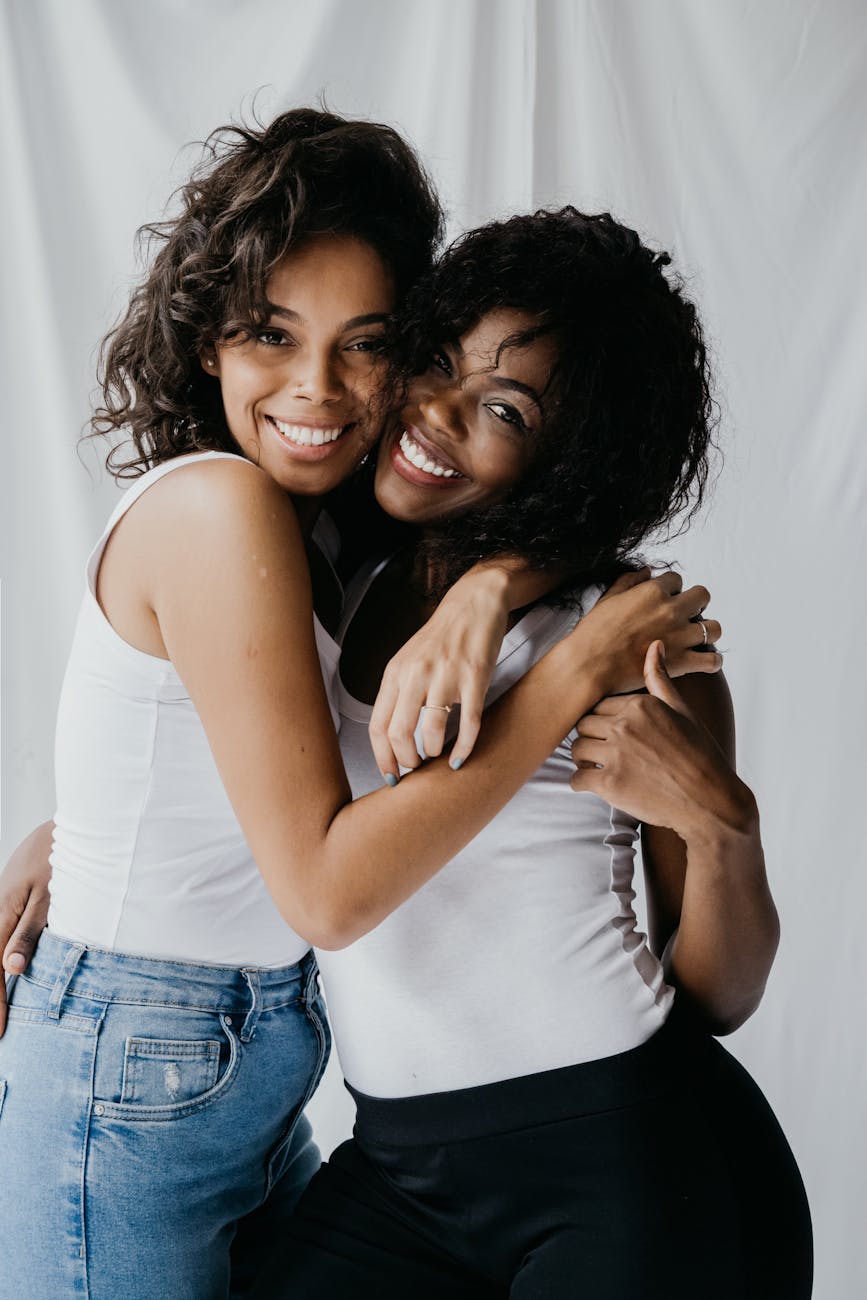
 THE BROWN GIRL DILEMMA