

Sade Adu, born Helen Folasade Adu on January 16, 1959, stands as one of the most enigmatic, adored, and musically influential women of the modern era. Her artistic identity blends sensual minimalism, rich emotional depth, and an unmistakable sonic signature that has carried her across generations. She is a woman whose voice alone can halt time—evoking longing, healing, and intimacy.
Born in Ibadan, Nigeria, Sade came into the world as a child of blended heritage: her father, Adebisi Adu, was Nigerian; her mother, Anne Cook, was an English nurse. This biracial identity shaped her life aesthetically and socially, giving her both a multicultural foundation and a dual sense of belonging. When her parents separated, Sade moved with her mother to Essex, England, where she grew up with an awareness of her African roots and British upbringing.
Her early life was marked by modesty and artistic curiosity. Sade originally studied fashion design at Saint Martin’s School of Art, believing her future lay in visual creativity rather than music. Music was not yet a career plan—it was simply part of her environment. Yet destiny has a way of tapping gifted people on the shoulder, even when they walk another path.
During her time in London, Sade began to sing background vocals for a Latin-soul group called Pride. Her voice—warm, cool, smoky, and profoundly emotional—caught immediate attention. The crowd response made it clear: she was not meant to remain in the background. Her presence commanded the spotlight.
As she performed with Pride, Sade began writing songs with members of the band. Her writing style, poetic and minimalist, reflected both vulnerability and confidence. After receiving overwhelming praise during Pride performances, a smaller formation of members broke away to create the group known today as Sade. With this new ensemble, her career trajectory shifted from underground singer to rising global star.
Sade’s breakthrough came with the 1984 release of “Diamond Life”, an album that introduced the world to hits such as “Smooth Operator”, “Your Love Is King”, and “Hang On to Your Love.” Her voice was unlike anything in the pop landscape—soft yet powerful, elegant yet raw, glamorous yet grounded. The album became one of the best-selling debut albums by a British female vocalist.
Her follow-up albums—“Promise” (1985), “Stronger Than Pride” (1988), “Love Deluxe” (1992), and “Lovers Rock” (2000)—continue to define entire eras of music. Sade is known for slow-burn records that age like fine wine, album cycles that are intentionally spaced out, and a perfectionist’s approach to her craft.
Over the course of her career, Sade has earned several major awards, including Grammy Awards for Best New Artist, Best R&B Performance, and Best Pop Vocal Album. She remains one of the few artists who can disappear for a decade and return to immediate worldwide acclaim. Her aura of mystery only amplifies her influence.
Beyond her music, Sade’s personal life is intentionally shielded from mainstream scrutiny. She married Spanish film director Carlos Scola in the late 1980s, though the marriage ended shortly afterward. She later entered a long-term partnership with Ian Watts, with whom she has one child—Mickailia “Ila” Adu, born in 1996. In recent years, Sade has been deeply supportive of Ila, who transitioned and publicly shared their journey, reflecting Sade’s nurturing and fiercely protective maternal spirit.
Sade’s family life is grounded in privacy, warmth, and a devotion to simplicity. Unlike many celebrities, she prefers countryside living over Hollywood glamour, giving interviews sparingly and valuing her peace above all. Her hobbies include quiet, earthy pleasures—gardening, cooking, horseback riding, and interior design. She is a woman who enjoys the feel of soil, the calm of nature, and the comfort of a peaceful home.
Her biracial identity shaped much of her early experience, especially growing up as a light-skinned Black girl in Britain. She has spoken about the complexities of being visibly different—too light for one group, too African for another—and how she carved her identity independently of other people’s expectations. Her presence helped broaden visual representations of Black womanhood at a time when few mixed-heritage Black women had global platforms.
As a light-skinned Black woman with a Nigerian father, Sade carried both privilege and pressure. She navigated colorism, exoticization, and constant commentary on her appearance. Yet she faced it with quiet dignity, using neither her lighter complexion nor her beauty as shields or shortcuts. Instead, she let her art speak.
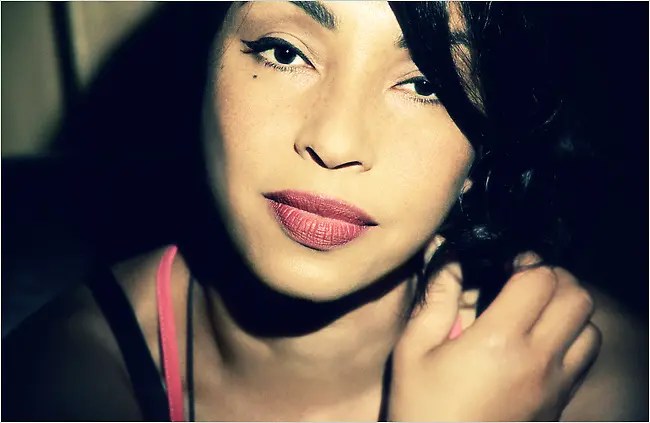
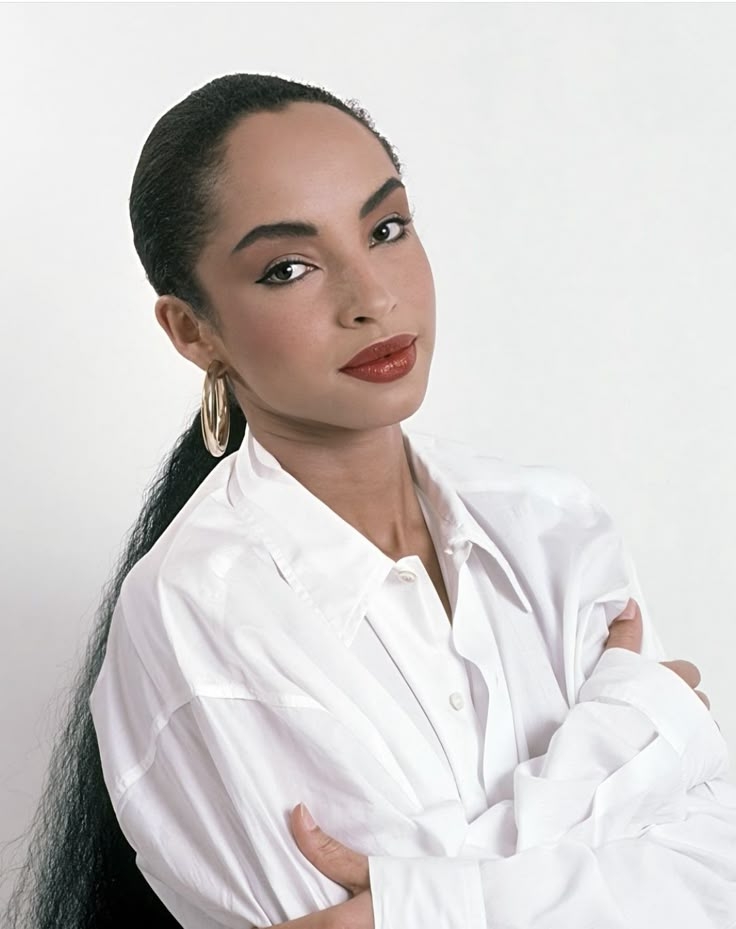
Sade’s beauty is legendary. She is known for her glowing skin, sculpted cheekbones, expressive eyes, and minimalist style that centers simplicity over spectacle. Her signature ponytail, red lip, and understated glamour have become visual emblems of femininity and quiet power. Men adore her, women are inspired by her, and the world respects her.
Her expressive face carries centuries of story—African ancestry, British poise, feminine softness, and artistic soulfulness. She embodies an effortless type of beauty that does not compete, does not overstate, and does not perform. Instead, she exists with self-possession and grace.
Despite global fame, Sade remains notoriously humble. She has repeatedly turned down industry pressure to release faster, perform larger, or commercialize more aggressively. Her silence is intentional. Her scarcity is strategic. Her voice, when released, comes like rain after drought—rare, cleansing, and deeply treasured.
She represents a generation of artists who prioritize emotional truth over fame, musical integrity over charts, and soulfulness over spectacle. While others chase trends, Sade creates worlds. While others release singles, she releases experiences.
Even today, new generations discover her music as if stumbling upon a rare, precious jewel. Her songs underscore weddings, heartbreaks, romantic dinners, moments of grief, and moments of deep spiritual healing. She is a universal voice of love.
Sade is not just a singer; she is an aesthetic. A feeling. A timeless feminine archetype. Her music remains evergreen, her influence remains vast, and her presence remains untouched by time. Her legacy stands on the pillars of elegance, artistic purity, emotional honesty, and cultural depth. She is truly one of the most beloved women in the world.
References
Balfour, I. (2016). The Sade influence: Minimalism, soul, and global style. Routledge.
Gates, H. L. (2020). Cultural icons of the African diaspora. Oxford University Press.
Guerrero, E. (2012). Women of soul: The evolution of Black female artistry. Columbia University Press.
Harris, D. (2018). Music, identity, and biracial representation in modern Britain. Cambridge University Press.
Rolling Stone. (2021). Sade: A timeless musical mystique.
Smith, S. (2021). Sonic intimacy: Black women musicians and emotional expression. University of California Press.
 THE BROWN GIRL DILEMMA