
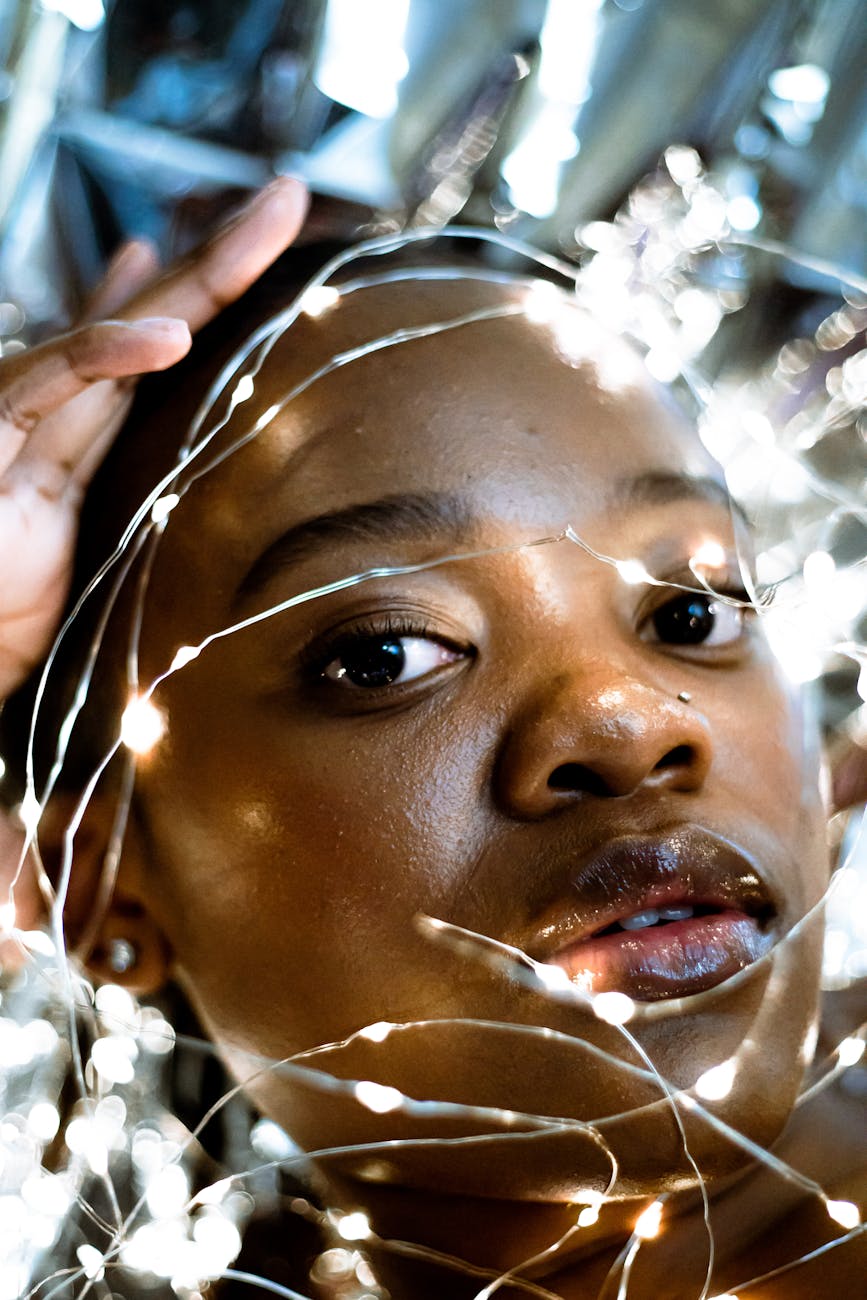
For individuals with dark skin, navigating a world that idealizes lightness is an enduring challenge. Society often elevates pale skin as the standard of beauty, success, and desirability, marginalizing darker complexions. Glow in the Dark is a celebration of dark-skinned identity, affirming beauty, resilience, and self-love in the face of systemic bias and colorism.
Historically, colonialism and slavery entrenched a hierarchy of skin tones. Lighter-skinned individuals were often granted privileges, while darker-skinned people were dehumanized, undervalued, and stigmatized (Hunter, 2007). These legacies persist today, influencing media representation, social perceptions, and self-image.
Colorism, the preferential treatment of lighter skin within racialized communities, compounds challenges for dark-skinned individuals. It can manifest subtly through microaggressions or overtly through exclusion from social, professional, and romantic opportunities. Understanding these dynamics is crucial to fostering resilience and self-acceptance (Russell, Wilson, & Hall, 1992).
Psychologically, living in a “pale world” can lead to internalized oppression. Many dark-skinned individuals are conditioned to view their complexion as less desirable, creating struggles with self-esteem, identity, and belonging. Reclaiming one’s narrative is an essential step toward healing and empowerment.
Media representation plays a powerful role in shaping perceptions. Historically, darker-skinned individuals were underrepresented or portrayed negatively in television, film, and advertising. When they were visible, they were often caricatured, reinforcing stereotypes. Today, increasing visibility of dark-skinned role models challenges these norms, affirming that beauty exists in all shades.
Beauty standards in fashion and advertising have long centered around lighter tones. Foundation shades, skincare marketing, and magazine covers have historically excluded dark skin, signaling to consumers that their complexion is less worthy. Expanding inclusivity is critical to affirming the worth of dark-skinned people (Glenn, 2008).
Dark-skinned women face a “double bind” of gendered and colorist biases. Their beauty is often undervalued compared to lighter peers, yet they are simultaneously hypersexualized in media narratives. Self-love becomes an act of resistance against a society that seeks to define their value through restrictive and prejudiced lenses.
Hair, an essential component of identity, intersects with skin tone. Natural hairstyles like afros, locs, and braids are often stigmatized in mainstream culture, yet they are powerful symbols of pride and self-expression. Embracing natural hair affirms cultural heritage and reinforces self-love.
Education is key to dismantling internalized biases. Learning about the historical and cultural significance of melanin-rich skin fosters appreciation and pride. Curricula that integrate Black history, cultural contributions, and positive representation help students develop resilience against pervasive societal prejudice.
Family and community support profoundly impact self-perception. Children who receive affirmation about their skin tone, hair, and heritage are more likely to embrace their identity confidently. Community initiatives that celebrate dark-skinned beauty reinforce belonging and self-worth.
Social media amplifies both challenges and opportunities. Platforms can perpetuate colorism through beauty filters and preference hierarchies, but they also provide spaces for empowerment. Campaigns like #DarkSkinIsBeautiful and #MelaninPoppin cultivate pride, representation, and collective affirmation.
Spiritual perspectives validate the inherent worth of dark-skinned individuals. Song of Solomon 1:5 celebrates dark skin: “I am black, but comely, O ye daughters of Jerusalem” (KJV). Such affirmations provide a framework for understanding beauty as divinely ordained rather than socially constructed.
Economic empowerment intersects with skin tone. Supporting Black-owned businesses and inclusive brands strengthens community wealth while reinforcing pride in identity. Economic agency becomes a form of self-affirmation and resistance against systems that marginalize dark-skinned individuals.
Art, literature, and film provide avenues for cultural expression and validation. Creators highlighting dark-skinned beauty, resilience, and achievement challenge dominant narratives, offering inspiration and affirmation to communities historically overlooked or misrepresented.
Interpersonal relationships also reflect colorism’s influence. Studies indicate that dark-skinned individuals often face bias in dating, friendships, and professional networks. Affirming self-worth requires both personal confidence and supportive social environments that counteract prejudice (Hill, 2002).
Mental health is profoundly affected by colorism. Therapy, mentorship, and community support help dark-skinned individuals process internalized biases, cope with societal pressures, and cultivate resilience. Prioritizing emotional well-being is essential to sustaining self-love in a pale-dominated culture.
Cultural pride strengthens identity and resilience. Celebrating heritage, learning ancestral histories, and participating in cultural practices provide a foundation of self-respect and belonging. These practices counteract societal narratives that devalue dark skin and marginalized communities.
Global movements for racial justice underscore the importance of self-love. Dark-skinned individuals who assert pride in their appearance and identity participate in broader efforts to dismantle systemic bias, affirming that visibility, representation, and advocacy are intertwined with personal empowerment.
Ultimately, glowing in a pale world is an act of defiance and affirmation. Loving one’s shade transcends aesthetics; it is a reclamation of dignity, a celebration of heritage, and a declaration of worth. Each individual who embraces their complexion challenges societal hierarchies and models resilience for future generations.
In conclusion, Glow in the Dark is both personal and revolutionary. Dark-skinned individuals who affirm their beauty resist systemic prejudice, nurture self-love, and inspire collective empowerment. Loving one’s shade in a pale world is a commitment to authenticity, pride, and the celebration of melanin as a source of strength, history, and beauty.
References
Glenn, E. N. (2008). Yearning for lightness: Transnational circuits in the marketing and consumption of skin lighteners. Gender & Society, 22(3), 281–302. https://doi.org/10.1177/0891243208316089
Hill, M. E. (2002). Skin color and the perception of attractiveness among African Americans: Does gender make a difference? Social Psychology Quarterly, 65(1), 77–91.
Hunter, M. (2007). The persistent problem of colorism: Skin tone, status, and inequality. Sociology Compass, 1(1), 237–254. https://doi.org/10.1111/j.1751-9020.2007.00014.x
Russell, K., Wilson, M., & Hall, R. (1992). The color complex: The politics of skin color among African Americans. Anchor Books.
The Holy Bible, King James Version. (n.d.). Song of Solomon 1:5. King James Bible Online. https://www.kingjamesbibleonline.org
 THE BROWN GIRL DILEMMA