
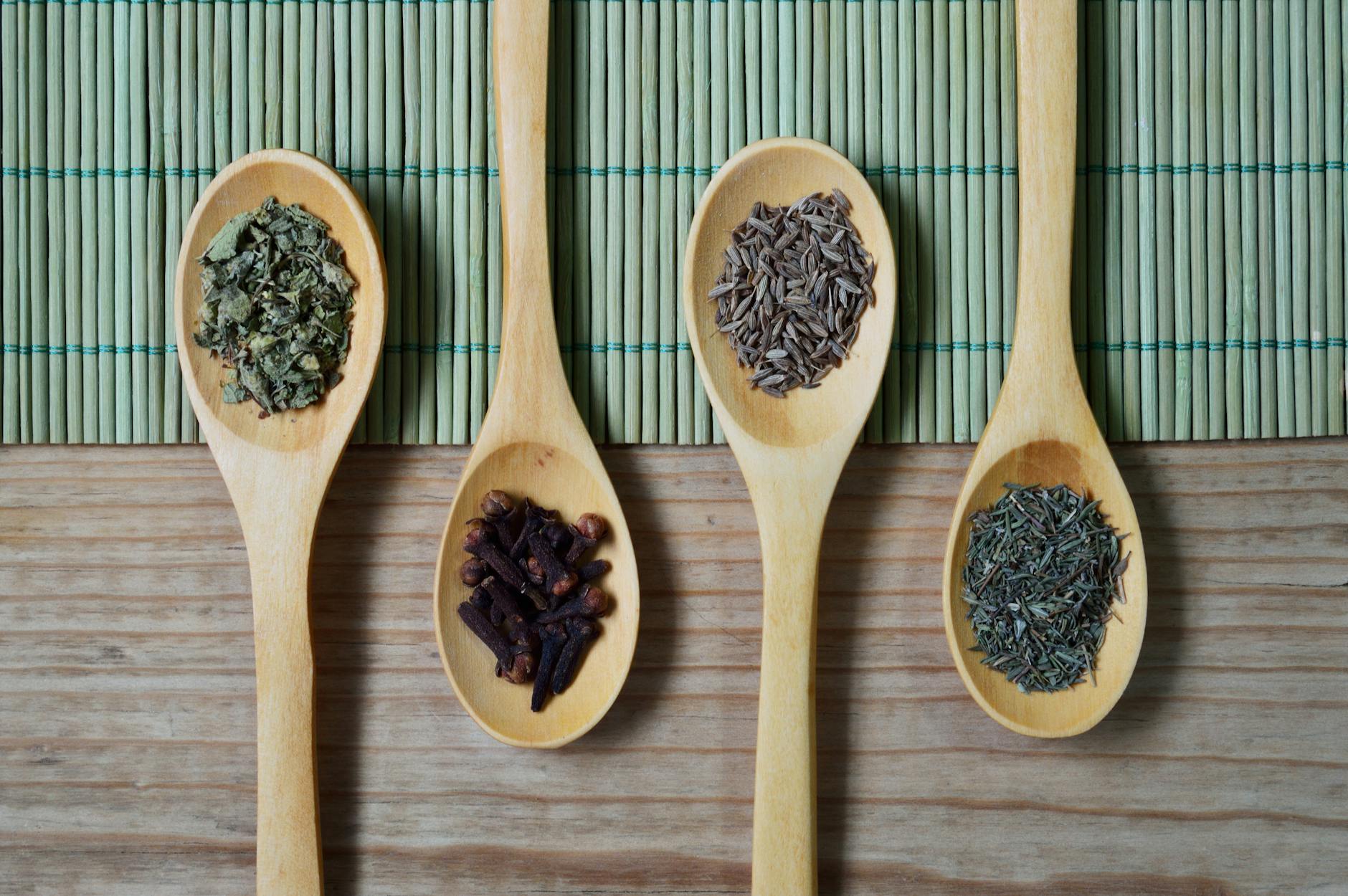
Herbs have been used for centuries to relieve pain naturally, often providing anti-inflammatory, analgesic, and calming effects without the side effects of many synthetic medications. Here’s an overview of some well-known pain-relieving herbs and a closer look at turmeric’s specific role in pain management:
🌿 Herbs for Pain Relief
1. Turmeric (Curcuma longa)
Turmeric is one of the most powerful anti-inflammatory herbs known. Its active compound, curcumin, helps reduce pain by blocking inflammatory pathways in the body. Studies have shown that turmeric can work similarly to NSAIDs (like ibuprofen) but without the same risk of stomach irritation (Daily et al., 2016).
2. Ginger (Zingiber officinale)
Ginger contains gingerols, which have anti-inflammatory and antioxidant properties. It is often used for muscle soreness, menstrual pain, and arthritis-related discomfort.
3. Willow Bark (Salix alba)
Known as “nature’s aspirin,” willow bark contains salicin, which the body converts into salicylic acid — the same compound used to make aspirin. It’s particularly good for headaches, back pain, and osteoarthritis.
4. Devil’s Claw (Harpagophytum procumbens)
Traditionally used in African medicine, devil’s claw is effective for reducing inflammation and pain from arthritis, tendonitis, and lower back pain.
5. Boswellia (Boswellia serrata)
Also called Indian frankincense, boswellia helps block the formation of certain inflammatory molecules. It’s used for osteoarthritis and rheumatoid arthritis pain relief.
6. Valerian Root (Valeriana officinalis)
Though mainly used for sleep, valerian root also has mild muscle relaxant properties, making it helpful for tension headaches and muscle spasms.
🌟 What Turmeric Does for Pain
Turmeric’s pain-relieving power comes mainly from curcumin, its bright yellow polyphenol compound. Curcumin has several mechanisms of action:
- Anti-Inflammatory Action – Curcumin inhibits NF-κB, a molecule that triggers inflammation. Less inflammation usually means less pain.
- Antioxidant Support – It neutralizes free radicals that damage tissues and worsen pain.
- Joint Health – Clinical studies have shown turmeric to reduce stiffness, swelling, and tenderness in people with osteoarthritis and rheumatoid arthritis (Henrotin et al., 2013).
- Nerve Pain Support – Emerging research suggests curcumin may help with neuropathic pain by supporting nerve repair and reducing inflammation around nerve tissues.
Best Way to Use:
- Take turmeric with black pepper (piperine) to increase absorption.
- Can be used in golden milk, teas, or taken as a standardized curcumin supplement (500–2000 mg/day under medical supervision).
🌿 Herbal Remedies for Different Types of Pain
🧠 Headaches & Migraines
- Willow Bark – Natural aspirin-like pain relief.
- Feverfew (Tanacetum parthenium) – Known to prevent migraines and reduce severity.
- Peppermint (Mentha piperita) – Peppermint oil applied to temples can relieve tension headaches.
- Ginger – Reduces nausea and inflammation often associated with migraines.
🦴 Joint Pain & Arthritis
- Turmeric (Curcuma longa) – Anti-inflammatory; helps reduce swelling and stiffness.
- Boswellia (Indian Frankincense) – Blocks inflammatory enzymes, reducing joint damage and pain.
- Ginger – Decreases pain and improves mobility.
- Devil’s Claw – Traditionally used for arthritis and tendon pain.
💪 Muscle Pain & Soreness
- Arnica (Arnica montana) – Topical gel or cream for bruises, sprains, and sore muscles.
- Valerian Root – Acts as a mild muscle relaxant.
- Chamomile – Calms muscle tension and helps with stress-related pain.
- Rosemary – Used topically as an oil to improve circulation and ease muscle stiffness.
🔥 Nerve Pain (Neuropathy, Sciatica)
- Turmeric/Curcumin – Reduces inflammation and supports nerve healing.
- St. John’s Wort – Traditionally used for nerve pain and mild nerve damage.
- Skullcap (Scutellaria lateriflora) – Helps calm nerve-related pain and spasms.
- Cayenne Pepper (Capsaicin) – Cream applied topically can desensitize nerve pain signals.
🌸 Menstrual Pain & Cramps
- Ginger – Reduces menstrual pain when taken as tea or capsules.
- Cinnamon – Has antispasmodic properties and eases uterine contractions.
- Cramp Bark (Viburnum opulus) – Specifically used to relax the uterus and reduce cramps.
- Chamomile – Calms muscles and relieves bloating and discomfort.
🩹 Back Pain
- Willow Bark – Works like aspirin for pain relief.
- Devil’s Claw – Excellent for chronic lower back pain.
- Turmeric – Helps reduce inflammation in the spine and surrounding muscles.
- Ginger Compress – Can be applied topically for soothing warmth and pain relief.
💡 Tips for Best Results
- Combine Herbs with Lifestyle Support – Stretching, hydration, rest, and anti-inflammatory foods amplify the effects.
- Consistency Matters – Many herbs work best when taken regularly for a few weeks.
- Check for Interactions – Some herbs (like St. John’s Wort, willow bark) may interact with medications, so consult a healthcare professional before starting.
📚 References
Daily, J. W., Yang, M., & Park, S. (2016). Efficacy of turmeric extracts and curcumin for alleviating the symptoms of joint arthritis: A systematic review and meta-analysis of randomized clinical trials. Journal of Medicinal Food, 19(8), 717–729. https://doi.org/10.1089/jmf.2016.3705
Henrotin, Y., Priem, F., & Mobasheri, A. (2013). Curcumin: A new paradigm and therapeutic opportunity for the treatment of osteoarthritis: Curcumin for osteoarthritis management. SpringerPlus, 2(1), 56. https://doi.org/10.1186/2193-1801-2-56
Gorji, A., & Khaleghi Ghadiri, M. (2001). History of headache in medieval Persian medicine. The Lancet Neurology, 1(8), 510–515. https://doi.org/10.1016/S1474-4422(02)00215-7
Gruenwald, J., Brendler, T., & Jaenicke, C. (2007). PDR for herbal medicines (4th ed.). Thomson Healthcare.
Ulbricht, C., Basch, E., Cheung, L., Goldberg, H., Hammerness, P., Isaac, R., … & Woods, J. (2011). An evidence-based systematic review of boswellia by the natural standard research collaboration. Journal of Dietary Supplements, 8(1), 45–88. https://doi.org/10.3109/19390211.2011.552068
Shara, M., & Stohs, S. J. (2015). Efficacy and safety of white willow bark (Salix alba) extracts. Phytotherapy Research, 29(8), 1112–1116. https://doi.org/10.1002/ptr.5377
Terry, R., & Ernst, E. (2000). Herbal remedies for osteoarthritis: A systematic review. British Journal of General Practice, 50(455), 493–496.
Ozgoli, G., Goli, M., & Moattar, F. (2009). Comparison of effects of ginger, mefenamic acid, and placebo in patients with primary dysmenorrhea. Journal of Alternative and Complementary Medicine, 15(2), 129–132. https://doi.org/10.1089/acm.2008.0311
 THE BROWN GIRL DILEMMA