
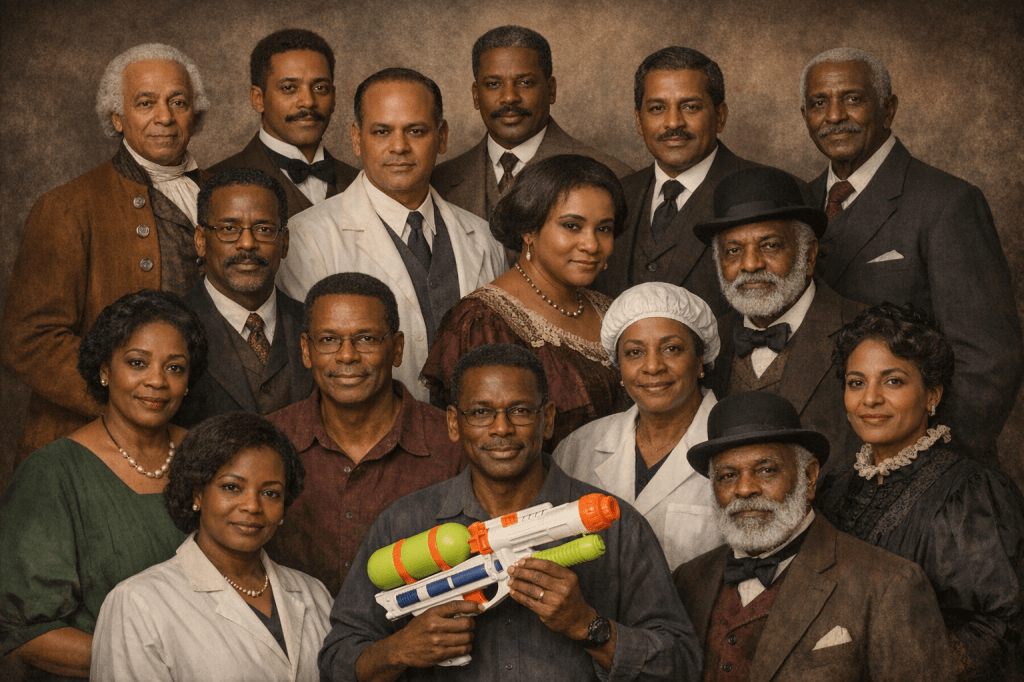
The history of innovation in the United States and across the African diaspora is incomplete without acknowledging the profound contributions of Black inventors. Working under the crushing weight of enslavement, segregation, patent discrimination, and limited access to capital, these men and women forged breakthroughs that reshaped agriculture, medicine, communication, transportation, and daily life. Their stories reveal brilliance tempered by struggle and perseverance refined by adversity.
Benjamin Banneker was a mathematician, astronomer, and almanac author whose scientific calculations helped survey the boundaries of Washington, D.C. Self-taught in astronomy, he published almanacs predicting eclipses and weather patterns. Despite racial prejudice in the 18th century, Banneker corresponded boldly with Thomas Jefferson, challenging the hypocrisy of slavery. His intellectual contributions undermined racist assumptions about Black inferiority and demonstrated scholarly excellence in the early republic.
Granville T. Woods, often called the “Black Edison,” held more than 50 patents. His improvements to telegraphy and railway communication, particularly the multiplex telegraph, enhanced train safety and efficiency. Woods faced constant legal battles, including challenges from Thomas Edison, yet successfully defended his patents. His perseverance ensured that rail transport systems became safer and more reliable during rapid industrial expansion.
Madam C.J. Walker, born Sarah Breedlove, revolutionized Black hair care with specialized products designed for African American women. She developed manufacturing methods and sales distribution systems that created one of the first self-made female millionaire enterprises in America. Walker overcame poverty and widowhood, building not only a business but also funding scholarships and civil rights initiatives, thereby linking invention to economic empowerment.
George Washington Carver transformed Southern agriculture by promoting crop rotation and alternative crops such as peanuts and sweet potatoes. While myths exaggerate the number of peanut inventions, his agricultural bulletins provided practical, life-saving knowledge to formerly enslaved farmers trapped in sharecropping cycles. Carver faced racial limitations in funding and recognition, yet became a global symbol of agricultural science and sustainability.
Garrett Morgan invented the three-position traffic signal and an early gas mask known as the safety hood. His gas mask saved lives during a 1916 tunnel disaster in Cleveland, though he initially hired white actors to demonstrate his invention due to racial bias. Morgan’s contributions continue to influence traffic management systems and emergency response technologies worldwide.
Elijah McCoy engineered an automatic lubricating device for steam engines, dramatically improving railroad efficiency. So respected was his design that buyers allegedly requested “the real McCoy” to avoid inferior imitations. Despite holding numerous patents, McCoy struggled financially later in life, reflecting the economic instability many Black inventors endured.
Lewis Latimer improved the carbon filament for light bulbs, extending their lifespan and making electric lighting affordable. A skilled draftsman, he contributed to patents for Alexander Graham Bell and worked closely with Thomas Edison. Latimer’s technical manuals standardized electrical engineering practices, though his name often remained overshadowed in popular narratives.
Sarah Boone patented an improved ironing board designed to better fit women’s garments. Living during Reconstruction, Boone innovated in domestic technology at a time when Black women’s labor was undervalued. Her contribution enhanced garment care efficiency and reflects how everyday needs sparked practical invention.
Jan Ernst Matzeliger revolutionized shoe manufacturing with a lasting machine that mechanized the process of attaching shoe uppers to soles. His invention dramatically reduced shoe prices, making footwear affordable for working-class families. Matzeliger endured racism and exhausting labor conditions, and he died young, but his innovation industrialized a global industry.
Alexander Miles patented automatic elevator doors that significantly improved passenger safety. Prior to his innovation, manual doors caused frequent accidents. Miles’ design became foundational in modern elevator systems, enhancing urban architecture and vertical expansion.
Charles Drew pioneered blood plasma preservation techniques and organized large-scale blood banks during World War II. Though he resigned from the American Red Cross in protest of racial segregation policies in blood donation, his research saved thousands of lives and laid the foundation for modern transfusion medicine.
Lonnie Johnson, a former NASA engineer, invented the Super Soaker water gun, generating billions in retail sales. Johnson’s earlier work involved energy systems and spacecraft power sources. Despite early business setbacks, he leveraged engineering expertise into entrepreneurial success and now focuses on advanced battery technology.
Marie Van Brittan Brown co-invented the first home security system with a closed-circuit television monitor in 1966. Concerned about slow police response times in her neighborhood, she designed a system allowing homeowners to see and communicate with visitors remotely. Modern security and surveillance systems trace conceptual roots to her patent.
Patricia Bath invented the Laserphaco Probe, improving cataract surgery precision and restoring sight to patients worldwide. As the first Black woman to receive a medical patent, Bath confronted gender and racial discrimination in academic medicine. Her contributions expanded access to vision care globally.
Mark Dean co-developed the IBM personal computer architecture and holds multiple patents related to computing systems. His work on the ISA bus and color PC monitor technology advanced modern computing. Rising to become an IBM vice president, Dean helped democratize digital technology in an era when Black engineers were vastly underrepresented.
These inventors did more than create devices; they altered economic systems, saved lives, and reshaped daily living. Their innovations contributed to safer transportation, medical breakthroughs, mass communication, agricultural sustainability, and home security. Yet many endured exploitation, lack of credit, financial hardship, and systemic racism. Their resilience underscores a broader historical narrative: innovation flourished even when opportunity was denied.
The legacy of these Black inventors reverberates through contemporary society. Traffic lights regulate our streets, elevators rise in skyscrapers, blood banks sustain hospitals, computers power industries, and agricultural science feeds nations. To study their lives is to recognize that ingenuity is not bound by race, but opportunity often is. Their stories demand both celebration and continued scholarly examination of structural barriers in science and industry.
References
Banneker, B. (1792). Banneker’s Almanac.
Brown, M. V. B. (1969). U.S. Patent No. 3,482,037.
Carver, G. W. (1920). Agricultural bulletins, Tuskegee Institute.
Drew, C. (1940). Banked Blood. Columbia University.
Latimer, L. (1890). Incandescent Electric Lighting: A Practical Description of the Edison System.
McCoy, E. (1872). U.S. Patent No. 129,843.
Miles, A. (1887). U.S. Patent No. 371,207.
Morgan, G. (1923). U.S. Patent No. 1,475,024.
National Inventors Hall of Fame. (n.d.). Biographical entries on listed inventors.
Smithsonian Institution. (n.d.). African American Inventors Initiative.
U.S. Patent and Trademark Office. (n.d.). Patent archives and historical records.
 THE BROWN GIRL DILEMMA