
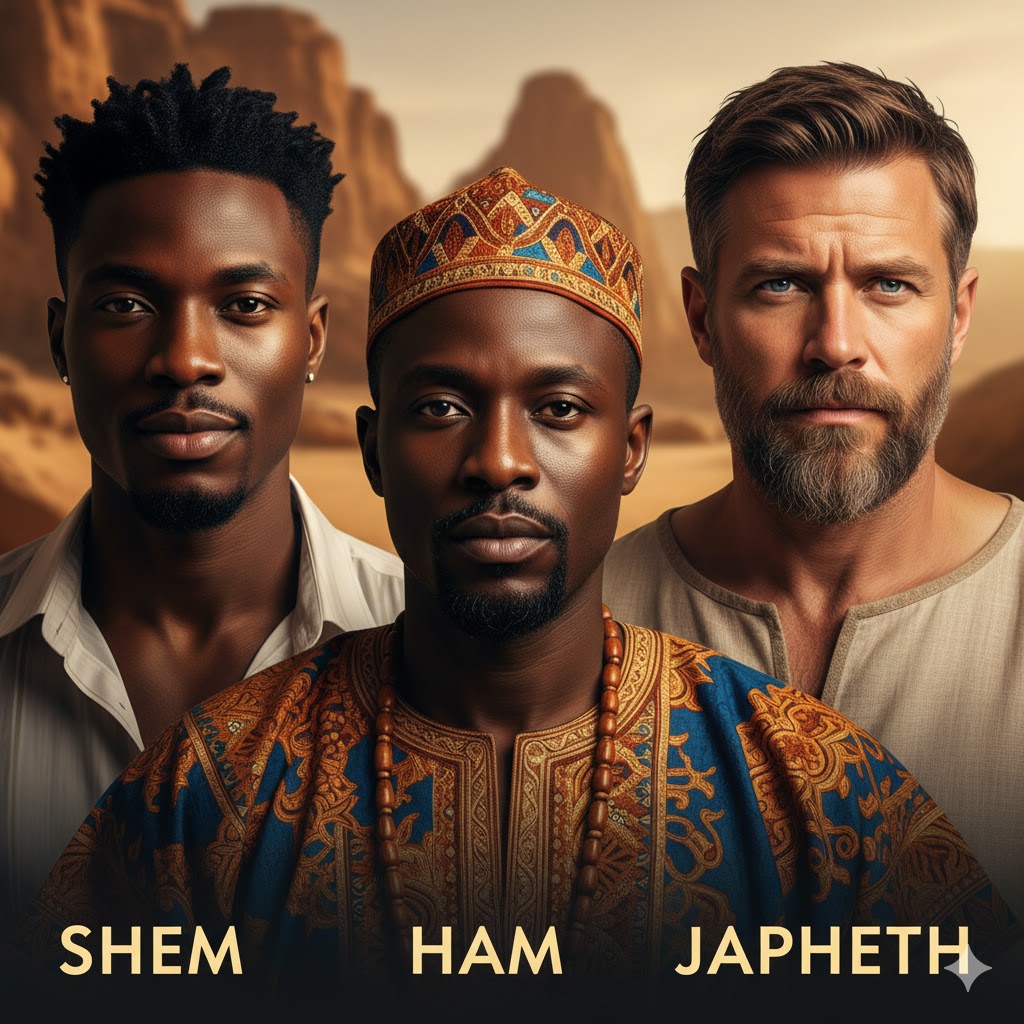
The “Table of Nations,” found in Genesis 10, remains one of the most profound genealogical records in Scripture. It outlines the dispersion of Noah’s three sons—Shem, Ham, and Japheth—after the Flood and provides the earliest biblical framework for understanding the origins of ancient peoples. Far more than a list of names, this chapter functions as a historical, cultural, and spiritual map of humanity that echoes through prophecy, migration, and identity. Within the Hebraic tradition, the Table of Nations is essential because it roots modern peoples in an ancient covenant story that begins with Noah and extends through Abraham, Israel, and ultimately the Messiah.

Genesis 10 opens with an authoritative declaration: “Now these are the generations of the sons of Noah” (Genesis 10:1, KJV). This introduces the idea that all post-Flood civilizations trace back to one family. In a world often fractured by race and hierarchy, Scripture begins with unity—one origin, three sons, and seventy nations. This unity does not erase difference; instead, it explains the divine ordering of cultural and ethnic plurality.
The sons of Japheth are listed first—Gomer, Magog, Madai, Javan, Tubal, Meshech, and Tiras (Genesis 10:2). These names correspond to peoples historically associated with Europe, parts of Asia Minor, and regions north of Israel. The Scriptures later reference several of these groups in prophetic texts, particularly Magog and Meshech, demonstrating that the Table of Nations is foundational not only to ancient history but also to eschatology.
Javan, associated with the Greek-speaking world, becomes particularly important in biblical prophecy and later history. His descendants—Elishah, Tarshish, Kittim, and Dodanim (Genesis 10:4)—illustrate how the Mediterranean world emerged through Japheth’s lineage. When Paul preaches in Greece centuries later, he is indirectly standing in the territories outlined in Genesis 10, showing how interconnected the biblical timeline truly is.
Ham’s lineage, occupying verses 6–20, is the most extensive in the chapter. Ham’s sons—Cush, Mizraim, Phut, and Canaan (Genesis 10:6)—represent African and Near Eastern civilizations. Of particular interest is Cush, often associated with Ethiopia, Nubia, and the broader regions of East Africa. Mizraim is universally recognized in Scripture as Egypt. These associations form the basis for understanding African biblical presence, heritage, and advanced civilizations within Scripture.
The descendants of Cush include Seba, Havilah, Sabtah, Raamah, and Sabtechah, but the most notable among them is Nimrod (Genesis 10:8). Described as “a mighty one in the earth” and “a mighty hunter before the LORD” (Genesis 10:9), Nimrod is credited with founding major Mesopotamian cities such as Babel, Erech, and Akkad (Genesis 10:10). His legacy is tied to empire-building, demonstrating the influence of Hamitic peoples on early global civilization.
Mizraim’s offspring include notable groups such as the Ludim, Anamim, Lehabim, Naphtuhim, Pathrusim, Casluhim, and Caphtorim (Genesis 10:13–14). The Philistines arise from this branch, illustrating that major biblical adversaries came from Ham’s line—not as a mark of inferiority, but as a testament to Ham’s geographical and political significance in the biblical world.
Phut, associated with Libya and North Africa, appears frequently in prophetic texts (Ezekiel 27:10; Nahum 3:9). His descendants are known for their military strength, aligning with Scripture’s consistent recognition of African nations as powerful and influential in regional conflicts and alliances.
The most controversial portion of Ham’s lineage concerns Canaan. Often misused historically to justify oppression, the biblical text itself does not support such conclusions. The Canaanites—Hivites, Jebusites, Amorites, and others (Genesis 10:15–18)—occupied the land later promised to Abraham. Their presence sets the stage for Israel’s future covenantal journey, demonstrating how genealogy intersects with geography and destiny.
Shem’s descendants, listed in verses 21–31, form the Semitic families, including the Hebrews, Assyrians, and Arameans. Shem is called “the father of all the children of Eber” (Genesis 10:21), emphasizing his connection to Abraham and the lineage through which Israel would arise. From Shem comes Arphaxad, Shelah, and Eber—names that anchor the Messianic line.
Eber’s name becomes the root of the term “Hebrew,” underscoring Genesis 10 as the starting point for understanding Israel’s ethnic and spiritual identity. The genealogical path from Shem to Abraham in Genesis 11 continues the story, showing how divine promise unfolds through a family tree that begins in the Table of Nations.
The division of the earth in the days of Peleg—“for in his days was the earth divided” (Genesis 10:25)—is a mysterious and significant note. Many interpret this as referencing either linguistic division at Babel or geographic dispersion. Whatever the exact meaning, it emphasizes that God oversaw the ordering of nations according to His plan.
The Table of Nations concludes by reiterating the central theme: “These are the families of the sons of Noah… by these were the nations divided in the earth after the flood” (Genesis 10:32). This ending affirms divine sovereignty over human migration, culture, and ethnicity.
For Hebraic readers, this chapter serves as a spiritual compass. It roots identity not in modern racial constructs but in biblical origin. It reinforces that every nation has a place in the redemptive narrative, yet Israel occupies a unique covenantal role flowing from Shem.
The Table of Nations also shows that Africa, Asia, and the Near East played major roles in early civilization, contrary to narratives that minimize non-European contributions. Scripture positions African and Semitic peoples at the center, not the margins, of ancient history.
By tracing Nimrod, Mizraim, Canaan, Asshur, and Eber, the chapter provides a panoramic view of how empires and tribes arose. It reveals that humanity’s diversity reflects God’s design rather than human accident. Differences in culture, language, and geography trace back to Genesis 10, not to notions of superiority or inferiority.
In modern times, the Table of Nations challenges believers to see beyond surface distinctions. If all nations came from one family, then ethnic hostility contradicts Scripture. The chapter becomes a theological argument for unity grounded in divine creation.
Yet it also highlights spiritual distinction. Israel, emerging from Shem, carries a covenant responsibility unlike any other nation. This duality—unity in origin, distinction in calling—becomes a biblical pattern that continues throughout the Old and New Testaments.
Ultimately, the Table of Nations frames the biblical worldview of humanity: one creation, many nations, and one redemptive plan. From Genesis to Revelation, the nations appear repeatedly, culminating in the vision of “all nations, and kindreds, and people, and tongues” standing before the Lamb (Revelation 7:9).
In this way, Genesis 10 is not merely a genealogy; it is a prophetic map. It shows where humanity began, how it spread, and how God would later gather the nations again under His kingdom. The Table of Nations reminds every reader of their sacred origin, their place in the divine story, and the God who oversees the destiny of all peoples.
References (KJV):
Genesis 10; Genesis 11:10–26; Revelation 7:9; Ezekiel 27:10; Nahum 3:9.
📜 Table of Nations (Genesis 10)
| Son of Noah | Descendants/People Groups Listed | Common Historical Associations (Traditional/Scholarly) |
| Japheth | Gomer, Magog, Madai, Javan, Tubal, Meshech, Tiras. Grandsons: Ashkenaz, Riphath, Togarmah (from Gomer); Elishah, Tarshish, Kittim, Rodanim (from Javan). | Indo-European peoples, often associated with the North, Asia Minor, and Mediterranean Coastlands (e.g., Greeks/Ionians, Medes, peoples of modern Turkey, Spain). |
| Ham | Cush, Egypt (Mizraim), Put, Canaan. Grandsons: Seba, Havilah, Sabtah, Raamah, Sabteca (from Cush); Ludites, Anamites, Lehabites, Naphtuhites, Pathrusites, Kasluhites, Caphtorites (from Egypt); Sidon, Heth, Jebusites, Amorites, Girgashites, Hivites, Arkites, Sinites, Arvadites, Zemarites, Hamathites (from Canaan). | Peoples of Africa, the Arabian Peninsula, Mesopotamia, and the Levant (e.g., Ethiopians, Egyptians, Libyans, Canaanites, Babylonians/Assyrians via Nimrod). |
| Shem | Elam, Ashur, Arphaxad, Lud, Aram. Grandsons: Uz, Hul, Gether, Mash (from Aram); Shelah (from Arphaxad). Great-grandson: Eber. | Peoples of the Middle East, the Levant, and Persia (e.g., Elamites, Assyrians, Aramaeans, Hebrews/Israelites via Eber). |
 THE BROWN GIRL DILEMMA