
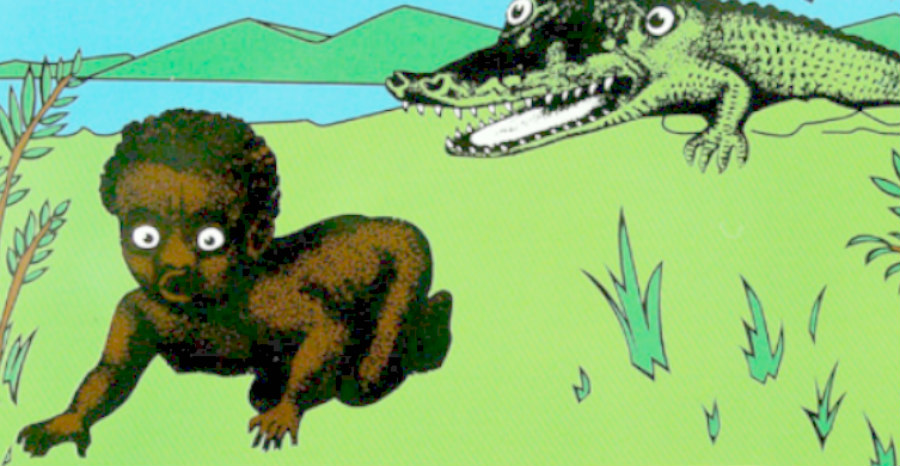
Throughout American history, the dehumanization of African people has taken on many horrific forms, some of which are so cruel and grotesque that they are hard to believe. One of the most chilling accounts in the archive of American racial violence is the claim that Black infants were used as “alligator bait” in the American South during and after slavery. While some have debated the extent or literal truth of these claims, the imagery, language, and cultural legacy surrounding this horror are well-documented and speak to a broader system of anti-Black racism, objectification, and commodification of Black bodies.
The Practice of Using Black Children as “Alligator Bait”
The term “alligator bait” refers to the horrific allegation that enslaved African babies—or Black children during the Jim Crow era—were used as live bait to lure alligators from swamps and rivers. In this grotesque practice, babies were supposedly placed in cages or allowed to cry on the riverbank while hunters waited for the animals to approach. Once an alligator surfaced, it was killed for its hide, which was highly valued in the leather trade.
Although there is limited physical documentation of widespread, organized baby-baiting in the historical record, oral histories, newspaper clippings, and racist memorabilia (such as postcards and advertisements) provide disturbing clues that such acts were either practiced or imagined as symbolic of white supremacy’s cruelty. For instance, a 1908 article from the Washington Times referred to Black children being used in Florida to capture alligators, and similar stories appeared in newspapers in Arkansas and Louisiana in the early 20th century (Pilgrim, 2000).
The pervasive use of “alligator bait” imagery—from cartoons to toys and minstrel shows—suggests not just cruelty, but the widespread normalization of anti-Black violence and the portrayal of Black children as sub-human.
Why Did They Do This?
This disturbing practice—whether literal or metaphorical—was rooted in the ideology of white supremacy. Black bodies were viewed as property, as tools, or as lesser beings. The use of children as bait demonstrates a complete erasure of Black humanity. Several key motivations underpinned this:
- Profit and Commodification: Alligator hides were extremely profitable. If the stories are true, using children as bait may have been viewed as an expedient, if horrific, means to a profitable end.
- Dehumanization and Entertainment: During the height of Jim Crow, Black suffering was not only ignored—it was spectacle. White America consumed images of Black children in dangerous, humiliating, or deadly situations as entertainment or jokes.
- Racial Terror and Social Control: These narratives were also psychological warfare, teaching Black people that their lives—and even their children—were disposable in the eyes of white society.
Where Did This Happen?
Accounts and stories of this atrocity are most frequently tied to southern states such as Florida, Louisiana, and Arkansas, regions where both alligator hunting and anti-Black violence were common. Florida, in particular, is frequently cited in newspaper reports and oral traditions surrounding this practice. Additionally, racist ephemera from the early 1900s—postcards, advertisements, and figurines—originated in southern states and were sold throughout the country, indicating widespread social acceptance of this dehumanizing myth.
Slavery and the Lingering Effects on Black People
The legacy of American slavery is not only about labor and property, but about the psychological and physical destruction of Black life. Enslaved Africans were denied their humanity from birth to death. The concept of Black children being used as alligator bait reflects this legacy—a society so steeped in white supremacy that even Black babies were fair game for profit or sport.
The aftershocks of slavery—psychological trauma, economic deprivation, family fragmentation, and institutional racism—still affect Black communities today. The trope of “alligator bait” lives on as a symbol of historical trauma, reminding us that Black childhood was never truly protected in a white supremacist society.
Cultural Legacy and Racial Memory
While some historians argue that the practice may have been exaggerated or symbolic, its cultural impact is undeniable. Racist postcards from the early 20th century depicting Black babies as “alligator bait” were widespread, sold in drugstores, and mailed across the nation. These images reinforced the belief that Black people were animals, suitable for violent and demeaning treatment.
As late as the 1950s and 60s, older generations of Black families passed down oral histories warning of this cruel practice—not merely as folklore, but as a cautionary tale about white violence. These stories served as survival knowledge, designed to protect Black children from wandering near rivers or swamps alone.
Conclusion: Remembering to Heal
The story of “alligator bait” is one of the darkest chapters in America’s long history of racism, reflecting the utter devaluation of Black life. Whether taken literally or understood as symbolic of systemic dehumanization, it is a reminder of the brutality that white supremacy inflicted not just on adults, but on the most innocent—Black children.
Understanding these atrocities is not about dwelling in the past, but about acknowledging the pain and truth that many Black families have carried for generations. Only by facing these horrors head-on can we begin to repair the wounds and reclaim our stolen humanity.
References
- Pilgrim, D. (2000). The Picaninny Caricature: Jim Crow Museum of Racist Memorabilia. Ferris State University. Retrieved from: https://www.ferris.edu/jimcrow/picaninny/
- Washington Times (1908). “Bait Alligators With Pickaninnies”, Washington Times Archives.
- Welsing, F. C. (1991). The Isis Papers: The Keys to the Colors. Third World Press.
- Wood, M. (1997). Slavery, Race and American History. University Press of Virginia.
- Hartman, S. (2007). Lose Your Mother: A Journey Along the Atlantic Slave Route. Farrar, Straus and Giroux.
 THE BROWN GIRL DILEMMA