
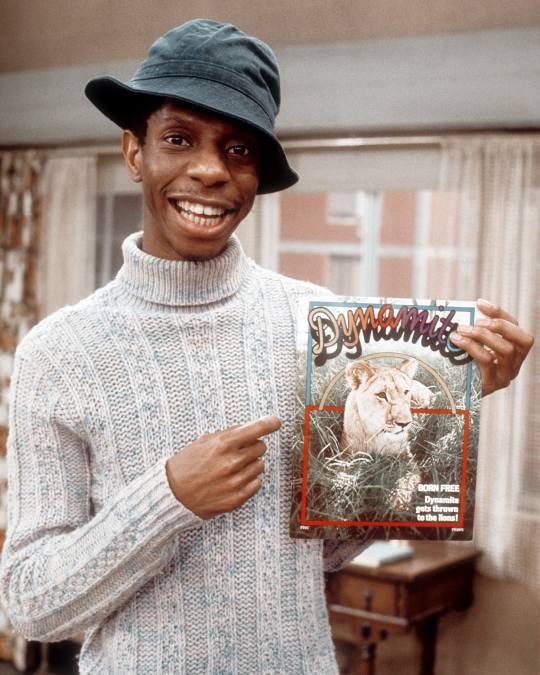
“Dy-no-mite!”
That single word made Jimmy Walker one of the most recognizable faces and voices in American television history. Jimmy Walker, born James Carter Walker Jr. on June 25, 1947, in Brooklyn, New York, rose from humble beginnings to become a pop culture icon through his unforgettable role as J.J. Evans on the groundbreaking sitcom Good Times. His exaggerated energy, comedic timing, and charismatic delivery transformed him into one of the most famous Black comedians of the 1970s.
Walker was raised in the Bronx by a single mother who worked as a housekeeper. Growing up in a working-class environment deeply influenced his comedic style, which often blended humor with observations about urban life, poverty, and social struggle. He attended The Bronx High School of Science and later City College of New York, where he began developing his interest in performance and comedy.
Before television fame, Jimmy Walker built his career through stand-up comedy, performing in small clubs and on college campuses. His big break came when he joined the cast of Rowan & Martin’s Laugh-In as a writer and performer in the late 1960s, one of the most influential comedy shows of the era. This exposure introduced him to national audiences and established him as a rising comedic talent.
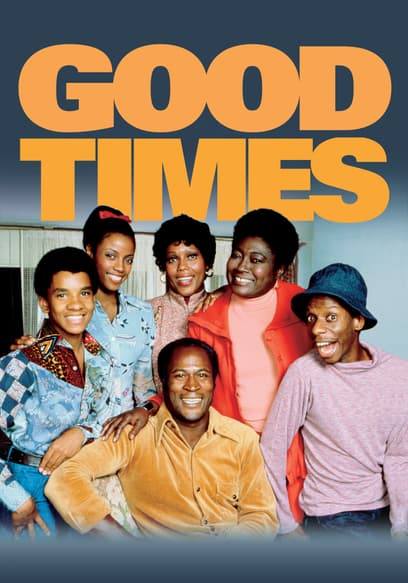
Walker’s defining role came in 1974 when he was cast as James “J.J.” Evans Jr. on Good Times. The show, a spin-off from Maude, followed a Black family living in a Chicago housing project and was one of the first sitcoms to address poverty, racism, unemployment, and systemic inequality from a Black perspective. J.J., the eldest son, was portrayed as a fast-talking, aspiring artist with an infectious personality and a tendency toward exaggerated humor.
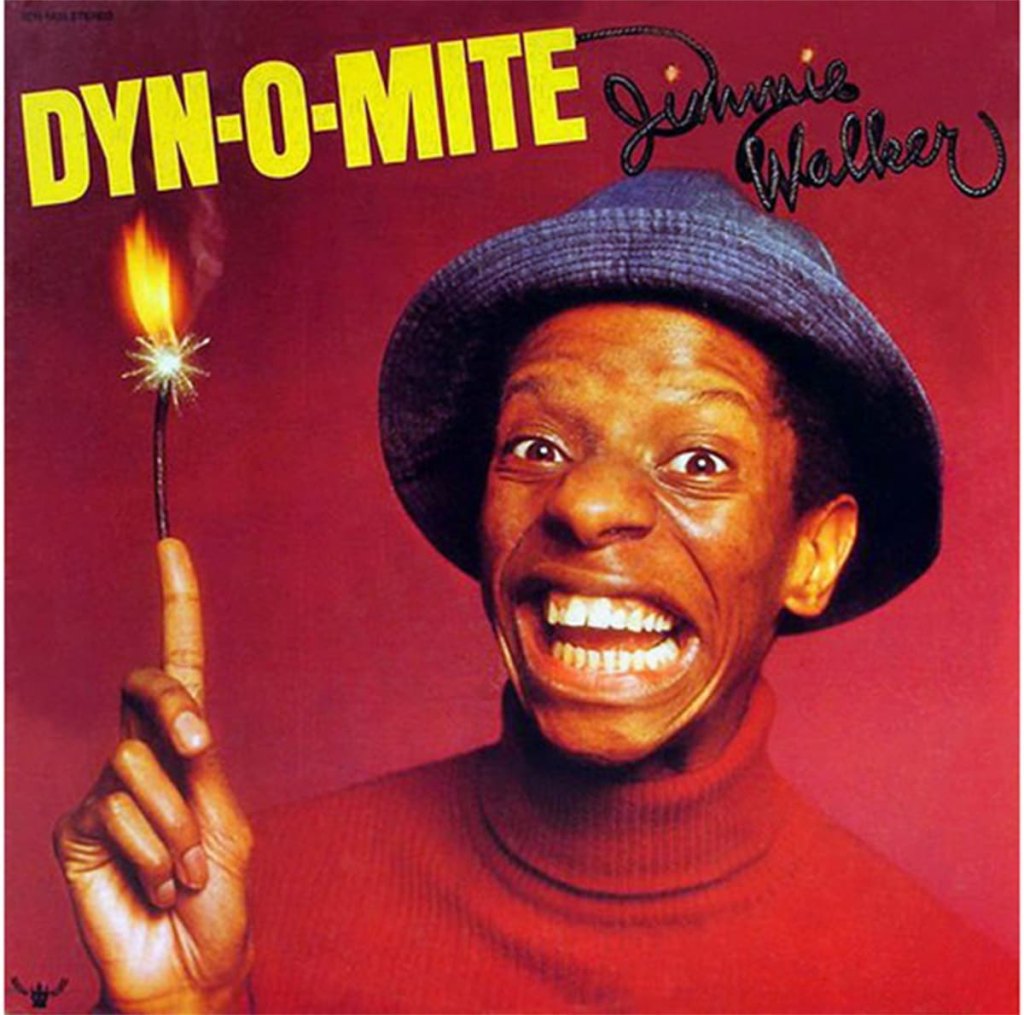
Jimmy Walker’s portrayal of J.J. became both legendary and controversial. His character’s over-the-top behavior, wide-eyed expressions, and loud catchphrases made him the breakout star of the show. While audiences loved J.J., some critics and co-stars, including Esther Rolle and John Amos, felt the character drifted into stereotype and comic excess. Walker, however, defended the role, stating that J.J. represented real people he grew up with and that laughter itself was a form of survival in difficult conditions.
“Dy-no-mite!” became one of the most famous catchphrases in television history, rivaling phrases like “Whatchu talkin’ ’bout, Willis?” and “Kiss my grits.” The phrase entered American slang and was used in commercials, cartoons, films, and everyday speech throughout the 1970s and beyond. Walker became a walking brand, instantly recognizable by voice alone.
Despite being the comedic centerpiece, Walker’s role had deeper layers. J.J. was not just a clown; he was a young Black man trying to escape poverty through art, ambition, and creativity. His dreams of becoming a professional artist symbolized the broader struggle of Black youth seeking opportunity within limited social structures.
After Good Times ended in 1979, Jimmy Walker continued acting across television and film. His filmography includes roles in Let’s Do It Again (1975), Airplane! (1980), The Concorde… Airport ’79, Tapeheads (1988), and appearances in cult classics like Repo Man. On television, he appeared in The Love Boat, Fantasy Island, The Tonight Show, Everybody Hates Chris, and Scrubs.
Walker also sustained a long career in stand-up comedy, touring nationally for decades and becoming a staple in comedy clubs, casinos, and Black entertainment circuits. Unlike many sitcom stars, he never abandoned live performance, seeing stand-up as his true artistic foundation.
In terms of personal life, Jimmy Walker has never been married and has no children. He has spoken openly about choosing independence and focusing on his career, lifestyle, and personal freedom. This made him somewhat unique among celebrities of his generation, as he maintained a largely private life outside the spotlight.
Walker’s fame extended beyond television into pop culture symbolism. He appeared in commercials, music videos, cartoons, and even political satire. His persona became shorthand for 1970s Black comedy, referenced in shows like Family Guy, In Living Color, The Simpsons, and Chappelle’s Show.
While Jimmy Walker did not receive major industry awards like Emmys, his cultural achievements are arguably greater. He received the NAACP Image Award recognition, multiple lifetime achievement honors from comedy organizations, and remains consistently listed among the most influential Black TV characters of all time.
Jimmy Walker’s impact lies in his role in expanding Black visibility in mainstream comedy. At a time when few Black actors had leading roles, Walker was one of the most famous faces on American television, crossing racial, class, and generational boundaries through humor.
His career also represents the tension between entertainment and representation. While some critics argue J.J. reinforced stereotypes, others recognize that Walker’s performance reflected authentic urban humor and gave voice to a segment of Black youth rarely seen on television.
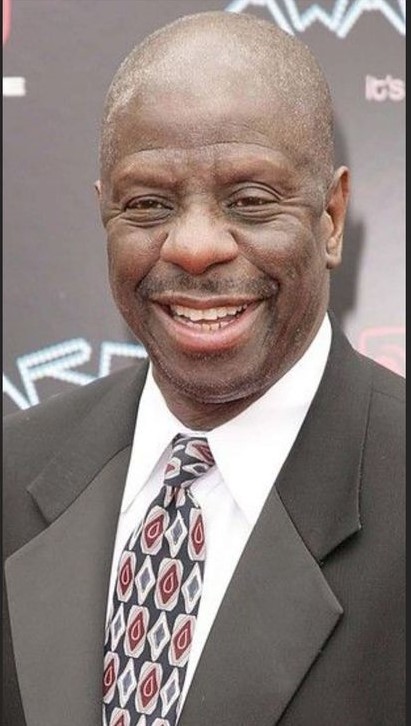
Walker himself has stated that his goal was never to be political but to be memorable, relatable, and funny. In that sense, his success is undeniable. He created one of the most iconic characters in TV history and shaped the comedic language of an entire era.
Today, Jimmy Walker is remembered not just for J.J., but for what he represented: the arrival of Black comedy into mainstream pop culture at full volume. His voice, style, and energy helped open doors for future comedians like Eddie Murphy, Chris Rock, Martin Lawrence, and Kevin Hart.
Jimmy Walker’s legacy is the legacy of laughter in the face of adversity. Through J.J. Evans, he turned poverty into punchlines, struggle into performance, and television into a cultural mirror for Black America in the 1970s. Few entertainers can claim to have created a phrase that still echoes across generations—but “Dy-no-mite!” remains eternal.
References
Bogle, D. (2016). Primetime blues: African Americans on network television. Farrar, Straus and Giroux.
Walker, J. J. (2012). Dyn-o-mite!: Good times, bad times, our times—A memoir. Chicago Review Press.
Smith, J. (2003). Black sitcoms and the politics of representation. Journal of African American Studies, 7(2), 33–49.
IMDb. (2024). Jimmy Walker filmography.
Encyclopedia Britannica. (2023). Jimmy Walker biography.
NAACP. (1999). Black television legacy awards.
Gray, H. (2005). Watching race: Television and the struggle for Blackness. University of Minnesota Press.
 THE BROWN GIRL DILEMMA