
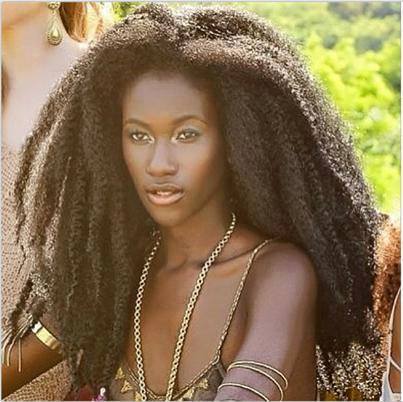
Hair has always carried meaning far beyond aesthetics—it reflects identity, history, politics, and even survival. For Black women, the politics of hair have long been tied to standards of beauty, professionalism, and self-worth. The debate between natural and relaxed hair is not simply cosmetic but deeply rooted in cultural history, racial oppression, and personal empowerment.
The Politics of Professionalism: Why Straight Hair Still Rules Corporate America
Employers in professional spaces often view straight hair as “neat,” “polished,” and “professional,” while Black kinky or coily hair is stereotyped as “unruly,” “unkept,” or “distracting” (Opie & Phillips, 2015). This bias is rooted in Eurocentric beauty standards that equate professionalism with whiteness. Because historically, straight hair aligns with the dominant white cultural norm, it is unconsciously perceived as the standard of acceptability.
Psychologically, this is linked to implicit bias—where people associate straight hair with competence, intelligence, and leadership, while natural Afro-textured hair triggers stereotypes of defiance or lack of refinement (Rosette & Dumas, 2007). Such perceptions are not about actual job performance but about conformity to white workplace culture.
Professionalism is not just about skill, education, or work ethic—it is often policed through appearance. For Black women, the workplace has historically imposed Eurocentric standards of beauty, particularly regarding hair. Employers frequently equate straight hair with professionalism, while natural kinky or coily textures are deemed “unruly,” “distracting,” or even “unprofessional.” This double standard has real consequences for Black women navigating corporate spaces.
The Legacy of Eurocentric Standards
The preference for straight hair in professional environments is rooted in colonial and Eurocentric ideals. Whiteness became the cultural baseline for what is considered polished, disciplined, and professional. Straight hair has long symbolized assimilation into white norms, whereas natural Afro-textured hair is often stigmatized as resistant or defiant. This has less to do with workplace performance and more to do with conformity to dominant cultural values.
Psychology and Bias
Psychological studies reveal how implicit bias shapes perceptions of hair. Research by Opie and Phillips (2015) shows that Black women with Afrocentric hairstyles (such as braids, Afros, or dreadlocks) are more likely to be rated as less professional, less competent, and less dominant compared to women with straightened hair. These evaluations are not objective assessments of skill, but rather cultural biases projected onto appearance. In essence, natural Black hair challenges white-centered notions of professionalism.
A Real-World Example: The Case of Chastity Jones
One of the most well-known workplace discrimination cases involving hair was Chastity Jones v. Catastrophe Management Solutions (2016). Jones, a Black woman, was offered a job at a call center but had her offer rescinded when she refused to cut her dreadlocks. The employer claimed that dreadlocks “tend to get messy,” despite the fact that her hair was neat and well-kept. Jones sued for racial discrimination, but the U.S. Court of Appeals ruled in favor of the employer, stating that hairstyle is not an “immutable characteristic” like race itself, and therefore not legally protected under Title VII. This case highlights how Black women’s natural hair continues to be penalized in ways straight hair never is.
The Emotional and Professional Toll
This bias creates psychological burdens for Black women who feel pressured to chemically relax, straighten, or otherwise alter their hair to fit workplace expectations. The choice is not simply aesthetic—it becomes a question of employability, respect, and economic survival. Constantly managing one’s hair to avoid discrimination can lead to stress, anxiety, and a diminished sense of authenticity. It also forces many Black women to choose between professional advancement and cultural self-expression.
The Rise of Natural Hair Movements
Despite this discrimination, movements like the Natural Hair Movement and campaigns such as #BlackGirlMagic and #CROWNAct have gained momentum. The CROWN Act (Create a Respectful and Open Workplace for Natural Hair) seeks to legally ban hair-based discrimination, affirming that Black hair in its natural state—braids, locs, twists, Afros—should be respected as professional. States like California, New York, and New Jersey have already passed the CROWN Act, with efforts expanding nationally.
The Science of Hair and Health Risks
Beyond social pressure, many relaxers and chemical straighteners carry health risks. Studies link long-term relaxer use to uterine fibroids, early puberty, and even increased cancer risk (Wise et al., 2012; Rosenberg et al., 2022). Straight hair may align with workplace expectations, but at the cost of Black women’s health. Natural kinky hair, on the other hand, is structurally stronger, better at retaining moisture, and scientifically designed to protect the scalp from the sun. What employers deem “unprofessional” is biologically one of the healthiest hair types.
The History of Hair Relaxers
Chemical hair relaxers first appeared in the early 20th century, pioneered by Madam C.J. Walker and other entrepreneurs who created products marketed to straighten Black hair for easier manageability and social acceptance (Bundles, 2001). By the mid-1900s, relaxers had become normalized, especially during the Civil Rights era when assimilation into white-dominated professional spaces was often tied to straightened hair. However, the rise of the natural hair movement in the 1960s and 1970s reintroduced Afrocentric pride, with natural hair symbolizing resistance and authenticity.
Relaxers use harsh chemicals such as sodium hydroxide, guanidine hydroxide, or ammonium thioglycolate to break down protein bonds in the hair shaft, permanently altering curl patterns (Robinson, 2011). Studies have shown that prolonged relaxer use can lead to scalp burns, hair thinning, breakage, and alopecia (Nkwocha, 2018). More concerning are the potential health risks: research suggests a correlation between chemical relaxer use and higher risks of fibroids, reproductive health issues, and even certain cancers (Wise et al., 2012). This raises the question of whether beauty should come at the expense of health.
The Love for Straight Hair and Its History
Many Black women’s affinity for straight hair is rooted in centuries of Eurocentric beauty ideals imposed during slavery and colonialism. Straight hair was historically associated with whiteness, cleanliness, and professionalism, while kinky or coily textures were stigmatized as “unkempt” or “inferior” (Patton, 2006). Assimilation into mainstream culture often meant altering one’s natural texture to access opportunities and avoid discrimination. Thus, the preference for straight hair is less about beauty alone and more about survival and acceptance in systems of white supremacy.
Why Natural Hair is Better
Natural hair carries cultural, spiritual, and health advantages. It allows the scalp and strands to thrive without chemical damage, preserving thickness and elasticity. It also honors heritage and affirms identity, serving as a visual declaration of authenticity and self-love. From a health perspective, embracing natural hair reduces exposure to toxic chemicals, supporting overall well-being (Byrd & Tharps, 2014).
The Science of Kinky Hair
Kinky and coily hair is structurally different from straight or wavy hair. Research shows that the elliptical shape of the hair follicle creates tight curls, which are more prone to dryness since natural oils have difficulty traveling down the shaft (Tate, 2009). While this fragility requires special care, it also provides unique styling versatility and natural volume unmatched by other hair types. Rather than being seen as “difficult,” kinky hair is scientifically a crown of complexity and resilience.
Biblical Reflections on Hair
The Bible references hair as a symbol of glory, strength, and consecration. “But if a woman have long hair, it is a glory to her: for her hair is given her for a covering” (1 Corinthians 11:15, KJV). While the Bible does not specify texture, it underscores hair as a natural gift from God. Altering it for societal acceptance raises questions about identity and divine intention. Thus, natural hair can be embraced as a reflection of God’s design rather than something to be suppressed.
The Psychology of Black Hair
Hair is central to self-concept and cultural belonging. For Black women, hair-related stress is well documented, with many experiencing “hair anxiety” in professional settings due to bias (Opie & Phillips, 2015). Psychologically, choosing natural hair often leads to greater self-acceptance and reduced internalized racism, while reliance on relaxers may be tied to conformity and fear of rejection. Hair, then, becomes both a personal and political battlefield, influencing mental health and identity formation.
Conclusion: Hair as Liberation
Ultimately, the debate between natural and relaxed hair is about more than style; it is about health, freedom, and authenticity. Natural hair resists centuries of oppression, honors cultural heritage, and prioritizes well-being. While each woman has the autonomy to choose, the growing embrace of natural textures in professional spaces signals a shift toward liberation. The politics of hair remind us that Black beauty is not something to be corrected—it is something to be celebrated. The real question is not whether natural Black hair is professional—it always has been—but rather why workplaces continue to uphold Eurocentric standards as the benchmark. By associating straight hair with competence, corporate America perpetuates racial inequality under the guise of professionalism. A shift toward inclusivity means challenging these assumptions and affirming that professionalism is about skills, not conformity to white aesthetics.
References
- Bundles, A. L. (2001). On Her Own Ground: The Life and Times of Madam C.J. Walker. Scribner.
- Byrd, A., & Tharps, L. (2014). Hair Story: Untangling the Roots of Black Hair in America. St. Martin’s Press.
- Nkwocha, I. (2018). The harmful effects of hair relaxers: A health review. Journal of Public Health and Epidemiology, 10(3), 99–106.
- Opie, T., & Phillips, K. W. (2015). Hair penalties: The negative influence of Afrocentric hair on ratings of Black women’s dominance and professionalism. Frontiers in Psychology, 6, 1311.
- Patton, T. O. (2006). Hey girl, am I more than my hair? African American women and their struggles with beauty, body image, and hair. NWSA Journal, 18(2), 24–51.
- Robinson, C. (2011). Hair Loss Disorders in Ethnic Populations. Springer.
- Tate, S. A. (2009). Black Beauty: Aesthetics, Stylization, Politics. Ashgate.
- Wise, L. A., Palmer, J. R., Reich, D., & Rosenberg, L. (2012). Hair relaxer use and risk of uterine leiomyomata in African-American women. American Journal of Epidemiology, 175(5), 432–440.
EEOC v. Catastrophe Management Solutions, 852 F.3d 1018 (11th Cir. 2016).
Opie, T., & Phillips, K. W. (2015). Hair penalties: The negative influence of Afrocentric hair on ratings of Black women’s dominance and professionalism. Frontiers in Psychology, 6, 1311.
Rosette, A. S., & Dumas, T. L. (2007). The hair dilemma: Conform to mainstream expectations or emphasize racial identity. Duke Journal of Gender Law & Policy, 14(1), 407–421.
 THE BROWN GIRL DILEMMA