Tag Archives: french

The Mulatto: The Complex Legacy of Mixed-Race Identity in Slavery.

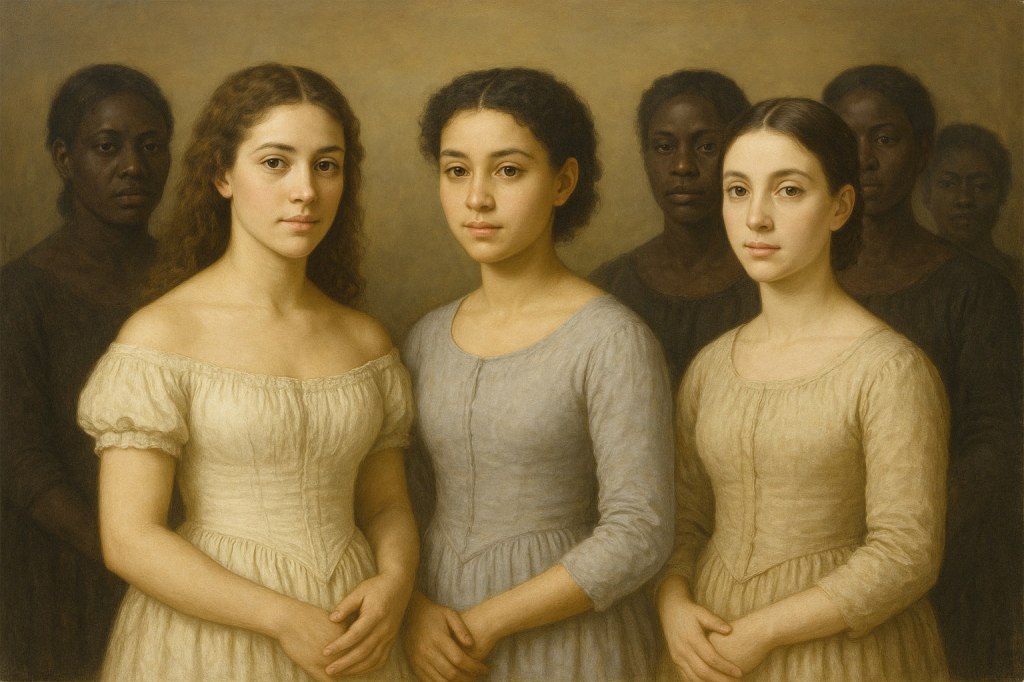
During the transatlantic slave trade and the centuries of chattel slavery that followed in the Americas, a tragic and complex racial hierarchy emerged. At its center was the “Mulatto”—a person of mixed African and European ancestry. The term itself, derived from the Spanish and Portuguese mulato, meaning “young mule,” was intended to signify something unnatural—a mix between species. This offensive origin reveals the dehumanizing way in which enslaved people were viewed, even those who bore the blood of their enslavers.

Mulattoes often came into existence through non-consensual sexual relationships between white male slave owners and enslaved African women. These unions were rarely romantic or voluntary; they were products of exploitation, coercion, and the unchecked power of white patriarchy. The children of these unions occupied an ambiguous social status. They were visibly lighter and sometimes given privileges over darker-skinned Africans, yet they were still enslaved and denied full humanity.

Economically, lighter-skinned slaves were often valued more highly in the slave markets. Auction records from New Orleans, Charleston, and the Caribbean show that Mulattoes, Quadroons, and Octoroons—terms denoting fractions of African ancestry—were sold for higher prices due to their perceived proximity to whiteness. In some cases, a beautiful light-skinned woman could fetch thousands of dollars—sometimes twice the price of a strong field laborer (Berry, 2007).

The hierarchy extended as follows: a Mulatto was half African, half European; a Quadroon was one-quarter African; and an Octoroon was one-eighth African. Each degree of whiteness supposedly brought refinement, beauty, and docility, qualities European buyers associated with superiority. This false racial science was a cornerstone of both slavery and early American eugenics.

Quadroon and Octoroon women, especially in New Orleans and parts of Louisiana, were sometimes groomed for what was known as the “plaçage” system. Under this arrangement, wealthy white men entered into unofficial unions with mixed-race women who were often educated, well-dressed, and trained in European manners. These relationships were not legal marriages but resembled concubinage. In exchange for companionship, these women received homes, money, and privileges denied to field slaves (Clark, 2013).

Plantation wives often felt deep resentment and humiliation over their husbands’ relationships with these women. The presence of mixed-race children—who sometimes lived in close proximity to the white household—served as constant reminders of betrayal. Historical letters and diaries reveal the rage, jealousy, and psychological torment many white women endured as they silently tolerated this hypocrisy (White, 1999).

Mulattoes, Quadroons, and Octoroons often worked inside the master’s home as cooks, maids, and nurses rather than in the fields. Their lighter complexion was falsely associated with higher intelligence and beauty. They became symbols of white men’s domination over both Black bodies and the institution of the family. This system reinforced colorism—a social order that persists even today.

Despite their elevated positions, these individuals lived under the same oppressive laws as all enslaved Africans. The “one-drop rule” in America classified anyone with African ancestry as Black, ensuring that even the lightest Octoroon remained enslaved if born to an enslaved mother. This legal principle ensured that slavery perpetuated itself across generations, regardless of physical appearance.

Mulattoes also faced rejection from both sides of society. They were often too “Black” to be accepted by whites, and too “white” to be fully trusted by darker-skinned slaves. This liminal identity created a painful dual consciousness—one that mirrored W.E.B. Du Bois’s later description of the “two-ness” of being both Black and American.

The valuation of mixed-race people as commodities is evident in slave ledgers and advertisements. For example, in the 1850s, a young Octoroon woman could sell for up to $3,000—a staggering sum when a skilled field hand might sell for $1,000 (Johnson, 1999). The intersection of race, beauty, and sex created a disturbing marketplace of human trafficking.

In urban centers like New Orleans, Charleston, and Havana, mixed-race women became central to elite social scenes. Some even gained temporary freedoms or wealth, though their status was always precarious. Freedom papers could be revoked, and any sign of rebellion risked severe punishment.

The plantation economy used these women as both workers and instruments of control. Their presence created divisions among enslaved people—divisions based on skin tone that mirrored European racial ideologies. This psychological warfare weakened unity among the enslaved, reinforcing white supremacy.

Christianity was also manipulated to justify this system. Slaveholders preached obedience while violating every moral tenet of the Bible. Yet enslaved people, including Mulattoes, found in Scripture the promise of deliverance. The story of Moses, the Exodus, and Deuteronomy 28 became powerful symbols of hope and identity.

After emancipation, colorism continued to shape Black communities. Some mixed-race families gained social advantages through education, passing, or wealth. Others were caught between worlds—accepted by neither the white elite nor the broader Black population.

The legacy of the Mulatto is thus deeply ambivalent. It reveals both the violence of racial oppression and the resilience of identity. The beauty, intelligence, and strength of mixed-race descendants are testimonies not to European “refinement” but to African endurance and divine grace.

The language of “Quadroon” and “Octoroon” has since been rejected as racist pseudoscience. Yet the scars of this history remain visible in modern discussions of beauty standards, social hierarchy, and representation in media.

For plantation wives, the mixed-race presence was a symbol of both moral failure and racial anxiety. For white men, it represented unchecked power. For the enslaved, it was a daily reminder of a world built on sexual exploitation and systemic cruelty.

Ultimately, the story of the Mulatto is not about privilege but pain—a reflection of how slavery corrupted family, faith, and love. It reveals the perverse intersection of race and desire that shaped America’s social fabric.

Today, scholars revisit these histories not merely to recount suffering, but to reclaim truth. The bloodlines of the enslaved, the Mulatto, the Quadroon, and the Octoroon tell a story of survival—one written not by choice, but by resilience and faith in freedom’s promise.

References

Berry, D. R. (2007). The Price for Their Pound of Flesh: The Value of the Enslaved from Womb to Grave, in the Building of a Nation. Beacon Press.

Clark, E. (2013). The Strange History of the American Quadroon: Free Women of Color in the Revolutionary Atlantic World. University of North Carolina Press.

Johnson, W. (1999). Soul by Soul: Life Inside the Antebellum Slave Market. Harvard University Press.

White, D. G. (1999). Ar’n’t I a Woman?: Female Slaves in the Plantation South. W.W. Norton & Company.
Creoles of Louisiana: History, Identity, and Culture.

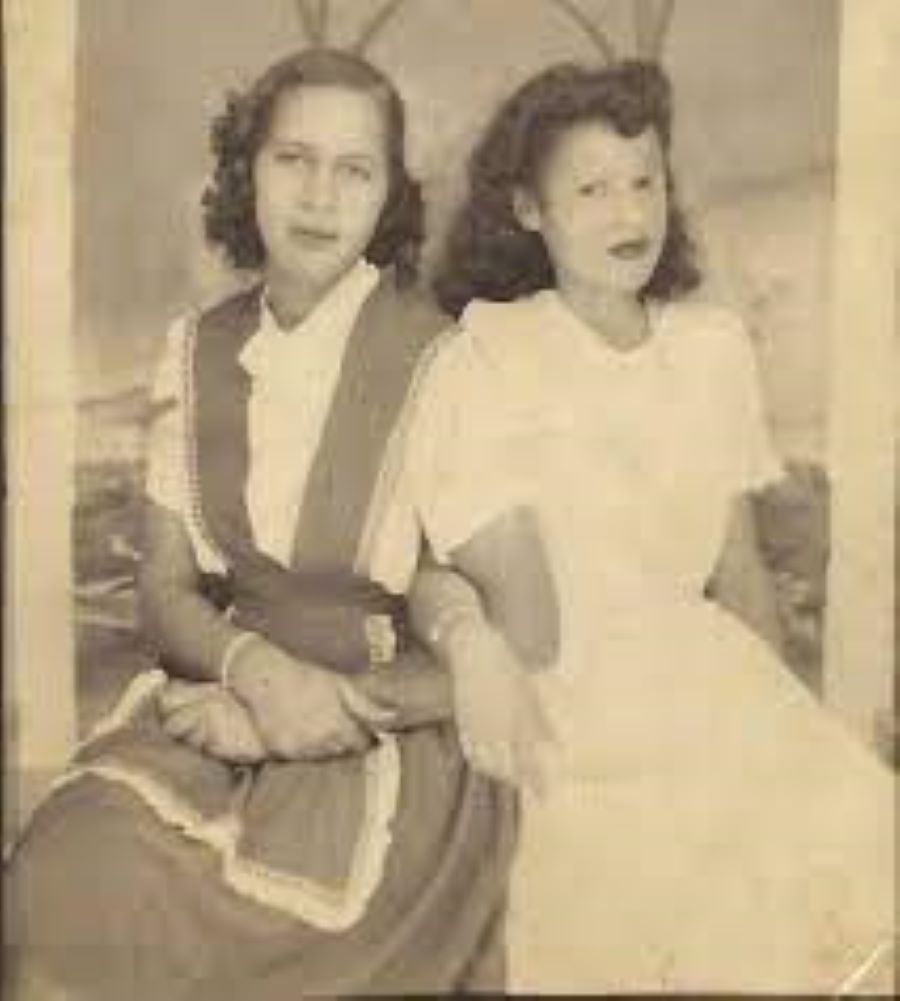
This photograph is the property of its respective owners. No infringement intended.

The Creoles of Louisiana are a unique cultural group whose roots go back to the French and Spanish colonial periods of the 18th century. The word “Creole” originally referred to people born in the colonies rather than in Europe, but over time, it came to describe a population of mixed European, African, and Native American ancestry that developed a distinct identity in Louisiana (Domínguez, 1994). The Creole community was shaped by colonial rule, the transatlantic slave trade, and the blending of cultures in the Gulf Coast region.

The racial and cultural mixture of Louisiana Creoles is complex. Many Creoles were of French and Spanish descent, intermarrying with Africans and Native Americans, which created a population with diverse skin tones, languages, and traditions (Hall, 1992). This blending produced a rich cultural heritage that included Catholicism, French or Creole French language, and a strong emphasis on music, cuisine, and family traditions. Creoles of color, in particular, played a unique role in Louisiana society, forming a class that was socially distinct from both enslaved Africans and white European settlers.

The origins of Louisiana Creoles can be traced to the early 1700s, when Louisiana was a French colony. By the mid-18th century, enslaved Africans from West Africa were brought into the colony, contributing not only labor but also culture, language, and traditions. Spanish rule, which lasted from 1763 to 1800, added another layer of influence. After the Louisiana Purchase in 1803, Creoles resisted assimilation into Anglo-American culture and worked to preserve their distinct identity (Hirsch & Logsdon, 1992).

An example of a well-known Creole is the famous writer and folklorist George Washington Cable, who documented Creole life in New Orleans, or more recently, singer Beyoncé Knowles, whose mother, Tina Knowles, is of Louisiana Creole heritage. Creoles can range widely in appearance, from very fair-skinned individuals with European features to darker-skinned individuals with African features, reflecting their mixed ancestry. This diversity in appearance often confounded simplistic racial categories in America’s history (Domínguez, 1994).

Historical Creoles of Louisiana

The historical Creoles of Louisiana were a culturally rich and socially complex community who emerged during the French and Spanish colonial periods in the 18th and 19th centuries. The word “Creole” originally meant “born in the colony” and applied to both Europeans and Africans born in Louisiana rather than in their ancestral homelands (Hall, 1992). Over time, it came to describe a distinctive class of people who were shaped by the blending of French, Spanish, African, and Native American influences.

One prominent group was the Creoles of color (gens de couleur libres), free people of mixed African and European ancestry who occupied a unique social position. They were neither enslaved nor fully accepted into white society, but they developed their own communities with strong traditions in music, art, education, and business (Hirsch & Logsdon, 1992). Many were educated in France, owned property, and even owned businesses or plantations.

Among the most famous historical Creoles was Marie Laveau (1801–1881), the legendary Voodoo priestess of New Orleans. She was a free woman of color who gained great influence in both the Black and white communities of the city. Her legacy blends religion, mysticism, and Creole culture, making her one of the most enduring symbols of Louisiana Creole identity (Long, 2006).

Another notable Creole figure was Homer Plessy (1862–1925), the plaintiff in the landmark Supreme Court case Plessy v. Ferguson (1896). Plessy, a Creole of color, challenged segregation laws by refusing to leave a whites-only train car, leading to the infamous “separate but equal” ruling. His activism reflects the long history of Creoles advocating for civil rights.

Creoles also made major contributions in the arts. Louis Moreau Gottschalk (1829–1869), a world-renowned pianist and composer, was of Creole descent. He brought Louisiana musical traditions to the international stage, blending European classical music with Afro-Caribbean and Creole rhythms (Saffle, 1995).

Visually, historical Creoles varied greatly in appearance. Some had light skin and European features, while others had darker complexions reflecting African ancestry. This diversity often blurred rigid racial categories in America’s history, making Creoles a community that challenged the black-and-white binary system of racial identity (Domínguez, 1994).

Socially, Creoles were also known for their traditions, such as Creole society balls, especially the “quadroon balls,” which introduced mixed-race women into elite circles. These gatherings reflected both the elegance and the racial complexities of Creole society in New Orleans.

By the late 19th and early 20th centuries, Creole identity began to shift due to segregation laws and Americanization after the Louisiana Purchase. Yet, historical Creoles left an enduring mark on Louisiana through music, food, religion, and resistance to cultural erasure. Their legacy is still celebrated today in New Orleans festivals, Creole cuisine, and the preservation of the Creole French language.

A key distinction exists between Creoles and Cajuns in Louisiana. Cajuns are descendants of French-speaking Acadians who were expelled from Canada (Nova Scotia) in the mid-1700s and settled in rural southern Louisiana. They developed their own culture, marked by Catholicism, French dialects, and rural traditions (Ancelet, 1991). In contrast, Creoles were often urban, tied to New Orleans and plantation life, and represented a broader racial and cultural mix. While both groups share French roots, their histories and identities are distinct.

Social life for Creoles in the 18th and 19th centuries included elaborate traditions such as Creole balls, which were formal gatherings that showcased music, fashion, and dance. These events often served as opportunities for members of the Creole community to preserve cultural identity and reinforce social ties. One particularly notable tradition was the “quadroon balls” in New Orleans, where women of mixed African and European ancestry were introduced into society, often leading to complex social arrangements within the racial caste system (Hirsch & Logsdon, 1992).

Creole culture is also deeply tied to music, food, and religion. Catholicism played a central role, influencing festivals such as Mardi Gras, which was celebrated with both sacred and secular dimensions. Creole cuisine, blending French, African, Spanish, and Caribbean flavors, produced iconic dishes like gumbo, jambalaya, and étouffée. Musically, Creoles contributed to jazz, zydeco, and other genres that are now central to Louisiana’s cultural identity.

Today, Louisiana Creoles continue to preserve their heritage while also navigating questions of racial and cultural identity in modern America. Their history of resilience, creativity, and adaptation has made them one of the most distinct cultural groups in the United States. Through language, food, music, and traditions, the Creoles of Louisiana embody the complexity of American history and the richness of cultural fusion.


References

  • Ancelet, B. J. (1991). Cajun Music and Zydeco. University Press of Mississippi.
  • Domínguez, V. R. (1994). White by Definition: Social Classification in Creole Louisiana. Rutgers University Press.
  • Hall, G. M. (1992). Africans in Colonial Louisiana: The Development of Afro-Creole Culture in the Eighteenth Century. LSU Press.
  • Hirsch, A. R., & Logsdon, J. (1992). Creole New Orleans: Race and Americanization. LSU Press.
  • Hirsch, A. R., & Logsdon, J. (1992). Creole New Orleans: Race and Americanization. LSU Press.
  • Long, C. (2006). A New Orleans Voudou Priestess: The Legend and Reality of Marie Laveau. University Press of Florida.
  • Saffle, M. (1995). Louis Moreau Gottschalk: Selected Studies in Nineteenth-Century American Music. Garland Publishing.

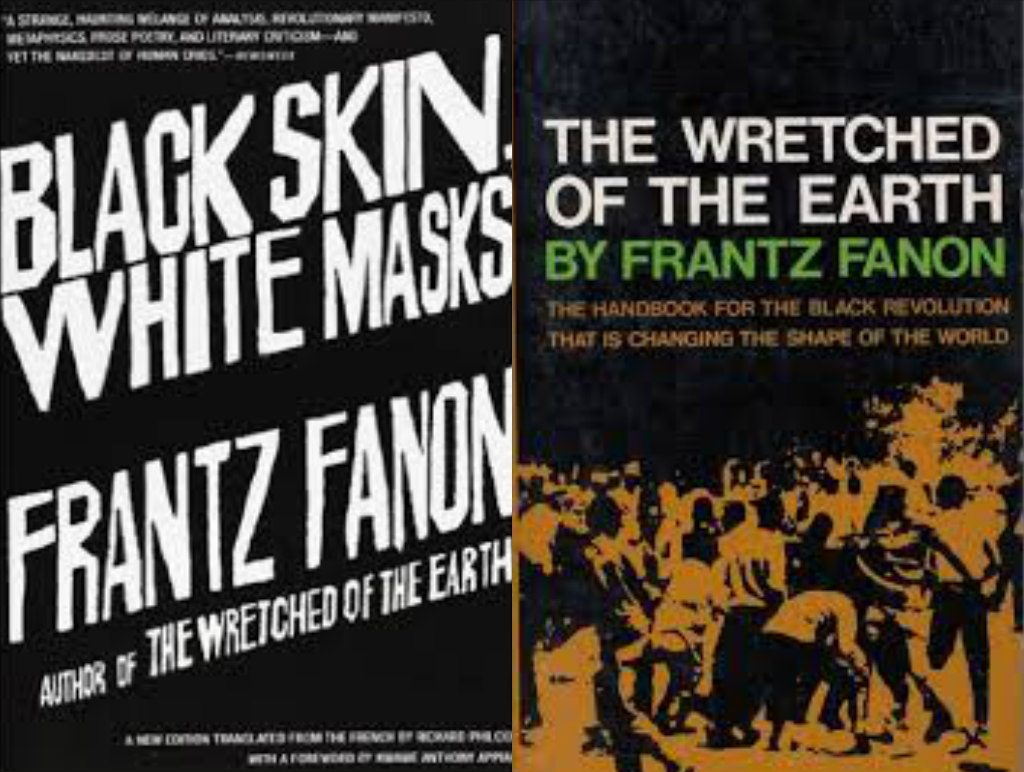
DOUBLE BOOK REVIEW: Black Skin, White Masks & The Wretched of the Earth by Frantz Fanon.

Frantz Fanon: The Revolutionary Mind of Black Liberation
Featuring Reviews of Black Skin, White Masks and The Wretched of the Earth


Who Was Frantz Fanon? Biography & Nationality

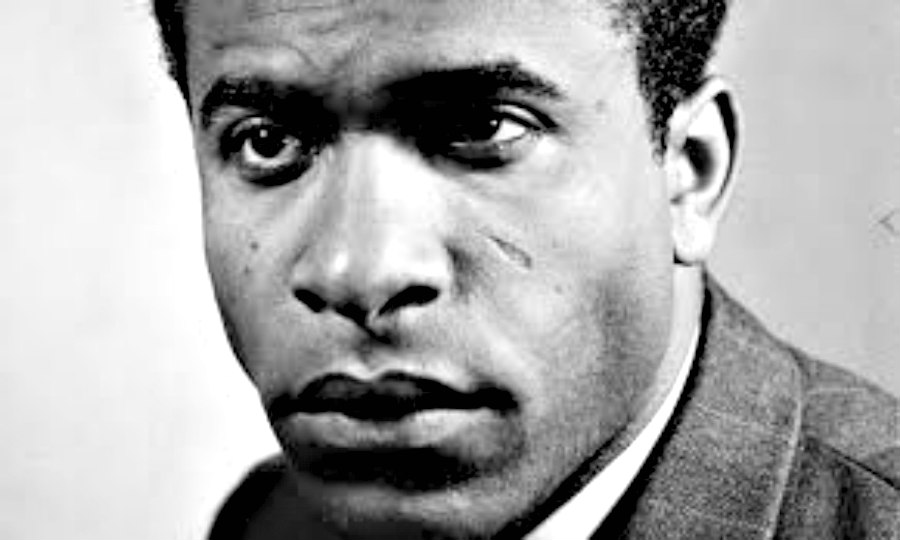
Frantz Omar Fanon was born on July 20, 1925, in Fort-de-France, Martinique, a French colony in the Caribbean. He was a Black psychiatrist, writer, revolutionary theorist, and anti-colonial activist. Fanon was of French nationality, since Martinique was a French territory, but he fiercely rejected colonial identity and became one of the most radical critics of French imperialism.

He grew up speaking French and was educated in the French system, but his experience as a Black man in a white-dominated society led him to reject colonial assimilation and instead advocate for African liberation.


His Marriage and Personal Life

Fanon married Josie (Marie-Josephe) Dublé, a white Frenchwoman, who was a nurse. This marriage sparked controversy, as Fanon wrote passionately against white colonialism and the psychological effects of internalized whiteness among Black people. Yet, he also saw personal relationships as complex and never viewed love solely through political binaries.

They had one son, Olivier Fanon.


His Language and Writing

Fanon wrote in French, and both of his major works have been translated into many languages, including English, Spanish, Arabic, and Portuguese, making his ideas accessible to freedom fighters and intellectuals around the world.


Life in Martinique and France: The Formation of a Revolutionary

Growing up in Martinique, Fanon was considered part of the Black middle class. However, he became deeply disillusioned with the racism of the French colonial structure, even in his homeland. He witnessed colorism, elitism, and a system that trained Black people to idolize whiteness.

He later moved to France to study psychiatry. As a young man, he fought in World War II for the Free French forces, believing in liberty and equality. But upon returning, he was met with the same anti-Black racism, even by those who had called him a fellow soldier. This double betrayal pushed him to rethink everything about colonialism, identity, and liberation.


Fanon wasn’t just a theorist; he joined the Algerian Revolution against French colonial rule, working as a psychiatrist and strategist for the National Liberation Front (FLN) in Algeria.

He treated Algerian fighters traumatized by war, and he exposed the use of torture by the French. His writings were not abstract—they were tools of war. The French authorities expelled him from Algeria for his radicalism, and he spent his remaining years helping liberation movements across Africa, including in Ghana and the Congo.


📘 Book Review: Black Skin, White Masks

⭐️⭐️⭐️⭐️⭐️

Published: 1952

Language: French (translated to English by Charles Lam Markmann)

Original Title: Peau Noire, Masques Blancs

This book is a psychological and philosophical dissection of what it means to be Black in a world built on white supremacy. Fanon dives deep into the Black psyche under colonialism, examining how racism shapes identity, self-worth, language, and love.

Key Messages and Themes:

  1. The Inferiority Complex of the Colonized:
    Black people, especially those educated in white systems, are taught to hate themselves and to wear “white masks” to be accepted.
  2. Language as a Tool of Oppression:
    Speaking French “well” became a way to be seen as civilized, but Fanon argued that this was a linguistic betrayal of self.
  3. Desire for Whiteness:
    Fanon was critical of Black men who sought white women to gain status, and Black women who rejected their own features for European beauty standards.
  4. Racism as a Mental Illness:
    He saw racism not just as social injustice but as a psychiatric condition—both for the oppressed and the oppressors.

“The Black man has no resistance against the white man’s culture. He becomes a mimic man.”
—Frantz Fanon, Black Skin, White Masks

🔥 Impact on the Black Psyche

The book shattered illusions. It revealed how colonialism invaded the mind, creating identity crises and self-hatred. It gave Black people language to understand their trauma and tools to decolonize the self.


📕 Book Review: The Wretched of the Earth

⭐️⭐️⭐️⭐️⭐️

Published: 1961 (just before his death from leukemia at age 36)

Translated by: Constance Farrington

Original Language: French

Introduction by: Jean-Paul Sartre

This is Fanon’s revolutionary manual, a blistering indictment of colonial violence and a blueprint for third-world liberation. Written from the frontlines of the Algerian War, it calls for armed struggle, psychological liberation, and national consciousness.

Key Messages and Chapters:

  1. “Violence is cleansing.”
    Fanon controversially argues that for the colonized to reclaim their dignity, violence is inevitable and purifying. It is how the oppressed reclaim agency.
  2. Mental Illness as a Colonial Weapon
    Fanon documents how colonial trauma causes paranoia, psychosis, and inferiority, especially among youth and fighters.
  3. Revolution Must Go Beyond Nationalism
    Independence is not enough. True liberation must dismantle capitalism, Western models of power, and Eurocentric values.
  4. Warning to Post-Colonial Elites
    Fanon criticized new African leaders who replaced white rulers but served the same Western interests, failing to uplift the masses.

“The colonized can see right away if decolonization is taking place or not. The minimum demand is for the colonized to govern their own country.”
—Frantz Fanon, The Wretched of the Earth


Why Was Fanon Revolutionary?

At a time when France still claimed moral superiority, Fanon exposed the brutality of its empire, tearing down illusions of liberal democracy. His insistence on psychological freedom, militant resistance, and cultural pride made him a hero to Black radicals and a threat to white colonial powers.


How Were Black People Seen in His Time?

In France and its colonies, Black people were exoticized, infantilized, and oppressed. They were taught that whiteness was superior, and “becoming French” was their highest goal. Fanon rejected this with rage and clarity.


Did His Light Skin Give Him Privilege?

Fanon was of mixed ancestry, and his relatively light skin may have given him closer access to French intellectual circles, but he rejected any identity built on proximity to whiteness. He used his position to amplify the pain and resistance of the oppressed, never to benefit personally.

His “je ne sais quoi” was not his skin—it was his brilliance, passion, and fearlessness.


What Was His Impact on Black People Worldwide?

Fanon inspired:

  • The Black Panther Party
  • South African anti-apartheid fighters
  • Caribbean and African revolutions
  • Black Lives Matter and global liberation movements
  • Scholars like bell hooks, Ngũgĩ wa Thiong’o, Angela Davis, and Malcolm X

His writings gave language to the rage and hope of colonized people and continue to empower those fighting white supremacy.


💡 Core Messages of Both Books

  • Colonialism is not just political—it is psychological.
  • Racism creates internalized hatred that must be unlearned.
  • Liberation requires both mental and physical decolonization.
  • Black identity must be rebuilt on truth, history, and cultural pride.
  • Freedom is not given—it must be seized.

Conclusion: The Fire That Still Burns

Frantz Fanon lived only 36 years, but he changed the world. He exposed the invisible chains in the Black mind and gave us tools to break them. His books are not just texts—they are weapons.

“Each generation must, out of relative obscurity, discover its mission, fulfill it, or betray it.”
—Frantz Fanon

Fanon fulfilled his mission. The question now is—will we fulfill ours?