Entrepreneurship is more than an economic endeavor; it is a philosophy of independence, self-determination, and empowerment. In societies where systemic oppression has historically limited access to resources and opportunities, entrepreneurship becomes a means of liberation. For the Black community in particular, entrepreneurship has served as both a survival strategy and a path to autonomy. This essay explores entrepreneurship as a tool for independence through historical, psychological, spiritual, and economic lenses.
Historical Foundations of Entrepreneurship and Independence
Historically, Black entrepreneurship has played a critical role in resisting oppression. During slavery, enslaved Africans often engaged in informal economies—trading goods, crafts, and services to supplement survival and assert a degree of autonomy (Walker, 2009). Following emancipation, many African Americans established independent businesses, ranging from barbershops and tailoring shops to banks and insurance companies. One of the most famous examples is Tulsa’s Greenwood District, commonly referred to as Black Wall Street. This thriving community symbolized financial independence and collective empowerment before its destruction during the 1921 Tulsa Race Massacre (Hill, 2021).
These examples demonstrate that entrepreneurship has historically been a means of circumventing racial barriers. In environments where mainstream systems excluded Black people from wealth accumulation, business ownership became a vital tool for independence and survival.
Psychological Empowerment through Entrepreneurship
Beyond economics, entrepreneurship fosters psychological independence. Psychologists argue that autonomy, competence, and purpose are core human needs (Deci & Ryan, 2000). By creating one’s own business, individuals are able to reclaim control over their work, exercise creativity, and establish a sense of agency. This is especially significant for those in marginalized communities, where systemic racism has historically stripped individuals of self-worth and opportunity (Franklin & Moss, 2018).
Entrepreneurship, therefore, functions as a psychological corrective—helping individuals move from a survival mindset to a growth mindset. The entrepreneur learns resilience, adaptability, and vision, qualities that counteract the generational trauma of oppression. Proverbs 22:29 (KJV) highlights the dignity of mastery and skill: “Seest thou a man diligent in his business? he shall stand before kings; he shall not stand before mean men.” Entrepreneurship thus not only provides sustenance but restores dignity and confidence.
Spiritual Dimensions of Independence
The biblical perspective frames entrepreneurship as stewardship and a means of honoring God. Scripture consistently emphasizes work, diligence, and the blessings of independence. Ecclesiastes 3:13 (KJV) declares, “Every man should eat and drink, and enjoy the good of all his labour, it is the gift of God.” Entrepreneurship allows individuals to embrace this divine gift by transforming labor into ownership rather than dependency.
Furthermore, Deuteronomy 28 outlines blessings tied to obedience, including economic prosperity and independence: “And the Lord shall make thee the head, and not the tail; and thou shalt be above only, and thou shalt not be beneath” (Deut. 28:13, KJV). Entrepreneurship, when practiced with integrity and stewardship, reflects these principles of leadership, headship, and generational blessing.
Entrepreneurship and Community Independence
While entrepreneurship fosters individual independence, its impact on communities is equally transformative. Businesses that circulate wealth within Black communities strengthen economic independence and resilience. According to research, every dollar spent in a Black-owned business circulates within the community far less than in other groups due to systemic economic exclusion (DuBois, 1903/2017; Anderson, 2017). Increasing entrepreneurship helps reverse this cycle, promoting collective empowerment and reducing dependence on external systems that often perpetuate inequality.
This community-centered entrepreneurship is in line with the biblical mandate to care for widows, orphans, and the marginalized (James 1:27, KJV). Independence through entrepreneurship is not about selfish gain but about establishing sustainable systems of empowerment that uplift entire families and neighborhoods.
Entrepreneurship in the Digital Age
In today’s economy, entrepreneurship increasingly involves technology, global networks, and digital innovation. Digital platforms lower barriers to entry, allowing entrepreneurs to bypass traditional gatekeepers such as banks and corporations. For example, Black entrepreneurs are increasingly leveraging e-commerce, social media, and digital services to reach global audiences and build scalable businesses (Gore & White, 2018).
This shift represents a new form of independence, where ownership extends beyond physical spaces into digital economies. By embracing digital entrepreneurship, individuals not only gain autonomy but also position themselves to create generational wealth.
Case Studies of Black Entrepreneurs and Independence
Oprah Winfrey: Media Ownership and Cultural Independence
Oprah Winfrey’s career demonstrates how entrepreneurship can transcend barriers of poverty, race, and gender to create unparalleled independence. Born into poverty in rural Mississippi and raised in difficult circumstances, Winfrey faced systemic racism, gender bias, and personal trauma. Yet, she leveraged her gifts in communication to build a media empire that extended far beyond her role as a talk show host. By founding Harpo Productions in 1986, Oprah took ownership of her intellectual property, gaining control over her brand, creative direction, and financial future.
Her entrepreneurial independence translated into cultural independence. Unlike many entertainers who remain dependent on networks and studios, Oprah’s ownership allowed her to tell stories that reflected authenticity, spirituality, and empowerment. This independence enabled her to create O, The Oprah Magazine, OWN: The Oprah Winfrey Network, and philanthropic initiatives such as the Oprah Winfrey Leadership Academy for Girls in South Africa. Her career exemplifies Proverbs 31:16 (KJV): “She considereth a field, and buyeth it: with the fruit of her hands she planteth a vineyard.” Oprah’s vineyard has been both financial and cultural, cultivating independence not just for herself but for others who draw strength from her example.
Daymond John: Fashion Entrepreneurship and Cultural Expression
Daymond John’s story reveals how entrepreneurship allows cultural independence and representation. In the early 1990s, growing up in Queens, New York, John observed the lack of representation in mainstream fashion for urban youth. Out of this gap, he founded FUBU (For Us, By Us), which became an international clothing brand symbolizing Black pride and cultural ownership. By sewing hats and shirts at home and selling them in his neighborhood, John turned a grassroots idea into a billion-dollar enterprise.
FUBU was not just a fashion label; it was a declaration of independence. It created a platform where Black identity and style were celebrated on global stages, shifting cultural power and financial gains toward the community that inspired it. Today, John extends this independence into mentorship, serving as an investor and advisor on Shark Tank. By investing in others, he demonstrates that entrepreneurship is cyclical—independence must be multiplied and passed forward. His career reflects Matthew 25:21 (KJV), where the faithful steward is rewarded: “Well done, thou good and faithful servant: thou hast been faithful over a few things, I will make thee ruler over many things.”
Madam C.J. Walker: Pioneering Economic Freedom for Black Women
Madam C.J. Walker, often cited as the first self-made Black woman millionaire in America, embodies how entrepreneurship historically functioned as liberation. Born Sarah Breedlove in 1867, the daughter of formerly enslaved parents, Walker faced the dual oppressions of racism and sexism. She began developing hair-care products for Black women after struggling with her own scalp disorders, eventually founding the Madam C.J. Walker Manufacturing Company.
Her company was revolutionary not just in its products but in its employment model. Walker trained thousands of Black women as sales agents, enabling them to achieve financial independence at a time when domestic service was the primary employment option available. Her wealth also translated into philanthropy, supporting educational institutions like Tuskegee Institute and movements for racial justice. Walker’s life illustrates Proverbs 14:1 (KJV): “Every wise woman buildeth her house: but the foolish plucketh it down with her hands.” By building her business, Walker built houses, schools, and legacies of independence for countless women.
Robert F. Smith: Redefining Independence through Finance and Philanthropy
Robert F. Smith, founder and CEO of Vista Equity Partners, represents entrepreneurship at the highest levels of finance and global investment. Born in Denver, Colorado, in 1962, Smith studied engineering before transitioning into finance, where he recognized the potential of investing in software companies. Today, Vista Equity Partners manages tens of billions in assets, making Smith one of the wealthiest African Americans in history.
Smith’s independence is both financial and philanthropic. In 2019, he made headlines by paying off the student loan debt of Morehouse College’s graduating class, a gesture that symbolized not only generosity but liberation from financial bondage. His actions underscore the idea that entrepreneurial independence is not meant to be hoarded but shared to empower others. In a biblical sense, his philanthropy echoes Galatians 5:13 (KJV): “For, brethren, ye have been called unto liberty; only use not liberty for an occasion to the flesh, but by love serve one another.” Smith’s example demonstrates that true independence is measured by how it uplifts the collective.
Challenges to Independence
Despite its potential, entrepreneurship is not free from challenges. Access to capital remains a significant barrier, with studies showing that Black entrepreneurs are denied loans at higher rates and face limited venture capital investment (Fairlie & Robb, 2008). Structural racism, market discrimination, and lack of mentorship further restrict opportunities. These challenges highlight that while entrepreneurship can be a tool for independence, systemic reforms are necessary to level the playing field.
Nevertheless, entrepreneurship teaches perseverance, and overcoming such obstacles strengthens resilience. As James 1:4 (KJV) reminds us, “But let patience have her perfect work, that ye may be perfect and entire, wanting nothing.”
Conclusion
Entrepreneurship serves as one of the most powerful tools for independence, both individually and collectively. Historically, it has allowed marginalized groups to carve out autonomy in hostile environments. Psychologically, it instills confidence, creativity, and resilience. Spiritually, it aligns with biblical principles of stewardship, diligence, and leadership. Economically, it circulates wealth and strengthens communities. While challenges remain, entrepreneurship continues to be a pathway toward liberation and a means of building generational prosperity. For those seeking independence, entrepreneurship is not merely a career choice but a strategy of survival, empowerment, and faith-driven advancement. The stories of Oprah Winfrey, Daymond John, Madam C.J. Walker, and Robert F. Smith illustrate how entrepreneurship functions as a tool for independence across eras and industries. Each demonstrates a unique dimension of independence—cultural, financial, communal, or philanthropic—while collectively affirming that entrepreneurship is a path of liberation. Historically, it enabled survival in hostile systems; today, it fuels innovation, generational wealth, and community empowerment. Rooted in creativity, resilience, and stewardship, entrepreneurship continues to reflect the biblical promise of being “the head and not the tail” (Deut. 28:13, KJV). As these entrepreneurs show, independence through entrepreneurship is not simply personal—it is a legacy, a testimony, and a strategy for collective freedom.
References
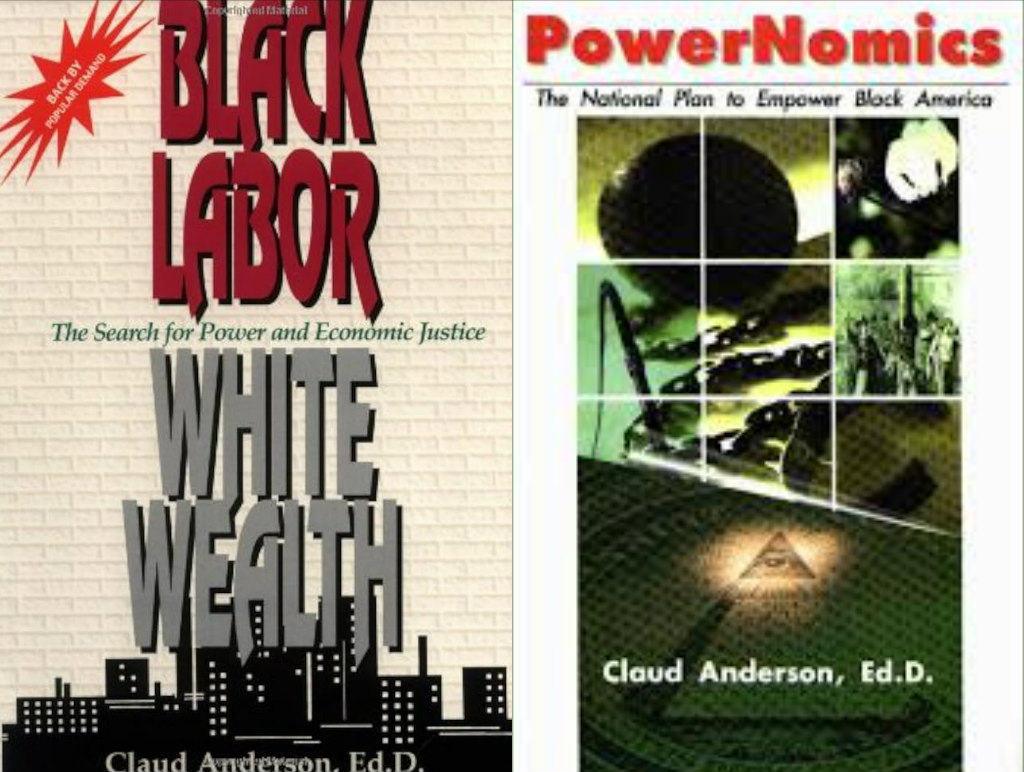
Anderson, C. (2017). PowerNomics: The national plan to empower Black America. PowerNomics Corporation of America.
Deci, E. L., & Ryan, R. M. (2000). The “what” and “why” of goal pursuits: Human needs and the self-determination of behavior. Psychological Inquiry, 11(4), 227–268.
DuBois, W. E. B. (2017). The souls of Black folk. Oxford University Press. (Original work published 1903)
Fairlie, R. W., & Robb, A. M. (2008). Race and entrepreneurial success: Black-, Asian-, and White-owned businesses in the United States. MIT Press.
Franklin, J. H., & Moss, A. A. (2018). From slavery to freedom: A history of African Americans (9th ed.). McGraw-Hill.
Hill, M. L. (2021). We still here: Pandemic, policing, protest, and possibility. Haymarket Books.
Walker, J. E. K. (2009). The history of Black business in America: Capitalism, race, entrepreneurship (Vol. 1 & 2). UNC Press.
Gore, D., & White, J. (2018). Black digital entrepreneurship and empowerment in the 21st century. Journal of Business and Economic Development, 3(2), 45–54.








 THE BROWN GIRL DILEMMA