
Tag Archives: fenty beauty

The “It Girl” Series: Rihanna

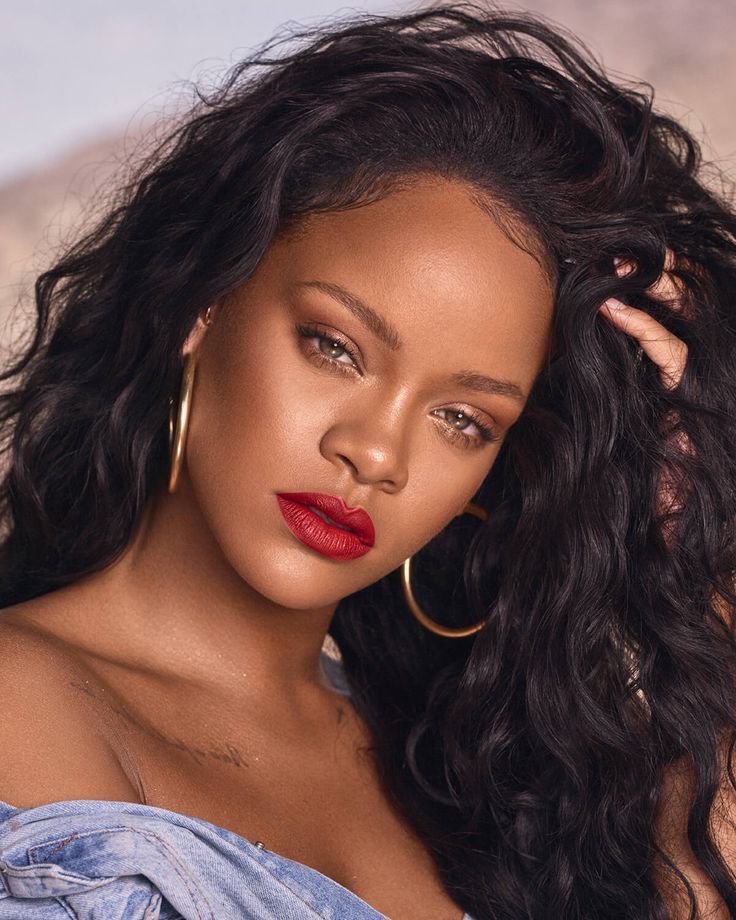
With mesmerizing hazel eyes, statuesque elegance, and an empire built on creativity and resilience, Rihanna embodies the modern “It Girl”—a global icon whose beauty, talent, and business acumen have reshaped music, fashion, and philanthropy.
This photograph is the property of its respective owner.

Robyn Rihanna Fenty—known globally as Rihanna—stands as one of the most influential cultural figures of the twenty-first century. Celebrated for her distinctive beauty, entrepreneurial brilliance, and musical innovation, Rihanna has evolved from a teenage pop singer into a billionaire mogul whose impact extends far beyond entertainment. Her captivating hazel eyes, radiant complexion, and statuesque presence have made her one of the most recognizable women in the world, while her ambition and vision have transformed her into a pioneer of modern celebrity entrepreneurship.

Rihanna was born on February 20, 1988, in Saint Michael, Barbados, and raised in the Barbadian capital of Bridgetown. Her father, Ronald Fenty, worked as a warehouse supervisor, while her mother, Monica Braithwaite, was an accountant. Growing up in a modest household, Rihanna’s childhood was shaped by both the vibrant culture of Barbados and the challenges of family struggles. Despite these obstacles, she demonstrated remarkable confidence and talent at a young age, particularly in music and performance.

Rihanna’s life changed dramatically in 2003 when she formed a girl group with two classmates and auditioned for American music producer Evan Rogers, who was visiting Barbados. Impressed by her distinctive voice and magnetic presence, Rogers invited Rihanna to record demo tapes in the United States. These recordings eventually reached rapper and entrepreneur Jay-Z, then president of Def Jam Recordings. After auditioning for Jay-Z, Rihanna was offered a recording contract that launched her career into the global spotlight.
This photograph is the property of its respective owner.

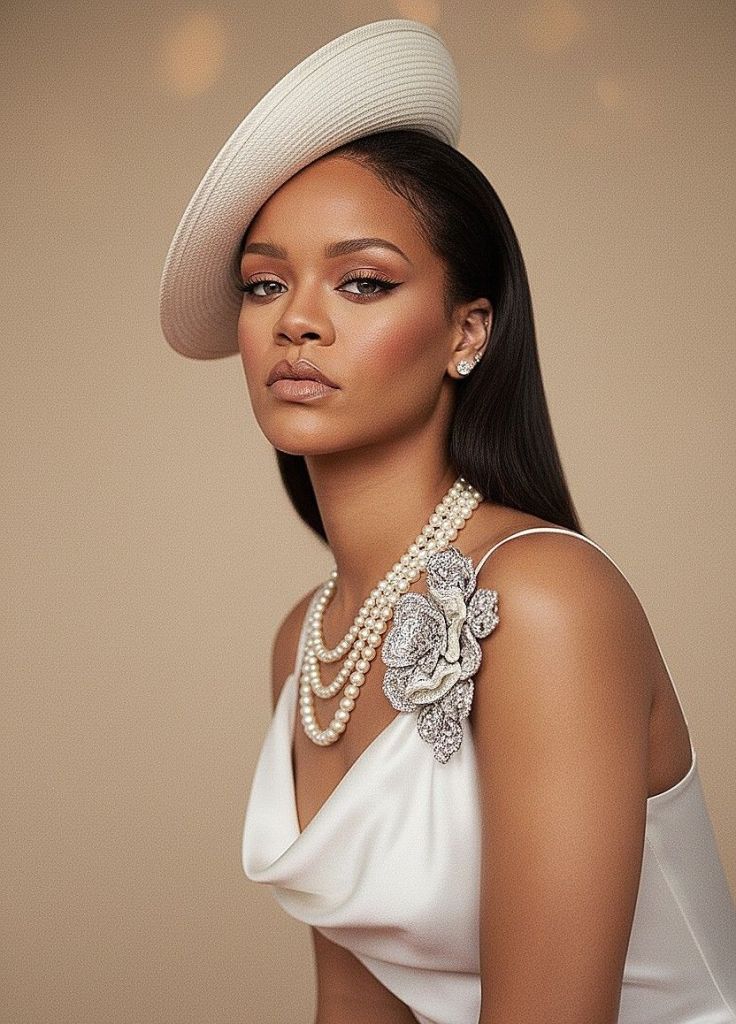
Her debut album, Music of the Sun (2005), introduced Rihanna’s Caribbean-infused pop sound and produced the hit single Pon de Replay. She quickly followed with A Girl Like Me (2006), which included chart-topping hits such as SOS and established her as a rising pop star. However, it was her third studio album, Good Girl Gone Bad (2007), that catapulted her into superstardom. The album featured the global smash hit Umbrella, which earned Rihanna her first Grammy Award and solidified her status as one of the defining artists of her generation.

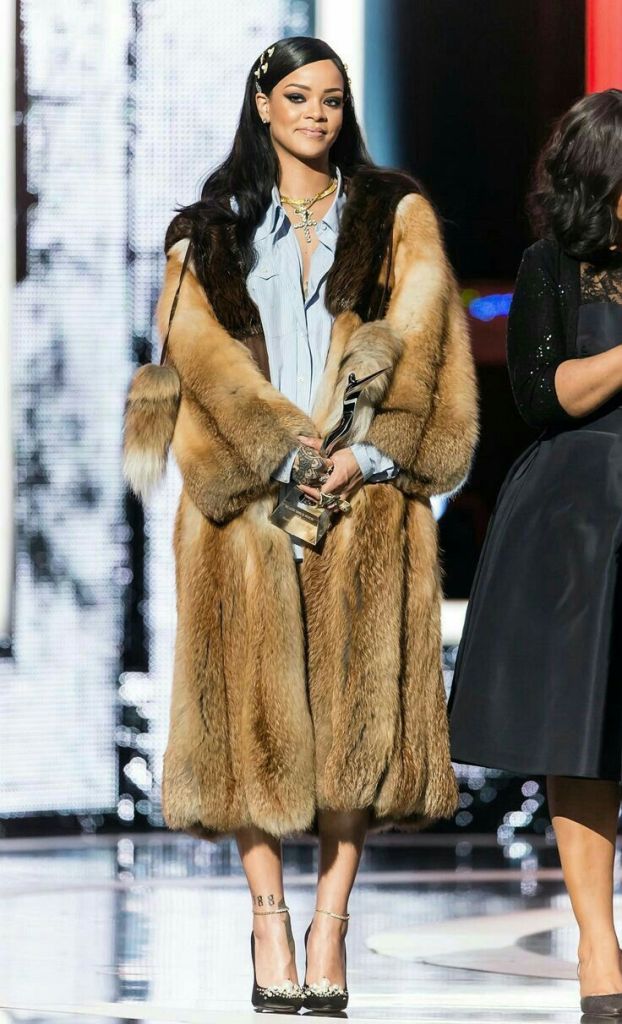
Throughout the late 2000s and 2010s, Rihanna continued to dominate the music industry with critically acclaimed albums such as Rated R, Loud, Talk That Talk, Unapologetic, and Anti. Her musical versatility allowed her to blend pop, R&B, reggae, dancehall, and electronic influences, creating a sound that resonated across cultures and continents. Over time, Rihanna accumulated more than a dozen number-one singles on the Billboard Hot 100 chart, making her one of the best-selling music artists in history.
This photograph is the property of its respective owner.

Beyond music, Rihanna revolutionized the beauty industry with the launch of Fenty Beauty in 2017 in partnership with the luxury conglomerate LVMH. The brand was celebrated for its groundbreaking inclusivity, debuting with 40 foundation shades designed to accommodate a wide range of skin tones. This bold move challenged long-standing industry norms and sparked what many analysts called the “Fenty Effect,” prompting other cosmetics companies to expand their shade ranges and embrace diversity in beauty marketing.

Rihanna’s entrepreneurial ambitions did not stop with cosmetics. She later launched Savage X Fenty, a lingerie company celebrated for its inclusive sizing and diverse representation of women. She also created Fenty Skin and other fashion ventures, solidifying her reputation as a business visionary. By 2021, financial analysts estimated Rihanna’s net worth at over $1 billion, making her the wealthiest female musician in the world and one of the few entertainers to achieve billionaire status through business innovation.

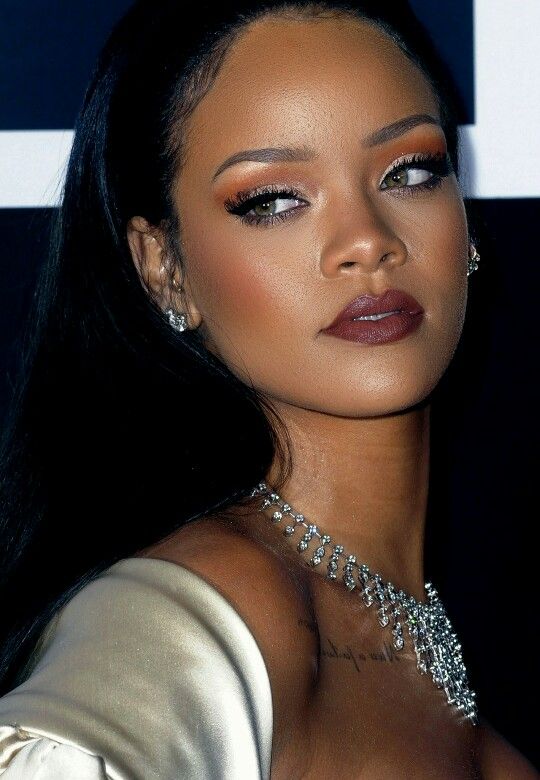
Her physical beauty has also played a role in her iconic status. Rihanna’s luminous hazel eyes, symmetrical facial structure, and statuesque figure have made her a muse for fashion designers and photographers alike. She has graced the covers of leading fashion magazines, including Vogue and Harper’s Bazaar, and has become known for her fearless experimentation with style. Whether walking red carpets or appearing in editorial spreads, Rihanna’s presence exudes confidence, individuality, and elegance.

Rihanna’s influence extends deeply into philanthropy. In 2012, she founded the Clara Lionel Foundation, named after her grandparents. The foundation focuses on global education, emergency response, and climate resilience initiatives, particularly in underserved communities. Through scholarships, disaster relief efforts, and global partnerships, Rihanna has demonstrated a commitment to using her wealth and platform to uplift others.
This photograph is the property of its respective owner.

Her humanitarian efforts have been widely recognized. In 2017, she was named Harvard University’s Humanitarian of the Year for her philanthropic contributions and global advocacy. Rihanna has also supported initiatives related to healthcare, disaster recovery, and educational access, particularly in Caribbean nations and developing regions.

In her personal life, Rihanna shares a long-term relationship with rapper and entrepreneur A$AP Rocky. The couple welcomed their first son in 2022 and their second son in 2023, embracing parenthood while maintaining their influential careers in music and fashion. Their partnership has been widely admired as a union of two creative visionaries shaping contemporary culture.

Rihanna’s list of accolades is extensive. Over the course of her career, she has won nine Grammy Awards, numerous American Music Awards, Billboard Music Awards, and MTV Video Music Awards. Her achievements span music, fashion, beauty, and philanthropy—making her one of the most decorated entertainers of the modern era.

Perhaps Rihanna’s greatest legacy lies in how she has reshaped the concept of the “It Girl.” Traditionally associated with fleeting fame or fashionable allure, Rihanna transformed the archetype into something far more powerful. She represents a new generation of celebrity—one that blends artistry, entrepreneurship, activism, and cultural leadership.

From the sunlit streets of Barbados to the boardrooms of global fashion houses, Rihanna’s journey is a testament to ambition, resilience, and self-definition. Her beauty may first capture the world’s attention, but it is her vision, generosity, and fearless independence that truly define her legacy.

In every sense, Rihanna is not merely an “It Girl”—she is a phenomenon whose influence will shape music, fashion, and philanthropy for generations to come.


References

Forbes. (2021). Rihanna is now officially a billionaire thanks to Fenty Beauty.

IFPI. (2022). Global music report: Recording industry revenues and artists.

Billboard. (2023). Rihanna’s chart history and Billboard Hot 100 achievements.

Clara Lionel Foundation. (2023). Mission and philanthropic initiatives.

Britannica, T. Editors of Encyclopaedia. (2024). Rihanna: Barbadian singer, actress, and entrepreneur.

LVMH. (2017). Fenty Beauty brand launch and partnership announcement.
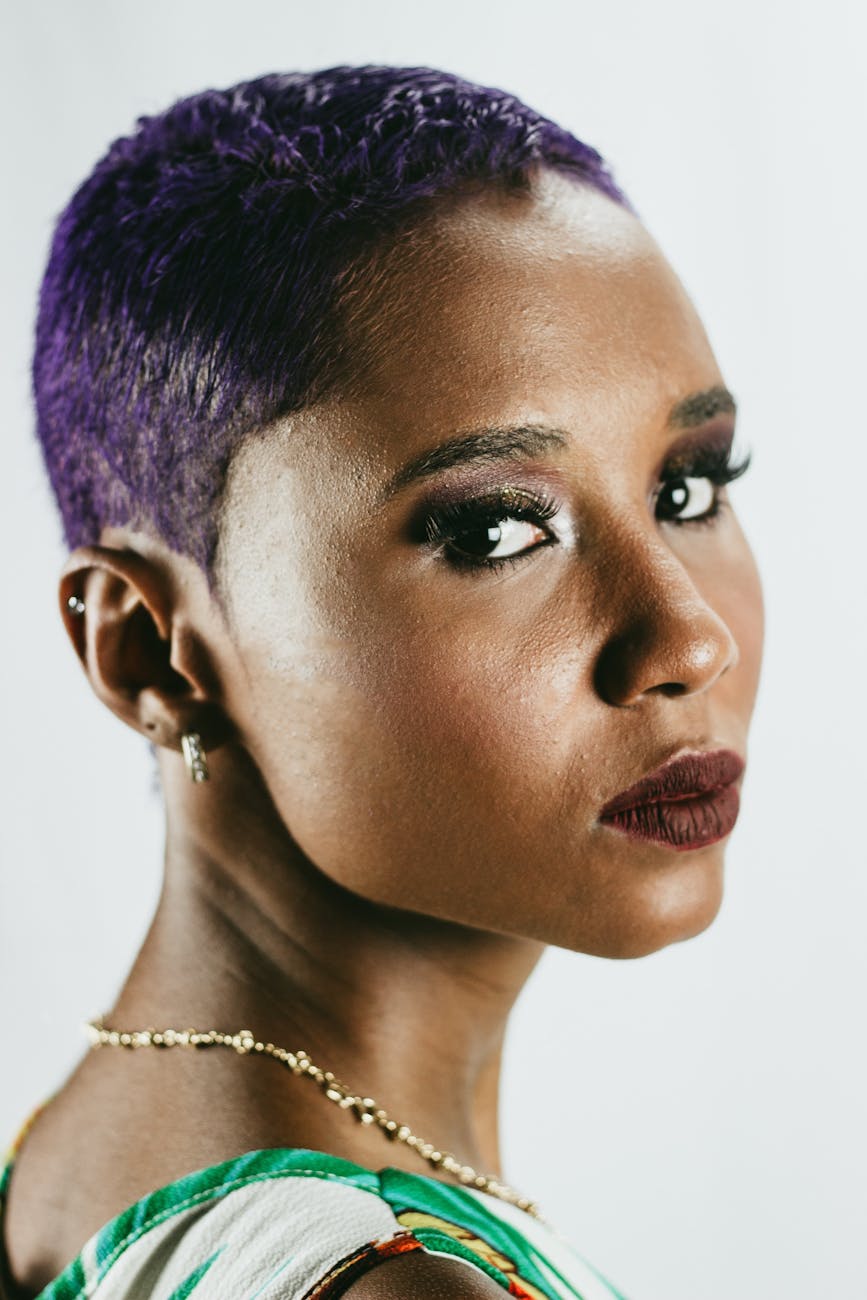
The Impact of Makeup Marketing on Black Women.

Photo by Matheus Ferrero on Pexels.com

The beauty industry, valued at billions of dollars worldwide, has long been a space where race, gender, and consumer culture intersect. For Black women, makeup marketing has been both a site of exclusion and empowerment. Historically marginalized in product design and advertising, Black women were often positioned outside mainstream definitions of beauty. Yet, over time, the demand for inclusivity, the rise of Black-owned brands, and the power of cultural influence have transformed makeup marketing. Still, the journey reveals complex dynamics of representation, identity, and consumer psychology.

Historical Exclusion from the Market

For much of the 20th century, mainstream makeup companies largely ignored the needs of Black women. Shades for darker skin tones were either unavailable or limited to a small range, forcing many women to mix products or turn to alternative methods to match their complexion (Craig, 2006). The absence of inclusive shades reinforced Eurocentric standards, sending the implicit message that lighter skin was normative and desirable. This exclusion not only alienated Black consumers but also perpetuated colorism by failing to validate the beauty of darker complexions.

The Psychological Effects of Exclusion

The lack of representation in makeup marketing contributed to negative self-image and internalized racism among Black women. According to Hall (2010), the erasure of darker skin tones in consumer products reinforced a hierarchy of beauty that privileged proximity to whiteness. Psychologically, this translated into feelings of invisibility, inadequacy, and pressure to conform to Eurocentric aesthetics. Biblical wisdom emphasizes the value of self-worth beyond external validation: “Favour is deceitful, and beauty is vain: but a woman that feareth the LORD, she shall be praised” (Proverbs 31:30, KJV). Yet, when entire industries failed to affirm Black women’s beauty, the weight of systemic messaging became a powerful force shaping identity.

Black-Owned Beauty Brands as Resistance

In response to exclusion, Black entrepreneurs created their own beauty solutions. Companies like Fashion Fair Cosmetics, founded in 1973 by Eunice Johnson, became pioneers in offering a wide range of shades for Black women. These brands not only met practical needs but also challenged dominant beauty narratives by affirming that Black beauty was valuable, marketable, and worthy of celebration (Byrd & Tharps, 2014). Makeup became more than a cosmetic product; it was an act of resistance, pride, and self-definition.

Modern Representation and Inclusivity

The 21st century ushered in significant changes. Rihanna’s Fenty Beauty revolutionized the industry in 2017 by launching with 40 foundation shades, later expanded to 50, proving that inclusivity could also be profitable. The brand’s success pressured major companies like L’Oréal, Maybelline, and CoverGirl to expand their shade ranges. Adut Akech, Duckie Thot, and other dark-skinned models became global campaign faces, signaling a shift toward celebrating deeper tones. However, critics note that inclusivity often functions as a marketing strategy rather than a genuine commitment to equity (Lewis & Neal, 2020).

Fashion Fair vs. Fenty Beauty

Fashion Fair (1973): Founded by Eunice Johnson of Ebony and Jet magazines, Fashion Fair was one of the first major cosmetic brands created specifically for Black women. It emerged during the height of the Civil Rights Movement and the Black Is Beautiful era. The brand’s marketing emphasized elegance, sophistication, and the celebration of dark-skinned women. Fashion Fair offered shades that had long been ignored by mainstream companies and became a staple in Black households, representing self-determination and pride in racial identity (Byrd & Tharps, 2014).

Fenty Beauty (2017): Launched by Rihanna, Fenty Beauty debuted with 40 foundation shades that instantly disrupted the industry. Unlike Fashion Fair, which primarily served Black women, Fenty positioned inclusivity as universal—catering to all races while centering deeper tones. Social media marketing, influencer campaigns, and global reach allowed Fenty to dominate culturally and commercially, setting new industry standards.

Comparison:

  • Cultural Context: Fashion Fair was a product of the Black Power era; Fenty emerged in the digital, globalized age.
  • Marketing Approach: Fashion Fair marketed exclusively to Black women; Fenty used Black women as the starting point but expanded inclusivity to all.
  • Legacy: Fashion Fair paved the way by affirming Black beauty in a segregated market; Fenty institutionalized inclusivity in the mainstream.

Together, these brands illustrate how makeup marketing for Black women evolved from racial exclusivity to global inclusivity—yet both underscore the importance of Black women shaping their own beauty narratives.

Social Media and Consumer Activism

Social media platforms have amplified Black women’s voices in shaping beauty marketing. Hashtags like #BlackGirlMagic and #MelaninPoppin highlight the richness of darker skin tones, while consumer backlash against non-inclusive campaigns has pressured companies to diversify. This shift demonstrates the power of collective consumer activism in holding brands accountable and ensuring that marketing reflects the realities of diverse beauty.

The Duality of Empowerment and Exploitation

While inclusive makeup marketing empowers Black women by affirming their presence, it also risks commodifying diversity. Representation can sometimes be surface-level, serving corporate profits more than genuine cultural respect. This duality highlights a tension: makeup can be a tool of self-expression and empowerment, but it can also perpetuate consumer dependency and reinforce beauty hierarchies if not critically engaged.

A Biblical Perspective on Beauty and Value

From a biblical perspective, makeup marketing raises questions about identity and self-worth. Scripture emphasizes that beauty originates not from external adornment but from inner character: “Whose adorning let it not be that outward adorning of plaiting the hair, and of wearing of gold, or of putting on of apparel; But let it be the hidden man of the heart” (1 Peter 3:3-4, KJV). This perspective does not condemn cosmetics outright but reminds Black women that marketing should not define their worth. True empowerment lies in knowing one’s divine value while navigating consumer culture critically.

Conclusion

The impact of makeup marketing on Black women is profound, weaving together histories of exclusion, resistance, empowerment, and commodification. While the rise of inclusive brands has reshaped the industry, Black women remain vigilant in ensuring that representation is authentic rather than exploitative. At its best, makeup marketing affirms identity and expands the definition of beauty; at its worst, it risks reducing diversity to a trend. Ultimately, the challenge for Black women lies in balancing the joy of self-expression with the wisdom of recognizing that true beauty and worth transcend products, aligning with God’s eternal affirmation of their value.


References

Byrd, A., & Tharps, L. L. (2014). Hair story: Untangling the roots of Black hair in America. St. Martin’s Press.
Craig, M. L. (2006). Race, beauty, and the tangled knot of a guilty pleasure. Feminist Theory, 7(2), 159–177.
Hall, R. E. (2010). An historical analysis of skin color discrimination in America: Victimism among victim group populations. Springer.
Lewis, R., & Neal, A. (2020). Colorism and the fashion industry: Shifting standards of representation. Journal of Black Studies, 51(5), 452–469.
The Holy Bible, King James Version. (1611/2017). Thomas Nelson.