
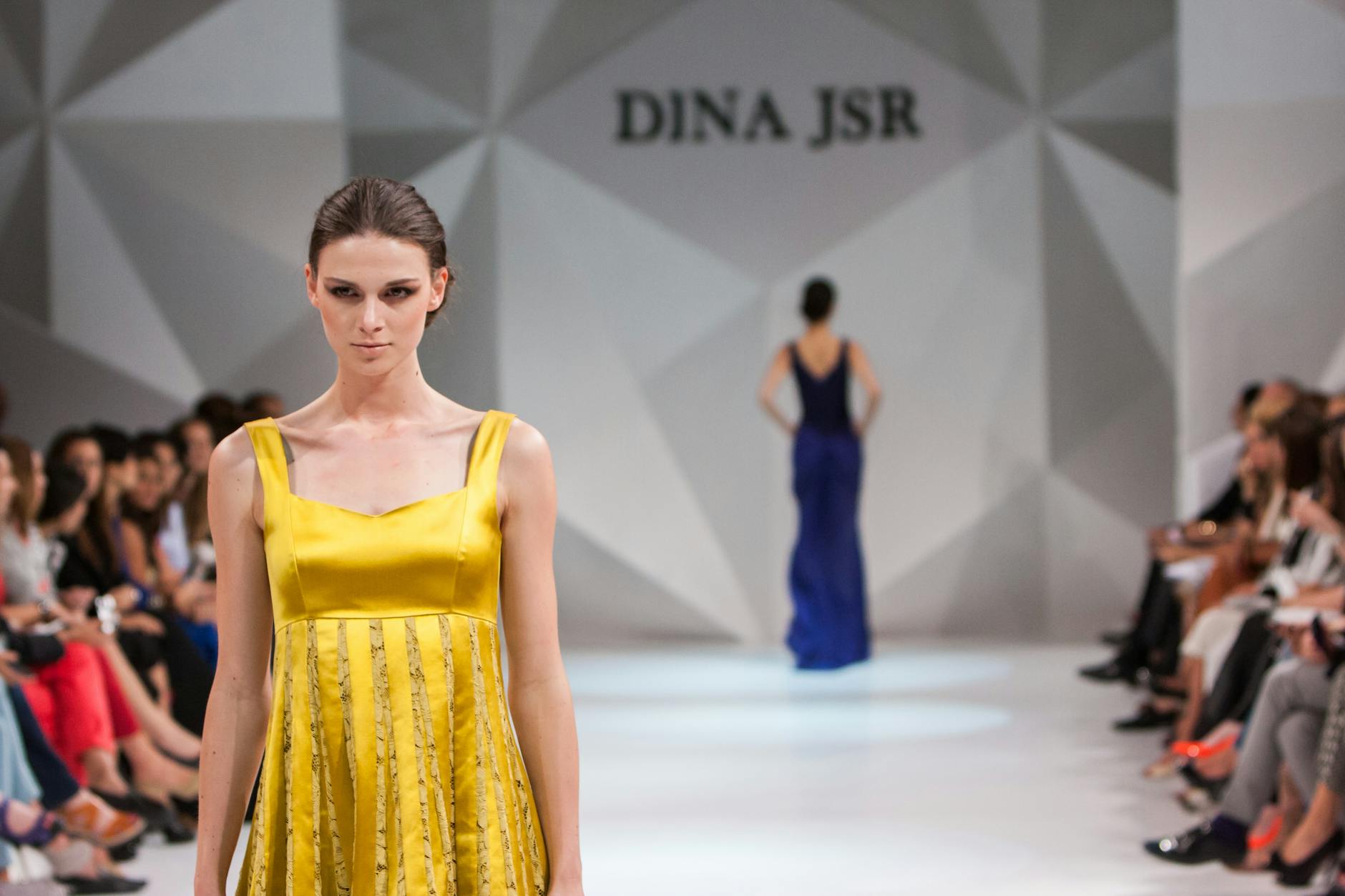
Fashion, as both a cultural expression and a global industry, reflects society’s evolving ideologies, class structures, and creative impulses. From ancient royal garments to modern streetwear, fashion is more than fabric—it is a language of status, art, rebellion, and self-identity. This paper traces the history of fashion with a focus on iconic elements like the little black dress, high heels, and haute couture. It also contrasts the styles and societal contexts of fashion from the 1960s to the 2000s and examines the work of pivotal designers such as Coco Chanel, Oscar de la Renta, Elie Saab, and Valentino.
The Origins and Evolution of Fashion
The history of fashion can be traced back to ancient civilizations such as Egypt, Mesopotamia, and Rome, where clothing signified rank, wealth, and occupation (Tortora & Eubank, 2010). In medieval Europe, sumptuary laws dictated what individuals could wear based on class, and during the Renaissance, elaborate fabrics and tailoring became status symbols.
The Industrial Revolution of the 18th and 19th centuries marked a turning point with mass production, making fashionable clothing accessible beyond the aristocracy. By the 20th century, fashion became a symbol of both modernity and rebellion, with icons like Coco Chanel and Christian Dior reshaping feminine silhouettes.
The Little Black Dress and Coco Chanel’s Revolution
Coco Chanel revolutionized women’s fashion by liberating them from corsets and promoting simplicity and elegance. In 1926, Vogue published a drawing of Chanel’s “little black dress,” describing it as “a uniform for all women of taste” (Madsen, 1990). The dress was radical in its minimalism, contrasting the ornate gowns of the era. Chanel’s vision made black, once reserved for mourning, a symbol of chic elegance.
Chanel’s biography reveals a woman who defied societal expectations. Born Gabrielle Bonheur Chanel in 1883 in Saumur, France, she began as a milliner and eventually built a fashion empire. Her designs, such as the tweed suit and the use of jersey fabric, reflected her commitment to functional luxury (Madsen, 1990).
The History and Symbolism of High Heels

High heels, often perceived as modern, date back to Persian cavalry in the 10th century who used heels for stability in stirrups. By the 17th century, European nobility wore heels to signify power; King Louis XIV famously wore red heels as a symbol of his status (Semmelhack, 2015).
In modern fashion, high heels are often associated with femininity, sexuality, and class, though their health implications and gender expectations have sparked ongoing debate. Despite controversy, they remain a staple in haute couture and mainstream fashion alike.
Haute Couture: History and Modern Significance
Haute couture, meaning “high sewing” in French, began in 19th-century Paris with Charles Frederick Worth, widely regarded as the first fashion designer to present seasonal collections. Haute couture is defined by custom-fitted clothing, hand-stitched construction, and luxurious materials, regulated by the Chambre Syndicale de la Haute Couture (Steele, 2005).
Designers such as Christian Dior, Valentino, Givenchy, and Elie Saab have carried the legacy of haute couture into the modern era. Saab, in particular, is renowned for ethereal, intricately embroidered gowns worn by royalty and Hollywood elite.
Fashion Trends by Decade (1960s–2000s)
Each decade brought distinct styles influenced by politics, culture, and technological shifts:
- 1960s – Mod fashion, mini skirts, bold prints (Mary Quant, André Courrèges)
- 1970s – Bohemian, disco, bell bottoms (Halston, Diane von Fürstenberg)
- 1980s – Power suits, shoulder pads, neon (Gianni Versace, Jean-Paul Gaultier)
- 1990s – Minimalism, grunge, slip dresses (Calvin Klein, Tom Ford)
- 2000s – Logomania, denim on denim, hip-hop fashion (Baby Phat, Ed Hardy)
Fashion Today vs. the Last 100 Years
- 1920s–1950s: silhouettes moved from restrictive corsets to simplified lines, culminating in Dior’s romantic post-war shapes.
- 1960s–1980s: youth culture, social revolutions, and corporate power defined bold and expressive style.
- 1990s–2000s: minimalism, casualwear ascendancy, brand logos, celebrity-endorsed fashion.
- 2020s: sustainability, nostalgia revivals, tech integration, diversity and inclusivity becoming central themes.
The fashion of each era responded to social dynamics—from feminism and counterculture to globalism and digital innovation.
Modern Trends and the Role of the Media
Today, fashion is heavily influenced by social media, fast fashion giants, and digital influencers. While this democratizes style, it also accelerates trend cycles and raises concerns about sustainability and mental health due to comparison culture. “Old money” elites often shop luxury heritage brands like Loro Piana, Hermès, and Brunello Cucinelli, in contrast to the masses who gravitate toward trend-driven retail brands.
Top Fashion Designers of the Past (Historical Legends)
These designers shaped fashion history and left legacies that continue to influence the industry:
1. Coco Chanel (1883–1971) – France
- Created the little black dress, Chanel No. 5, and Chanel suits.
- Liberated women from corsets; introduced casual elegance.
- House of Chanel remains one of the most powerful fashion houses.
2. Christian Dior (1905–1957) – France
- Introduced the “New Look” in 1947: cinched waists, full skirts, femininity post-WWII.
- Re-established Paris as the capital of fashion.
3. Yves Saint Laurent (1936–2008) – France
- First to put women in tuxedos (Le Smoking).
- Merged haute couture with street style.
- Iconic for color blocking and global influence.
4. Gianni Versace (1946–1997) – Italy
- Known for bold colors, gold hardware, Greek motifs, and celebrity culture.
- Popularized supermodels and high-glamour fashion.
5. Valentino Garavani (b. 1932) – Italy
- Master of red carpet romance, known for “Valentino red”.
- Specialized in haute couture elegance.
6. Karl Lagerfeld (1933–2019) – Germany
- Artistic director of Chanel, Fendi, and his own brand.
- Known for revamping fashion houses while keeping heritage.
7. Oscar de la Renta (1932–2014) – Dominican Republic/USA
- Known for luxurious gowns and dressing First Ladies.
- Feminine, refined eveningwear for the elite.
8. Alexander McQueen (1969–2010) – UK
- Avant-garde, dark romanticism, technical genius.
- Known for theatrical runway shows and sculptural garments.
👑 Leading Fashion Designers Right Now (2020s–Present)
These designers are dominating the current fashion scene across haute couture, ready-to-wear, and innovation:
1. Maria Grazia Chiuri – Dior (France)
- First female creative director at Dior.
- Focuses on feminism, craftsmanship, and modern romanticism.
2. Pierpaolo Piccioli – Valentino (Italy)
- Reinvented Valentino with ethereal couture and bold color use.
- Praised for inclusive casting and poetic design.
3. Demna (Gvasalia) – Balenciaga (France/Georgia)
- Known for normcore, dystopian aesthetics, and political commentary.
- Challenges the fashion establishment while keeping Balenciaga edgy.
4. Daniel Roseberry – Schiaparelli (USA/France)
- Revived the surrealist legacy of Elsa Schiaparelli.
- Worn by Beyoncé, Cardi B, and Lady Gaga (notably at Biden’s inauguration).
5. Elie Saab – Lebanon
- Master of red carpet glamour.
- Known for embellished gowns with Middle Eastern opulence.
6. Jonathan Anderson – Loewe & JW Anderson (UK/Spain)
- Artistic and gender-fluid designs.
- Cultivates luxury art-fashion hybrids.
7. Pharrell Williams – Louis Vuitton Men’s (USA)
- Music mogul turned designer.
- Infuses hip-hop culture into high fashion since 2023.
8. Telfar Clemens – Telfar (USA)
- Famous for the “Bushwick Birkin” bag.
- Champion of unisex, inclusive, accessible luxury.
9. Simone Rocha – UK/Ireland
- Known for feminine silhouettes with a gothic twist.
- Modern fairy-tale fashion.
10. Iris van Herpen – Netherlands
- Leads fashion-tech innovation.
- Uses 3D printing, robotics, and biomimicry in haute couture.
✨ Honorable Mentions (Current and Rising)
- Matthew M. Williams – Givenchy
- Glenn Martens – Diesel & Y/Project
- Nicolas Ghesquière – Louis Vuitton (Women’s)
- Sarah Burton (recently stepped down) – Alexander McQueen
- Bach Mai – Emerging couture talent
- Marine Serre – Sustainability and futurism
- Grace Wales Bonner – British-Jamaican designer blending tailoring with Black culture
The First Hat Milliner and the Role of Accessories
The profession of millinery—hat making—rose to prominence in the 17th century. Rose Bertin, milliner to Marie Antoinette, was one of the first to gain international fame. Hats were once a symbol of decorum and status; today, they serve both function and fashion, especially in haute couture.
The Ups and Downs of Fashion
Fashion offers creative expression, economic power, and cultural identity. However, its pitfalls include consumerism, exploitation of labor, and unrealistic beauty standards. Moreover, the pressure to remain “on trend” can foster insecurity and materialism.
Conclusion
Fashion is both an art form and a mirror of society. From Chanel’s timeless black dress to the media-driven culture of fast fashion, clothing tells the story of human desire, innovation, and identity. The industry continues to evolve, balancing heritage and futurism, luxury and accessibility. As the world confronts environmental and social challenges, the future of fashion will depend on conscious creativity and a renewed understanding of its historical significance. Fashion is a reflection of society’s evolving values—from rigid hierarchy and exclusion to democratized expression, sustainability, and individual identity. Figures like Worth and Chanel reshaped not only what people wear, but how they see themselves. In every era, fashion has offered both opportunity for self-expression and critique of excess, reminding us that clothes carry cultural stories as much as they carry the body.
References
- Madsen, A. (1990). Chanel: A Woman of Her Own. Henry Holt.
- Semmelhack, E. (2015). Shoes: The Meaning of Style. Bata Shoe Museum.
- Steele, V. (2005). Fashion, Italian Style. Yale University Press.
- Tortora, P. G., & Eubank, K. (2010). Survey of Historic Costume. Fairchild Books.
- Arnold, R. (2009). Fashion: A Very Short Introduction. Oxford University Press.
- Steele, V. (2003). The Berg Companion to Fashion. Bloomsbury.
- Chanel’s life and influence; LBD history thisbluebird.comiconikmagazine.comWikipediaapnews.com
- History of haute couture and Charles Frederick Worth The National News+1
- High heel origins and social symbolism teenvogue.com+2Wikipedia+2
- Modern trends in fashion revival and sustainability theguardian.combyrdie.commarieclaire.com
 THE BROWN GIRL DILEMMA