
BEAUTY
I. The Mirror
A face so fair, it steals the light,
Symmetry carved from stars at night.
Lips like dawn, eyes deep as flame,
The world bends softly to her name.
II. The Gaze
He saw her once, and time stood still,
Desire danced against his will.
Yet beauty fades, as roses do—
Does love survive what once was new?
III. The Soul
But kindness lingers where gloss may go,
A light the skin can never show.
For beauty starts and ends in grace—
A gentle heart, a sacred face.
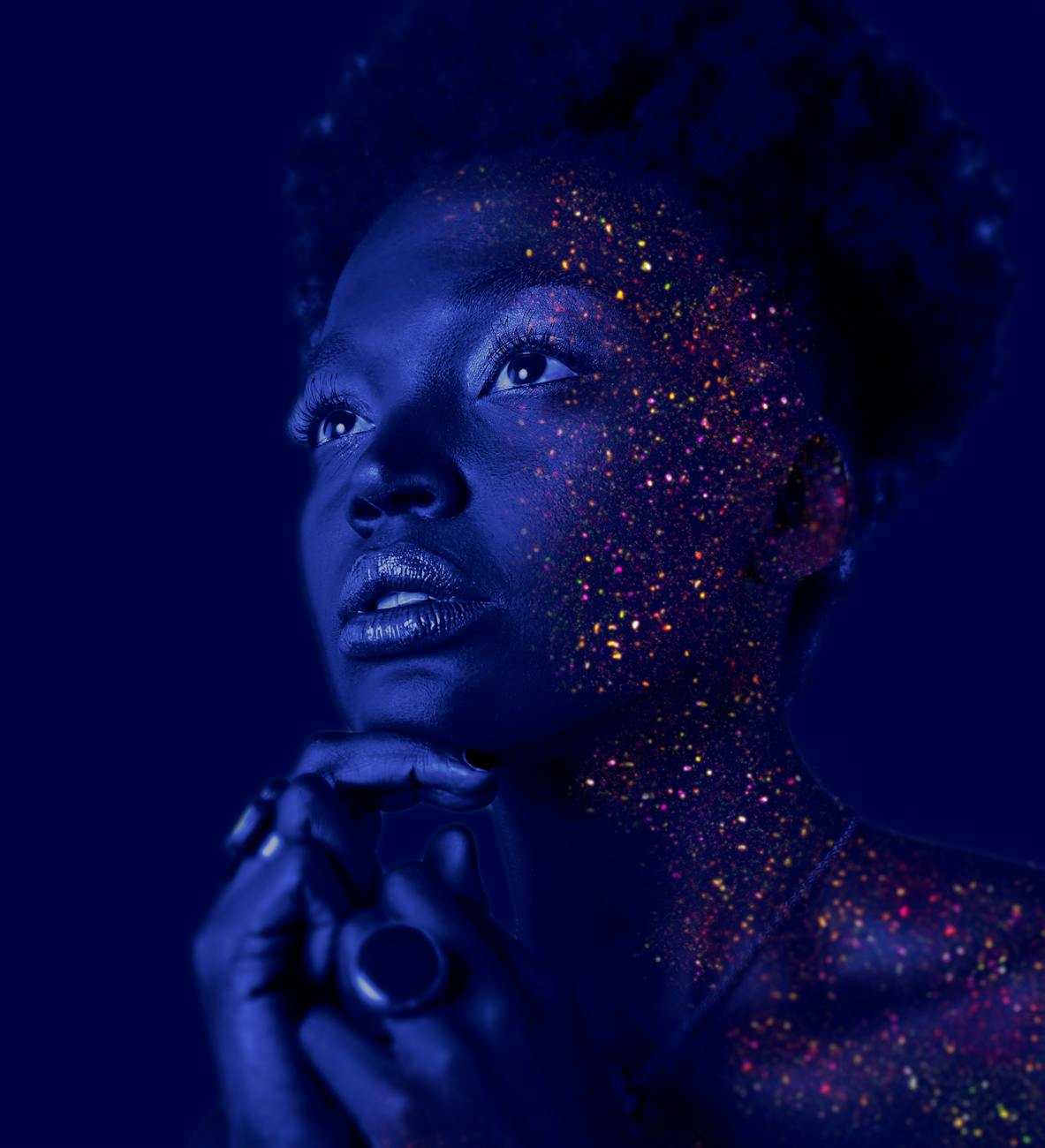
Introduction: The Allure of Physical Beauty
Physical beauty is one of the most deeply studied, universally recognized, and yet culturally complicated phenomena in human psychology. It influences attraction, social standing, professional opportunities, and even mental health. But what is beauty, really? Is it merely symmetry and smooth skin, or is it tied to power, status, race, and bias? Why are men said to be visual, and does beauty actually predict happiness—or only illusion?
1. The Science of Physical Beauty
From a biological standpoint, physical beauty often correlates with indicators of health, youth, and fertility:
- Facial symmetry, clear skin, bright eyes, and proportional features are universally considered attractive (Rhodes, 2006).
- These features signal genetic fitness and reproductive viability—an evolutionary principle supported by Darwinian sexual selection theory.
- Studies using fMRI scans show our brains experience a “pleasure response” when viewing symmetrical or “beautiful” faces (Aharon et al., 2001).
Are We Born to Recognize Beauty?
Yes. Research shows that infants as young as 3 months prefer to look at faces considered attractive by adults (Langlois et al., 1991). Babies gazed longer at more symmetrical and aesthetically pleasing faces, suggesting a biological wiring for visual appeal.
2. Are Men More Visual? Beauty, Sex, and Gendered Perception
According to evolutionary psychology:
- Men are typically more visually stimulated and often rate physical appearance higher in mate selection than women do.
- Women may prioritize status, stability, and personality traits like empathy, confidence, and humor.
“Men fall in love with their eyes, women fall in love with their ears.” — Anonymous proverb
This doesn’t mean women don’t care about looks—but evolutionarily, men’s visual preferences tie to fertility cues, whereas women look for protection and provision.
3. Beauty’s Real-Life Consequences: Jobs, Marriage, and Privilege
Beauty can serve as a social currency:
- Attractive people often earn more, are perceived as more competent, and are more likely to be hired (Hamermesh & Biddle, 1994).
- Studies suggest that beautiful women are more likely to marry wealthier or higher-status men, a phenomenon dubbed the “beauty-status exchange.”
However, this isn’t without drawbacks—objectification, jealousy, and narcissistic abuse often follow.
4. Beauty and Narcissism: The Myth of Narcissus
In Greek mythology, Narcissus was a man so enamored with his own beauty that he stared at his reflection until he died.
“Narcissism is the love of self taken to an extreme—dangerous when unchecked, tragic when unreciprocated.” — Dr. Craig Malkin, Harvard psychologist
Today, social media reinforces narcissistic tendencies, especially in those praised primarily for their looks.
5. Quotes on Physical Beauty
- Cindy Crawford: “Even I don’t wake up looking like Cindy Crawford.” (A commentary on how beauty is often curated and artificial.)
- Halle Berry: “Beauty is not just physical—it’s the light in your heart and how you make people feel.”
- Aishwarya Rai Bachchan: “Elegance and grace go hand in hand with beauty. It’s not just about looking good but feeling good and being kind.”
These quotes highlight the multidimensional nature of beauty.
6. What Makes a Person Physically Attractive?
Common physical attributes rated as attractive include:
- For women: clear skin, symmetrical face, full lips, hourglass shape, long hair
- For men: broad shoulders, strong jawline, symmetrical face, height, confidence
But what truly attracts people goes beyond looks:
- Kindness, confidence, sense of humor, intelligence, and emotional safety rank high in long-term relationships.
7. Racial Bias in Beauty Standards
Beauty standards have been heavily influenced by Eurocentric ideals, privileging:
- Fair skin
- Straight hair
- Narrow noses
- Slim figures
This has led to colorism and fetishization of certain races.
The Psychology Today Controversy
In a 2011 Psychology Today article, evolutionary psychologist Satoshi Kanazawa claimed that Black women were “objectively less attractive”—an assertion met with global outrage. The article was removed, and Kanazawa was widely condemned. Notably, many Black men were criticized for not defending Black women, exposing internalized racism and fractured solidarity in Black communities.
8. Hierarchy of Beauty and the Blonde Ideal
In Euro-American cultures, blonde-haired, blue-eyed women often sit at the top of the beauty hierarchy—thanks to media, Hollywood, and colonial ideals.
- Women like Grace Kelly, Marilyn Monroe, and Scarlett Johansson are often listed among the “most beautiful” globally.
- Rankings of “The Most Beautiful Women” almost always feature celebrities, showcasing how media visibility—rather than true global consensus—drives beauty recognition.
9. Does Race Influence Attractiveness?
Research suggests racial biases do exist in dating preferences and beauty perceptions (Fisman et al., 2008). However:
- Attraction is heavily influenced by environment, exposure, and culture, not just biology.
- In Africa, Asia, and Latin America, local beauty standards vary greatly, favoring darker skin, fuller bodies, or other features not typically idealized in the West.
10. What Is Most Attractive Beyond Beauty?
When beauty fades (and it inevitably will), people are drawn to:
- Character
- Integrity
- Spiritual connection
- Emotional intelligence
- Purpose and passion
As Maya Angelou once said:
“People will forget what you said, people will forget what you did, but people will never forget how you made them feel.”
Conclusion
Beauty is both biological and constructed—wired into our brains but also shaped by media, race, and societal norms. While it can open doors, true connection, emotional safety, and character keep them open. In a world obsessed with appearance, the most radical act might be to see—and love—beyond the surface.
References
- Aharon, I., Etcoff, N., Ariely, D., Chabris, C., O’Connor, E., & Breiter, H. (2001). Beautiful faces have variable reward value: fMRI and behavioral evidence. Neuron, 32(3), 537-551.
- Fisman, R., Iyengar, S., Kamenica, E., & Simonson, I. (2008). Racial Preferences in Dating. Review of Economic Studies, 75(1), 117–132.
- Hamermesh, D., & Biddle, J. (1994). Beauty and the Labor Market. American Economic Review, 84(5), 1174–1194.
- Langlois, J. H., Roggman, L. A., Casey, R. J., et al. (1991). Infant preferences for attractive faces: Rudiments of a stereotype? Developmental Psychology, 27(4), 640–649.
- Rhodes, G. (2006). The Evolutionary Psychology of Facial Beauty. Annual Review of Psychology, 57, 199–226.
- Malkin, C. (2015). Rethinking Narcissism: The Bad—and Surprising Good—About Feeling Special. HarperWave.
 THE BROWN GIRL DILEMMA