
Tag Archives: Etiquette

The Proper Etiquette Series: How to Sit Properly?

Sitting properly is one of the most foundational elements of etiquette, communicating poise, confidence, and self-respect without a single word spoken. Whether in professional, social, or formal settings, the way a woman sits creates an immediate impression. Proper posture reflects inner discipline, elegance, and an understanding of decorum—qualities that never go out of style.

A proper seated posture begins with how one approaches the chair. Instead of collapsing into the seat or sitting hastily, a woman should move with intention and grace. She steps toward the chair, turns slightly, and lowers herself gently with control, keeping her back straight as she sits. This simple act sets the tone for polished behavior.

Once seated, posture becomes key. The back should remain straight with the shoulders relaxed, avoiding both stiffness and slouching. Good posture not only looks refined but also conveys attentiveness and dignity. It supports healthy breathing and reduces strain on the spine, merging etiquette with physical wellness.

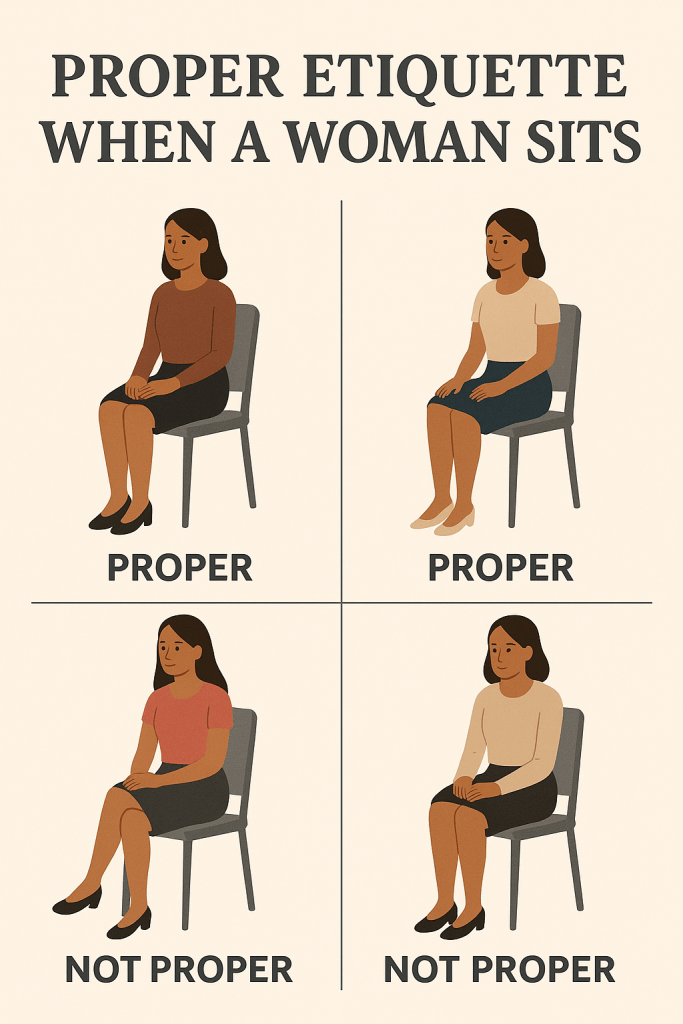
Leg placement is one of the most important elements of proper sitting etiquette. There are two traditionally accepted positions: the “duchess slant” and the “ankle cross.” In the duchess slant, the knees are kept together while the legs are angled slightly to one side—soft, feminine, and modest. In the ankle cross, the knees remain together while the ankles are crossed discreetly. Both positions maintain modesty and balance.

What should be avoided are positions that convey carelessness or lack of awareness. This includes sitting with knees apart, legs wide, or slouching deeply into the seat. While modern culture sometimes normalizes casual posture, traditional etiquette emphasizes composure, especially in settings requiring professionalism or formality. How one sits reflects how one values the environment and the company present.

Hand placement also contributes to overall poise. Hands should rest lightly on the lap—never fidgeting, tapping, or gripping the seat. Gentle stillness communicates confidence and calm. Avoiding restless movements prevents unnecessary distractions and keeps the posture looking serene and controlled.

In skirt or dress attire, proper sitting technique becomes even more essential. A woman should subtly smooth her clothing beneath her as she sits to avoid wrinkling and to maintain coverage. Crossing the legs at the knee is traditionally discouraged for formal settings because it may appear overly casual or create wardrobe challenges, whereas the duchess slant remains universally polished.

Awareness of one’s environment is also part of correct etiquette. Whether at dinner, in a meeting, or at a ceremony, a woman should sit in a way that does not intrude upon the space of others. Leaning excessively, swinging legs, or resting arms over chair backs can appear disrespectful. Elegance remains controlled, balanced, and contained.

Body language completes the picture. A proper seated posture includes calm facial expression, gentle eye engagement, and a composed presence. Sitting correctly enhances communication by allowing others to see the individual as attentive, confident, and respectful. Etiquette is as much about what one conveys silently as what one speaks aloud.

Ultimately, sitting properly is an art that merges modesty, poise, and mindfulness. It elevates everyday behavior into purposeful elegance. When a woman understands how to sit with grace, she communicates not only refinement but also self-dignity—two traits that remain timeless across cultures and eras. Proper etiquette is not about restriction; it is about presenting oneself with honor and intentionality.


References

Bixler, S. (2018). The etiquette edge: Modern manners for business success. HarperCollins.

Forni, P. M. (2002). Choosing civility: The twenty-five rules of considerate conduct. St. Martin’s Press.

Hixson, K. (2016). The art of poise: Graceful living in a modern world. Etiquette Press.

Post, P. (2021). Emily Post’s etiquette (19th ed.). HarperCollins.

Udall, A. (2015). The essentials of modern etiquette: Social graces for contemporary women. Silver Leaf Press.

The Art of Etiquette: 30 Essential Rules for Cultured Conduct

Photo by Monstera Production on Pexels.com

Introduction

Etiquette, derived from the French word étiquette meaning “ticket” or “label,” refers to the established code of polite behavior in society. Far beyond superficial manners, proper etiquette demonstrates respect, cultural competence, emotional intelligence, and self-discipline. Whether at the dinner table, in a business meeting, or walking down the street, etiquette shapes how we are perceived and how we influence others. This guide presents 30 timeless rules of etiquette across various social domains to help individuals embody grace, professionalism, and cultural decorum.


I. Dining Etiquette (Table Manners)

  1. Wait to Begin Until Everyone Is Served
    It is proper to wait until everyone has their plate before eating unless the host insists otherwise.
  2. Use Utensils from the Outside In
    Formal place settings are organized by course; start with the outermost utensils and work your way in.
  3. Napkin on the Lap
    As soon as you sit down, place the napkin on your lap. It stays there throughout the meal.
  4. Don’t Reach Across the Table
    Ask politely for items to be passed rather than stretching over others’ plates.
  5. Chew with Your Mouth Closed
    No talking with food in your mouth, no loud chewing, and no slurping.
  6. Excusing Yourself
    Politely say, “Excuse me,” if you must leave the table—never announce personal matters like bathroom use.
  7. Pass Salt and Pepper Together
    Even if someone only asks for one, both are passed together in formal etiquette.
  8. Cut One Bite at a Time
    Only cut the piece of meat you are about to eat, rather than slicing the whole portion at once.
  9. Hold Wine Glass by the Stem
    Holding the bowl of a wine glass warms the wine and leaves smudges.
  10. Tipping Servers
    In the U.S., it’s customary to tip 15–20% of the bill to express gratitude for service.

II. Social and Party Etiquette

  1. RSVP Promptly
    Respond to invitations quickly, even if you cannot attend. It shows consideration for planning.
  2. Bring a Host Gift
    When invited to someone’s home, arrive with a small gift—wine, dessert, or flowers are appropriate.
  3. Introduce Others by Name and Relevance
    Always facilitate social introductions with full names and a helpful context (e.g., “This is my friend Sarah, a graphic designer”).
  4. Don’t Monopolize Conversations
    Practice active listening. Be aware of body language cues that suggest disinterest or exclusion.
  5. Avoid Politics and Controversy in New Company
    Unless you know the group well, steer clear of divisive subjects at social gatherings.

III. Business and Professional Etiquette

  1. Arrive on Time
    Punctuality is a sign of respect. In professional settings, arrive 5–10 minutes early.
  2. Dress Appropriately for the Industry
    Know the dress code—business formal, business casual, or creative casual—and present yourself accordingly.
  3. Use Professional Greetings
    Always say “Good morning,” “Good afternoon,” and greet colleagues by name. A firm handshake and eye contact matter.
  4. Respect Hierarchy and Titles
    Refer to superiors with appropriate titles unless invited to use first names.
  5. Follow Up with a Thank You
    After meetings or interviews, send a follow-up message expressing gratitude and summarizing key takeaways.

IV. Personal Appearance and Dressing Etiquette

  1. Dress Modestly and Neatly
    Cleanliness and grooming are fundamental. Wrinkled, stained, or revealing clothes undermine credibility.
  2. Fragrance Should Be Subtle
    Perfume or cologne should never overpower the room or cause discomfort to others.
  3. Shoes Should Match the Occasion
    Choose footwear that is appropriate—polished dress shoes for business, clean casual shoes for informal outings.
  4. Accessories Should Enhance, Not Distract
    Avoid excessive jewelry or loud fashion statements unless the environment encourages it.
  5. Always Maintain Good Posture
    How you carry yourself speaks before you say a word—stand tall, shoulders back.

V. Gestures, Body Language, and Public Behavior

  1. Don’t Point with Fingers
    It’s considered rude in many cultures. Use an open hand or nod to direct attention.
  2. Keep Personal Space
    Respect the “social distance” bubble—typically 2–3 feet in casual and business settings.
  3. Silence Cell Phones in Public Settings
    Phones should be on silent or vibrate during meetings, meals, or cultural events.
  4. Walking in Public
    Walk on the right side of the path or hallway, keep pace with traffic, and yield to elders or those with mobility needs.
  5. Standing in Public
    Avoid blocking doorways, escalators, or walkways. If you stop to speak, move aside.

Conclusion

Proper etiquette reflects the inner character and social awareness of an individual. It is not a rigid set of outdated rules but a fluid language of respect, poise, and cultural sensitivity. Whether navigating a formal dinner, corporate boardroom, or sidewalk, practicing etiquette affirms dignity—both your own and that of others. As Emily Post once said, “Manners are a sensitive awareness of the feelings of others. If you have that awareness, you have good manners.”


References

  • American Psychological Association. (2023). Etiquette and professionalism. https://www.apa.org
  • Post, P., & Post Senning, D. (2011). Emily Post’s Etiquette, 18th Edition. William Morrow.
  • Forni, P. M. (2002). Choosing Civility: The Twenty-five Rules of Considerate Conduct. St. Martin’s Press.
  • Vanderbilt, T. (2008). Traffic: Why We Drive the Way We Do (and What It Says About Us). Knopf.
  • The Protocol School of Washington. (2024). Etiquette training resources. https://www.psow.edu