
The Bronze Blonde Bombshell Who Redefined Black Glamour
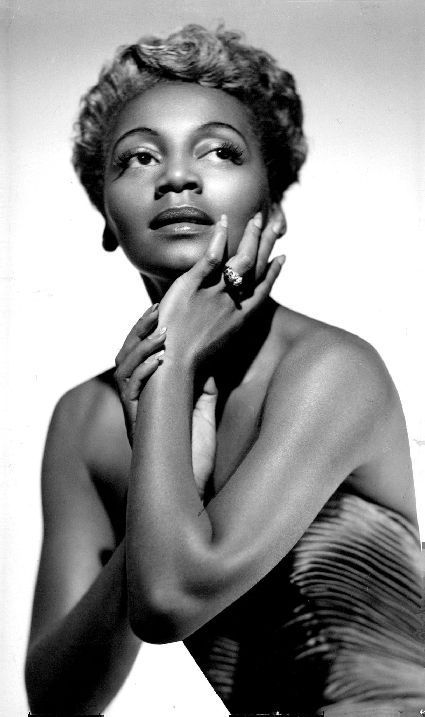
In the golden age of American nightlife, before the Civil Rights Movement reshaped the nation’s moral compass, one woman stood beneath the spotlight with silver hair gleaming and a voice that silenced entire rooms. Joyce Bryant was not merely a nightclub singer — she was spectacle, defiance, elegance, and contradiction embodied. She was called “The Bronze Blonde Bombshell,” “The Black Marilyn Monroe,” and “The Voice You’ll Always Remember.” Yet beyond the glamour was a woman of discipline, faith, and conviction whose life defied the industry that made her famous.
Born Ione Emily Bryant on October 14, 1927, in Oakland, California, and raised in San Francisco in a strict Seventh-day Adventist household, Bryant’s upbringing was conservative and deeply religious. Her early life did not forecast the sensual icon she would become. At fourteen, she briefly eloped — a youthful rebellion that ended almost as quickly as it began. It would not be the last time she surprised those who tried to define her.
Her entry into entertainment was accidental. In 1946, while visiting Los Angeles, she accepted a dare to sing at a nightclub to earn money for her return home. The club owner paid her $25 and invited her back. That impromptu performance marked the birth of a career that would soon electrify New York’s nightclub circuit.
By the late 1940s and early 1950s, Bryant was headlining major venues, reportedly earning thousands per week — an extraordinary sum for a Black woman in segregated America. Her four-octave vocal range captivated audiences, but it was her appearance that made her unforgettable. She dyed her hair metallic silver — initially using radiator paint — and wore impossibly tight mermaid gowns that required her to be sewn into them before performances. She moved minimally on stage, creating an aura of mystique that intensified her sensual presence.
Her aesthetic was deliberate. In an era when Black women were often denied glamorous representation, Bryant constructed herself as living art. In 1954, Ebony magazine named her one of the five most beautiful Black women in the world, alongside icons such as Lena Horne, Eartha Kitt, and Dorothy Dandridge. That recognition solidified her place within the visual lineage of celebrated Black femininity — what cultural historians often describe metaphorically as “Ebony Dolls”: women whose beauty, poise, and cultural visibility reshaped aesthetic standards.
Bryant’s recordings included songs such as “Love for Sale,” “Runnin’ Wild,” and “Drunk with Love.” Some were banned from radio due to perceived suggestiveness. Yet the controversy only amplified her allure. She was daring but never vulgar; provocative yet controlled. She understood that power in performance was not merely about exposure, but about command.
Her impact extended beyond aesthetics. Bryant broke racial barriers by performing in previously segregated venues, including Miami Beach nightclubs that rarely booked Black entertainers. She received threats from white supremacist groups but continued performing, quietly challenging Jim Crow norms with every booking.
Despite reaching the height of nightclub fame, Bryant walked away from it all in the mid-1950s. Disillusioned with the exploitation and moral compromises demanded by the entertainment industry, she returned to her religious roots. She studied at Oakwood College and devoted herself to faith-based service and activism. She also participated in civil rights fundraising efforts and supported the broader movement for racial justice emerging under leaders such as Martin Luther King Jr..
Unlike many performers who fade into obscurity after leaving the spotlight, Bryant reinvented herself. In the 1960s, she returned as a classically trained vocalist, studying opera and performing with respected companies including the New York City Opera. Her transition from nightclub bombshell to operatic soprano confounded critics who had underestimated her discipline and artistry.
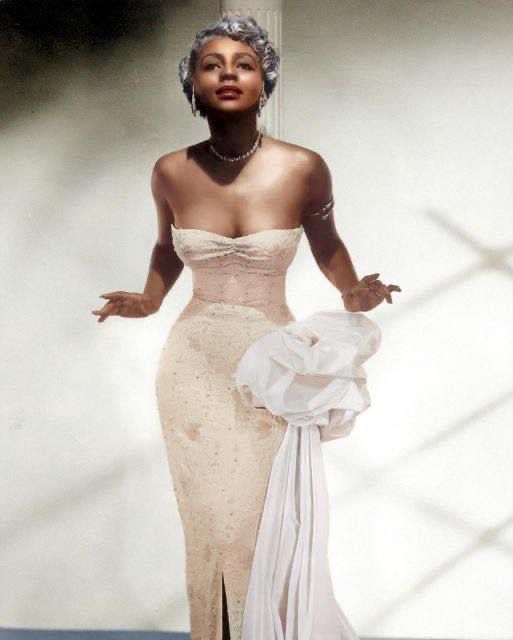
Her film work was limited but historically noted. She appeared in the 1946 crime film Mr. Ace, performing as a nightclub singer. While Hollywood never fully capitalized on her magnetism, her screen presence remains a testament to her versatility.
Personally, Bryant’s life was marked more by independence than domestic publicity. Aside from her teenage elopement, she did not build her legacy around marriage or publicized romantic partnerships. Instead, she cultivated a life of artistic growth, spiritual conviction, and community service.
In later years, renewed interest in her story led to documentaries and retrospectives, reintroducing her to audiences who had never witnessed her reign firsthand. She passed away in Los Angeles in 2022 at the age of 95, leaving behind a legacy that spans glamour, resistance, faith, and reinvention.
Why is Joyce Bryant considered an Ebony Doll? Because she represented an archetype rarely afforded to Black women in mid-20th-century America: high glamour without apology, sensuality without shame, beauty without concession to Eurocentric standards. She crafted her image intentionally and then relinquished it on her own terms. She proved that beauty and righteousness, performance and principle, could coexist within one woman.
Joyce Bryant was not merely a nightclub sensation. She was a cultural architect of Black glamour. She was a pioneer who stood radiant in silver hair beneath hostile skies — and she remains a symbol of elegance forged in resistance.
References
Bryant, J. (n.d.). Official Biography. JoyceBryant.net.
Joyce Bryant. (2024). In Wikipedia.
Ebony. (1954). “The World’s Most Beautiful Black Women.” Ebony Magazine.
Mr. Ace. (1946). Republic Pictures.
Black Women Radicals. (n.d.). Joyce Bryant Biography.
Ebony Magazine. (2022). “Acclaimed Singer Joyce Bryant Passes Away at 95.”
 THE BROWN GIRL DILEMMA