

Tag Archives: Dark-Skinned

Pretty Privilege Series: Breaking the Mirror — Dismantling Colorism and Rewriting Beauty Standards

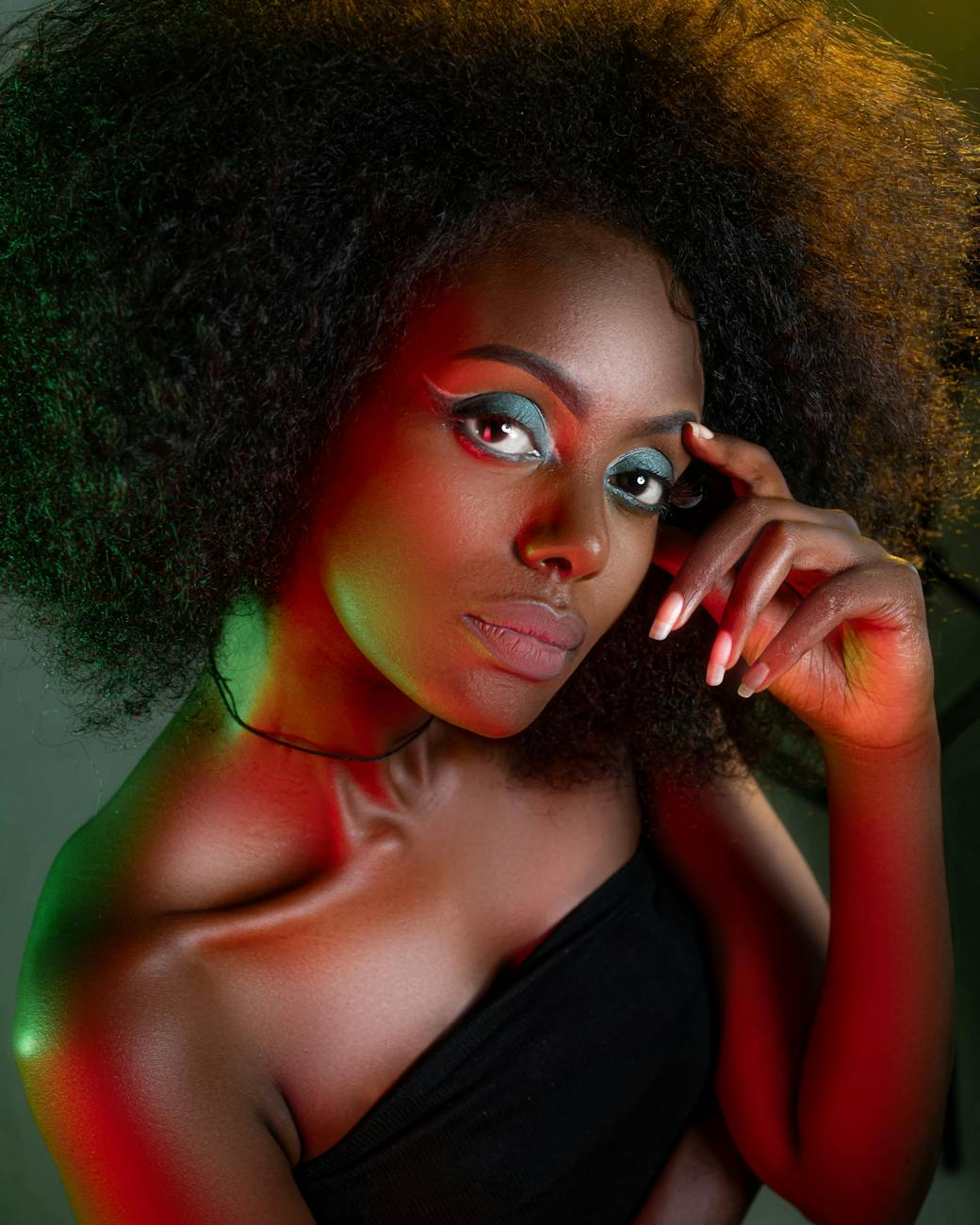
Photo by nomso obiano on Pexels.com

Colorism is not just a social issue; it is a deeply entrenched system that shapes how people perceive themselves and others. To dismantle it, we must not only expose its roots but actively work to uproot them from every layer of society — family, education, media, and faith communities.

The first step in dismantling colorism is to acknowledge that it exists. Too often, when dark-skinned women speak about their experiences, they are dismissed as “being too sensitive” or “imagining things.” Public acknowledgment validates their pain and makes space for honest dialogue (Hunter, 2007).

Families play a critical role in perpetuating or breaking cycles of colorism. Parents must avoid comments that favor lighter skin tones — phrases like “stay out of the sun” or “you’re too dark to wear that color” can harm children’s self-image. Instead, families should affirm melanin-rich skin as beautiful, worthy, and God-given (Psalm 139:14).

Representation in toys, books, and cartoons is equally crucial. Giving children dolls, storybooks, and characters that reflect a range of skin tones helps normalize beauty diversity early on. The popularity of dark-skinned Barbie dolls and children’s books like Sulwe by Lupita Nyong’o are helping to rewrite what “beautiful” looks like for a new generation.

Schools can be powerful agents of change. Anti-bias education should include lessons about colorism — not just racism — so that children understand why comments about skin tone can be harmful. Curriculum that highlights dark-skinned historical figures, inventors, and leaders helps students appreciate Blackness as a source of strength, not shame (Monk, 2014).

Media companies hold tremendous influence. Producers, casting directors, and advertisers must continue to broaden representation by featuring dark-skinned women in leading roles, fashion campaigns, and beauty commercials without making their complexion the “plot point.” Diversity should feel natural, not tokenized (Tate, 2016).

Music and pop culture also have a responsibility. Lyrics that glorify light skin at the expense of dark skin should be challenged. Artists can use their platforms to celebrate deeper melanin rather than perpetuate harmful hierarchies. This shift is already underway with songs like Beyoncé’s Brown Skin Girl, which honors dark-skinned beauty unapologetically.

Faith communities have a unique opportunity to restore dignity. Pastors and spiritual leaders can preach sermons that affirm all shades of Blackness, reminding congregations that partiality is sin (James 2:1-4). Churches can also host workshops for young girls about identity, self-worth, and biblical beauty.

Healing also requires confronting internalized bias. Adults who grew up hearing colorist comments must examine how those messages shaped their thinking. Therapy, journaling, and support groups can help individuals unlearn harmful beliefs and stop passing them down to the next generation (Hall, 1992).

Community mentorship programs can make a difference by pairing young girls with confident, accomplished dark-skinned women who model self-acceptance. Representation at a personal level — not just on screens — gives young people a tangible example to follow.

Social media campaigns like #MelaninPoppin and #DarkSkinGirlsDeserve continue to create spaces where Black women celebrate each other. These online movements should be amplified, encouraging women to share their stories, selfies, and success without fear of ridicule or fetishization.

Beauty companies must go beyond token inclusion. Creating inclusive shade ranges is important, but so is equitable marketing. Ads should show dark-skinned women in glamorous, aspirational ways, not just as a diversity checkbox. Representation should be consistent and global, not seasonal or trend-based.

Fashion magazines and runway shows should continue featuring models like Duckie Thot, Adut Akech, and Anok Yai in editorial spreads that highlight their natural skin. Seeing dark-skinned women gracing covers helps undo decades of invisibility in fashion media.

Colorism must also be addressed among men, as they often perpetuate dating preferences rooted in shade hierarchy. Open forums, barbershop talks, and men’s groups can challenge harmful narratives about what makes a woman “wifey material” and encourage men to value character over complexion.

Economic equity must be part of the conversation. Research shows that darker-skinned women face wage disparities compared to their lighter-skinned peers (Goldsmith, Hamilton, & Darity, 2006). Advocating for fair pay, promotions, and leadership opportunities ensures that beauty bias does not hinder professional growth.

Educational media like documentaries, podcasts, and panel discussions should explore colorism’s global impact — from Africa to the Caribbean to the U.S. This helps people see that it’s not just a “Black American” issue but a global phenomenon shaped by colonization and Eurocentric standards (Smedley, 1999).

Men and women of lighter complexions can become allies by acknowledging their privilege and refusing to benefit from systems that pit them against darker-skinned peers. Solidarity, not silence, is necessary for dismantling colorism’s power.

On a personal level, individuals can speak up when they hear colorist jokes or backhanded compliments like “pretty for a dark-skinned girl.” Silence allows harmful narratives to persist. Correcting these comments with gentleness and education can shift group dynamics over time.

Breaking the mirror of colorism is a lifelong process. It requires consistent work, intentional language, and bold representation. When society stops seeing dark skin as a barrier and starts seeing it as a blessing, true beauty equity will emerge.

Ultimately, dismantling colorism is not just about affirming appearance — it is about restoring identity, dignity, and worth to those who have been told they are less than. Rewriting beauty standards is an act of justice and healing that benefits the entire community, creating a world where every shade is celebrated as a masterpiece of divine design.


References

  • Goldsmith, A., Hamilton, D., & Darity, W. (2006). Shades of Discrimination: Skin Tone and Wages. American Economic Review, 96(2), 242–245.
  • Hall, R. E. (1992). Bias Among African Americans Regarding Skin Color: Implications for Social Work Practice. Research on Social Work Practice, 2(4), 479–486.
  • Hunter, M. (2007). The Persistent Problem of Colorism: Skin Tone, Status, and Inequality. Sociology Compass, 1(1), 237–254.
  • Monk, E. P. (2014). Skin Tone Stratification among Black Americans, 2001–2003. Social Forces, 92(4), 1313–1337.
  • Smedley, A. (1999). Race in North America: Origin and Evolution of a Worldview. Westview Press.
  • Tate, S. (2016). Black Beauty: Aesthetics, Stylization, Politics. Routledge.
Pretty Privilege Series: The Dark History of Being Dark-Skinned.

Photo by Abenezer Shewaga on Pexels.com

The experience of being dark-skinned carries a unique and often painful history that intersects with colonialism, racism, and internalized colorism. While lighter-skinned individuals historically benefited from proximity to whiteness, dark-skinned individuals often bore the brunt of systemic oppression, both from the outside world and within their own communities (Hunter, 2007). The narrative of dark skin has been shaped by centuries of stereotypes portraying it as undesirable, inferior, or threatening, creating a long-lasting psychological and social wound.

During the transatlantic slave trade, darker-skinned Africans were often subjected to the harshest labor. They were placed in the fields, working from sunrise to sunset, enduring grueling conditions. This division between “field slaves” and “house slaves” not only created social stratification within enslaved populations but also reinforced the idea that dark skin was associated with physical toil and subjugation (Williams, 1987).

Colonial propaganda deepened these associations by depicting dark skin as savage and uncivilized. European colonizers crafted pseudoscientific racial hierarchies in which darker skin was seen as a marker of primitivism. These ideas were spread globally through education, religion, and media, becoming ingrained in colonized societies and influencing beauty ideals for generations (Smedley, 1999).

The psychological toll of this history is profound. Dark-skinned children often face teasing and bullying from a young age, even within their own racial group. Terms like “blick,” “charcoal,” or “tar baby” have historically been used as insults, shaping children’s self-esteem and leading to what researchers call color-based trauma (Wilder, 2010). This trauma can result in internalized self-hate and a lifelong struggle to embrace one’s own beauty.

In the early 20th century, darker-skinned African Americans were excluded from certain social clubs, churches, and sororities that required passing the “paper bag test.” These exclusions further marginalized dark-skinned individuals, denying them access to elite Black spaces and perpetuating class and color divides (Russell, Wilson, & Hall, 2013).

In Hollywood and the entertainment industry, darker-skinned actors and actresses were often given subservient, villainous, or hypersexualized roles. The “mammy,” “brute,” and “jezebel” stereotypes became staples in film, associating dark skin with servitude, aggression, and moral looseness (Bogle, 2016). This limited representation reinforced negative societal perceptions and deprived darker-skinned individuals of complex, heroic portrayals.

Music videos, fashion magazines, and advertising have historically elevated lighter-skinned models while sidelining their darker counterparts. Even in hip-hop culture, where Blackness is celebrated, the phrase “redbone” became synonymous with desirable women, leaving dark-skinned women out of the narrative or objectified as exotic rarities (Neal, 2013).

The economic cost of being dark-skinned is measurable. Research shows that darker-skinned Black men and women often receive lower wages, harsher prison sentences, and fewer job opportunities than lighter-skinned peers with similar qualifications (Goldsmith, Hamilton, & Darity, 2006). This phenomenon, known as colorism wage disparity, shows that discrimination operates on a spectrum, not just a binary of Black and white.

Dark-skinned women in particular face what sociologists call “double discrimination”—experiencing both racism and colorism, and often sexism as well. This triple burden affects dating, hiring, and representation in ways that make their fight for recognition uniquely challenging (Hill, 2002).

Psychologically, the message that “lighter is better” leads some dark-skinned individuals to attempt to lighten their skin using bleaching creams. This dangerous practice is still common in parts of Africa, the Caribbean, and Asia, and is marketed as a way to achieve success and beauty (Charles, 2003). The very existence of a multibillion-dollar skin-lightening industry demonstrates how deep this bias runs.

Biblically, dark skin is not a curse but part of God’s design. Passages like Song of Solomon 1:5 (“I am black, but comely…”) celebrate dark beauty, reminding believers that melanin is not a mark of shame but of divine artistry. Scripture affirms that all are created in God’s image (Genesis 1:27), directly opposing the colonial lie that whiteness equates to godliness.

Dark-skinned men often face criminalization in ways that lighter-skinned men do not. Studies show they are more likely to be perceived as threatening, face higher rates of police brutality, and receive harsher punishments for the same crimes (Monk, 2014). This contributes to overrepresentation in prisons and a cycle of generational trauma.

In romantic relationships, dark-skinned women often face exclusion. Social experiments reveal that dating apps and social spaces show a bias toward lighter-skinned Black women, while darker-skinned women are frequently ranked as the least desirable group (Wilder, 2010). This leads to pain, frustration, and a struggle for self-worth in the context of intimacy and partnership.

Popular culture has slowly begun to challenge these narratives. The rise of actresses like Lupita Nyong’o, Danai Gurira, and Viola Davis has shifted the beauty conversation, showing the world that dark-skinned women can be glamorous, powerful, and leading ladies. Lupita’s Oscar-winning performance and her vocal advocacy for dark-skinned representation have been particularly transformative (Tate, 2016).

The natural hair movement and hashtags like #MelaninPoppin have helped reframe dark skin as a symbol of pride and resilience. Social media has created a platform where dark-skinned influencers and activists can celebrate their beauty without waiting for mainstream approval.

Despite these strides, the work is far from over. Dark-skinned children still report feeling excluded in classrooms, underrepresented in dolls and storybooks, and pressured to aspire to lighter ideals of beauty. Representation in media and education must continue to evolve to normalize and affirm all shades of Blackness.

Healing from the dark history of being dark-skinned requires both systemic and personal change. Communities must confront internalized colorism, reject harmful jokes and language, and uplift dark-skinned individuals in leadership, media, and relationships.

Spiritually, the process of healing calls for a renewal of the mind (Romans 12:2). Believers must learn to see beauty as God sees it—beyond colonial standards and rooted in dignity. Churches can play a role by affirming Black beauty from the pulpit and resisting Eurocentric portrayals of holiness.

Ultimately, the dark history of being dark-skinned is a story of survival and defiance. Despite centuries of marginalization, dark-skinned people have continued to create culture, lead movements, and inspire revolutions. The future demands that we not only acknowledge the pain but also celebrate the power of melanin as part of our collective liberation.


References

  • Bogle, D. (2016). Toms, Coons, Mulattoes, Mammies, and Bucks: An Interpretive History of Blacks in American Films. Bloomsbury.
  • Charles, C. (2003). Skin Bleaching, Self-Hate, and Black Identity in Jamaica. Journal of Black Studies, 33(6), 711–728.
  • Goldsmith, A., Hamilton, D., & Darity, W. (2006). Shades of Discrimination: Skin Tone and Wages. American Economic Review, 96(2), 242–245.
  • Hall, R. E. (1992). Bias Among African Americans Regarding Skin Color: Implications for Social Work Practice. Research on Social Work Practice, 2(4), 479–486.
  • Hill, M. (2002). Skin Color and the Perception of Attractiveness Among African Americans. Social Psychology Quarterly, 65(1), 77–91.
  • Hunter, M. (2007). The Persistent Problem of Colorism: Skin Tone, Status, and Inequality. Sociology Compass, 1(1), 237–254.
  • Monk, E. P. (2014). Skin Tone Stratification among Black Americans, 2001–2003. Social Forces, 92(4), 1313–1337.
  • Neal, M. A. (2013). What the Music Said: Black Popular Music and Black Public Culture. Routledge.
  • Russell, K., Wilson, M., & Hall, R. (2013). The Color Complex: The Politics of Skin Color Among African Americans. Anchor Books.
  • Smedley, A. (1999). Race in North America: Origin and Evolution of a Worldview. Westview Press.
  • Tate, S. (2016). Black Beauty: Aesthetics, Stylization, Politics. Routledge.
  • Wilder, J. (2010). Revisiting “Color Names and Color Notions”: A Contemporary Examination of the Language and Attitudes of Skin Color among Young Black Women. Journal of Black Studies, 41(1), 184–206.
  • Williams, E. (1987). Capitalism and Slavery. UNC Press.