
Leopold II of Belgium AKA The Devil Leopold
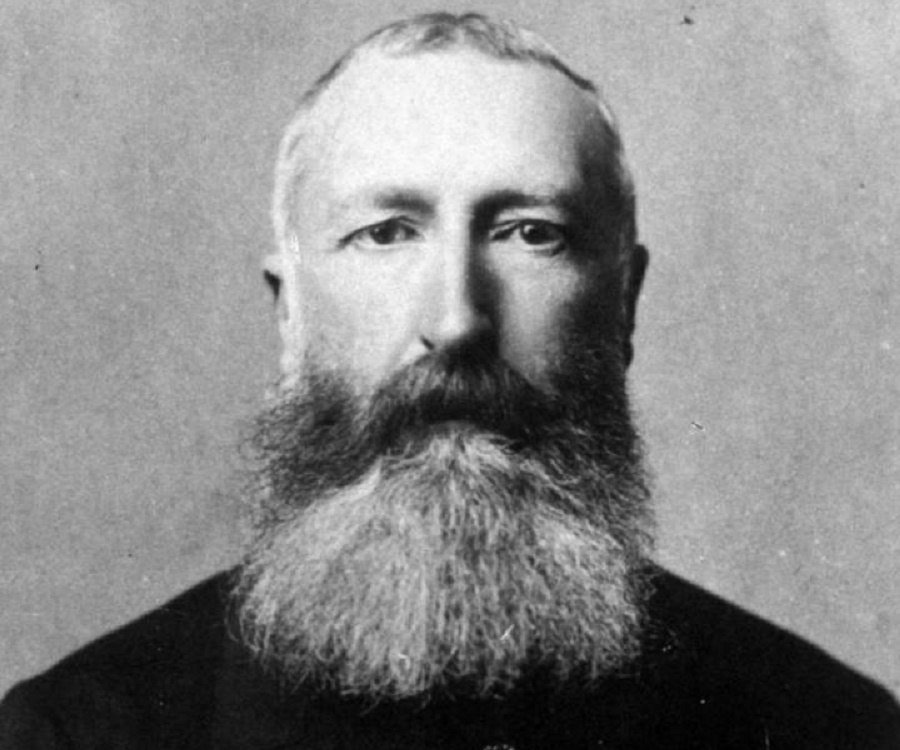
He skinned my people
Castrated my brothers
Raped my sisters
And brutally murdered my people
All in the name of the Devil
He is the Devil incarnate
King Leopold II of Belgium: Lineage, Tyranny, and the Congo Atrocities
King Leopold II (born Leopold Louis Philip Marie Victor; 1835–1909) reigned as King of the Belgians from 1865 until his death, succeeding Leopold I (Britannica, 2025). He belonged to the House of Saxe-Coburg and Gotha and was a first cousin to Queen Victoria of Britain. In 1853, he married Marie-Henriette of Austria, and together they had several children, though none of his sons survived to adulthood (Wikipedia, 2025). His rule over Belgium was constitutional, but he became infamous for personally owning and exploiting the vast territory known as the Congo Free State (Wikipedia, 2025; Britannica, 2025).
The Congo Free State: Private Empire and Devastation
In 1885, at the Berlin Conference, European powers granted Leopold jurisdiction over the Congo Basin, under the guise of humanitarian mission and civilization. However, he administered the territory as his private enterprise, exploiting its natural wealth—particularly ivory and rubber—through coercive labor, forced quotas, and extreme violence enforced by the Force Publique, his mercenary army (Wikipedia, 2025; Britannica, 2025).
The consequences were catastrophic. Adam Hochschild described Leopold’s project as a “genocidal plundering” that caused the deaths of approximately 10 million Congolese people, through brutal violence, starvation, and disease (Wikipedia, 2025; New Yorker, 2015). Population-loss estimates range from 5 million to 13 million, with the most widely accepted figure around 10 million (Wikipedia, 2025).
Leopold’s Ideology and Racial Violence
Leopold’s colonial ideology was deeply grounded in scientific racism and Eurocentric paternalism. He justified his rule in the Congo as a civilizing mission, though in reality it facilitated systematic terror, mutilation, rape, and forced labor (Casement Report, 1904). A 1904 investigation by Roger Casement, commissioned by the British government, exposed widespread atrocities committed under Leopold’s authority—including cutting off hands for missed rubber quotas, castration, and mass violence (Casement Report, 1904; Wikipedia, 2025).
Why Did Leopold Target Black People So Harshly?
Leopold’s racial hostility was institutional rather than personal. Africans were treated as subhuman labor to be exploited for personal wealth. Violence was a tool to suppress resistance, ensure compliance, and perpetuate a racial hierarchy that dehumanized native populations (Hochschild, 1999). The global popularity of eugenics and social-Darwinian thought in Europe and America validated these acts, enabling them under the cloak of colonial legitimacy.
Legacy and Comparison to Other Tyrants
Historians often place Leopold alongside Hitler and Stalin in terms of absolute cruelty, yet his actions remain less recognized internationally. Leopold’s reign precipitated one of history’s most extensive humanitarian disasters—yet his atrocities were shrouded under euphemistic justifications until international activists, missionaries, and journalists exposed the truth (Hochschild, 1999; New Yorker, 2015).
Conclusion
King Leopold II’s personal ambition created a private colonial state defined by terror. Between 1885 and 1908, his rule in the Congo wrought famine, mutilation, and mass death on an unimaginable scale. This genocide—the greatest in African colonial history—reflects how unchecked power, racial supremacism, and capitalist greed can combine to produce catastrophic violence.
📚 References
- Adam Hochschild. (1999). King Leopold’s Ghost: A Story of Greed, Terror, and Heroism in Colonial Africa.
- Britannica. (2025). King Leopold II. Encyclopedia Britannica.
- Casement, R. (1904). Report on the Congo Atrocities. British Parliamentary Papers.
- Wikipedia. (2025). King Leopold II of Belgium; Atrocities in the Congo Free State.
- New Yorker. (2015). The Elephant in the Courtroom.
 THE BROWN GIRL DILEMMA