
Tag Archives: commandments

An Introduction to Biblical Doctrine

Biblical doctrine refers to the organized teaching of the essential truths found in Scripture. The word doctrine simply means “teaching,” and in a biblical sense, it represents what God has revealed about Himself, humanity, sin, salvation, and righteous living. Doctrine is not meant to be abstract theology for scholars only, but practical truth meant to shape belief, character, and daily life.

At the center of biblical doctrine is the authority of Scripture. The Bible presents itself as divinely inspired and profitable for teaching, correction, and instruction in righteousness (2 Timothy 3:16, KJV). This establishes doctrine not as human opinion, but as divine revelation. Without Scripture as the foundation, doctrine becomes subjective and disconnected from God’s will.

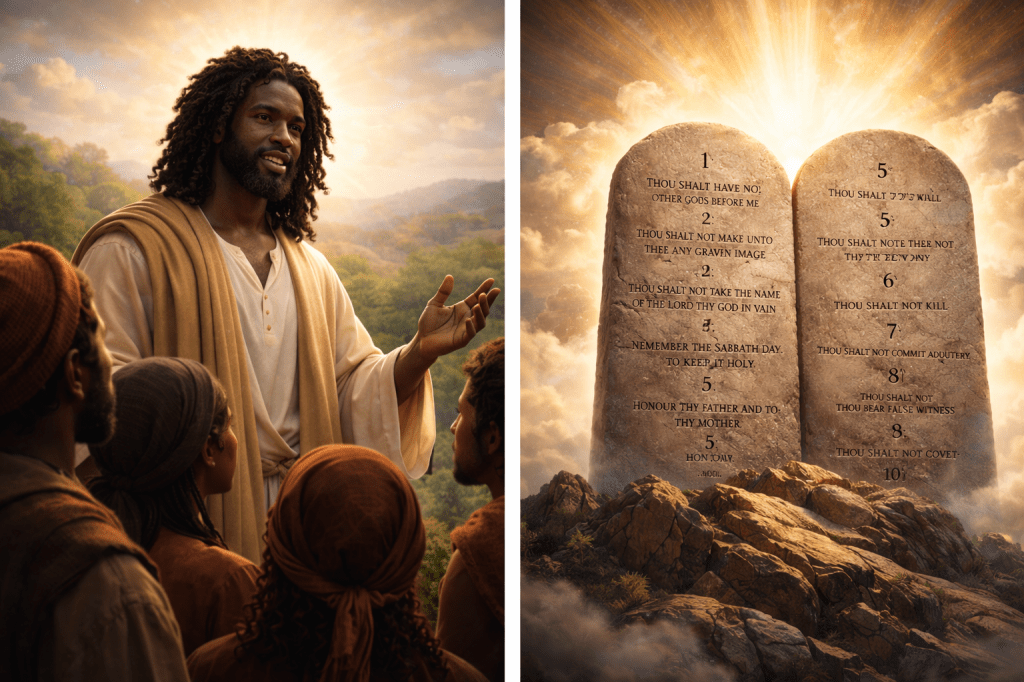
One of the most foundational elements of biblical doctrine is the Law, particularly the Ten Commandments given to Moses. These commandments reveal God’s moral standard and define righteousness in practical terms. They address humanity’s relationship with God (the first four commandments) and humanity’s relationship with others (the remaining six), forming the ethical backbone of biblical faith (Exodus 20, KJV).

However, the commandments were never meant to function as a means of salvation. Rather, they expose sin and reveal humanity’s need for grace. Paul explains in Romans 3:20 (KJV) that by the law comes the knowledge of sin. The law diagnoses the condition, but it cannot cure it. This prepares the theological stage for the role of Jesus Christ.

Jesus did not abolish the commandments but fulfilled them. In Matthew 5:17 (KJV), He states clearly that He came not to destroy the law, but to fulfill it. This fulfillment was not merely legal but spiritual. Jesus internalized the law, moving righteousness from external obedience to internal transformation of the heart.

This internalization is most clearly seen in Jesus’ teachings known as the Beatitudes. Found in Matthew 5:3–12 (KJV), the Beatitudes describe the spiritual attitudes that characterize true followers of Christ: humility, meekness, mercy, purity of heart, hunger for righteousness, and peacemaking. Unlike the commandments, which are framed as prohibitions, the Beatitudes are framed as blessings.

The commandments define what righteousness looks like in action, while the Beatitudes define what righteousness looks like in spirit. The law says, “Do not murder,” but Jesus says anger in the heart is also sin. The law says, “Do not commit adultery,” but Jesus says lustful thoughts are equally condemnable (Matthew 5, KJV). This demonstrates that biblical doctrine is not about behavior management but heart transformation.

In biblical theology, Jesus is the embodiment of doctrine. He is not only the teacher of truth but the truth itself (John 14:6, KJV). Doctrine is therefore not merely a system of beliefs but a person-centered reality. To know doctrine is to know Christ, and to follow doctrine is to imitate His character.

The commandments reveal God’s holiness, while the Beatitudes reveal God’s nature. Together, they form a complete picture of biblical righteousness: external obedience grounded in internal humility. The law governs actions, while the Beatitudes govern attitudes. One addresses what we do; the other addresses who we are.

Biblical doctrine ultimately leads to transformation, not information. James warns that hearing the word without doing it produces self-deception (James 1:22, KJV). True doctrine produces repentance, obedience, love, and spiritual maturity. It is not designed to inflate knowledge, but to conform believers into the image of Christ.

In conclusion, biblical doctrine is the theological framework through which God reveals truth, defines righteousness, and restores humanity. The commandments establish moral law, while the Beatitudes establish spiritual character. Together, they show that God desires not only righteous behavior, but righteous hearts. Doctrine, therefore, is not about religion—it is about transformation into divine likeness.


References

Holy Bible (King James Version). (2017). Thomas Nelson.

Grudem, W. (1994). Systematic theology: An introduction to biblical doctrine. Zondervan.

Erickson, M. J. (2013). Christian theology (3rd ed.). Baker Academic.

Stott, J. (2012). The message of the Sermon on the Mount. InterVarsity Press.

Wright, N. T. (2010). After you believe: Why Christian character matters. HarperOne.

Dilemma: 🤔gods🤔

Photo by Dino Uniyal on Pexels.com

In Scripture, the term “god” (Hebrew: elohim, אֱלֹהִים) refers to any being, entity, or object to which humans attribute supreme power, reverence, or devotion—whether real or imagined. A god can be the true and living Creator, YHWH (Yahweh), or a false entity that receives misplaced loyalty and worship (Psalm 82:6; Deuteronomy 10:17).

The Human Psyche and the Urge to Worship

Humans are innately spiritual beings (Ecclesiastes 3:11), created with a longing for transcendence, meaning, and connection to something greater than themselves. Psychologically, people often seek gods because:

  1. Security: A god—whether divine or false—represents protection against chaos and uncertainty.
  2. Identity: People derive self-worth and belonging through alignment with their chosen deity or ideology.
  3. Control: By pleasing or appeasing a “god,” humans believe they can influence their destiny or environment.
  4. Projection: Often, gods are human ideals magnified—projecting human desires, fears, and values into a divine image.

When people reject the Most High, this spiritual vacuum is filled with substitutes (Romans 1:21-23).


Can a Person Be a God to Themselves?

Yes—self-worship is one of the most dangerous forms of idolatry. In modern psychology, this aligns with narcissism and self-deification, where one’s own desires, opinions, and ambitions override divine authority. The serpent’s temptation to Eve—“Ye shall be as gods” (Genesis 3:5)—remains a core seduction today, manifesting in philosophies that glorify self-rule, self-sufficiency, and self-exaltation above God’s will.


Can We Make People Into Gods?

Absolutely. Throughout history, rulers, celebrities, and leaders have been elevated to godlike status—given unquestioned loyalty, devotion, and imitation. In biblical times, Pharaoh and Nebuchadnezzar demanded worship (Daniel 3:4-6). Today, celebrity culture, political cults, and even certain religious leaders receive reverence that rivals or replaces God (Acts 14:11-15).


What Is an Idol?

An idol (pesel, פֶסֶל in Hebrew) is a physical or conceptual representation of a false god. Idolatry is not limited to carved statues—it includes anything that replaces God as the ultimate object of trust, love, and obedience. Paul warns that covetousness itself “is idolatry” (Colossians 3:5), showing that the heart can worship possessions, not just figures.


Present-Day Gods

In modern society, gods often disguise themselves as “normal” pursuits or values, but they carry the same spiritual consequences as ancient idols:

  1. Money & Wealth (Mammon) – Matthew 6:24 warns we cannot serve God and riches.
  2. Celebrities & Influencers – People mimic lifestyles and values that oppose biblical truth.
  3. Government & Political Systems – When allegiance to a political ideology supersedes loyalty to God’s kingdom.
  4. Technology & Social Media – Consuming devotion, shaping thought, and determining self-worth.
  5. Self & Personal Ambition – The rise of “manifest your own destiny” culture, ignoring God’s sovereignty.
  6. Relationships & Romantic Partners – Placing human love above God’s will.
  7. Pleasure & Entertainment – Prioritizing comfort and leisure over holiness and service.

Impact on Humanity

Modern gods subtly reshape human values, causing moral relativism, loss of reverence for God, and increasing self-centeredness. They fragment societies by promoting division, consumerism, and endless comparison. Most dangerously, they redirect worship from the Creator to the creation (Romans 1:25), blinding people to truth and righteousness.

(Exodus 20:3, KJV)

Meaning in Biblical Context

This is the first commandment, and it sets the foundation for all the others. In Hebrew, it literally means, “You shall not have any other gods in My presence.” God is declaring that He alone is to be worshiped, loved, obeyed, and trusted as the ultimate authority.

In ancient times, “gods” often referred to literal idols or deities worshiped by surrounding nations (Baal, Ashtoreth, Ra, Zeus, etc.). For Israel, this command was a direct rejection of polytheism and idolatry, calling for exclusive covenant loyalty to the one true God (Deuteronomy 6:4–5).


Spiritual Principle

  • God desires exclusive devotion.
  • Anything we place above Him in importance—whether physical, emotional, or spiritual—becomes a “god” to us.
  • Worship is not just bowing to an idol—it’s where we give our deepest loyalty, time, trust, and affection.

How People Break This Commandment Today

Even without bowing to statues, people still violate this commandment through modern forms of idolatry. Here’s how:

  1. Materialism & Consumerism
    • Treating wealth, possessions, or luxury brands as the highest goal in life.
    • Example: Someone who sacrifices integrity, relationships, and health just to get more money or status symbols is effectively worshiping material wealth.
      (Matthew 6:24 – “Ye cannot serve God and mammon.”)
  2. Career or Ambition as a “God”
    • Obsessing over professional success to the point where it overshadows faith, morality, and relationships.
    • Example: A person who neglects worship, family, and personal well-being for a job promotion.
  3. Celebrity and Influencer Worship
    • Idolizing musicians, actors, athletes, or social media figures—treating their opinions or lifestyles as more important than God’s Word.
    • Example: Mimicking every fashion, belief, or action of a celebrity, even when it goes against biblical principles.
  4. Self-Worship
    • Prioritizing personal image, pleasure, and independence over God’s will.
    • Example: Living by “my truth” rather than God’s truth, and valuing personal comfort above obedience to Scripture.
  5. Technology and Entertainment
    • Allowing social media, gaming, or streaming platforms to consume most waking hours.
    • Example: Spending 6–8 hours a day online but having “no time” for prayer or Scripture.
  6. Relationships as Idols
    • Placing a romantic partner, spouse, or friend in the place of God.
    • Example: Compromising moral convictions just to keep someone’s affection.
  7. New Age or Occult Practices
    • Seeking spiritual power, guidance, or protection from crystals, astrology, or witchcraft instead of God.
    • Example: Checking a horoscope daily for decision-making rather than praying for guidance.

Why This Commandment Still Matters

Placing anything “before God” distorts our priorities, erodes our moral compass, and draws us away from our source of life and truth. As Jesus said, the greatest commandment is to “love the Lord thy God with all thy heart, and with all thy soul, and with all thy mind” (Matthew 22:37, KJV).

When God is truly first, every other area—relationships, work, health, finances—finds its proper balance.