Tag Archives: celebrity

Growing Up Famous While Black in Hollywood: The Untold Story of Child Stars.

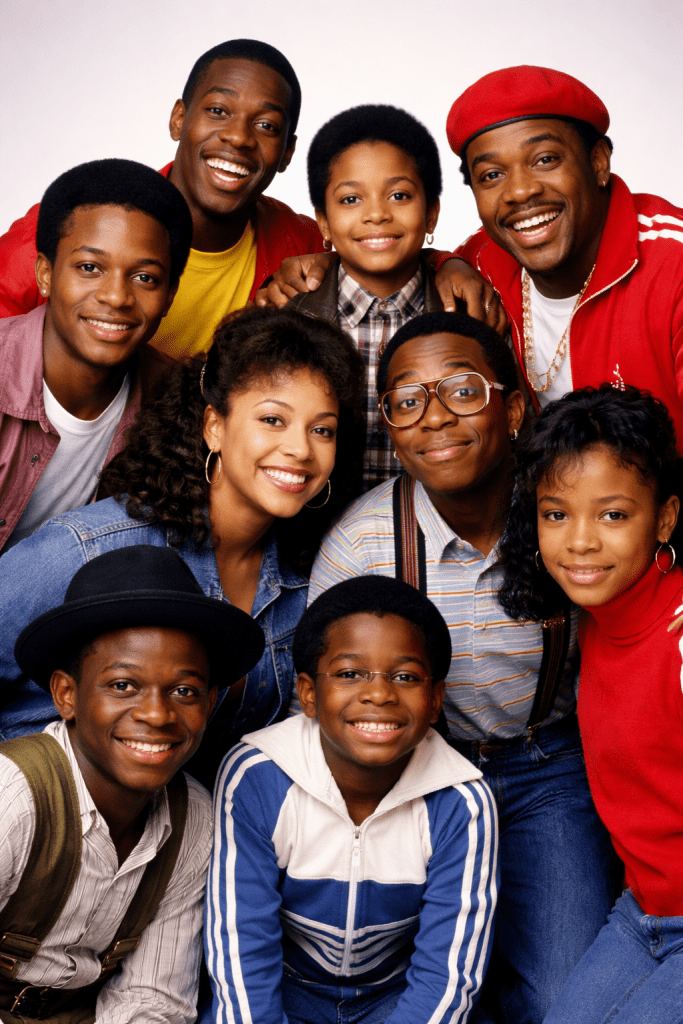
The history of Black child stars in American television reveals a complicated story of talent, visibility, exploitation, and racial inequality. Throughout the twentieth century, Black children appeared in sitcoms and films that were largely created and controlled by white executives, producers, and writers. While these young performers often became beloved cultural icons, their experiences behind the scenes frequently reflected the racial hierarchies that shaped the entertainment industry. Fame brought opportunity, but it also exposed many Black child actors to unequal pay, stereotyping, and limited long-term career support.

Hollywood’s early power structure was overwhelmingly white, especially during the 1970s and 1980s, when many Black child actors rose to prominence. Network executives, casting directors, and producers determined which stories were told and how Black characters were portrayed. Although television increasingly included Black characters, the creative control over those characters often remained outside the Black community. As a result, Black child stars sometimes found themselves performing roles that reflected white expectations about Black identity rather than authentic cultural representation.

One of the most recognizable Black child stars of television was Gary Coleman, who became famous for portraying Arnold Jackson on the sitcom Diff’rent Strokes. Coleman’s character was a witty and charming orphan adopted by a wealthy white businessman. His catchphrase, “What’chu talkin’ ’bout, Willis?” became one of the most famous lines in television history, turning Coleman into a national sensation and making him one of the most recognizable child actors of the era.

At the height of his fame, Coleman was reportedly earning approximately $100,000 per episode, making him one of the highest-paid child actors on television at the time. Despite this financial success, his story later became a cautionary tale about the vulnerability of child performers. Much of the money he earned as a child was mismanaged by adults responsible for his finances. As an adult, Coleman sued his adoptive parents and business advisor for misappropriating his trust fund.

Coleman’s struggles illustrate a broader pattern within Hollywood in which child stars generated enormous wealth for studios while having little control over their earnings. Although laws such as the Coogan Act were designed to protect child actors’ finances, many performers still experienced financial exploitation. For Black child stars, this vulnerability sometimes intersected with racial inequities in an already unequal industry.

Another major Black child star who captured audiences during the 1980s was Emmanuel Lewis, who played the title character on the sitcom Webster. Like Coleman’s role, Lewis portrayed an orphaned Black child adopted by a wealthy white family. The show centered on Webster’s charm and innocence, and Lewis quickly became a household name across the United States.

The premise of shows like Webster and Diff’rent Strokes reflected a recurring trope in Hollywood storytelling: the lovable Black child raised within a white household. While these narratives introduced audiences to talented Black performers, they often framed Black childhood through a lens that centered white benevolence. The stories rarely explored the broader social realities of Black communities or systemic racism.

In many cases, the appeal of these shows depended on the image of the “cute” Black child whose humor and innocence softened racial tensions for white audiences. The characters were often written to be charming, comedic, and non-threatening. While this made them popular with viewers, it also reinforced a narrow representation of Black identity.

Earlier generations of Black child actors experienced similar patterns of limited financial reward and stereotypical roles. One example is Matthew Beard, widely known as “Stymie” from the classic comedy series Our Gang (later called The Little Rascals). Beard was one of the most recognizable child actors of the 1930s, yet like many performers of that era, he reportedly received little long-term financial compensation for his work.

Beard’s experience illustrates how Hollywood historically profited from the talents of Black children while failing to provide long-term economic security. Although audiences loved these characters, the industry rarely invested in the future careers or financial stability of the young actors who portrayed them.

Another figure connected to the conversation about young Black actors in Hollywood is Lamont Bentley, who began acting at a young age and later became known for roles in Black-centered television and film. Like many performers who started as children, Bentley navigated an industry where opportunities for Black actors were limited and highly competitive.

Hollywood’s reliance on stereotypes also shaped how certain Black characters were written for sitcoms. A notable example involves Jimmie Walker, whose character J.J. Evans became the breakout figure on the sitcom Good Times. Walker’s catchphrase “Dyn-o-mite!” became immensely popular with audiences and turned him into one of the show’s most recognizable stars.

However, not everyone celebrated the character’s comedic style. Some cast members and critics argued that J.J.’s exaggerated mannerisms and clownish behavior reinforced negative stereotypes about Black men. Actors within the show reportedly disagreed with producers over the increasing emphasis on comedy at the expense of portraying a serious Black family narrative.

These debates highlight a long-standing tension in Black television representation. Comedy could open doors for Black actors and make shows commercially successful, yet it could also risk perpetuating caricatures that undermined the dignity of Black characters.

Many discussions about Black sitcoms inevitably include the work of influential television producer Norman Lear. Lear was responsible for several groundbreaking television programs that addressed social issues such as racism, poverty, and inequality. His shows helped bring Black family life into mainstream television during a time when representation was limited.

Lear’s supporters argue that his productions challenged audiences to confront uncomfortable social realities. Programs such as Good Times depicted working-class Black families and addressed issues like unemployment and systemic poverty.

At the same time, critics have debated whether some of Lear’s programs relied too heavily on exaggerated comedic elements. While his shows created opportunities for Black actors, they were still shaped by creative decisions made primarily within white-dominated production environments.

Another important figure in the discussion of Black child actors is Kim Fields, who portrayed Dorothy “Tootie” Ramsey on the sitcom The Facts of Life. Fields joined the show as a young actress and quickly became one of its most recognizable characters.

Within the show’s predominantly white ensemble cast, Fields represented one of the few Black characters at an elite girls’ boarding school. Her character brought diversity to the series and resonated with many viewers who rarely saw Black girls represented on mainstream television.

Fields appeared alongside actress Lisa Whelchel, who played Blair Warner, the wealthy and privileged student at the center of many storylines. The contrast between Blair’s affluent background and Tootie’s more grounded personality reflected broader class dynamics often explored in the show.

Although Fields was a beloved member of the cast, many television scholars have noted that storylines frequently centered on white characters. This reflected the broader structure of television writing rooms at the time, which were overwhelmingly white.

Despite these limitations, Fields successfully transitioned into adulthood within the entertainment industry, later starring in the sitcom Living Single. Her longevity in Hollywood is notable because many child actors struggle to maintain successful careers after their early fame fades.

Black child actors often faced a double burden in Hollywood. Like all child performers, they were subject to the pressures of fame, demanding work schedules, and public scrutiny. At the same time, they navigated racial stereotypes and limited roles shaped by systemic inequalities within the industry.

Outside the studio, fame did not shield these actors from the broader realities of American racism. Many experienced discrimination in everyday life despite their celebrity status. Their visibility on television did not always translate into social equality in their personal lives.

Financial instability was another common issue for child stars. Many actors who earned large salaries as children found themselves struggling financially as adults due to poor financial management or exploitation by guardians and managers.

The transition from child star to adult performer proved especially difficult in Hollywood. Once audiences associated an actor with a specific childhood role, casting directors often struggled to imagine them in more mature parts.

For Black actors, these challenges were often intensified by the industry’s limited representation of complex Black characters. Adult roles were scarce, and many performers were confined to stereotypes or minor supporting parts.

Nevertheless, Black child stars played a crucial role in shaping American popular culture. Their performances brought visibility to Black families and children on national television during decades when representation remained limited.

Case Study: Typecasting and the Career of Jaleel White After Steve Urkel on Family Matters

The career of Jaleel White provides a compelling case study on the phenomenon of typecasting in Hollywood, particularly as it affects Black actors who become strongly associated with a single character. White rose to international fame as the nerdy, high-pitched, suspender-wearing Steve Urkel on the sitcom Family Matters, which aired from 1989 to 1998. Although the role brought White immense popularity and cultural recognition, it also shaped public perception of the actor in ways that later complicated his career trajectory.

Jaleel White began acting at a very young age, appearing in commercials and minor television roles during the 1980s. His early career included guest appearances on several television programs, demonstrating his versatility even before landing the role that would define his career. Ironically, Steve Urkel was originally written as a one-time guest character on Family Matters. However, audience reactions were so enthusiastic that the character quickly became central to the show’s storyline.

Steve Urkel soon became one of the most recognizable television characters of the 1990s. With oversized glasses, colorful suspenders, high-water pants, and an awkward personality, Urkel embodied the archetype of the socially awkward genius. His catchphrase “Did I do that?” became a defining line of the era and entered American pop culture. Merchandise, lunchboxes, dolls, and T-shirts featuring the character flooded the market, illustrating the enormous commercial success of the role.

The character’s popularity, however, transformed the direction of Family Matters. Initially conceived as a family-centered sitcom about the Winslow household, the show gradually shifted toward storylines revolving around Urkel’s comedic misadventures and inventions. White himself reportedly played multiple variations of the character, including the suave alter ego Stefan Urquelle, which demonstrated his acting range within the confines of the show.

Typecasting occurs when an actor becomes so strongly associated with a particular role that casting directors and audiences struggle to see them in other types of characters. This phenomenon is common among child actors, whose formative years are closely tied to a specific public persona. For Jaleel White, Steve Urkel became both a blessing and a professional limitation.

After Family Matters ended in 1998, White faced the challenge of redefining his career outside the shadow of Urkel. Casting directors often struggled to envision him in serious or dramatically different roles because audiences had internalized the image of the comedic, awkward teenager. This is one of the central consequences of typecasting: the actor’s identity becomes fused with the fictional character in the public imagination.

In interviews, White has acknowledged the complexities of playing such an iconic role. While he remains proud of the cultural impact of Steve Urkel, he has also spoken about the difficulty of transitioning into adult roles. The entertainment industry frequently pigeonholes actors who become synonymous with a particular character, especially in long-running sitcoms.

Typecasting has historically affected many actors in television history. For example, actors who portray extremely distinctive characters—whether comedic or dramatic—often struggle to escape the expectations attached to those roles. In White’s case, the visual and vocal quirks of Urkel made the character particularly memorable, which strengthened the association between actor and role.

Another factor contributing to White’s typecasting was the character’s exaggerated personality. Urkel’s nasal voice, clumsy physical comedy, and eccentric inventions created a highly stylized performance. While this made the character beloved by audiences, it also made it more difficult for viewers to separate White’s real personality from the fictional character.

White attempted to diversify his career following the end of Family Matters. He appeared in various television programs, including guest roles and voice acting. One of his notable voice roles was portraying Sonic in the animated series Adventures of Sonic the Hedgehog, which demonstrated his versatility beyond live-action sitcom performance.

Despite these efforts, public recognition of White remains strongly tied to Steve Urkel. This phenomenon illustrates the enduring power of television characters in shaping an actor’s identity. Even decades after the show ended, audiences often refer to White primarily through the lens of his famous character.

Typecasting also intersects with broader structural patterns within Hollywood. Black actors historically have had fewer opportunities in mainstream television and film compared to their white counterparts. When a Black actor becomes strongly associated with a single role, the limited number of available roles can make it even more difficult to break free from that identity.

In the case of Jaleel White, however, the actor has embraced the legacy of Urkel while also attempting to redefine his career. He has appeared in various television projects, including reality competitions and guest appearances that highlight his personality beyond the fictional character.

White’s experience illustrates a broader tension within entertainment culture. Iconic roles bring fame, financial success, and cultural influence, but they can also create barriers for actors seeking artistic evolution. The stronger the cultural impact of the character, the more difficult it becomes for audiences to accept the actor in a different identity.

Scholars studying media representation often cite the phenomenon of typecasting as a structural limitation within the entertainment industry. Actors who portray culturally distinctive characters—particularly those tied to race, comedy, or physical traits—may find their careers defined by those portrayals long after the original performance ends.

Nevertheless, Steve Urkel remains one of the most influential television characters of the 1990s. The character reshaped the narrative of Family Matters and became a central symbol of nerd culture, comedic awkwardness, and television nostalgia. While typecasting influenced White’s career trajectory, it also cemented his place in television history.

Ultimately, the case of Jaleel White demonstrates the double-edged nature of iconic television roles. The success of Steve Urkel provided global recognition and cultural legacy, yet it also illustrates how Hollywood can confine actors within the boundaries of their most famous characters. For many performers, the challenge is not achieving fame, but escaping it.

For many Black viewers, these characters were deeply meaningful because they provided rare moments of identification on mainstream television. Seeing Black children on screen helped affirm cultural identity and possibility.

At the same time, the experiences of these actors reveal how deeply race shaped opportunities in Hollywood. Their careers highlight both the progress and the persistent inequalities that characterized the entertainment industry.

In recent decades, the industry has begun to change. Greater representation among writers, producers, and directors has created new opportunities for Black performers to tell their own stories.

Modern audiences are increasingly aware of the historical treatment of child actors, and there is growing advocacy for stronger protections and more equitable contracts.

The stories of performers such as Gary Coleman, Emmanuel Lewis, Kim Fields, and others remind us that behind every beloved television character was a young person navigating fame, expectation, and structural inequality.

Their experiences reveal both the joy that Black child stars brought to audiences and the systemic challenges they faced within a white-dominated entertainment industry.

Understanding this history allows scholars and audiences alike to examine how race, power, and media representation intersect in the making of American television.


References

Bogle, D. (2016). Bright Boulevards, Bold Dreams: The Story of Black Hollywood. Running Press.

Coleman, G. (1998). Gary Coleman: The Unauthorized Biography. St. Martin’s Press.

Gray, H. (2004). Watching Race: Television and the Struggle for Blackness. University of Minnesota Press.

Hunt, D., Ramón, A., & Tran, M. (2021). Hollywood Diversity Report. UCLA College of Social Sciences.

Watkins, S. C. (2005). Hip Hop Matters: Politics, Pop Culture, and the Struggle for the Soul of a Movement. Beacon Press.

Bogle, D. (2001). Toms, Coons, Mulattoes, Mammies, and Bucks: An Interpretive History of Blacks in American Films. Continuum.

IMDb historical production archives for Diff’rent Strokes, Webster, Good Times, and The Facts of Life.

White, J. (2012). Interviews discussing his career and the legacy of Steve Urkel.

IMDb. (n.d.). Family Matters production and cast archives.

Turner Classic Movies Media Archive on sitcom television history.

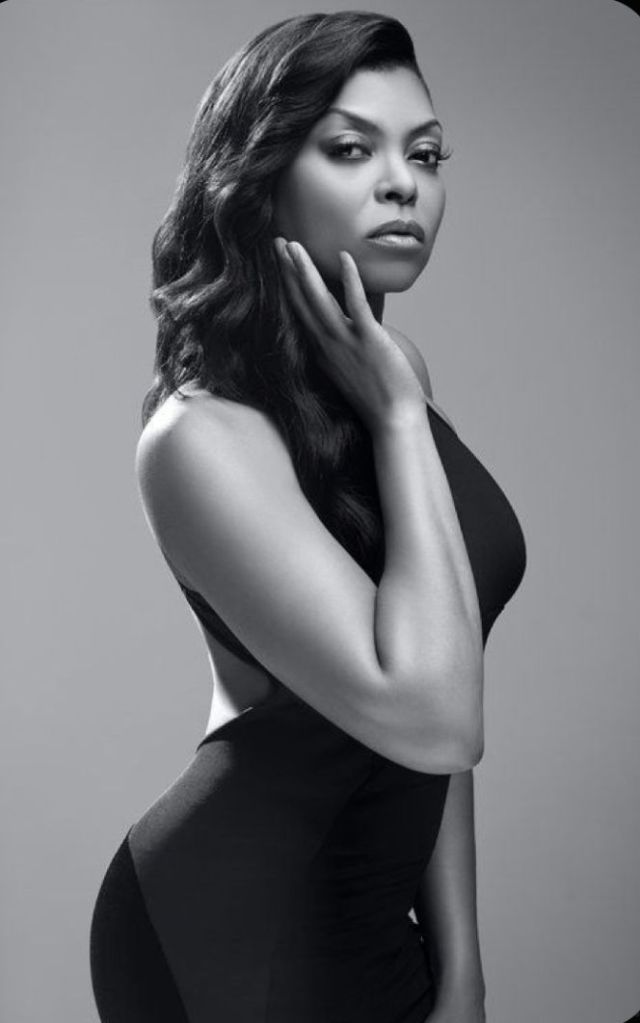
The “It Girl” Series: Taraji P. Henson

A magnetic presence with expressive eyes and a face that tells stories—Taraji P. Henson embodies charisma, beauty, and the undeniable allure of the screen.

This photograph is the property of its respective owners

Taraji P. Henson was born on September 11, 1970, in Washington, D.C., and raised in a close-knit family that encouraged her artistic ambitions. She developed a passion for acting early on, which led her to Howard University, where she earned a Bachelor of Fine Arts degree. Henson began her career with small television roles, including appearances on Smart Guy and Ally McBeal, but her breakout came with the film Baby Boy (2001), in which she portrayed Yvette, a character both complex and compelling. This role showcased her range as an actress and her ability to convey depth, emotion, and resilience.

Over the years, Henson has become a fixture in Hollywood, celebrated for her versatility and fearless approach to acting. She gained widespread acclaim for her portrayal of Cookie Lyon in the hit series Empire (2015–2020), earning a Golden Globe Award for Best Actress. This role highlighted not only her talent but also her ability to dominate the screen with presence, emotion, and authenticity. Henson has also been an outspoken advocate for gender equity and fair pay in the entertainment industry, reinforcing her reputation as a strong, independent voice in Hollywood.

Her filmography spans a wide range of genres, showcasing her remarkable versatility. She appeared in The Curious Case of Benjamin Button (2008), Hustle & Flow (2005), Proud Mary (2018), and Good Deeds (2012) alongside Idris Elba, as well as Hidden Figures (2016) and Hustle (2022). From historical dramas to action thrillers, Henson consistently delivers nuanced, compelling performances. In addition to live-action roles, she has lent her voice to animated projects and participated in brand endorsements, solidifying her influence beyond the screen. Henson’s expressive face, radiant skin, and commanding presence allow her to communicate power, vulnerability, and charisma without uttering a single word—a hallmark of an “It Girl.”

This photograph is the property of its respective owners

In her personal life, Henson has been married once and is the mother of a son, Marcel. She has shared her experiences navigating motherhood, fame, and career with honesty and grace, offering inspiration to many. On set, she has cultivated deep professional relationships and often speaks highly of her co-stars, reflecting her collaborative spirit. Her beauty is distinctive, transcending traditional Hollywood standards, with features that are celebrated for their expressiveness, symmetry, and strength.

This photograph is the property of its respective owners

What makes Taraji P. Henson an undeniable “It Girl” is the way she commands attention both on and off screen. Her expressive eyes and emotive facial expressions allow her to convey complex emotions effortlessly, captivating audiences with every glance. She combines raw talent with a fearless authenticity, embracing roles that challenge norms and showcase her versatility. Beyond acting, her confident presence, bold fashion choices, and outspoken advocacy for women’s rights and fair pay amplify her cultural influence, making her a role model as well as a star. Taraji’s allure is not just in her beauty—it is in her charisma, intelligence, and unapologetic individuality, qualities that make her both relatable and aspirational, securing her place as one of Hollywood’s most magnetic figures.

References:

  1. Taraji P. Henson Biography. (2023). Biography.com. https://www.biography.com/actor/taraji-p-henson
  2. Golden Globe Awards 2016 Winners. (2016). GoldenGlobes.com. https://www.goldenglobes.com/winners-nominees/2016
  3. Hipes, P. (2021). Taraji P. Henson Talks Empire, Advocacy & Hollywood. Deadline. https://deadline.com/2021/01/taraji-p-henson-interview-empire-1234667890/
  4. Taraji P. Henson Filmography. (2023). IMDb. https://www.imdb.com/name/nm0375296/

The “It Girl” Series: Kimberly Elise

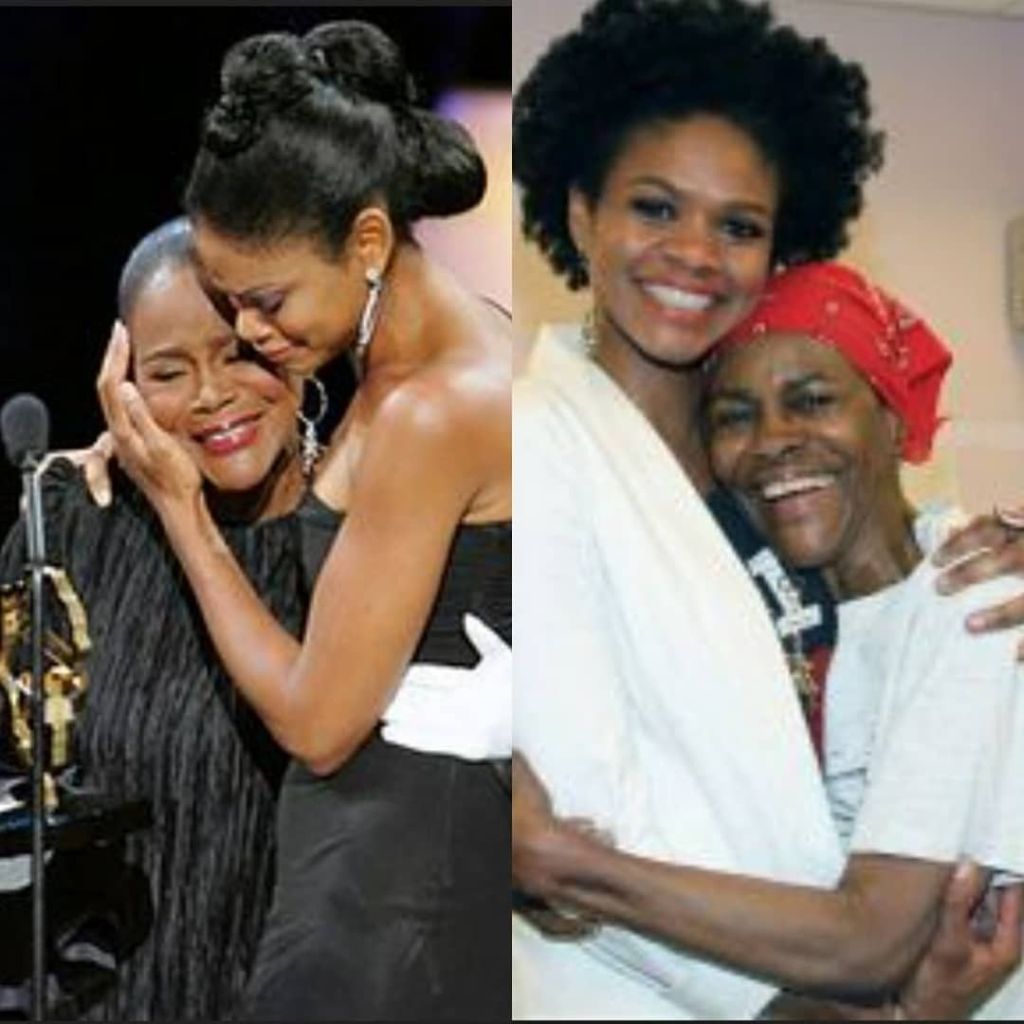
Piercing, expressive eyes and a commanding screen presence—Kimberly Elise blends beauty with depth, talent, and the rare quiet power of a young Cicely Tyson.

This photograph is the property of its respective owner.

Kimberly Elise Trammel was born on April 17, 1967, in Minneapolis, Minnesota, and raised with a deep love for performance and storytelling. She earned a B.A. in Communications from the University of Minnesota before pursuing her acting career in Los Angeles. Elise’s natural talent, intense presence, and distinctively expressive eyes quickly set her apart in dramatic roles. She made her feature‑film debut in the crime action classic Set It Off (1996), portraying Tisean “T.T.” Williams with emotional intensity and strength.

Elise’s career is marked by nuanced, layered performances in films that explore struggle, resilience, and redemption. She appeared in Beloved (1998), John Q (2002), The Manchurian Candidate (2004), Diary of a Mad Black Woman (2005), Woman Thou Art Loosed (2004), Pride (2007), The Great Debaters (2007), For Colored Girls (2010), Dope (2015), Almost Christmas (2016), Death Wish (2018), and Ad Astra (2019).

Her collaborations with Denzel Washington—John Q, The Manchurian Candidate, and The Great Debaters—are particularly notable. Elise has described working with Washington as a professional joy, emphasizing that he is intensely focused, generous in his preparation, and deeply committed to family and craft—qualities she shares as a performer. Elise’s repeated casting opposite him and the respect evident in industry discussions reflect a mutual professional regard and creative rapport.

These photographs are the property of their respective owners.

Elise’s expressive, piercing eyes are a hallmark of her acting style: they convey internal life, pain, strength, and transformation without a single line of dialogue. Her presence has drawn comparisons to a young Cicely Tyson, not only for her physical resemblance but for the depth and dignity she brings to every role.

In her personal life, Kimberly Elise was first married to Maurice Oldham (April 21, 1989 – September 29, 2005), with whom she has two daughters, AjaBleu Oldham and Butterfly Rose Oldham. She later married George E. McCrary on August 23, 2023.

Elise’s work has earned critical recognition and industry honors. Early in her career, she won Best Supporting Actress at the 19th Annual CableACE Awards for The Ditchdigger’s Daughters (1997). She also received Independent Spirit Award and NAACP Image Award nominations for Woman Thou Art Loosed (2004), won NAACP Image Awards for Diary of a Mad Black Woman and other projects, and has been celebrated for her powerful contributions to film and television that center Black women’s stories.

Kimberly Elise embodies the qualities of an “It Girl” through a blend of confidence, emotional intelligence, and acting prowess. Her beauty is not superficial but expressive and commanding, rooted in her ability to convey truth through subtle gestures and deep emotional resonance. Whether portraying everyday struggles or extraordinary resilience, Elise’s work resonates with authenticity, intelligence, and grace—making her one of Hollywood’s most compelling and enduring talents.

References:

  1. Kimberly Elise. (2024). IMDb. https://www.imdb.com/name/nm0253708/biography/
  2. Kimberly Elise Filmography. (2024). Fandango. https://www.fandango.com/people/kimberly-elise-197874/film-credits
  3. Kimberly Elise Movies & TV Shows. (2024). Rotten Tomatoes. https://www.rottentomatoes.com/celebrity/kimberly_elise
  4. Kimberly Elise: The Perfect Pairing. (2020). Essence. https://www.essence.com/news/kimberly-elise-the-perfect-pairing/
  5. Actress Kimberly Elise on Working with Denzel Washington. (2013). TheGrio. https://thegrio.com/2013/05/31/actress-kimberly-elise-talks-being-denzel-washingtons-work-wife
  6. Kimberly Elise: Giving Voice to Voiceless. (2018). Chicago Sun‑Times. https://chicago.suntimes.com/2018/4/13/18398979/kimberly-elise-giving-voice-to-voiceless-on-road-to-black-hollywood-royalty
  7. NAACP Image Awards: Past Winners. (2023). NAACP.org. https://naacpimageawards.net/past-winners/

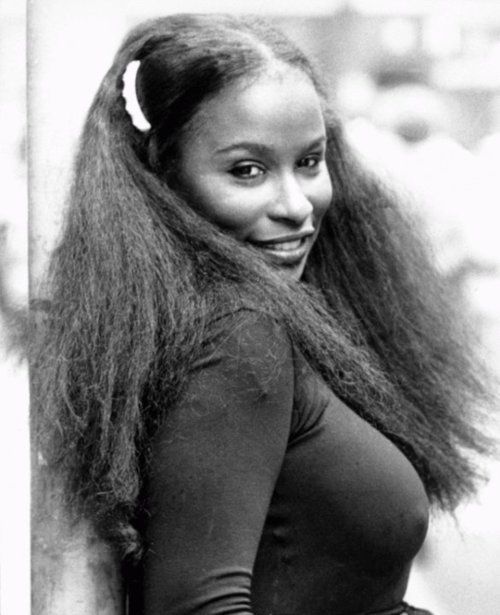
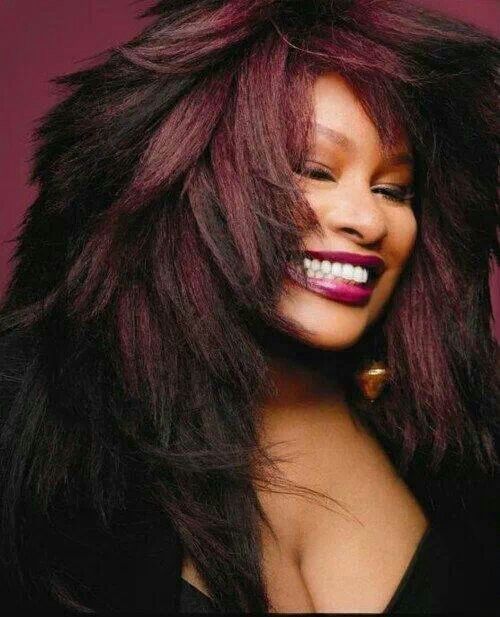
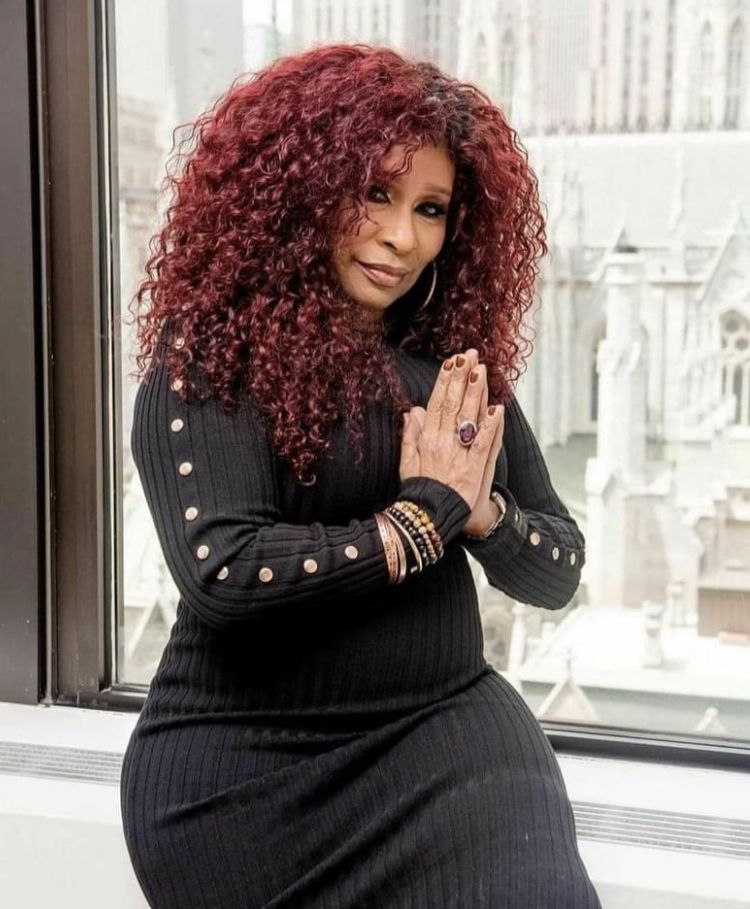
Celebrity Spotlight: Chaka Khan

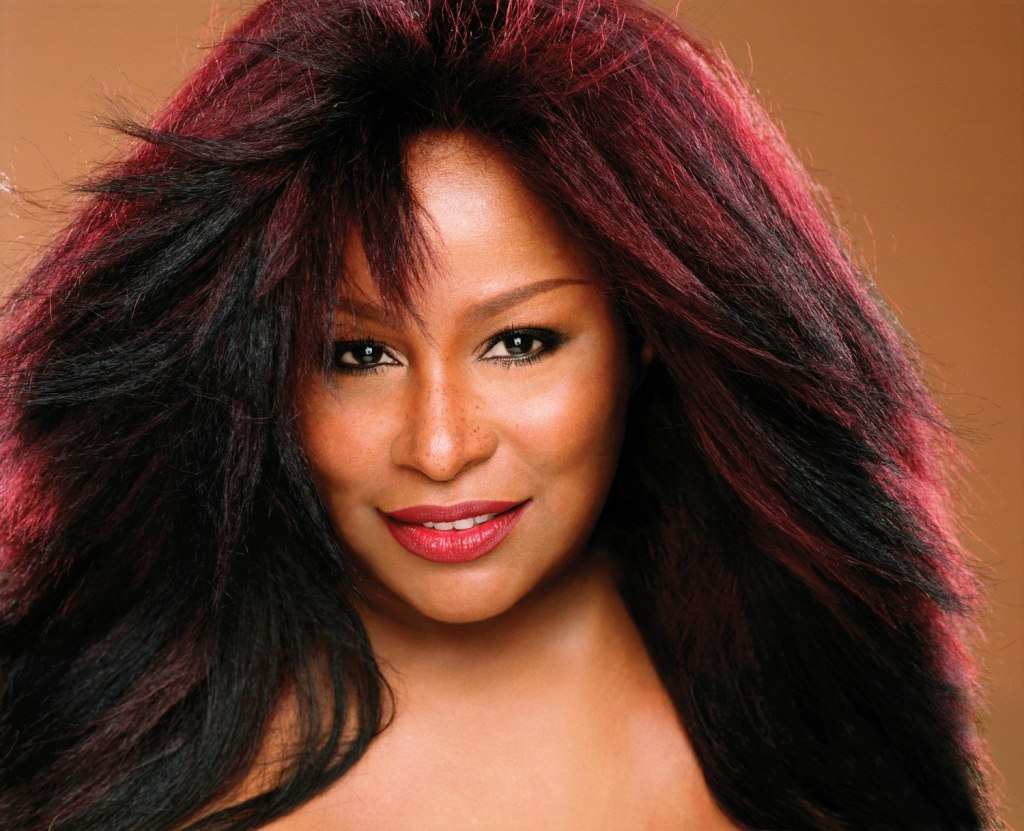
The Queen of Funk-Soul with the iconic hair and powerful voice.

The photograph is the property of its respective owner. No copyright infringement intended.

Chaka Khan, born Yvette Marie Stevens on March 23, 1953, in Chicago, Illinois, is a musical icon whose career has spanned more than five decades. She rose to prominence as the lead vocalist of the funk band Rufus in the 1970s and later established a successful solo career. Her unique fusion of funk, R&B, jazz, and soul has earned her the nickname “The Queen of Funk.”

Chaka Khan’s early life was shaped by her upbringing in a musically inclined family. She developed a passion for singing at a young age, performing in local talent shows and school productions. Her powerful voice, remarkable range, and emotive delivery quickly set her apart from her peers, laying the foundation for her extraordinary career.

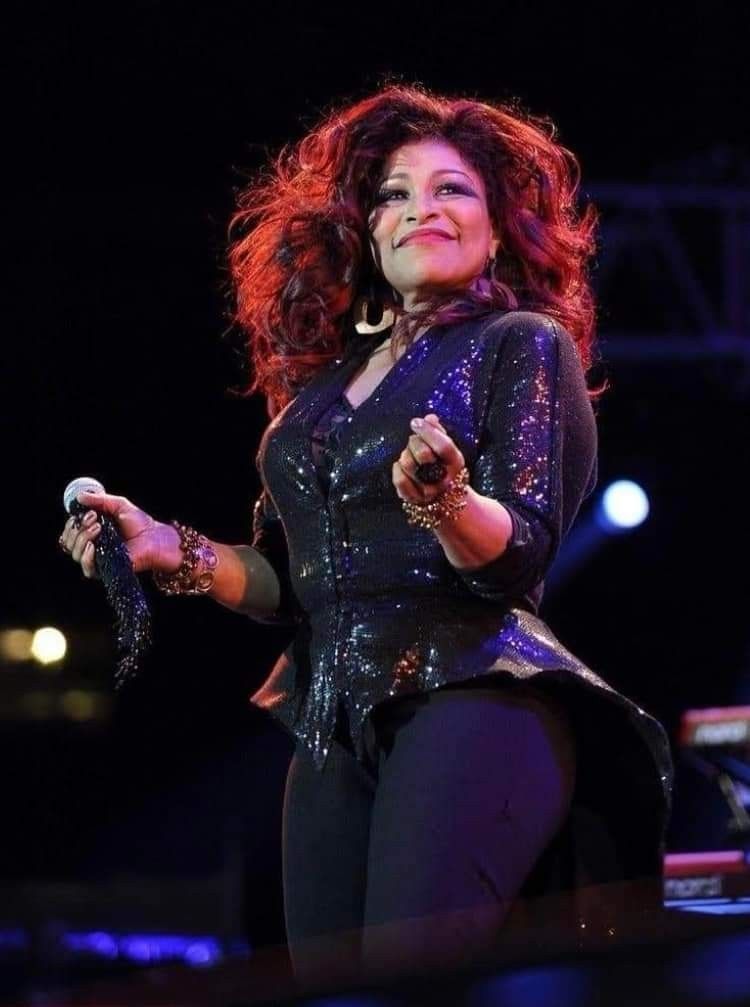
In the mid-1970s, Khan joined the band Rufus, where her electrifying stage presence and vocal prowess brought the group national recognition. Hits like “Tell Me Something Good” and “Sweet Thing” showcased her ability to blend funk rhythms with soulful melodies, propelling Rufus to the top of the charts and cementing her status as a rising star.

The photograph is the property of its respective owner. No copyright infringement intended.

Her solo career, launched in 1978, further solidified her musical legacy. Khan’s ability to seamlessly navigate genres—R&B, funk, jazz, and pop—allowed her to create timeless hits such as “I’m Every Woman,” “Ain’t Nobody,” and “Through the Fire.” These songs became anthems of empowerment and remain staples in popular culture.

Chaka Khan’s contributions to music have earned her numerous accolades, including ten Grammy Awards and multiple nominations across decades. She is celebrated not only for her vocal talent but also for her influence on future generations of artists, inspiring singers like Beyoncé, Mary J. Blige, and Alicia Keys.

Beyond music, Khan’s personal style and beauty have drawn attention. She is renowned for her thick, luxurious mane, which became a signature feature and was reportedly insured due to its iconic status. Her bold fashion choices and radiant presence on stage and off have contributed to her enduring image as a style icon.

The photograph is the property of its respective owner. No copyright infringement intended.

In addition to her artistic achievements, Chaka Khan has navigated personal challenges and relationships in the public eye. She has been married and has one daughter, but much of her private life has remained guarded, reflecting her focus on artistry over celebrity gossip. Her friendships within the music industry, including close bonds with artists like Rufus bandmates and peers in the funk and R&B community, have been crucial for support and collaboration.

Khan’s voice has often been described as a force of nature, capable of delivering both tender emotion and explosive power. Critics frequently note that her vocals can “shatter glass,” reflecting her commanding stage presence and technical mastery. Her voice remains one of the most distinctive and influential in contemporary music history.

Her impact on live performance is legendary. Khan’s concerts are known for their high energy, audience engagement, and moments of improvisation that highlight her vocal agility. Fans worldwide continue to celebrate her dynamic performances, which remain relevant across generations.

The photograph is the property of its respective owner. No copyright infringement intended.

Khan’s influence extends beyond entertainment. She has become a symbol of Black excellence, demonstrating resilience, creativity, and empowerment. Her success as a woman of color in a predominantly male and Eurocentric industry has inspired countless artists to pursue careers in music while embracing their cultural identity.

Throughout her career, Chaka Khan has collaborated with many notable musicians, including Prince, Quincy Jones, and Stevie Wonder. These partnerships have not only enriched her musical catalog but also solidified her reputation as a versatile and respected artist within the industry.

Her awards and honors extend beyond Grammys. Khan has been recognized for her contributions to music and culture, receiving lifetime achievement awards and acknowledgments from various organizations dedicated to celebrating Black artists and women in the entertainment industry.

The photograph is the property of its respective owner. No copyright infringement intended.

Chaka Khan’s most celebrated songs continue to resonate with audiences worldwide. Tracks like “I’m Every Woman” have been reimagined and covered by contemporary artists, ensuring her legacy endures. The themes of empowerment, love, and resilience in her music have transcended generations, making her work timeless.

Even in her later years, Khan maintains a vibrant public persona, striking a balance between her health, performance, and philanthropy. She remains committed to music, touring, and mentoring younger artists, while also embracing her iconic image and personal style, including her signature hair, radiant appearance, and confident presence.

In conclusion, Chaka Khan embodies the intersection of musical genius, personal style, and cultural influence. Her thick, luxurious hair, commanding voice, celebrated hits, and decades of awards solidify her place as one of the most iconic performers in modern music history. Khan’s life and career continue to inspire, reflecting a legacy built on talent, resilience, and unapologetic self-expression.


References

  • George, Nelson. (2004). The Death of Rhythm and Blues. Penguin Books.
  • Khan, Chaka. (2003). Chaka Khan: Through the Fire. HarperCollins.
  • Taraborrelli, J. Randy. (2015). The Superstars: From Tina Turner to Beyoncé. Hachette Book Group.
  • Whitburn, Joel. (2013). Top R&B/Hip-Hop Singles: 1942-2012. Record Research, Inc.
  • PBS. (2005). Chaka Khan: Queen of Funk. Documentary.

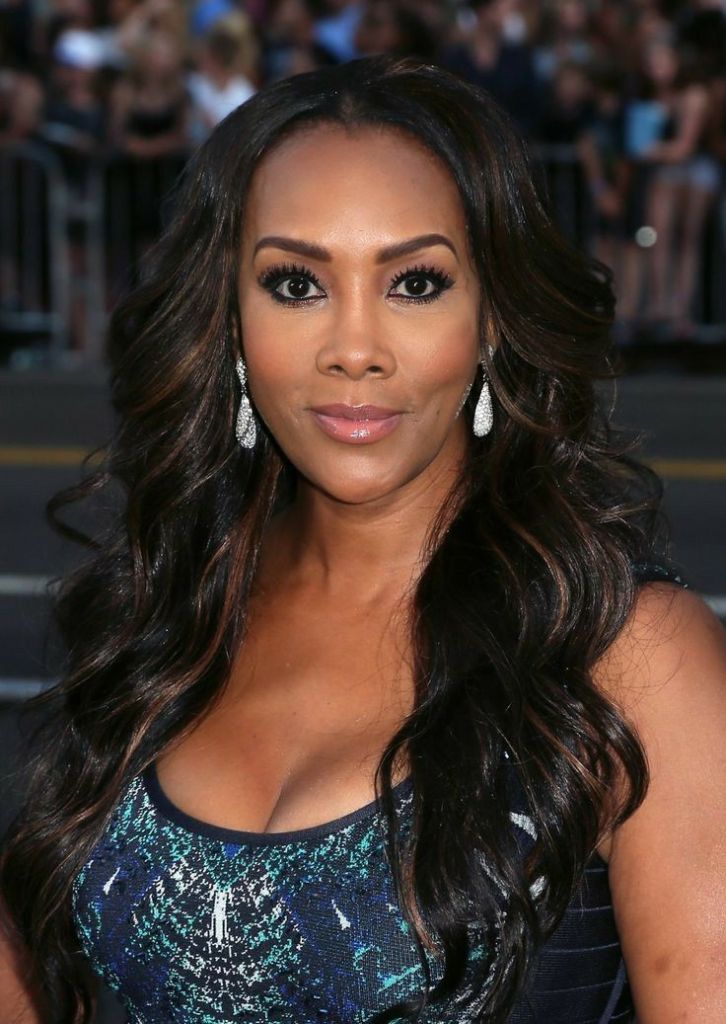
The “It Girl” Series: Vivica A. Fox

The 90s bombshell who turned blockbuster beauty into enduring Black Hollywood power.

This photograph is the property of its respective owner.

In the pantheon of Black Hollywood glamour, few women have embodied resilience, sensuality, and business acumen quite like Vivica A. Fox. With her radiant smile, honey-brown complexion, and unmistakable screen presence, Fox emerged in the 1990s as one of the definitive “It Girls” of her era. She was not merely beautiful—she was bankable. At a time when Hollywood often limited roles for Black actresses, Fox carved out a space where glamour met grit, and vulnerability met strength.

Born July 30, 1964, in South Bend, Indiana, and raised in Indianapolis, Fox earned a degree in social sciences from Golden West College before pursuing acting. Her early career included soap operas such as Days of Our Lives and Generations, where she honed the discipline and stamina required in the entertainment industry. These formative years shaped her work ethic and prepared her for the breakout that would redefine her trajectory.

This photograph is the property of its respective owner.

Fox’s ascension to mainstream fame arrived with her role as Jasmine Dubrow in Independence Day (1996). Acting alongside Will Smith, she portrayed a devoted girlfriend and single mother navigating apocalyptic chaos. The film grossed over $800 million worldwide, cementing Fox as a recognizable face in blockbuster cinema. That same year, she starred opposite Jada Pinkett Smith and Queen Latifah in Set It Off, a cultural landmark that remains one of the most significant portrayals of Black female antiheroes in American film history. Her performance as Frankie Sutton—loyal, fierce, and tragically vulnerable—demonstrated dramatic range and emotional depth.

This photograph is the property of its respective owner.

Throughout the late 1990s and early 2000s, Fox became synonymous with box office consistency and romantic allure. She starred in Soul Food, a film adaptation of the television series’ precursor, highlighting Black family dynamics, and appeared in Why Do Fools Fall in Love, portraying Elizabeth Waters opposite Halle Berry. Fox also displayed comedic brilliance in Booty Call and dramatic intensity in Kill Bill: Vol. 1, directed by Quentin Tarantino. As Vernita Green (Copperhead), she embodied physical power and maternal complexity, proving she could dominate action cinema alongside global stars.

In the 2010s, Vivica A. Fox strategically expanded her brand through a prolific partnership with Lifetime, becoming one of the network’s most recognizable leading ladies and executive producers. She headlined and produced multiple entries in the popular thriller franchise commonly known as “The Wrong” series—including titles such as The Wrong Roommate and The Wrong Fiancé—which centered on suspense-driven narratives involving deception, obsession, and betrayal. In 2020, Fox solidified her relationship with Lifetime and its parent company, A+E Networks, by signing a first-look development and producing deal. The agreement positioned her to both star in and executive produce original films for the network, effectively transitioning her from on-screen talent to creative architect. This deal underscored her business acumen, granting her expanded influence over storytelling while ensuring sustained visibility in a competitive industry.

Beyond acting, Fox evolved into a producer and entrepreneur, founding Foxy Brown Productions. She later became a staple of television, starring in and producing projects for networks such as Lifetime, often portraying sophisticated, high-powered women. Her longevity in the industry reflects not only talent but adaptability—an essential attribute for Black actresses navigating Hollywood’s shifting landscape.

Culturally, Fox’s beauty represented the quintessential “All-American” glamour filtered through a distinctly Black aesthetic. Her softly arched brows, almond-shaped eyes, and luminous skin tone positioned her within mainstream beauty discourse at a time when representation was limited. Yet her appeal transcended aesthetics. She carried herself with confidence, humor, and unapologetic femininity, influencing a generation of actresses and audiences alike.

Vivica A. Fox is an “It Girl” not because of fleeting popularity, but because of sustained visibility, cultural impact, and professional endurance. She represents the archetype of the 1990s Black Hollywood starlet who matured into a mogul—gracefully, strategically, and unapologetically. In a world that often sidelines women as they age, Fox has maintained relevance, embodying elegance and resilience.

Her legacy is one of survival and success. She is not simply remembered for her roles; she is remembered for her presence—bold, beautiful, and enduring.


References

Bogle, D. (2016). Toms, Coons, Mulattoes, Mammies, and Bucks: An interpretive history of Blacks in American films (Updated ed.). Bloomsbury Academic.

Guerrero, E. (1993). Framing Blackness: The African American image in film. Temple University Press.

IMDb. (n.d.). Vivica A. Fox. Retrieved from https://www.imdb.com

Mask, M. (2009). Divas on screen: Black women in American film. University of Illinois Press.

A+E Networks. (2020). Vivica A. Fox signs first-look development deal with Lifetime. Press release.

Deadline. (2020). Vivica A. Fox inks first-look deal with Lifetime.

IMDb. (n.d.). Vivica A. Fox filmography. Retrieved from https://www.imdb.com

Lifetime. (n.d.). Original movies featuring Vivica A. Fox. Retrieved from https://www.mylifetime.com

The “It Girl” Series: Regina King

With hazel eyes that see truth and talent that commands history, Regina King doesn’t follow eras — she defines them.

This photograph is the property of its respective owner.

There are actresses, there are auteurs, and then there is Regina King — a woman whose career arc reflects brilliance, endurance, evolution, and cultural gravitas. Regina King is not merely an “It Girl” because of a trend or visibility. She is an It Girl because she embodies excellence — consistently, intelligently, and unapologetically.

From child star to Academy Award winner to Emmy-winning television powerhouse and acclaimed director, King represents the rare Hollywood figure whose relevance deepens with time.


Early Life & How She Got Started

Born January 15, 1971, in Los Angeles, California, Regina King grew up in View Park–Windsor Hills, a historically Black middle-class enclave. After her parents divorced, King was raised primarily by her mother, Gloria, and encouraged to pursue both education and performance.

Her professional career began in 1985 when she was cast as Brenda Jenkins on the NBC sitcom 227. As the witty, sharp-tongued teenage daughter of Mary Jenkins (played by Marla Gibbs), King displayed natural comedic timing and emotional intelligence beyond her years. “227” ran for five seasons and established her as a household name in Black America.

Unlike many child actors, King did not disappear. She transitioned deliberately into film, starring in culturally defining projects such as Boyz n the Hood (1991), Poetic Justice (1993), and Friday (1995). Each role expanded her range — from socially conscious drama to romantic intensity to comedic realism.


This photograph is the property of its respective owner.

Becoming a Hollywood Force

By the 2000s, Regina King was no longer simply a former child star — she was a powerhouse performer. Her television performances in Southland and American Crime earned her critical acclaim and multiple Emmy Awards. In fact, she has won four Primetime Emmy Awards, making her one of the most decorated Black actresses in television history.
Her career-defining film role came in If Beale Street Could Talk, directed by Barry Jenkins. Her portrayal of Sharon Rivers — a fierce, protective mother — earned her the Academy Award for Best Supporting Actress in 2019. In her Oscar acceptance speech, King declared:

“I’m an example of what it looks like when support and love is poured into someone.”

That statement encapsulates her ethos: grounded, grateful, powerful.

She later directed the critically acclaimed film One Night in Miami…, becoming the first Black woman to direct a film selected for the Venice Film Festival in 2020. The film dramatized a fictionalized meeting between Malcolm X, Muhammad Ali, Jim Brown, and Sam Cooke — positioning King not only as an actress but as a cultural curator of Black history.


Portraying Shirley Chisholm

In 2024, King portrayed pioneering congresswoman Shirley Chisholm in the Netflix film Shirley. Chisholm, the first Black woman elected to Congress and the first Black candidate for a major party’s presidential nomination, required gravitas, discipline, and historical sensitivity. King brought both power and tenderness to the role, further solidifying her reputation for portraying strong, intelligent Black women rooted in political and emotional complexity.


Her Family, Marriage & Personal Loss

Regina King married record executive Ian Alexander Sr. in 1997. They divorced in 2007. Together, they had one son, Ian Alexander Jr.

In January 2022, Ian Alexander Jr. died by suicide at age 26. The tragedy stunned Hollywood and the public. King released a statement describing her son as “a bright light who cared so deeply about the happiness of others.”

Her strength in the aftermath was quiet but profound. She requested privacy while expressing gratitude for the outpouring of love. In interviews before his death, she had often described motherhood as her greatest joy. Afterward, she has spoken about grief as something that does not disappear but transforms.

Her resilience has deepened public admiration. She embodies a particular kind of Black maternal dignity — one that does not collapse under public pain but refuses spectacle. All the best to her.


This photograph is the property of its respective owner.

Beauty, Presence & Hollywood Appeal

Regina King’s beauty is understated yet magnetic. Her warm hazel eyes — often highlighted by minimal, elegant styling — convey intelligence and emotional awareness. Casting directors frequently praise her for her ability to “listen on camera,” a rare acting skill that makes her performances feel lived-in rather than performed.

Critics often describe her as:

  • Disciplined
  • Emotionally precise
  • Thoughtful
  • Commanding without arrogance

Viola Davis once publicly praised King’s range and fearlessness, and many directors note her preparation and leadership on set. Her appeal in Hollywood stems from three rare combinations:

  1. Talent across mediums (film, television, directing)
  2. Professional longevity without scandal-driven notoriety
  3. Intellectual depth paired with cultural authenticity

She is popular not because she is loud, but because she is consistently excellent.


This photograph is the property of its respective owner.

Why She Is an “It Girl”

The term “It Girl” is often associated with trendiness, youth, or fleeting fame. Regina King redefines it.

She is an It Girl because:

  • She began as a teenage sitcom star and evolved into an Oscar-winning actress.
  • She commands respect in both acting and directing.
  • She carries herself with moral and intellectual clarity.
  • She uplifts Black history through her work.
  • She balances glamour with groundedness.

She represents aspirational Black womanhood — educated, accomplished, emotionally complex, and culturally conscious.

Her favorites often include roles that explore justice, motherhood, and Black identity — themes aligned with her public values. She has stated in interviews that she chooses projects that matter socially, not merely financially.


Popularity & Cultural Position

Regina King is popular because she bridges generations:

  • Millennials remember her from Friday.
  • Gen X remembers her from 227.
  • Gen Z knows her from Watchmen.
  • Cinephiles respect her Oscar win.
  • Scholars respect her directorial contributions.

Few artists manage that breadth.

In a Hollywood system that often sidelines Black women after a certain age, King has grown more powerful, not less visible. She is the embodiment of sustained relevance.

Regina King is not simply an actress.
She is a cultural institution.

And in the It Girl Series, she stands as proof that brilliance, when cultivated with discipline and dignity, never fades — it evolves.


References

Academy of Motion Picture Arts and Sciences. (2019). 91st Academy Awards winners list.

Emmys. (n.d.). Regina King – Award history. Television Academy.

IMDb. (n.d.). Regina King filmography. Retrieved from https://www.imdb.com

Jenkins, B. (Director). (2018). If Beale Street Could Talk [Film]. Annapurna Pictures.

King, R. (Director). (2020). One Night in Miami… [Film]. Amazon Studios.

Netflix. (2024). Shirley [Film].

NBC. (1985–1990). 227 [Television series].

People Magazine. (2022). Regina King statement on the death of her son.

The Hollywood Reporter. (2019–2024). Interviews and coverage on Regina King’s directing and acting career.

Variety. (2018–2024). Coverage of Regina King’s awards and industry impact.

The Ebony Dolls: Stacey Dash

“Striking Beauty, Unforgettable Presence.”

This photograph is the property of its respective owner. No copyright infringement intended.

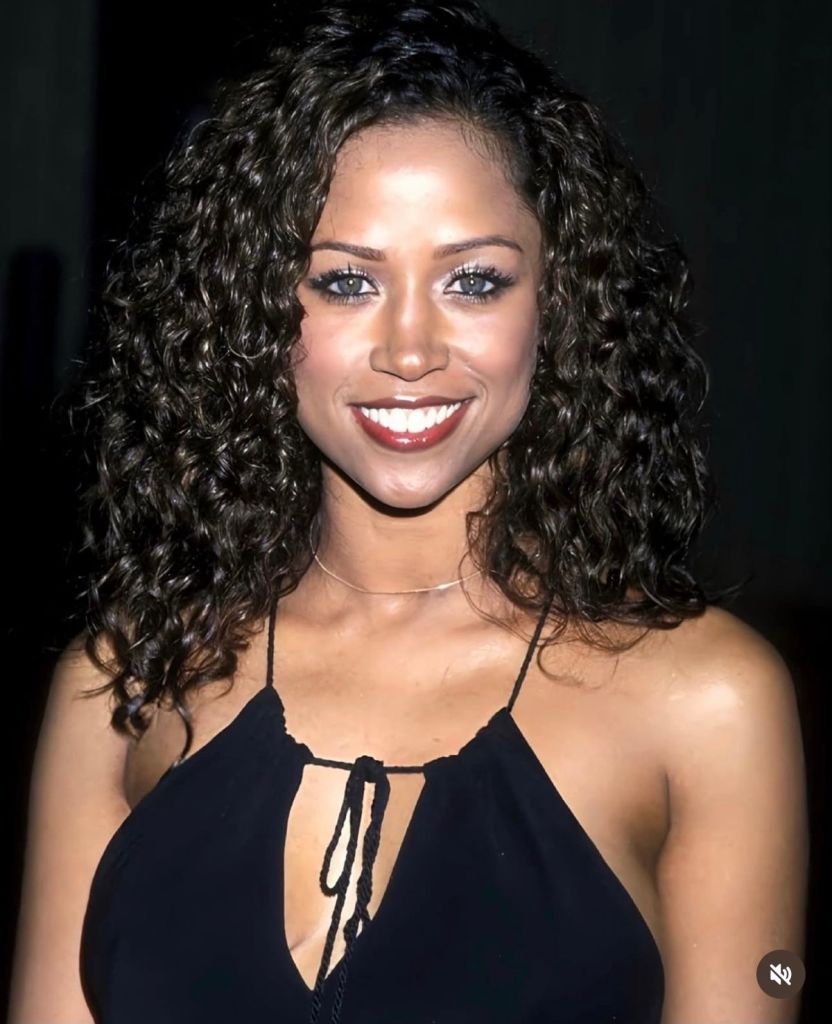
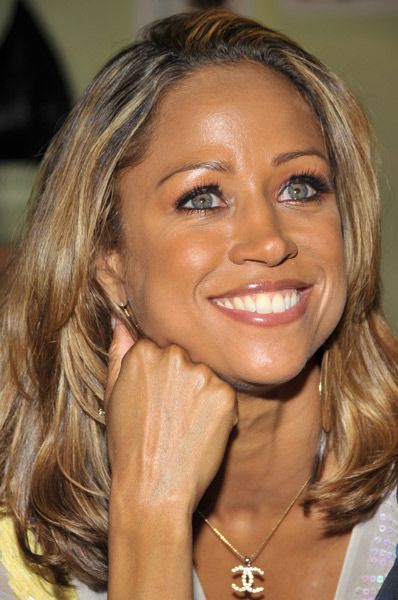
Stacey Dash is an actress and former television personality whose career spans film, television, and political commentary. Born Stacey Lauretta Dash on January 20, 1967, in the Bronx, New York, she rose to prominence in the 1990s as one of Hollywood’s most recognizable light-skinned Black actresses, known for her youthful appearance, symmetrical features, and refined on-screen charisma.

Dash was raised in a culturally diverse household. Her father is African American, and her mother is of Mexican and Afro-Bajan (Barbadian) descent. This blended heritage contributed to her distinctive look—high cheekbones, almond-shaped, striking green eyes, radiant complexion, and a delicate facial structure that often allowed her to portray characters younger than her actual age. Her beauty became one of her defining industry trademarks.

This photograph is the property of its respective owner.

She began her acting career in the mid-1980s, making her television debut in the NBC crime drama Crime Story (1985). Her first film appearance came in Enemy Territory (1987), followed by roles in films such as Moving, Mo’ Money, and Renaissance Man. These early roles positioned her within urban and mainstream cinema, but she had yet to achieve breakout stardom.

Her defining breakthrough came in 1995 with the teen comedy Clueless, where she portrayed Dionne Davenport alongside Alicia Silverstone. Although Dash was in her late twenties at the time, she convincingly played a fashionable high school student. The film became a cultural phenomenon, and Dionne’s stylish, witty, and confident persona cemented Dash as a pop-culture icon of the 1990s. She later reprised the role in the television adaptation of Clueless (1996–1999).

Throughout the late 1990s and early 2000s, Dash appeared in films such as View from the Top, Gang of Roses, and Paper Soldiers, as well as television programs including The Game and Single Ladies. She also appeared in music videos, most notably in Kanye West’s “All Falls Down,” which reintroduced her to a younger generation of viewers.

This photograph is the property of its respective owner. No copyright infringement intended.

In addition to acting, Dash transitioned into political commentary in the 2010s, becoming a contributor for Fox News. This career pivot sparked significant public discourse and polarized opinions, impacting her public image and altering the trajectory of her entertainment career.

In her personal life, Dash has been married multiple times and is the mother of two children. Despite public scrutiny and media attention surrounding her relationships and political views, she has remained a figure of fascination due to her longevity in public consciousness.

While Dash has not received major Academy-level awards, Clueless remains a cult classic, and her character Dionne continues to be referenced in discussions of 1990s fashion and teen cinema. Her cultural influence is tied heavily to that era’s aesthetic and the representation of affluent, stylish Black teen femininity in mainstream film.

This photograph is the property of its respective owner.

Why is she considered an “Ebony Doll”? The phrase, when used respectfully, reflects admiration for her polished features, petite frame, smooth complexion, and doll-like facial symmetry. She embodied a glamorous, fashion-forward image that blended softness with confidence. Her presence in Clueless especially presented a portrayal of a young Black woman who was affluent, articulate, stylish, and socially powerful—an image not commonly centered in 1990s teen films.

Stacey Dash represents a specific moment in Black pop culture history: the era of glossy, MTV-influenced cinema, high-fashion teen comedies, and multicultural casting that subtly shifted representation. Whether through admiration or controversy, her visibility has been enduring.

She remains a figure associated with timeless 1990s beauty, cultural conversation, and a defining cinematic role that continues to resonate decades later.


References

IMDb. (n.d.). Stacey Dash – Filmography and Biography.
Wikipedia contributors. (n.d.). Stacey Dash.
Paramount Pictures archives. Clueless (1995).
Fox News archives (2014–2017 contributor records).

The Ebony Dolls: Joyce Bryant

The Bronze Blonde Bombshell Who Redefined Black Glamour

In the golden age of American nightlife, before the Civil Rights Movement reshaped the nation’s moral compass, one woman stood beneath the spotlight with silver hair gleaming and a voice that silenced entire rooms. Joyce Bryant was not merely a nightclub singer — she was spectacle, defiance, elegance, and contradiction embodied. She was called “The Bronze Blonde Bombshell,” “The Black Marilyn Monroe,” and “The Voice You’ll Always Remember.” Yet beyond the glamour was a woman of discipline, faith, and conviction whose life defied the industry that made her famous.

Born Ione Emily Bryant on October 14, 1927, in Oakland, California, and raised in San Francisco in a strict Seventh-day Adventist household, Bryant’s upbringing was conservative and deeply religious. Her early life did not forecast the sensual icon she would become. At fourteen, she briefly eloped — a youthful rebellion that ended almost as quickly as it began. It would not be the last time she surprised those who tried to define her.

Her entry into entertainment was accidental. In 1946, while visiting Los Angeles, she accepted a dare to sing at a nightclub to earn money for her return home. The club owner paid her $25 and invited her back. That impromptu performance marked the birth of a career that would soon electrify New York’s nightclub circuit.

By the late 1940s and early 1950s, Bryant was headlining major venues, reportedly earning thousands per week — an extraordinary sum for a Black woman in segregated America. Her four-octave vocal range captivated audiences, but it was her appearance that made her unforgettable. She dyed her hair metallic silver — initially using radiator paint — and wore impossibly tight mermaid gowns that required her to be sewn into them before performances. She moved minimally on stage, creating an aura of mystique that intensified her sensual presence.

Her aesthetic was deliberate. In an era when Black women were often denied glamorous representation, Bryant constructed herself as living art. In 1954, Ebony magazine named her one of the five most beautiful Black women in the world, alongside icons such as Lena Horne, Eartha Kitt, and Dorothy Dandridge. That recognition solidified her place within the visual lineage of celebrated Black femininity — what cultural historians often describe metaphorically as “Ebony Dolls”: women whose beauty, poise, and cultural visibility reshaped aesthetic standards.

Bryant’s recordings included songs such as “Love for Sale,” “Runnin’ Wild,” and “Drunk with Love.” Some were banned from radio due to perceived suggestiveness. Yet the controversy only amplified her allure. She was daring but never vulgar; provocative yet controlled. She understood that power in performance was not merely about exposure, but about command.

Her impact extended beyond aesthetics. Bryant broke racial barriers by performing in previously segregated venues, including Miami Beach nightclubs that rarely booked Black entertainers. She received threats from white supremacist groups but continued performing, quietly challenging Jim Crow norms with every booking.

Despite reaching the height of nightclub fame, Bryant walked away from it all in the mid-1950s. Disillusioned with the exploitation and moral compromises demanded by the entertainment industry, she returned to her religious roots. She studied at Oakwood College and devoted herself to faith-based service and activism. She also participated in civil rights fundraising efforts and supported the broader movement for racial justice emerging under leaders such as Martin Luther King Jr..

Unlike many performers who fade into obscurity after leaving the spotlight, Bryant reinvented herself. In the 1960s, she returned as a classically trained vocalist, studying opera and performing with respected companies including the New York City Opera. Her transition from nightclub bombshell to operatic soprano confounded critics who had underestimated her discipline and artistry.

Her film work was limited but historically noted. She appeared in the 1946 crime film Mr. Ace, performing as a nightclub singer. While Hollywood never fully capitalized on her magnetism, her screen presence remains a testament to her versatility.

Personally, Bryant’s life was marked more by independence than domestic publicity. Aside from her teenage elopement, she did not build her legacy around marriage or publicized romantic partnerships. Instead, she cultivated a life of artistic growth, spiritual conviction, and community service.

In later years, renewed interest in her story led to documentaries and retrospectives, reintroducing her to audiences who had never witnessed her reign firsthand. She passed away in Los Angeles in 2022 at the age of 95, leaving behind a legacy that spans glamour, resistance, faith, and reinvention.

Why is Joyce Bryant considered an Ebony Doll? Because she represented an archetype rarely afforded to Black women in mid-20th-century America: high glamour without apology, sensuality without shame, beauty without concession to Eurocentric standards. She crafted her image intentionally and then relinquished it on her own terms. She proved that beauty and righteousness, performance and principle, could coexist within one woman.

Joyce Bryant was not merely a nightclub sensation. She was a cultural architect of Black glamour. She was a pioneer who stood radiant in silver hair beneath hostile skies — and she remains a symbol of elegance forged in resistance.


References

Bryant, J. (n.d.). Official Biography. JoyceBryant.net.

Joyce Bryant. (2024). In Wikipedia.

Ebony. (1954). “The World’s Most Beautiful Black Women.” Ebony Magazine.

Mr. Ace. (1946). Republic Pictures.

Black Women Radicals. (n.d.). Joyce Bryant Biography.

Ebony Magazine. (2022). “Acclaimed Singer Joyce Bryant Passes Away at 95.”

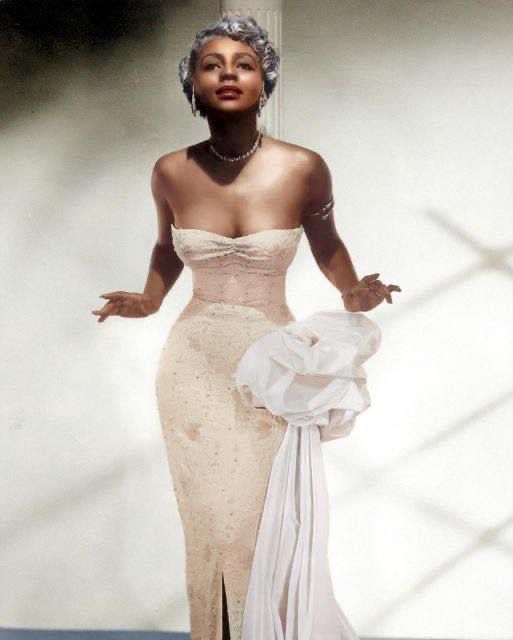
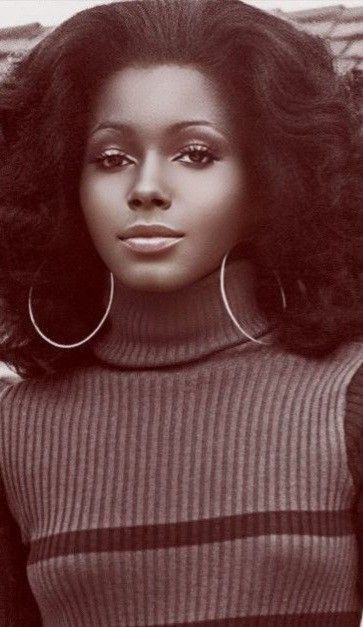
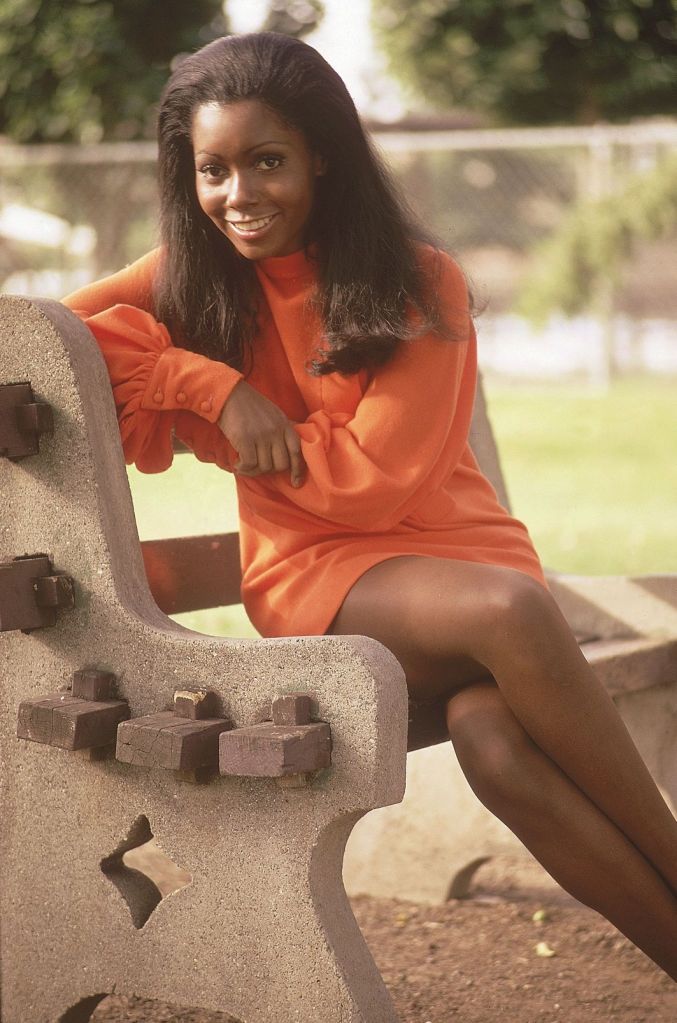
The Ebony Dolls: Judy Pace

The Black Barbie

This photograph is the property of its owner. No copyright infringement intended.

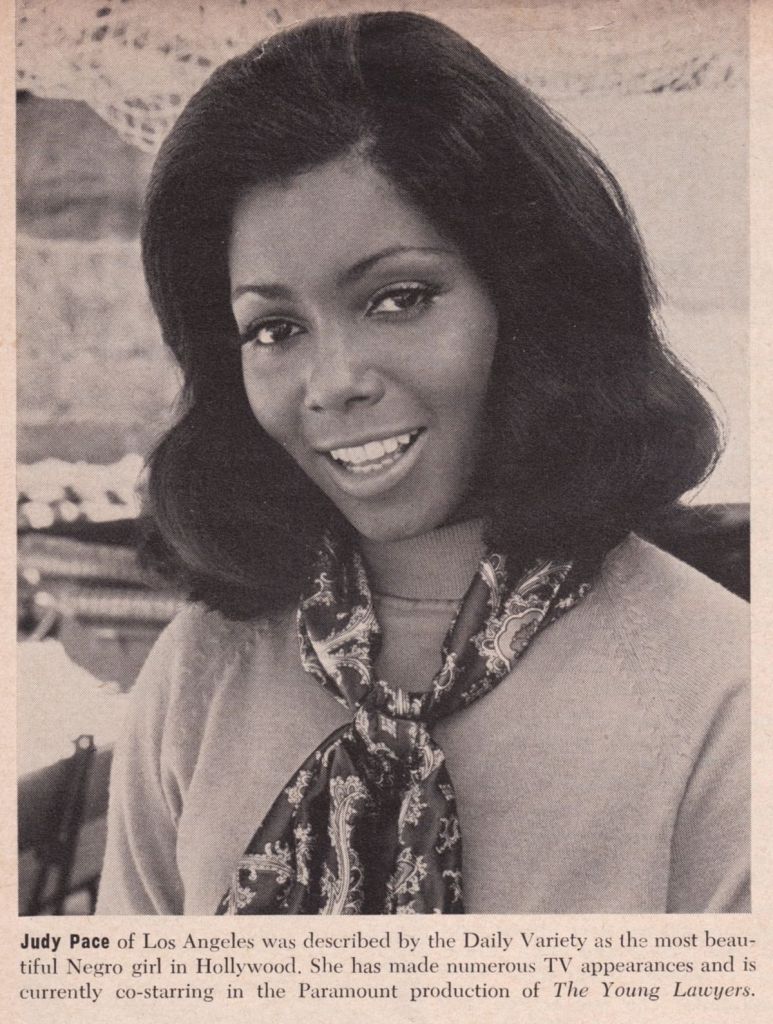
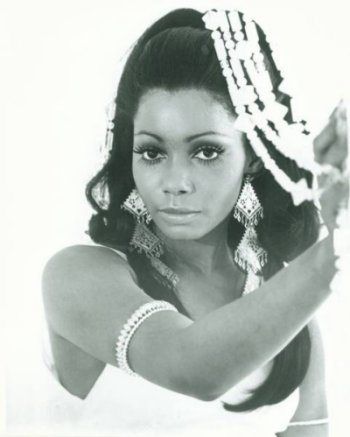
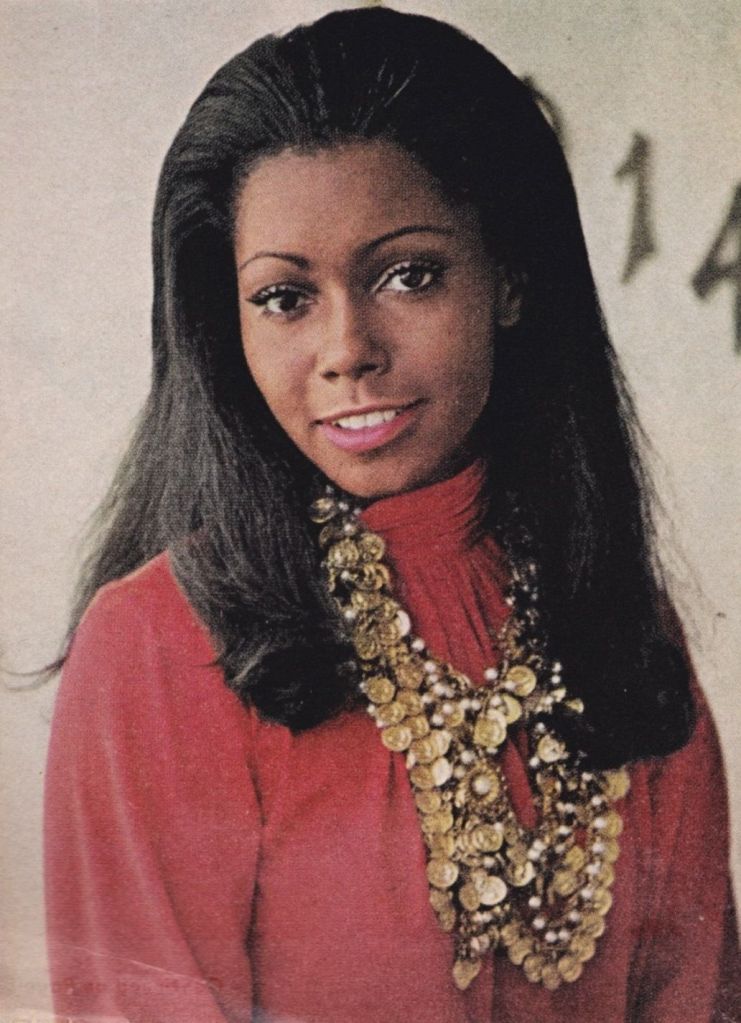
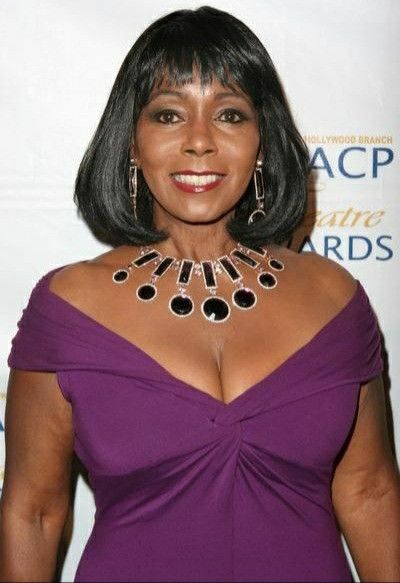
Judy Pace is an American actress and model whose beauty, talent, and groundbreaking presence helped reshape Hollywood’s portrayal of Black women during the 1960s and 1970s. Born Judy Lenteen Pace on June 15, 1942, in Los Angeles, California, she emerged at a time when opportunities for dark-skinned Black actresses were limited, yet she transcended barriers with elegance and strength. She was not simply a performer; she became a symbol of refined Black beauty during an era of cultural transformation.

Raised in Los Angeles, Pace grew up in a creative and supportive household. Her father worked as an airplane mechanic and her mother was a dressmaker. She attended Los Angeles City College, where she studied sociology before transitioning into modeling. Her entry into the entertainment industry came through fashion, and she quickly distinguished herself as the youngest model to participate in the prestigious Ebony Fashion Fair. That platform placed her before national audiences and positioned her as a rising figure in Black fashion and media.

This photograph/article is the property of its respective owner.

Her modeling success opened the door to film. She made her screen debut in 1963 in 13 Frightened Girls, marking the beginning of a steady acting career. However, her true breakthrough came in 1968 when she joined the cast of the television drama Peyton Place, becoming the first Black female villainess in American prime-time television history. This role was culturally significant; it disrupted the narrow stereotypes assigned to Black women and introduced complexity and intrigue to their representation onscreen.
This photograph is the property of its owner. No copyright infringement intended.

Pace continued her television success with a starring role in The Young Lawyers from 1969 to 1971. Her performance earned her the NAACP Image Award for Outstanding Actress in a Drama Series in 1970, affirming both her talent and her cultural impact. Throughout the 1970s, she appeared in numerous popular television shows, including Batman, Bewitched, I Dream of Jeannie, Sanford and Son, and Good Times. Her film credits include Three in the Attic and Cotton Comes to Harlem, further solidifying her versatility across genres.

This photograph is the property of its respective owner.

Beyond her acting, Judy Pace was widely celebrated for her striking appearance. Her dark chocolate complexion, luminous skin, and expressive eyes captivated photographers and audiences alike. During a period when colorism often privileged lighter complexions, she stood unapologetically as a dark-skinned beauty icon. Industry publications described her as one of the most beautiful women to appear on screen. She was affectionately referred to as “The Black Barbie” and “The Black Babydoll,” titles that reflected both admiration and her doll-like elegance.

Her beauty, however, was never detached from intellect or poise. Pace represented a refined femininity that balanced strength with softness. She carried herself with composure and confidence, embodying the spirit of the “Black is Beautiful” movement that was redefining aesthetic standards in America. In this sense, she became more than a glamorous figure; she became a cultural affirmation.

This photograph is the property of its owner. No copyright infringement intended.

In her personal life, she married actor Don Mitchell in 1972. The couple had two daughters, including actress Julia Pace Mitchell. After their divorce in 1984, Pace later married baseball legend Curt Flood in 1986. Flood was a pivotal figure in Major League Baseball’s fight for free agency, and their union linked two pioneering spirits—one in sports justice and the other in entertainment representation. They remained married until Flood’s passing in 1997.

Judy Pace’s lineage reflects African American heritage rooted in Los Angeles, and her life represents the postwar generation of Black Americans who navigated integration, civil rights transformation, and evolving media landscapes. Her career unfolded during a critical historical moment when Black visibility in Hollywood was expanding but still constrained. She stepped into that space with confidence and sophistication.

Why is she a great “Ebony Doll”? Because she embodied grace under pressure. She broke barriers without loud proclamations, simply by being excellent. She proved that dark-skinned Black women could be leading ladies, complex characters, and national beauty icons. She expanded what America saw when it looked at Black womanhood.

This photograph is the property of its respective owner.

Judy Pace is elegant. She is a representation. She is cinematic history. She is the quiet revolution of beauty and talent walking through Hollywood’s doors when they were only slightly open.

References

BlackPast.org. (n.d.). Judy Lenteen Pace (1942– ).
IMDb. (n.d.). Judy Pace – Biography.
NAACP Image Awards archives. (1970). Outstanding Actress in a Drama Series.
Wikipedia contributors. (n.d.). Judy Pace.
Wikipedia contributors. (n.d.). Julia Pace Mitchell.
Wikipedia contributors. (n.d.). Curt Flood.

Betty Boop: The Hidden Black Roots Behind an American Icon.

Betty Boop is widely remembered as one of the most recognizable animated characters in American history—flirtatious, wide-eyed, baby-voiced, and emblematic of the Jazz Age. Created during the Great Depression, she became a cultural symbol of femininity, modernity, and rebellion. Yet beneath the animated glamour lies a layered and contested origin story that intersects with race, music, and the appropriation of Black artistry in early American entertainment.

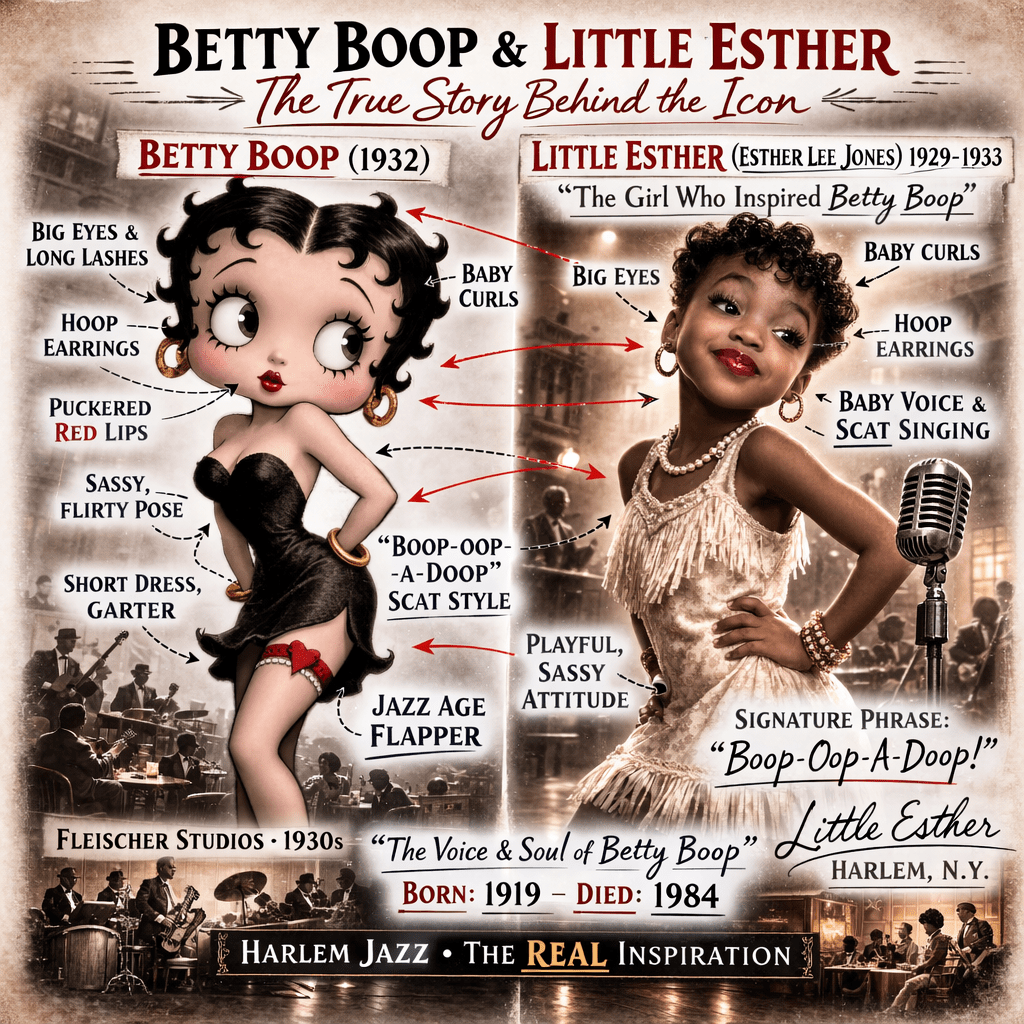
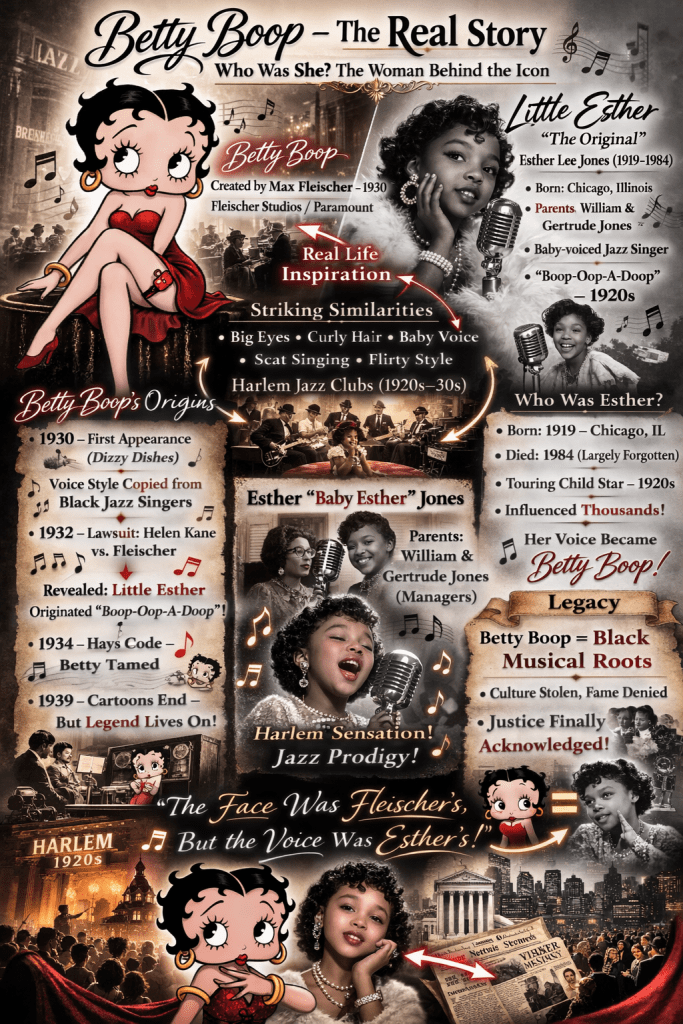
Betty Boop was created by animator Max Fleischer and introduced in 1930 through Fleischer Studios. Her first appearance was in the cartoon Dizzy Dishes, part of the Talkartoons series distributed by Paramount Pictures. Initially, Betty was not even human; she debuted as an anthropomorphic French poodle performing in a nightclub. Over time, her floppy ears were transformed into hoop earrings, and her canine features softened into the human flapper figure audiences recognize today.

The early 1930s were a time when jazz reigned supreme, and animated shorts often borrowed heavily from live musical performances. Fleischer Studios regularly featured jazz musicians and nightclub aesthetics. Betty’s exaggerated baby voice, rhythmic phrasing, and scat-style singing were not accidental inventions but reflections of popular Black musical traditions that had been captivating audiences nationwide.

Central to Betty Boop’s origin story is the Black child performer known as Little Esther Phillips, born Esther Lee Jones in Chicago. Known professionally as “Baby Esther” or “Little Esther,” she rose to fame in the late 1920s. Managed by her parents, William and Gertrude Jones, she performed in Harlem nightclubs and toured nationally. Her act included a distinctive baby-voiced scat style filled with sounds like “Boop-oop-a-doop,” a phrase that would later become Betty Boop’s signature catchphrase.

Esther was a prodigy who captivated audiences in venues across New York City, particularly during the height of the Harlem Renaissance. Her performances were known for their playful vocal improvisations, expressive facial gestures, and rhythmic phrasing. Contemporary reports describe her as electrifying, charming, and musically advanced beyond her years.

In 1932, a lawsuit brought national attention to Esther’s connection to Betty Boop. Helen Kane, a white singer famous for her 1928 hit “I Wanna Be Loved by You,” sued Fleischer Studios for allegedly stealing her “boop-boop-a-doop” style for Betty Boop. Kane claimed the animated character was an unauthorized caricature of her persona.

During the trial, however, evidence was introduced showing that Helen Kane herself had borrowed the vocal style from Little Esther. Film footage was presented of Esther performing her baby-voiced scat years before Kane adopted the style. The court ultimately ruled against Kane, concluding that the baby-voice technique was not original to her and therefore could not be exclusively claimed.

This lawsuit, though unsuccessful for Kane, revealed a broader pattern of racial borrowing in American entertainment. Black performers often originated musical styles that were later popularized by white entertainers who received greater financial rewards and national recognition. Betty Boop’s voice and persona thus sit at the crossroads of Black innovation and white commercial adaptation.

Betty Boop herself evolved rapidly. By 1932, she became the first female animated character to star in her own cartoon series. She embodied the flapper archetype—short dress, garter, high heels, and a coquettish demeanor. In many ways, she reflected the liberated woman of the Roaring Twenties, challenging Victorian modesty with playful sensuality.

However, with the enforcement of the Hays Code in 1934, Betty’s overt sexuality was toned down. Her hemlines were lowered, her garter removed, and her storylines became more domestic. This shift marked not only a moral tightening in Hollywood but also a decline in Betty’s rebellious jazz-era spirit.

Meanwhile, Little Esther’s career faced its own challenges. As she matured, the novelty of her childlike voice faded in the eyes of mainstream promoters. Despite her talent, she did not receive the same long-term commercial success as the animated character inspired by her style. Her later life remains less documented than her early performances, reflecting the historical marginalization of many Black entertainers of that era.

The question “Was Esther Betty Boop?” is complex. Legally, Betty Boop was not officially based on Esther. The court did not credit her as the direct inspiration. Yet culturally and musically, the similarities are striking. Esther’s scat syllables, vocal tone, and rhythmic delivery predated both Helen Kane and Betty Boop’s animated persona.

Betty Boop was often compared to the flapper girls of the Jazz Age—bold, urban, and flirtatious. Yet her voice carried the imprint of Harlem’s jazz clubs. The aesthetics of early animation borrowed liberally from Black musical spaces while rarely acknowledging their origins.

Max Fleischer himself was an innovator in animation, pioneering techniques like rotoscoping. Yet like many creators of his time, he operated within an entertainment industry shaped by racial hierarchies. Whether consciously or not, Fleischer Studios benefited from cultural forms birthed in Black communities.

Betty Boop’s popularity soared throughout the 1930s. She appeared in more than 90 cartoons and became a merchandising phenomenon. Dolls, comic strips, and advertisements cemented her as a household name. She remains one of the most enduring animated icons in American pop culture.

Esther Lee Jones, by contrast, did not enjoy such immortality. Her contributions were largely overshadowed in mainstream history. Only in recent decades have scholars and cultural critics revisited the 1932 lawsuit to reconsider her influence on American animation and popular music.

Betty Boop as a character never “died” in the conventional sense; her cartoon series ended in 1939, but she was revived through syndication and nostalgic merchandising. She remains a symbol of retro Americana, appearing on clothing, collectibles, and themed events worldwide.

Little Esther’s death date is less clearly documented in popular historical sources, which itself reflects how incomplete archival records can be for Black performers of the early twentieth century. Her story survives primarily through court transcripts, jazz histories, and cultural scholarship examining appropriation in entertainment.

The legacy of Betty Boop is therefore dual-layered. On the surface, she represents animation history and the Jazz Age aesthetic. Beneath that surface lies a deeper narrative about artistic borrowing, race, and the erasure of Black innovators from mainstream credit.

Today, conversations about Betty Boop increasingly acknowledge Little Esther’s role in shaping the vocal style that defined the character. Scholars argue that recognizing Esther does not diminish Betty’s cultural impact but rather enriches the historical record by restoring context.

Betty Boop’s story reminds us that American pop culture is often a tapestry woven from multiple communities, even when only one thread receives the spotlight. To ask who Betty Boop really was is to uncover not just an animated flapper, but a reflection of jazz, Harlem nightlife, racial complexity, and the enduring influence of a gifted Black child performer whose voice echoed far beyond the stage.


References

Bogle, D. (2001). Toms, coons, mulattoes, mammies, and bucks: An interpretive history of Blacks in American films. Continuum.

Fleischer, R. (2005). Out of the inkwell: Max Fleischer and the animation revolution. University Press of Kentucky.

Maltin, L. (1987). Of mice and magic: A history of American animated cartoons. Plume.

Watkins, M. (1998). On the real side: Laughing, lying, and signifying—the underground tradition of African American humor that transformed American culture. Simon & Schuster.

Court decision: Kane v. Fleischer, 299 F. 533 (S.D.N.Y. 1934).