
The Unrivaled Supermodel and Queen of the Catwalk
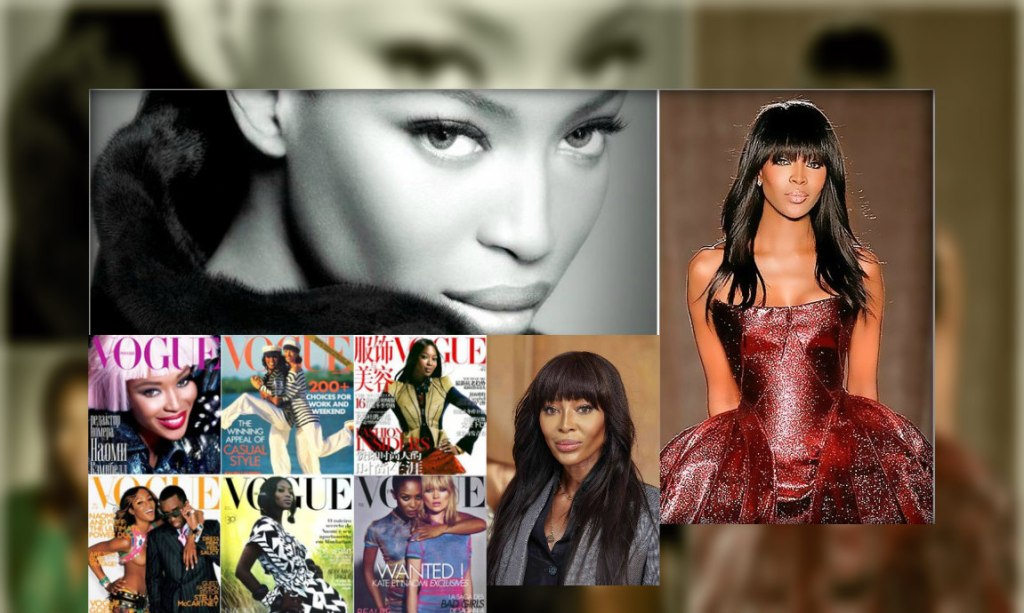
With her statuesque frame, chiseled cheekbones, an unmistakable feline grace, with the best runway walk known to man, Naomi Campbell reigns as one of the most iconic supermodels in history—a living embodiment of timeless beauty, discipline, and global influence. Her deep mocha complexion, commanding runway presence, and captivating gaze revolutionized the fashion world, breaking barriers for Black women in an industry once reluctant to embrace diversity. Discovered at just 15 years old, Campbell became the first Black model to grace the covers of French Vogue and Time magazine, solidifying her place among the elite. Beyond modeling, she has evolved into a philanthropist, actress, businesswoman, and cultural ambassador, using her platform to advocate for racial equality and representation in fashion. Naomi Campbell is not merely a model—she is an institution, a symbol of power, poise, and perseverance whose name defines excellence itself.
Few names in fashion history command the same reverence as Naomi Campbell, whose presence on the runway is often described as both thunderous and divine. With a walk that is the benchmark of high fashion, Naomi did not simply model clothes—she embodied power, elegance, and revolution. As one of the original “supermodels,” she shattered racial barriers, redefined global beauty standards, and remains an enduring force in fashion decades after her debut.
Early Life and Modeling Beginnings
Naomi Elaine Campbell was born on May 22, 1970, in London, England, to a Jamaican-born mother, Valerie Morris, a professional dancer. Naomi never knew her father, who left before her birth, and she took her mother’s surname. Of Afro-Jamaican and Chinese-Jamaican descent, Naomi grew up between London and Rome, where she studied ballet and performing arts.
Her modeling journey began serendipitously. At just 15 years old, while shopping in Covent Garden, Naomi was discovered by Beth Boldt, head of the Synchro Model Agency. By age 16, she was already gracing the cover of British Elle—a signal that fashion’s next phenomenon had arrived.
Rise to Supermodel Status and the “Big Five”
In the late 1980s and early 1990s, Naomi became one of the original five supermodels, a term Gianni Versace helped popularize. The group—Naomi Campbell, Linda Evangelista, Christy Turlington, Cindy Crawford, and Claudia Schiffer—dominated catwalks and campaigns, crossing over into pop culture with unprecedented fame. These women weren’t just faces of brands; they were personalities, businesswomen, and icons.
Naomi’s defining moment came in 1991, when Versace sent all five supermodels down the runway together, lip-syncing George Michael’s “Freedom! ’90,” immortalizing the era and solidifying Naomi’s place in fashion history.
A Trailblazer in Fashion
Naomi Campbell broke racial barriers in an industry that long upheld Eurocentric beauty standards. She was the first Black model to appear on the covers of French Vogue (1988) and Time Magazine, and the first Black British model to cover British Vogue in decades. Her presence signaled a tectonic shift, yet she has repeatedly spoken about how much of her career was earned through persistence in the face of racism.
In an interview with The Guardian (2020), Campbell stated, “I had to fight for myself because nobody else was going to fight for me. Racism is still very much alive in this industry.”
Despite being a supermodel, Naomi was often excluded from certain magazine covers and beauty campaigns. She has been candid about being booked last, paid less, or overlooked—until designers like Azzedine Alaïa, Yves Saint Laurent, and Gianni Versace personally advocated for her inclusion.
The Walk That Changed the Runway
Naomi’s runway walk is widely regarded as the most iconic in fashion history. Fluid yet powerful, rhythmic yet effortless—her strut became a signature, studied by generations of aspiring models. No one, past or present, walks quite like Naomi Campbell. Designer Marc Jacobs once said, “Naomi doesn’t walk the runway. She owns it.”
Fashion commentator Tim Blanks described it as “the physical expression of regality.” Her ability to command space—whether in couture or ready-to-wear—transcended the clothes and elevated fashion shows into full theatrical displays.
Longevity and Current Influence
Remarkably, Naomi remains one of the few models from her era still working at the top tier of the industry. Well into her 50s, she continues to headline major runway shows—Fendi, Balmain, and Valentino among them—and serves as a mentor and judge on modeling competitions, including The Face. She’s also walked for Rihanna’s Fenty, bridging generations and staying relevant with younger audiences.
Edward Enninful, editor-in-chief of British Vogue, called her “a legend, and a living link between fashion’s past, present, and future.”
Rivalry with Tyra Banks
Naomi’s long-publicized feud with Tyra Banks cast a shadow over both of their careers. In early interviews, Banks described being ostracized by Naomi in the 1990s when she entered the industry. Though both women have since reconciled, Tyra admitted in a 2019 interview that Naomi’s treatment made her question her place in fashion.
Naomi, in turn, claimed the media pitted them against each other, fostering competition between the only two prominent Black models of their time—another consequence of fashion’s limited diversity.
Comparisons: Naomi Campbell vs. Cindy Crawford
Both Naomi Campbell and Cindy Crawford were pioneers of the supermodel era, but they took slightly different paths. Cindy, often seen as the “All-American beauty,” became the face of numerous beauty campaigns and focused more on commercial modeling and business ventures. Naomi, by contrast, was a runway thoroughbred, closely aligned with haute couture and high fashion.
Where Cindy brought relatable beauty to the masses, Naomi brought otherworldly presence and regal glamour to elite runways. Both earned their spots through talent, but Naomi’s path was arguably more difficult due to systemic racism and underrepresentation.
Praise from Industry Icons and Her Own Words
Gianni Versace once said, “Naomi is not just a model—she is fashion.”
Vivienne Westwood called her “the goddess of the runway.”
Donatella Versace, after Naomi walked in her tribute show for Gianni in 2017, said: “She is a symbol of strength and resilience.”
On Christy Turlington, Naomi once said: “Christy is the most beautiful woman in the world—inside and out. Her face is like a Renaissance painting.” This rare public compliment reveals Naomi’s respect for her fellow supermodels, despite often being cast as the competitive one.
Personal Life
Naomi Campbell has never married but has had high-profile relationships, including with U2’s Adam Clayton, Russian billionaire Vladislav Doronin, and, more recently, she has welcomed two children, announcing the births quietly in 2021 and 2023. She maintains a level of privacy around her family life, choosing instead to highlight her philanthropic efforts and modeling career.
Conclusion
Naomi Campbell is not merely a supermodel—she is a cultural icon, a fashion revolutionary, and a living legend. With a walk that has never been matched, a legacy that spans generations, and a resilience forged in adversity, she has become more than the sum of her catwalks and covers. She is a force—still walking, still stunning, still Naomi.
References
- Enninful, E. (2021). British Vogue Interviews
- Banks, T. (2019). Tyra Banks Show Interview with Naomi Campbell
- Versace, G. (1991). Freedom! Runway Show Commentary
- Blanks, T. (2018). Business of Fashion: The Naomi Effect
- Campbell, N. (2020). The Guardian Interview
- Vogue Archives. (1988–2024). Covers and Editorials featuring Naomi Campbell
 THE BROWN GIRL DILEMMA